Federal Advocacy Alert

Ask your legislators to support the
Historic Tax Credit enhancement provisions included in the infrastructure legislation.


Your outreach will directly determine
how much support HTC provisions will receive in ongoing negotiations with the Biden Administration.

For months, Greater Portland Landmarks has joined preservation supporters across the country to advocate for improvements to the federal Historic Tax Credit program. Last week, the House Ways and Means Committee passed a key piece of infrastructure legislation that will expand and improve a number of community development incentives.

Historic Tax Credit provisions, similar to the House version of the Historic Tax Credit Growth and Opportunity Act (HTC-GO/H.R. 2294), were included in the legislation and passed out of committee on a vote of 24 to 19. The following HTC provisions were included in the bill passed out of the Ways and Means Committee:

  • Temporarily Increasing the HTC From 20% to 30% for all projects. (Sec. 135301)

  • Permanent increase in the rehabilitation credit for small projects. (Sec. 135302)

  • Modification of substantial rehabilitation definition. (Sec. 135303)

  • Elimination of basis adjustment. (Sec. 135304)

  • Modifications of tax-exempt use leasing rules. (Sec. 135305)

  • Enabling HTC to be used for public school buildings. (Sec. 135306)

How can you help?

While Senate Democrats are in control of the present phase of negotiations and Maine doesn't have a Democratic Senator, we encourage you to reach out and express to our legislators the impact Historic Tax Credits have on economic development and affordable housing creation in Maine communities today! Will you join us?

Despite strong support in the House, the Biden Administration is currently negotiating with House and Senate leadership to reduce the cost and scope of the bill. All historic tax credit provisions are in jeopardy of reduction or elimination.

Saying Goodbye to the UMaine School of Law Building

The Home of the University of Maine Law School is being demolished after 50 years of looming over Oakdale.

By Archer Thomas

Since 1972, the hulking concrete mass of the University of Maine School of Law Building has quite literally loomed over the otherwise low-rise and residential Oakdale neighborhood. There is nothing quite like it in Portland, or Maine for that matter. In a city whose historic character is well reflected in the restrained traditionalism of most of its architecture, the Law Building is audaciously modern and unapologetically controversial.

UMaine Law’s home building is being demolished after 50 years of looming over Oakdale.

Admittedly, the structure is hard to love. For one, the Law Building sticks out like a sore thumb, an eight-story behemoth in the last state where the tallest building is a church. Being one of Maine’s very few Brutalist or Brutalism-adjacent structures, its raw concrete siding matches the drab gray of an overcast sky. The turret-like form of its main tower, complete with quasi-medieval crenellation, emphasizes the lack of correspondence between the building and its surroundings. Adding these aesthetic issues on top of its function as a law school and connotations surrounding the world of litigation, one can begin to understand the weariness that Portlanders have generally expressed towards the structure.


The building was designed by Wadsworth, Boston, Dimick, Mercer, and Weatherill, a local architecture firm.

The building was designed by Wadsworth, Boston, Dimick, Mercer, and Weatherill, a local architecture firm.

In 2017, Architectural Digest—one of the most popular architecture magazines in the country—published a list featuring “The 7 Ugliest University Buildings in America.” Lo and behold, the UMaine Law Building made the cut. Though the building escaped some of the harsher critiques levelled at the other unlucky finalists—including “prisonlike” (the Health Sciences Center at Louisiana State University) and “like a Disney villain’s lair” (Crosley Tower at the University of Cincinnati)—the listing caught the attention of local news outlets, who playfully reveled in the negative attention the structure was receiving. The Portland Press Herald noted that the building’s recognition as a “real stinker” was “surprising no one who works there,” including Associate Dean for Academic Affairs Dmitry Bam, for whom “there are days when he thinks it would be nice to have an office in a traditional brick building overlooking the water.”

Well, it appears that Bam and the rest of the Law Building’s critics are in luck—the University of Maine System announced this past spring that the concrete giant would be coming down. Temporarily, the School of Law will be relocating to an office building at 300 Fore Street in the Old Port. Ostensibly, the most pressing reason behind the decision is the continued deterioration of the structure. According to Dean Leigh Saufley, “What is wrong with the building is a four-hour conversation.”

The deterioration of concrete mid-century buildings (Brutalist or otherwise) is a rising concern in this country—look no further than the tragic collapse of a condo building in Surfside, Florida which claimed around 100 lives this summer. While concrete by itself is enormously resilient (the dome of the Pantheon in Rome, for instance, has lasted almost two millennia), the vast majority of concrete buildings erected in the past century are reinforced, meaning that rebar (steel bars) is embedded within the concrete. While this practice dramatically increases the tensile strength of concrete, both it and steel possess properties which threaten the integrity of the composite material as they weather. Concrete, although appearing extremely solid, can actually allow the infiltration of moisture after years of exposure. While moisture is not necessarily a threat to concrete on its own, steel can rust, gradually breaking down the rebar and leading to flaking and fracturing in the surrounding concrete, a process called spalling.

Moreover, once it begins, the degradation of reinforced concrete is extremely difficult and costly to stop. In order to preserve Frank Lloyd Wright’s Unity Temple in Oak Park, Illinois, for instance, most of the concrete had to be reapplied one side at a time so as to replace all the rusted rebar, requiring the structure to be held up by temporary supports. In effect, the restoration necessitated the piecemeal replacement of the almost the entire structure, a feat which cost a whopping $25 million for a single church.


A 1967 photograph of Unity Temple in Oak Park, Ill. from the Library of Congress

A 1967 photograph of Unity Temple in Oak Park, Ill. from the Library of Congress

Though the challenges facing the Law Building could likely be addressed for less than that sum, the difficulties associated with concrete preservation will probably lead to the sacrifice of hundreds of aesthetically and historically significant modernist buildings in coming decades. Furthermore, the decision to demolish rather than rehabilitate aging Brutalist buildings is relatively common because until recently it was easy to forget that these concrete structures were once loved and seen as beautiful. According to an associate dean at the School of Law, the building’s architect was so pleased with his design that (allegedly) “he used to set up a folding chair out front and just stare at it some days.” Nevertheless, the Press Herald’s recent coverage of the building’s woes fails to include a single contemporary voice who values the structure as a piece of Portland’s modernist heritage.

The recognition that modernist buildings are valuable and warrant the same kind of attention and protection directed at other historic structures is growing. Over the past few decades, several international organizations have arisen to promote the preservation of the world’s modernist heritage. Activists have adeptly utilized the internet and social media to introduce Brutalism and other modernist subgenres to a new generation and rally the public around preservation. In 2015, the SOS Brutalism project was launched, including a global, publicly available database of Brutalist buildings. Maine only possesses one listing on SOS Brutalism—the Law Building—and soon it will have none.

Efforts to preserve modernist concrete buildings represent an ironic turning point in the preservation movement. In many cases, the structures currently under threat are the same ones which arose from the wholescale decimation of earlier historic sites in the mid-20th century, a process which kicked off the preservation movement in the first place. Scollay Square, a lively European-style city plaza located in downtown Boston, was bulldozed in the 1960s to make way for the Government Center complex including the new Boston City Hall. The decision was almost immediately upheld as an archetypical example of urban renewal’s harmful excesses. The Boston City Hall increasingly came to be seen as a regrettable mistake. In the 2000s, however, when the city considered selling the property to developers, preservation activists and members of the community stood in support of the concrete giant. Redevelopment gradually faded from the city’s agenda, and City Hall was saved.


2350791131_ScollaySq.jpg
Contrast Boston’s Scollay Square in the late 19th century (left) with this 1968 image of  Government Center.

Contrast Boston’s Scollay Square in the late 19th century (left) with this 1968 image of Government Center.

Similarly, the Law Building replaced a row of quaint Victorian single-family homes along Deering Avenue. If they had survived to the present day, it is very possible that they would be protected under a historic preservation ordinance. Nevertheless, this is not what occurred, and we find ourselves in a similar circumstance to the 1960s when the Law Building was first being conceived. In the rush to move on from our past, we are at risk of depriving our descendants of their architectural heritage. If any lesson should be taken from the urbanism of the mid-20th century, it is that tastes change. One person’s eyesore is another’s gem. If the Law Building is truly beyond saving, as it might well be, it is imperative that we as a public at least pay it the homage it deserves. Who knows? Maybe one day we will remember it like we remember Portland’s Union Station—a venerable victim of regrettably shortsighted times.

IMG_0609[1].JPG

Archer Thomas is a recent graduate of Bowdoin College, having majored in history and minored in government and legal Studies. Growing up in Buxton, Archer has loved Portland and appreciated Greater Portland Landmarks’ work from a young age. Architectural history and urbanism have been passions of his for a long time, with his undergraduate thesis having focused on the historical and theoretical relationship between Brutalist and postmodern architecture. He is also a 2021 Thomas J. Watson Fellow and will embark on a year of learning about urban rail infrastructure around the world as soon as State Department travel advisories allow. Afterwards, he hopes to enroll in a graduate program in historical preservation, architectural history, or architecture.

Minor League Baseball in Bayside: A History of the Bayside Park Baseball Stadium

A view of Bayside Park baseball stadium from Washington Avenue in Portland. Portland Maine History 1786 to Present

A view of Bayside Park baseball stadium from Washington Avenue in Portland. Portland Maine History 1786 to Present

Bayside Park served as home to several independent baseball teams from its construction in 1913 up until the 1930 season. Located on the North side of Fox Street, in between Boyd and Smith Streets, it was home to not only baseball games, but to circus events and boxing matches too.  

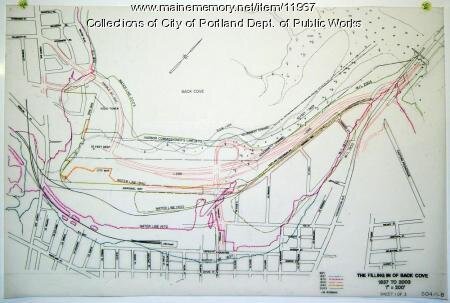
The baseball stadium was built on fill. The lower sections of what is now known as the Bayside neighborhood below Oxford Street were once part of Back Cove. Several infill projects in Back Cove took place between 1870 and the construction of I-295 over a hundred years later.  Back Cove during the 1800s was full of industrial waste and residential sewage for the majority of the century. In 1895, Mayor James Baxter hired the Olmstead landscape architectural firm to improve the health and sanitation of the Cove, while also developing a scenic waterfront area for recreation. This began the development of the Portland Park System and led to the the gradual development of the Back Cove shoreline through the 20th Century.

A map depicting the various fill campaigns in the Bayside neighborhood.  Portland Department of Public Works/Maine Memory Network

A map depicting the various fill campaigns in the Bayside neighborhood. Portland Department of Public Works/Maine Memory Network

In 1913 when the baseball stadium was built, the shoreline of Back Cove extended to what is now Marginal Way and followed the Union Railroad tracks over the cove toward Tukey’s Bridge.  The park’s Grandstands wrapped around the southern corner of the block, with Boyd Street down the 3rd base line and Fox Street down the 1st base line. An additional bleacher section was built past 1st base. If a batter really got a hold of a ball, he could make a splash hit beyond Back Cove’s high water line out in Left Field. 

Bayside Park was built on Fox Street in 1913, between Boyd and Smith Streets. It’s northern boundary was the shoreline of Back Cove and the Union Railroad trestle that crossed Back Cove. Portland Public Library

Bayside Park was built on Fox Street in 1913, between Boyd and Smith Streets. It’s northern boundary was the shoreline of Back Cove and the Union Railroad trestle that crossed Back Cove. Portland Public Library

The first game at Bayside Park was held on May 8, 1913. The Portland Duffs opened up their game of the new season in the New England League under legendary owner and manager Hugh Duffy. Duffy (1866-1954) was born in Rhode Island and spent most of his professional baseball career in Boston, but also played in Chicago, Milwaukee, and Philadelphia. He made his transition from playing to coaching in 1904 when he left Milwaukee to coach the Philadelphia Phillies of the National League, and then later became owner and manager of the Providence Greys of the Eastern League. After another attempt in the Major Leagues managing the Chicago White Sox, he ended up in New England as owner/manager of the newly incorporated Maine Franchise in lower Class-B New England League. Named after himself, he managed the Portland Duffs for 4 years and managed to win a pennant in 1915, but then sold the club following the 1916 season. Duffy was inducted into the Major League Baseball Hall of Fame in 1945.

Opening Day at Bayside Park in 1913. Douglas Noble/Maine Memory Network

Opening Day at Bayside Park in 1913. Douglas Noble/Maine Memory Network

After the 1916 season a new team, the Portland Paramounts, used Bayside Park lead by manager Michael Garrity. One familiar face lasted through the team change, pitcher Fleet Mayberry (1890-1929). Earl Fleet Mayberry’s career in Portland lasted from the Duffs inaugural season in 1913 into the 1917 season with the Paramounts. After 1917 he entered the military, serving in World War I. After the war he played six more seasons of baseball and worked as a school teacher in his home state of North Carolina. 

Pitching alongside Mayberry was another notable former Portland Duff player named Oscar Tuero (1898-1960). Tuero was born in Havana, Cuba and played from 1913-1941 all throughout the United States. He was with the Portland Duffs in the 1914 season, and was one of the few players from the Duffs to make it into the Major Leagues. From 1918 to 1920, Tuero pitched in 69 games for the St. Louis Cardinals. 

Although the Portland Paramounts only lasted one season at Bayside Park, there continued to be a string of teams that called the park their home. The Portland Blue Sox of 1919, the Portland Green Sox in 1925, the Portland Eskimos in 1926-1927, and the Portland Mariners from 1928-1930.  

Members of the Portland Green Sox at Bayside Park circa 1925. The Portland Observatory on Munjoy Hill is visible at image left above the tree line. Portland Press Herald/Maine Memory Network

Members of the Portland Green Sox at Bayside Park circa 1925. The Portland Observatory on Munjoy Hill is visible at image left above the tree line. Portland Press Herald/Maine Memory Network

Although baseball remained an extremely popular sport in Portland, the challenges of the independent baseball leagues did not allow a team to stay at Bayside Park for a long time. Teams could not constantly fill the stands and make a profit. With the construction of the Portland (now Fitzpatrick) stadium in 1930, Bayside Park was reduced to use by local Twilight and Sunset Leagues. Without a steady team occupying the park, the field and stadium were neglected, and by 1950 the grandstands were torn down. 

The area of Bayside along Back Cove became an industrial area, and shortly after the tear down of the stadium in 1951, a trucking company built on top of where screaming fans previously watched  baseball games. Closer to Back Cove, in what was once Left-Centerfield, was the new manufacturing building for the Songo Shoe Company. These developments would be the start to a multi-decade long change in the neighborhood along with urban renewal projects starting in the late 1950s.  

Urban Renewal also gave the the neighborhood the name ‘Bayside’, when the removals made way for new developments like Kennedy Park in 1965 and the Franklin Arterial project in 1967. The urban renewal projects displaced many Irish, Italian, Scandinavian, and Armenian immigrant families who likely attended games and played in local leagues at Bayside Park. Today, Fox Field serves as a recreational grounds for sports and after school programs serving one of Portland’s most diverse neighborhoods. If you look north of Fox Street, you will see the old trucking company has become a newly renovated spot for two popular brewery restaurants. What was once the section of Smith Street connecting to Marginal Way became Diamond Street after the demolition of the Bayside Park.  

The History of Baseball in Maine can draw many ties to the old site of Bayside Park. The site was at a time the outskirts of the neighborhood, but then became a front door for Portland’s after the urban renewal movement that affected so many historic homes and buildings in the Bayside neighborhood.


Some of the Portland Teams’ Members

George E "Duffy" Lewis (1888-1979) was a left fielder on three world champion Boston Red Sox teams and manager of the Portland Mariners of the New England League at Bayside Park 1927-1929. He is in the Maine Baseball Hall of Fame.

Cuban born Oscar Tuero (1893-1960) played for the Portland Duffs during the 1914 season. From 1918-1920 he played with the St. Louis Cardinals.

Roland “Cuke” Barrows (1883-1955) of Gorham, Maine was an outfielder who played Major League Baseball for the Chicago White Sox from 1909 to 1912. Although he would establish a long-time family greenhouse and floral business in Gorham, his nickname purportedly came from his “cool as a cucumber” play in tough games, not from his gardening skills. He was inducted into the Maine Baseball Hall of Fame in 1983.

James J. “Fitzy” Fitzpatrick (c1896-1989) was a teacher, athletic director and coach at Portland High School for 45 years. Portland’s Fitzpatrick Stadium is named in his honor. He also played semi-professional ball in Portland. He once faced Babe Ruth at Bayside Park in Portland, where Ruth was doing batting exhibitions. “I pitched the whole game,” Fitzpatrick recalled. “Ruth popped twice to the infield and the other two times, I struck him out, and when Babe didn’t speak to me after the game I knew he was mad and I was some shook up.” He was inducted into the Maine Baseball Hall of Fame in 1974.

Also Cuban born, Rafael Quintana played minor league baseball over six seasons with six different teams, including the 1929 season with the Portland Mariners. He also played two seasons in the Cuban leagues splitting time between Habana and Almendares.

Harry Lord (1882-1948) played four seasons at third base with the Boston Red Sox (1907-1910) and five seasons with the Chicago White Sox. Near the end of his career in 1917 he played with Portland, batting .266 in 102 games. Born in Porter Maine, he later lived in Cape Elizabeth and coached at South Portland High School. He too is in the Maine Baseball Hall of Fame.

William “Doc” Doherty was from Portland. He was a first baseman and played part of the 1929 season for Portland. He was inducted into the Maine Baseball Hall of Fame in 1972.

Frank Alexander “Pat” French was a graduate of the University of Maine at Orono who played centerfield briefly for the Philadelphia Athletics in 1917 before going off to fight later that year in World War I. He returned to Maine and would later play in 1927 for the Portland Eskimos.

Another Portlander, Ray Carr pitched for Duffy Lewis’ Portland team in 1927. Ray also pitched for Camden Club, managed by Portland’s Ray “Lanky” Jordan - a former Portland Green Sox player. Ray Jordan, as well as Ray Carr and his brother Daniel are all in the Maine Baseball Hall of Fame. Daniel worked as the grounds keeper at Bayside Park for eight years, and was a longtime Portland police officer.

Although most players at Bayside Park were men, at least one woman spent a great deal of time at the stadium. Florence Irene “Smokey” Woods caught batting practice and shagged flies for the 1913 Portland team in the New England League managed by Hugh Duffy. Known for her exceptional batting eye as well as her throwing arm, she played on several area teams. It is said that she “amazed members of Portland teams in the New England League at Bayside Park with her arm and batting skill. She was the envy of many a boy at Cathedral Grammar, where she mixed discipline with goodly doses of baseball in the schoolyard. Her baseball activities were largely confined to Portland’s Bayside Park and the local Cathedral Grammar schoolyard. She later became a nun and was known as Sister Mary Athanasia. She was inducted into the Maine Baseball Hall of Fame in 1979.

Written and researched by Evan Brisentine and Julie Larry.

Evan Brisentine was a 2021 summer intern with Greater Portland Landmarks and is currently in the Masters of Historic Preservation at the University of Oregon. He graduated from Santa Clara University with a B.A. in History and is now in his second year of his Master's program. Evan is originally from the San Francisco Bay area but experienced life in Maine when he lived in Old Orchard Beach during the summers of 2013 and 2014 playing baseball. His interests in the preservation field include cultural resource management and preservation planning.


Easy Energy Upgrades for Your Older Home

By Noelle Lord Castle
This article was originally published in the Landmarks Observer

Back when your drafty old place was built, believe me they had energy efficiency in mind.  Buildings were oriented so main living areas could take advantage of heat from solar gain, sturdy evergreen trees were planted to block the winter winds and deciduous trees to shade the summer heat, chimneys were constructed strategically to take full advantage of the radiant heat from warm masonry and the fire, and they would never have gone to bed without taking the basic step of closing the curtains.  Resources were precious.

Bottom line was that common sense prevailed.  When it comes to making your old places as efficient as possible today, common sense is your best (and often least expensive) weapon.  It’s easy to get caught up in what seems like a major issue with a quick solution (replace old windows with new ones) and lose sight of the long term implications which not only include the loss of historic fabric but major financial and environmental costs.  Modern “upgrades” do not have the lifespan of older materials, and can undermine older building systems (big timbers need to breathe!).  Take some reasonable steps and you will see big improvements, and your special building will not suffer the consequences of being torn apart

10 THINGS YOU CAN DO OVER THE WEEKEND TO MAKE YOUR OLD HOUSE MORE EFFICIENT


(efficiency=warmer home +more money in your pocket
+ good for the environment)

1.       Install (or begin on the north or draftiest areas) good quality weather stripping around doors and windows Save at least 10%.

2.       Install a programmable thermostat and reduce the temperature by up to 10 degrees (no lower than 55 degrees) when you are not home.  Save up to 20%.

3.       Seal air leaks and gaps around windows, doors, and other building intersection or access points. Go around from the inside and the outside (in warmer weather) using caulking, backer-rod, and spray foam as appropriate.  Save at least 10%.

4.       Install insulating window treatments and use them to seal out drafts and block out heat in summer. Save $10 monthly for every degree you can lower your thermostat.

5.       Install low-flow faucets and shower heads (really, new ones are indiscernible).  Save $200-$500 annually.

6.       Wrap all exposed water pipes with foam insulation and secure electrical tape.

7.       Start using a humidifier, moisture makes air feel warmer so you can lower your thermostat.  Save $10 monthly for each degree you can lower your thermostat

8.       Use compact florescent lamps (CFLs) or light emitting diods (LEDs) instead of incandescent bulbs. Use up to 75% less electricity, change just 15 bulbs and save $50 annually.

9.     Turn back your hot water heaters to 120 degrees.  Save up to 10%.

10.    Change the filters in your heating and cooling system units.  Have them serviced annually for best efficiency.

Noelle Lord Castle operates Old House C.P.R. and shares her passion for helping owners of older buildings discover how to take good care of them through consulting, teaching, and writing.  She can be reached by the email linked here.

Need a Fall Reading List? We've got Suggestions!

Now that summer is drawing to a close are you adding books to your reading list? Do you plan to spend one last sunny September weekend in your hammock with a good book? We are! Here are some titles on our fall reading list. Don’t forget to shop local and support your local bookstore!


Restoring your Historic House

by Scott Hanson

How can you accommodate contemporary life in a historic house? This book prioritizes the identification and preservation of the historic, character-defining features of a house as a starting point in your renovation process. Illustrating best-practices for updating historic homes for modern life in ways that do not attempt to turn an old house into a new one, the book also suggests many ways to save money in the process, without settling for cheap or inappropriate solutions. Maine preservationist Scott Hanson has 40 years’ experience rehabilitating historic houses in Maine and New England.


The Sustainers: Being, Building and Doing Good through Activism in the Sacred Spaces of Civil Rights, Human Rights and Social Movements'

by Catherine Fleming Bruce

The Sustainers includes sites such as the Audubon Ballroom where Malcolm X was assassinated; the Greyhound bus station now serving as the Freedom Riders Bus Museum in Montgomery, Alabama; the South Carolina home of Modjeska Simkins, and Robben Island Prison where Nelson Mandela was held. The book was awarded the 2017 Historic Preservation Book Prize from the University of Mary Washington Center for Historic Preservation. Ms. Bruce was the first African-American to receive the Book Prize. In the book, Catherine examines 10 historic sites related to civil rights and argues that marking these sites and maintaining them is a public good.


Building Reuse_Merlino.jpg

Building Reuse: Sustainability, Preservation, and the Value of Design

by Kathryn Rogers Merlino

The construction and operation of buildings is responsible for more than 40 percent of all primary energy use and nearly half of all our carbon emissions. The impact of the demolition and removal of an older building can greatly diminish the advantages of new green buildings. In her recent book, Merlino calls for a more expansive view of preservation that goes beyond keeping only the most distinctive structures based on their historical and cultural significance to embrace the creative reuse of even unremarkable buildings for their environmental value. Her book includes a range of case studies.


Preservation & Place: Historic Preservation by and of LGBTQ Communities in the United States

by Katherine Crawford-Lackey and Megan E. Springate

This was a winner of the 2020 University of Mary Washington Center for Historic Preservation Book Prize. Examining significant historic and archaeological sites affiliated with lesbian, gay, bisexual, transgender, and queer history in the United States brings light to the importance of the preservation process in documenting and interpreting the lives and experiences of queer Americans. The book features chapters on archaeology and interpretation, as well as several case studies focusing on queer preservation projects.


Protecting Coastal American Cities_Pelz.jpg

Protecting Coastal American Cities: Case Studies in Resilience

by Matthew Pelz, John B. Anderson, A.D. (Nikki) Brand, Dwayne Jones

Here at Landmarks we continue to examine the consequences of climate change, increasing storm surge, and rising sea levels on our coastal communities. Understanding how coastal communities around the world have adapted to these challenging environments can help identify not only the strategies to better prepare our vulnerable cities and towns.

Protecting Historic Coastal Cities presents an overview of how historic communities in coastal environments understand and confront the unique challenges they face. Its authors explore communities like Galveston, New Orleans, and Miami, as well as looking at pioneering advances in flood protection in the Netherlands.


Looking for a book to introduce building conservation and historic preservation to a younger person in your life? Check out the National Trust for Historic Preservation’s list of 10 Preservation Books for Children and Teens! Check out our shop for more children’s activity books, books on energy efficiency in older homes, and of course, local history!

10 Historic Places to Visit in Greater Portland This Summer

It’s not too late to get out and enjoy summer in Maine! What are your plans for the last few weeks of Summer? Why not visit some of Greater Portland’s historic sites this year? Here are some suggestions:

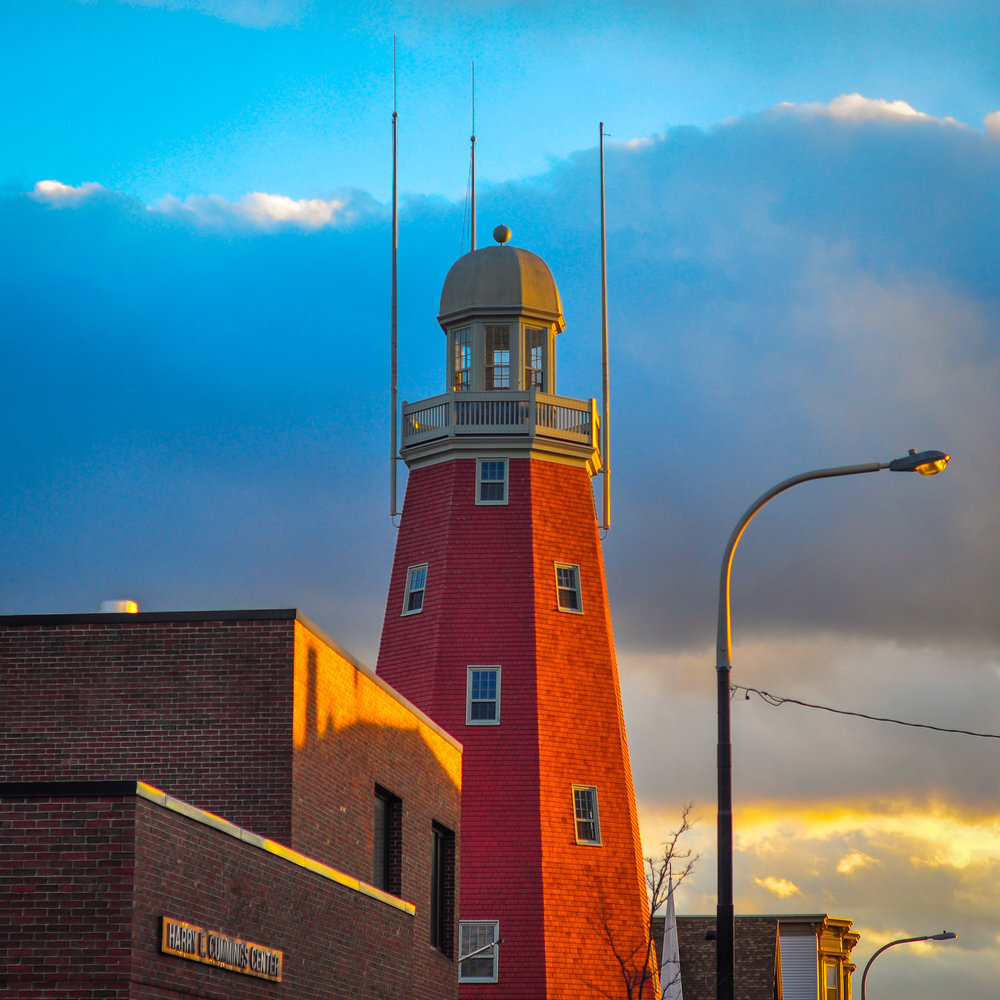
  1. Come visit us at the Portland Observatory! In 1807 Captain Lemuel Moody (1768-1846), ordered construction of this octagonal, 86-foot high tower on Munjoy Hill to serve as a communication station for Portland’s bustling harbor. It was a commercial venture designed to give a competitive edge to ship owners who paid Moody a subscription fee of $5.00 a year to alert them when their ships were arriving.

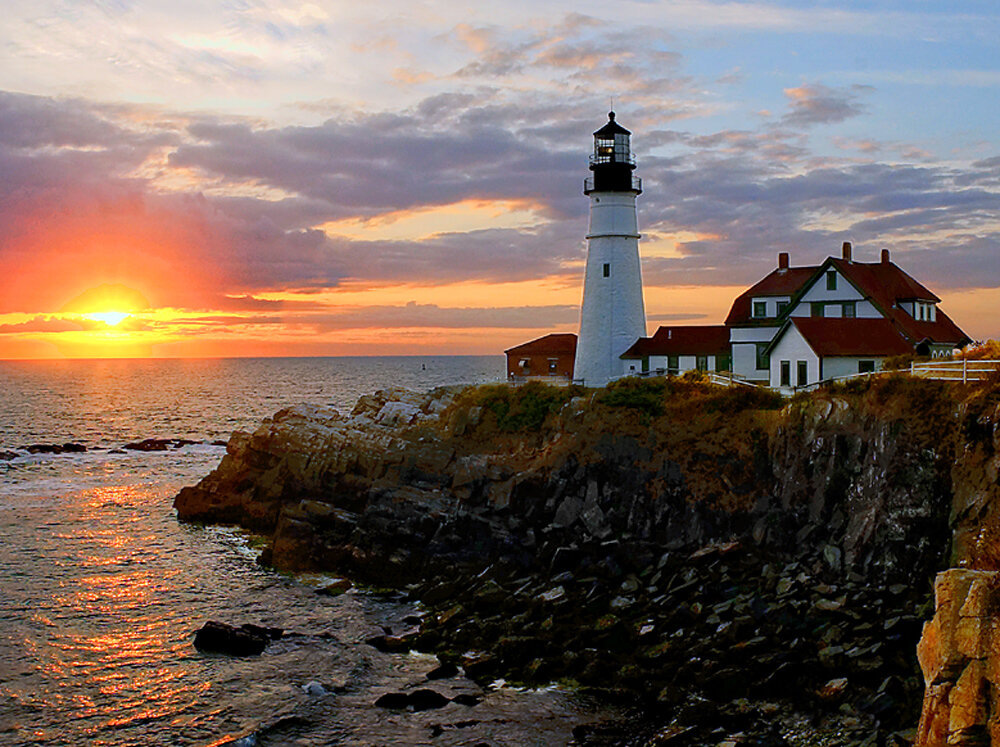
  2. Everyone knows to visit Portland Headlight, probably the most well-known light house in Maine. But have you visited the children's garden or walked along the cliffs to visit the Ecology Project at Fort Williams? Fort Williams Park is open year-round from sunrise to sunset and maintained by the citizens of Cape Elizabeth for all to enjoy. While it’s gorgeous on a sunny day, it’s even a great place to visit on a cloudy or foggy summer day too.

  3. On a hot summer evening take a stroll through Fort Preble (1808) to enjoy cool ocean breezes. Occupied during the War of 1812 and the Civil War, the fort was sold in 1952 to the State of Maine and is now the campus of Southern Maine Community College. Some of Fort Preble's original early 20th Century brick buildings (including officers' quarters, barracks and a fire station), along with perimeter casemates, remain and are in a good state of preservation. Don’t forget to walk out to Spring Point Ledge Light built near the fort in 1897.

  4. You can use our self-guided interactive maps to explore Greater Portland anytime! Our online maps can be used to take a virtual tour from your computer, or you can use them on your phone as you walk around a local neighborhood.

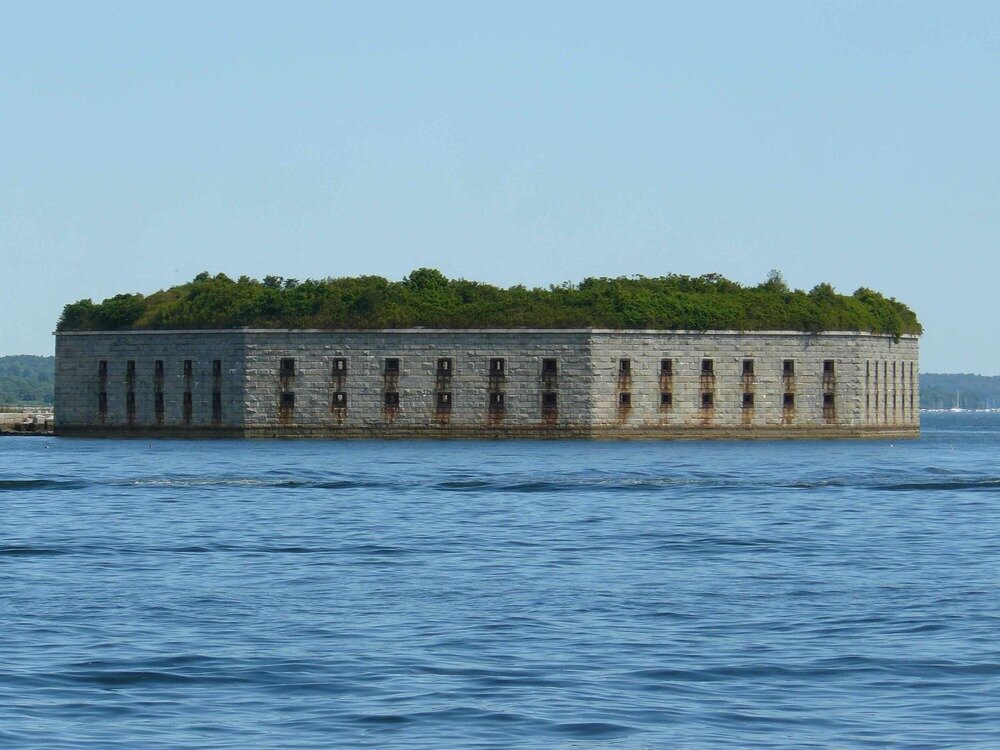
  5. Explore Fort Gorges! Named after Sir Ferdinando Gorges, Fort Gorges was built 1861-1868 by Ruben Smart and is modeled after Fort Sumter in Charleston, South Carolina. Fort Gorges was planned and constructed as one of three forts in Portland Harbor in reaction to the threat of foreign naval powers, initially provoked by the War of 1812. The Friends of Fort Gorges group is actively building awareness and raising funds to preserve the fort.

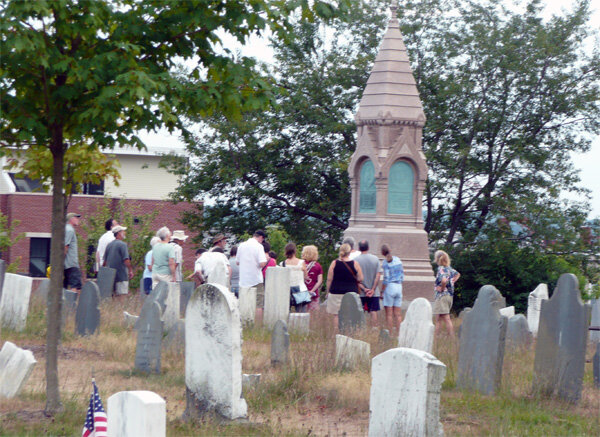
  6. Take a tour of Eastern Cemetery! Spirits Alive has also developed a virtual tour of the cemetery that you can view while lounging in your hammock or take with you when you visit the cemetery on your own whenever the gates are open between Memorial Day and Labor Day.

  7. Sail on a historic schooner! Sailing on a windjammer is the perfect way to experience the beauty of the Maine coast, complete with lighthouses, seals, and seabirds. Windjammers Bagheera, Wendameen, or Timberwind were built in Maine and are listed on the National Register of Historic Places.

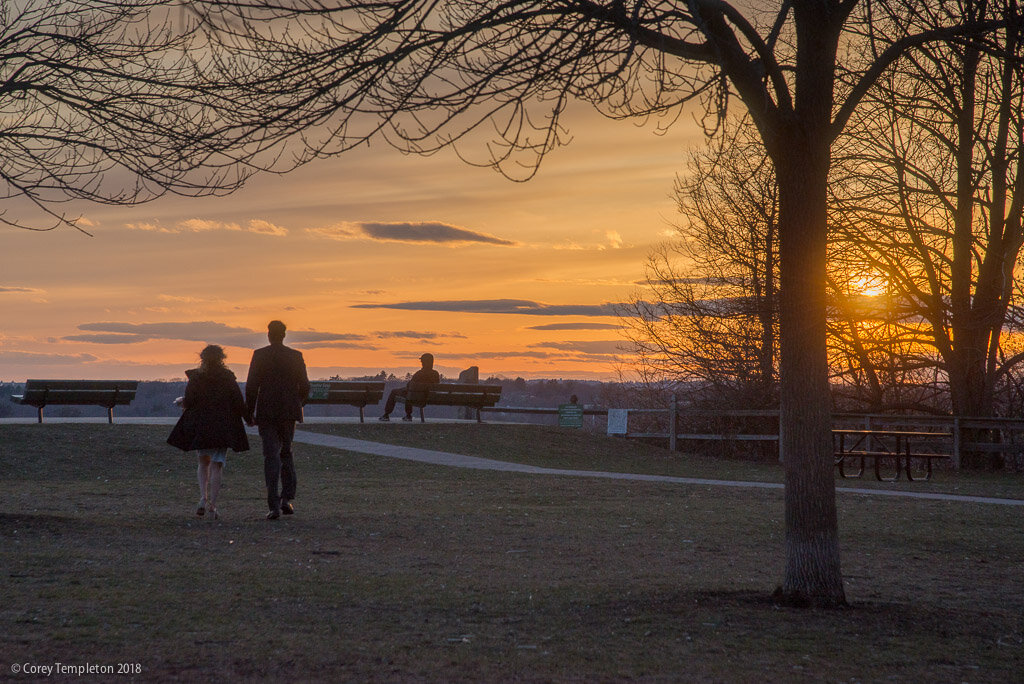
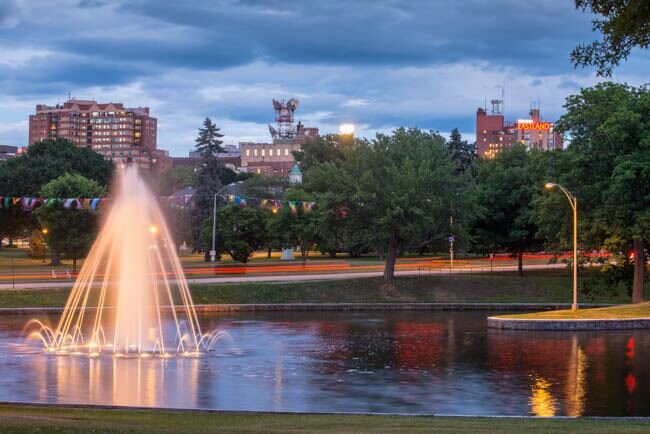
  8. Pack a picnic basket - or better yet order lunch or dinner to go from a local business - and enjoy your meal in one of Portland’s historic parks. Catch a sunset from newly designated historic Fort Sumner park, watch the ducks play in Deering Oaks pond, or enjoy the stunning view from the Eastern Promenade.

  9. Mackworth Island is the former home of James Phinney Baxter and of his son, Governor Percival Baxter, and was deeded to the State of Maine in 1943. Currently it is the site of the Baxter School for the Deaf. The island is a legislated bird sanctuary and is connected to Falmouth by a causeway at the mouth of the Presumpscot River. The island is open to visitors from dawn to dusk.

  10. The Cumberland and Oxford Canal was opened in 1832 to connect the largest lakes of southern Maine with the seaport of Portland, Maine. The canal followed the Presumpscot River from Sebago Lake through the towns of Standish, Windham, Gorham, and Westbrook. The Canal diverged from the river at Westbrook to reach the navigable Fore River estuary and Portland Harbor.

    The Fore River Sanctuary is the site of the former Cumberland and Oxford Canal. You can walk along the remains of the towpath and see the repair basin, a man-made pond dug for the canal. The nature sanctuary is also the home of Jewell Falls, Portland’s only natural waterfall.

    You can also see elements of the canal and towpath in Gambo Preserve. Access the preserve from trail heads in Windham near Gambo Dam or from Gorham’s Shaw Park.

April 21st Meeting of Portland's Historic Preservation Board

Some big new construction projects will be discussed at tonight’s Historic Preservation Board meeting. Two new housing projects, one for families and one for seniors, on Winter Street are part of the proposed Mercy Hospital Redevelopment. The other agenda item is a new residential tower downtown at 200 Federal Street. Read Landmark’s comments for the public hearing below.

200 Federal Street

Greater Portland Landmarks supports the proposed new mixed use building at 200 Federal Street. We are pleased to see that the design progressed to include a number of design revisions that provide more relief, depth, masonry patterns, and architectural interest in the building, especially at the base. We agree with the staff finding that the design is conservative, but the base and tower form a well-integrated, contextually appropriate proposal that meets the design standards.

The staff report mentions minor concerns about the cohesiveness of the Federal Street façade. The seating area to the east of the tower’s main entrance provides an amenity that in our opinion is a welcome addition to the street front. As has been discussed in planning board meetings, this building’s residents will likely be using alternative forms of transportation. The small seating area will be a useful place to wait for a ride with a friend or family member, a rideshare like Lyft or Uber, or to meet a friend before walking to dinner or other activity downtown. While not another storefront window, we think this is a valuable amenity conveniently located by the building entrance, and not so long of a blank wall that it will negatively impact the pedestrian experience.  

144 State Street

Greater Portland Landmarks is pleased that the proposed redevelopment of the Mercy Hospital campus offers the opportunity to enhance the existing neighborhood and reknit the streetscapes of Winter, State, and Spring Streets. While the proposed building is longer and slightly taller than its 2 ½ to three story neighbors in our opinion it is not out of scale with its context.

Like Winter Street, Park Street is a narrow street and the blocks on the west side have frontage on State Street. Park Row on the west side of the street is generally four plus stories as the entry levels to each unit are elevated above the sidewalk. On the east side of the street, with the exception of the church steeple, buildings are 2 ½ to three stories, a similar relationship to that proposed on Winter Street.

a typical house in Park Row, Park Street Portland (1924 City of Portland )

a typical house in Park Row, Park Street Portland (1924 City of Portland )

Park Row is 376 feet in length, longer than its immediate neighbors and longer than the proposed Winter Street building. In our opinion this historic precedent is compatible in scale and mass to its neighbors and creates a welcoming pedestrian experience with its transitional space between the sidewalk and building entrances. While this transition space is more generous in width than the Winter Street proposal, the proposed building takes advantage of the site’s topography to have a few raised entrances and a raised base similar to the Park Row example.

The strong fourth floor cornice of the design presented in the workshop helped to unify the overall building design (and is more similar to the historic precedent of Park Row) in our opinion. As raised in the staff report, the revised third floor cornice visually competes with the projecting window hoods. Perhaps these hoods are too deep? Or perhaps the cornice should be at the top of the building?

The staff report also raised the issue of the window hierarchy. In several neighboring row house developments, the primary ‘public’ rooms were on the second level, as can be evidenced externally by the larger window openings on the second floor of Park Row and the row on Pine Street at the end of Winter Street.

We encourage the Historic Preservation Board to take these taller and longer historic precedents into consideration in their deliberations. The proposed building on Winter Street will also be a visual transition on Spring Street between its lower scale residential neighbors and the much taller hospital building on State Street.

We hope that the Historic Preservation Board will approve the proposed new housing, but we encourage them to condition their approval to include review of the window specifications, location of building mounted utilities and mechanical elements, and the exterior lighting.

Visualizing the impact of urban renewal in Bayside

By Kate Burch

One of the topics we are asked about most frequently at Landmarks is the widespread demolitions in the Bayside neighborhood during Portland’s urban renewal efforts. Like cities across the country, urban renewal was in full swing in the 1950s-1970s in Portland, with the city eager to clear neighborhoods designated as slums and to improve automobile infrastructure by building high-traffic arterial streets and parking lots.

BaysideMap.PNG

Bayside was particularly affected by urban renewal policies. The neighborhood around Franklin Street was a dense, mixed-use neighborhood of residences, religious buildings, and stores with Jewish and Italian immigrant communities. This map from Portland’s 1943 report on Bayside shows how the city graded various neighborhoods, from best (A rating) to worst (E rating means the neighborhood is a slum.) These assessments were used to justify the razing of entire neighborhoods and move residents to new housing, fragmenting these communities. Families were compensated for relocation and offered additional relocation assistance.

Driving on Franklin Street today, it can be difficult to visualize what the area looked like before urban renewal demolition. This map is an overlay of the Sanborn Fire Insurance Company’s 1909 maps of the area to demonstrate what the streets looked like before the bulldozers came through.

To provide a better picture of what these neighborhoods were like, this next map reconstructs the buildings in from the 1909 Sanborn maps, color-coded according to use and overlaid on a contemporary map. You can see the dense residential blocks anchored by stores and religious buildings (both an Italian Catholic Church and a synagogue) in a walkable, mixed-use neighborhood.

Gorham's Historic Districts

Gorham Academy (part of the  Gorham Campus Historic District), c.1880

Gorham Academy (part of the Gorham Campus Historic District), c.1880

By Alessa Wylie

The Town of Gorham is home to not one, not two, but three historic districts, each showcasing different aspects of the Town’s history. South Street Historic District (1988) reflects neighborhood growth, Gorham Historic District (1992) reveals village development, and Gorham Campus Historic District (1978) illustrates educational history in Maine.

European colonists first settled in Gorham in 1736, but it was not until after 1760 that significant growth took place, resulting in its incorporation in 1764. The town center was laid out at the junction of Main and South Streets (Maine State Routes 25 and 114) in the 1750s, with a small cemetery and schoolhouse just to its south. The area south of the cemetery, along South Street, was originally farmland, but gradually developed as a residential area in the early 19th century.

Baxter Memorial Library

Baxter Memorial Library

The South Street Historic District was designated in 1988 and is a nearly rectangular area of about nine acres. It contains 20 buildings constructed between about 1790-1840 that show remarkable consistency in the overall form of the buildings during this 50-year period.  neighborhood. Prominent in the district is the Baxter House, now a museum, which is notable as the home of two of Maine's governors, James Phinney Baxter and Percival Baxter. It stands next to the 1907 Colonial Revival Baxter Memorial Library, the only non-residential building in the district, which was a gift to the town by James Phinney Baxter.

The Gorham Historic District is roughly L-shaped, encompassing the town center, and includes a small cluster of religious and commercial buildings at School and Main Streets, with some residential properties on streets spreading from the center. It’s comprised of 19th and 20th century buildings and was listed on the National Register of Historic Places in 1992.

GorhamHD.jpg

Architecturally, the Gorham Historic District reflects the wide variety of styles that were popular from the early 19th century through the 1930s, including Federal and Greek Revival buildings. There is a single Queen Anne building and a handful of Colonial Revival houses too. The Italianate style is well represented in the district, principally in commercial, fraternal and religious structures. Among the most notable of these are the former Masonic Hall and the Lewis McLellan Block both of which were erected in 1875 from plans drawn by Portland architect Charles H. Kimball. The district abuts the Gorham Campus Historic District.

GorhamCampus.png

The Gorham Campus Historic District encompasses seven buildings that make up the historic core of the campus of the University of Southern Maine in Gorham. Built between 1806 and 1931, they reflect the varied academic history of the campus, and were listed on the National Register of Historic Places in 1978. The district is important not only for the architectural merit of the buildings, but also because the buildings illustrate educational development in Maine. Beginning as Gorham Academy in 1803, it grew to become the Gorham Academy and Teachers Institute in 1847. Almost 100 years later, in 1945, it became Gorham State Teachers College and now is part of the University of Maine system.

Our new virtual Gorham Walking Tour is a great way to explore all the districts. Check it out today!

#InMyDistrict - Historic Tax Credits in Greater Portland

It’s Preservation Action’s virtual Preservation Advocacy Week, and we’re joining the #InMyDistrict campaign to show the impact of Historic Preservation Tax Credits in Maine!  

The Federal Historic Preservation Tax Incentives program encourages private sector investment in the rehabilitation and re-use of historic buildings. It is one of the nation’s most successful and cost-effective community revitalization programs. Each year approximately 1,200 projects are approved. Since 1976, the program has leveraged over $73 billion in private investment to preserve 40,380 historic properties nationwide. This program preserves our architectural heritage while stimulating economic growth by bringing new life to under-utilized properties, and is often used to help create affordable housing and bring commercial investment to neighborhoods. 

Here are some recent projects in our district (ME01) that used the Federal Historic Preservation Tax Credit to create affordable housing and commercial space. 

The Motherhouse (Portland)

IMD_motherhouse.jpeg

The St. Joseph’s Convent, also known as the Motherhouse, is a significant architectural landmark in Deering Center. Completed in 1909, the Classical Revival building was designed by the Boston architectural firm of Chickering and O’Connell, one of New England’s preeminent ecclesiastic design firms. The building was the principal residence for the Sisters of Mercy until it closed in 2005 due to the dwindling numbers of Sisters residing in the building. The Motherhouse is a key feature of the neighborhood and for almost 100 years served as an important educational, residential, and spiritual center for the Sisters of Mercy in the local community.

Developers Collaborative and Sea Coast Management leveraged federal and state tax credits to complete a complex adaptive reuse project that converted the space into 66 affordable and 22 market rate housing units for seniors.  The project preserved much of the character and history of the property. Its grand stairways, stained glass windows, three-story chapel with altar, and grand organ have been restored and preserved. Interior window trim, wainscoting, and ceiling details were removed and reinstalled after the application of insulation and utilities.
Stevens Square at Baxter Woods: The Motherhouse

Hyacinth Place (Westbrook)

IMD_hyacinth.jpg

The Saint Hyacinth’s School (1893) and Convent (1921) were built on Walker and Brown Streets in Westbrook to serve the French-Canadian immigrants that settled in Westbrook to work in the area’s mills. The School was designed by Coburn and Son of Lewiston and the convent was designed by Timothy O’Connell of Boston.  The school closed in 1974. The buildings were then home to a Center of Religious Education, a House of Prayer, St. Hyacinth Historical Society, and the Westbrook Food Pantry before being vacated. The buildings were long neglected by deferred maintenance. 

In 2013, the buildings were listed in the National Register of Historic Places for their architectural and educational significance and association with Westbrook’s Franco-American community. Financed in part by Federal and State Historic Tax Credits, the vacant and neglected buildings were restored and the interiors rehabilitated for use as 37 units of affordable housing. 

Avesta Housing: Hyacinth Place

Bessey Commons (Scarborough)

The Elwood G. Bessey School (1927) in Scarborough was converted in 2010 to 54 affordable apartments for seniors, financed in part by Federal Historic Tax Credits. The project was completed by a developer with a connection to the property: Cynthia Milliken Taylor of Housing Initiatives attended the Bessey School when it was an elementary school, and her father attended Bessey when it was Scarborough High School.

Bessey Commons

Southgate (Scarborough)

IMD_Southgate.jpg

The historic Southgate farmhouse (1805) in Scarborough is one of the town's oldest structures and has had a variety of uses over two centuries, including a "gentleman’s farm" and country retreat, a restaurant and inn, and rental housing. The house was originally owned by Dr. Robert Southgate, who moved to Scarborough from Massachusetts in 1771 and builder of the first ‘turnpike’ in Maine across Scarborough Marsh, today’s US Route 1. In 2014, Avesta Housing purchased the property, and it was added to the National Register of Historic Places in 2018 which allowed Avesta to use tax credits as one of the financing tools. The redevelopment project created 38 units of affordable housing within a half-mile of a grocery store, bank, elementary school, bus stop, and drugstore. 

Avesta Housing: Southgate

96 Federal Street (Portland)

The brick apartment building at 96 Federal Street (1867) housed generations of immigrant families in the 19th and 20th centuries until it fell into disrepair and was condemned and abandoned. In 2015, developer Dan Black worked with Maine Preservation and Greater Portland Landmarks to expand the recently-approved India Street Historic District to include the building. State and Federal Historic Tax Credits enabled the developer to save this building and complete extensive stabilization and rehabilitation necessary to create a 6-unit rental building.

Maine Preservation Honor Award: 96 Federal Street

96 Federal Street before restoration

96 Federal Street before restoration

And after!

And after!

Engine Company No. 9 (17 Arbor St, Portland)

IMD_Engine_Company_Number_Nine_Firehouse.JPG

Engine Company Number Nine Firehouse (1902, also known as the Arbor Street Firehouse) was built shortly after Deering was annexed to Portland. This station housed Engine Number 9 and Ladder Number 4 until 1972, when they moved to a new station on Forest Avenue. It was listed on the National Register of Historic Places in 2010.  The former home of Portland’s Parks Department, it was sold by the City and rehabilitated into new commercial offices, financed in part by Historic Tax Credits, in 2012. 

Grand Trunk Office Building (Portland)

This three-story Neoclassical style brick building, built in 1903, is the only building which survives from the extensive Grand Trunk Railroad complex in Portland. It was vacant and derelict when Gorham Savings Bank and development partners purchased the building. Using Historic Tax Credits, the building’s interior and exterior were restored, and it has become the bank’s busy, new downtown Portland office. 

share the impact of htcs in our district with our representatives!

Ask our members of Congress to support the Historic Tax Credit as a part of future stimulus legislation by copying this template and sending it to our representatives:

Contact Senator Angus King

Contact Senator Susan Collins

Contact Representative Chellie Pingree

As you consider what programs will help to stimulate the economy in the next round of recovery legislation, I urge you to support the Historic Tax Credit program and the provisions of the HTC-GO Act (H.R. 2825/S. 2615). Please support additional proposed enhancements including a temporary increase in the value of the HTC from 20% to 30% as well. The HTC is a proven economic development tool in Maine and across the nation. These changes would increase rehabilitation activities, create jobs, and support communities across Maine. 

In Maine a recent study highlighted that since 2008, the Federal Historic Tax Credit in conjunction with the Maine Historic Tax Credit (HTC), has generated $525 million in construction investment through more than 100 rehabilitation projects, spanning 3.6 million square feet of commercial and residential space, and have created or preserved 1,911 housing units (of which nearly 1,300 were affordable.)

In Greater Portland historic tax credit projects are helping to provide much needed affordable housing, especially for seniors, and facilitating the reuse of existing buildings in our town and city centers. For example, the complex adaptive reuse of the Motherhouse (St. Joseph's Convent, in Portland), financed in part by historic tax credits, created 66 units of affordable housing and 22 market-rate units, all for seniors. The Saint Hyacinth's school in Westbrook, formerly vacant, was rehabilitated to create 37 units of affordable housing. And in Scarborough, the redevelopment of the historic Southgate Farmhouse created 38 units of affordable housing within a half-mile of a grocery store, bank, elementary school, bus stop, and drugstore. Please support this program that works for Maine and puts Maine people to work.