

Guest Author: Nancy Ellenberger
The Masonic Building, 1911
415 Congress Street, Portland, Maine
Architect: Frederick A. Tompson
Special thanks to Nancy for her research and narrative work on this article!
When Maine’s Masonic orders opened their magnificent new Grand Lodge and Temple on Congress Street in 1911, they celebrated with a week-long fair for the general public. For one week, visitors would be allowed to roam the ‘labyrinth of dark hallways and majestic rooms’ hidden behind street level commercial spaces whose rentals would help maintain the rest of the six story Beaux Arts Temple. An average of 1500 people a day crowded in to see movies and theatrics in the Scottish Rite room, artist Joseph Kahill’s Schlotterbeck portrait in the immense Corinthian Hall, the art exhibit, electrical booth, ice cream table, shooting gallery, flower booth, neckwear table, Toy Land, and Arts and Crafts displays. The ‘greatest of its kind ever attempted in this state,’ the Masonic fair was a ‘unparalleled success,’ declared the Portland Sunday Telegram (26 Nov 1911).
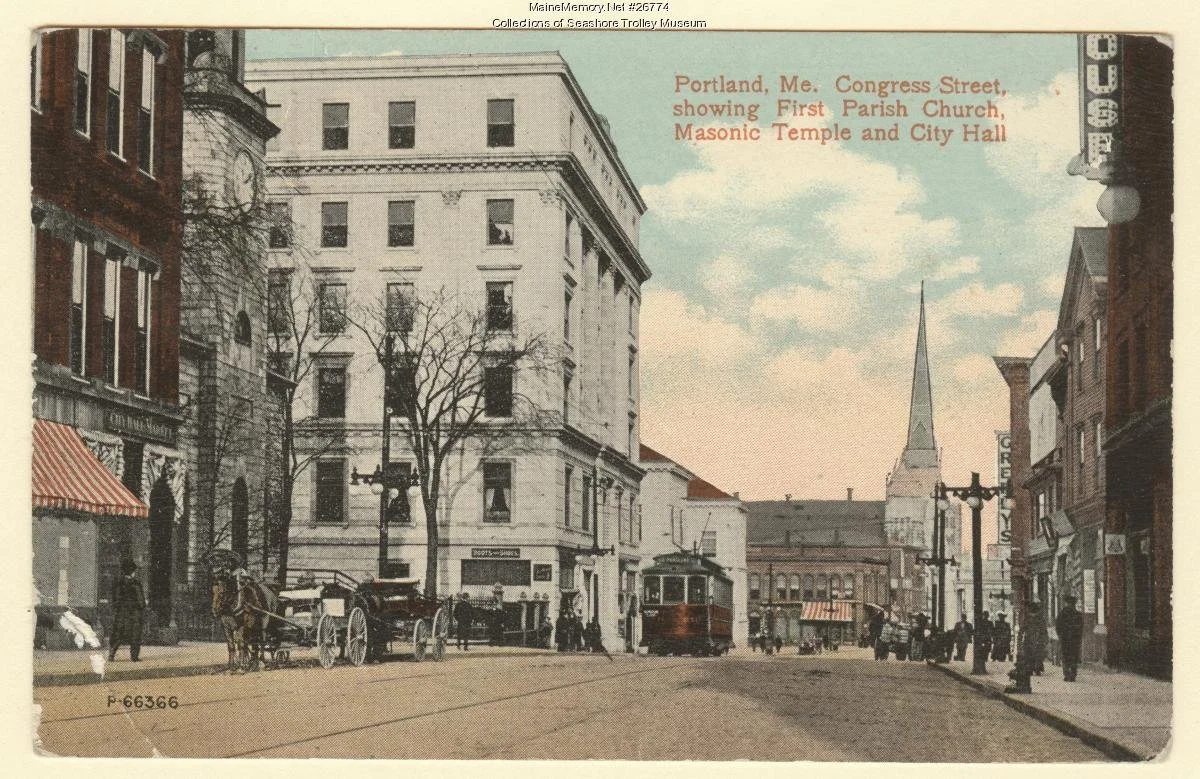
Image Credit: #26774 Maine Memory Network via Seashore Trolley Museum
Citizens who attended were gaining surprising access to these near-sacred fraternal spaces, since the Masons were a ‘secret society’ with unfamiliar iconography, costumes stored in numbered lockers in the Armory, and ceremonies known only to initiates. Ostensibly a democratic and non-sectarian order, the Masons were associated with urban political and monied elites. In 1911 active Masons in Portland included Maine’s governor, secretary of state, both US Senators, all three House representatives, the state’s Supreme Court Chief Justice, Portland’s mayor, and its two richest men. As the press announcement shows, local workmen were proud to announce their association with the building project and presumably bring their families to the fair.
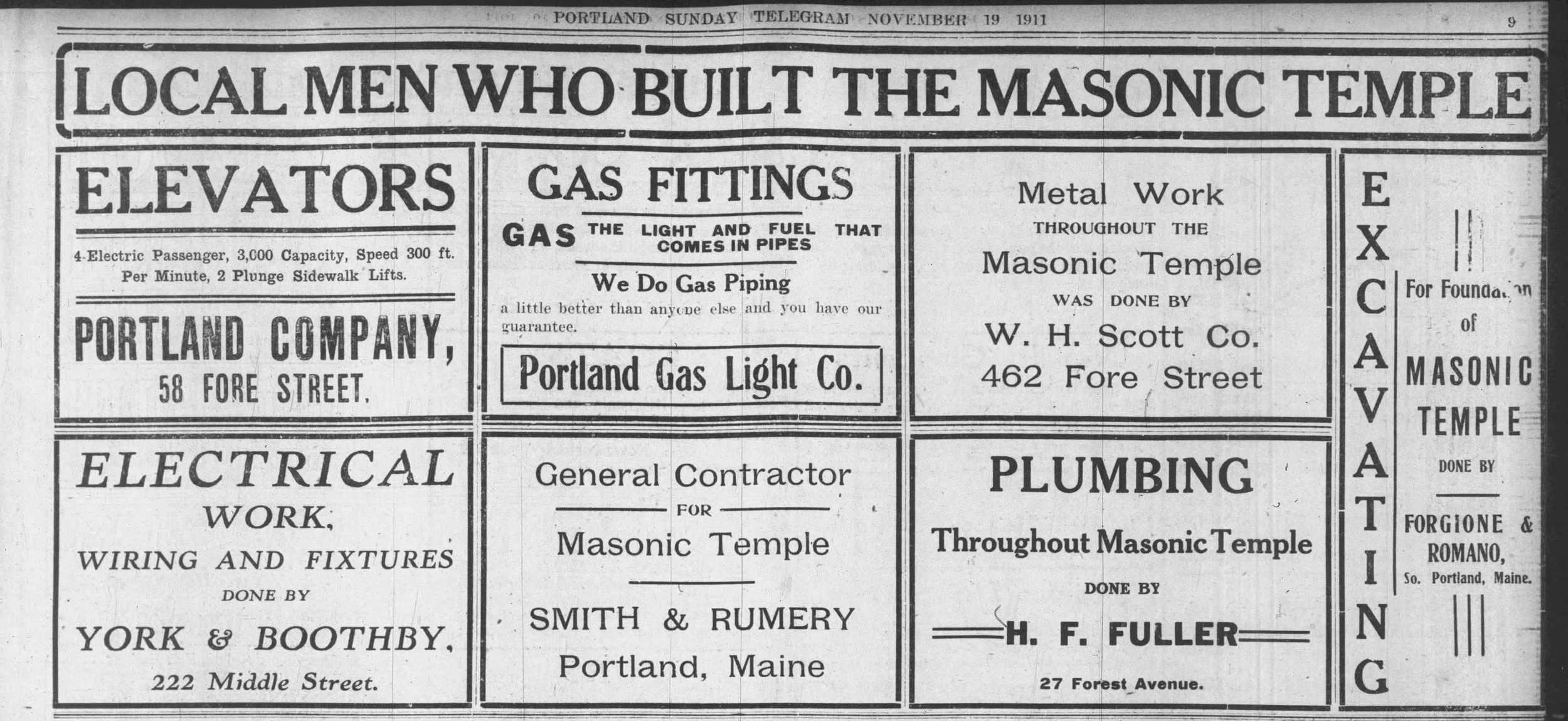
Image Credit: Portland Sunday Telegram, Nov. 19, 1911, PG 9
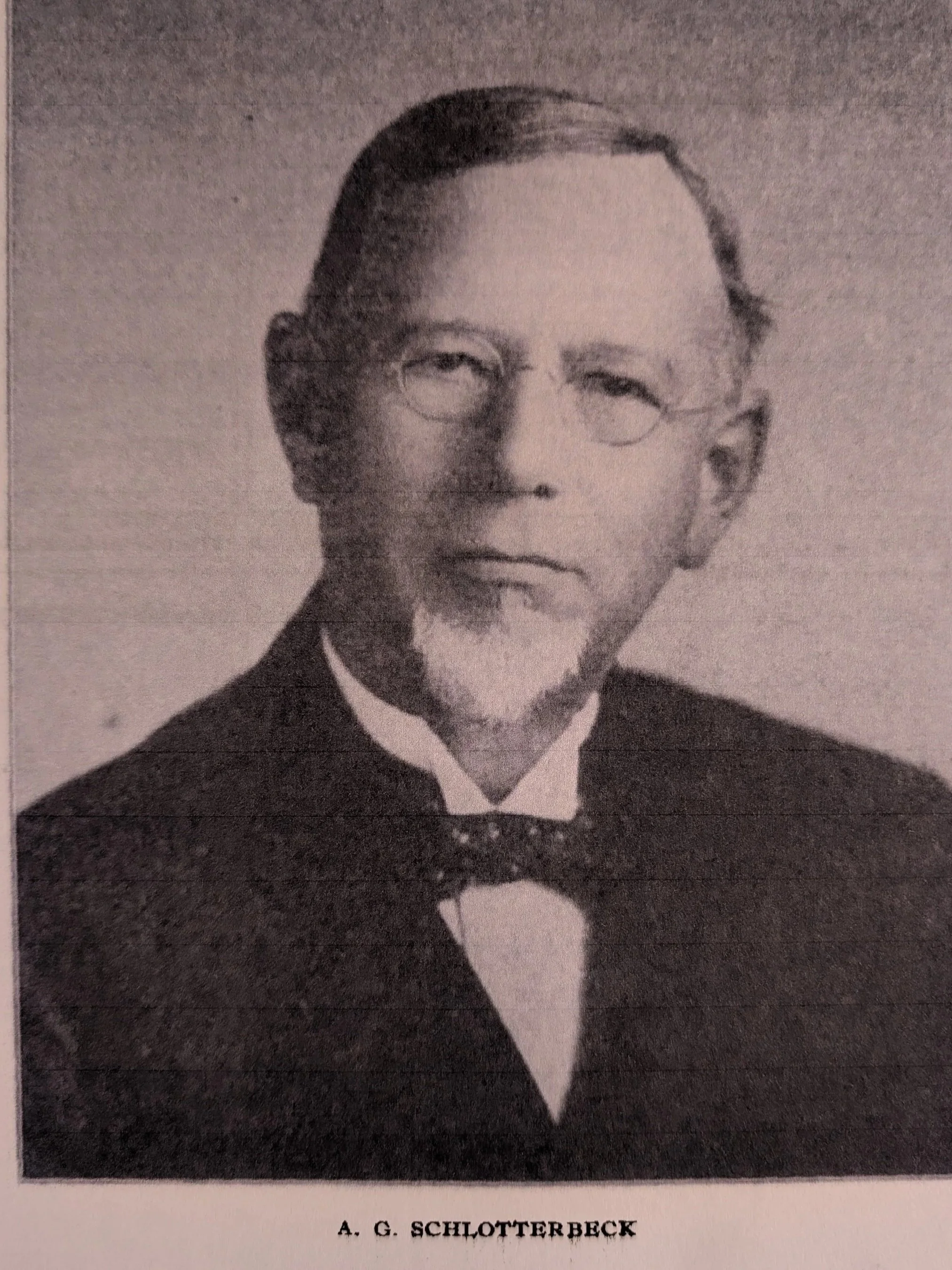
Image Credit: Journal of American Pharmaceutical Association, April 1917
Public visibility and private mystery also characterized the man universally considered father of the Temple, Augustus G. Schlotterbeck. A son of German immigrants and trained as an apothecary, young Schlotterbeck arrived in Portland shortly after the Great Fire and opened a pharmacy on Congress Street. Twenty years later, he and brother-in-law Charles Foss founded the patent medicine company Schlotterbeck and Foss, now purveyors of specialty sauces and food flavorings. In 1909 Schlotterbeck chaired the committee that oversaw construction of the building and incidentally placed his portrait in the great hall. After his death a decade later, a widely reported probate case revealed that Schlotterbeck had left two-thirds of his half-million-dollar estate to the Masons, after disinheriting his estranged adopted daughter, which retired the mortgage on the Temple.
The Masonic Temple originally included office space in front, in addition to the grand and more private spaces used by the Masons in the rear. It was in one of these offices where Greater Portland Landmarks was incorporated in July, 1964. Today the Congress Street half of the building is in private ownership and contains commercial office and retail space. Masonic spaces are still used by local lodges, and the great common rooms and ceremonial spaces –can be reserved as event space for weddings, graduations, reunions and civic gatherings in Portland.