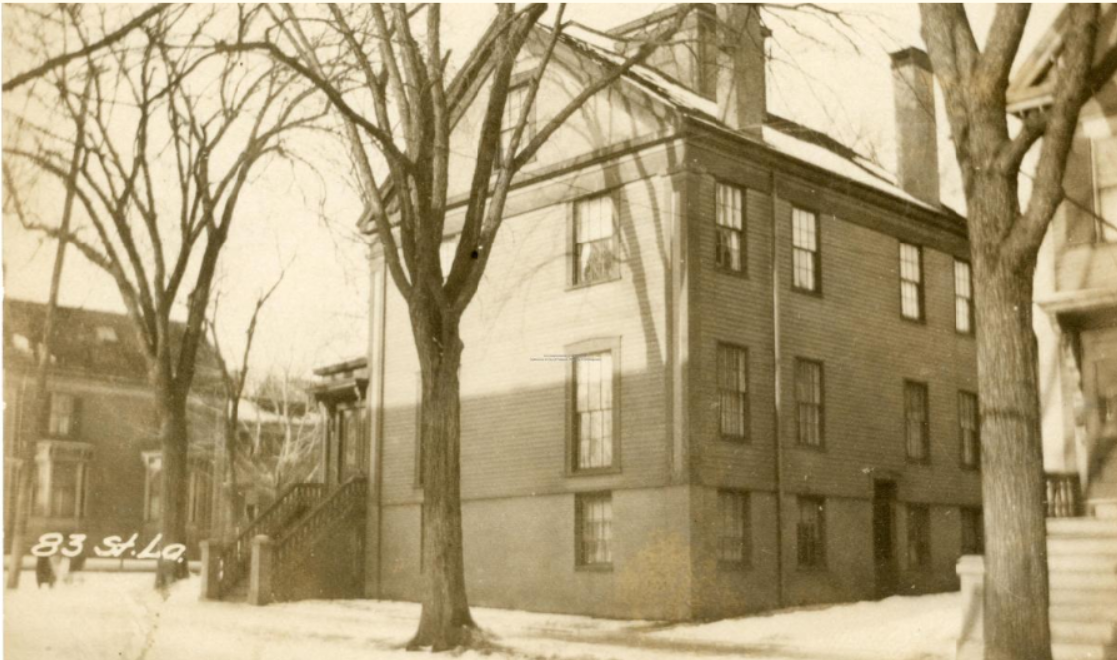
Architect of the Week: Ellen Louise Payson

By Alessa Wylie

Screen Shot 2020-05-26 at 1.18.28 PM.png

Ellen Louise Payson (1894-1977) known to family, friends and clients as Louise, is considered a pioneer of American landscape architecture. She gained widespread recognition during the 1920s and '30s as an accomplished landscape architect “for the soundness with which she applies to her gardens the principles of landscaping and architecture … and for the sympathetic feeling for varying material which her work always shows.”

Louise Payson was born in Portland, Maine, the daughter of Edgar Robinson Payson and Harriet Estabrook Payson of the prominent Payson family. She was four years old when her mother died of typhoid fever and her father’s sister Jeannette came to live with the family. Aunt Jeannette and her close friend and companion, Annie Oakes Huntington would play an important role in Louise’s life. Aunt Jeannette loved to travel and Annie Oakes Huntington was a well-known botany expert whose 1902 book Studies of Trees in Winter was so successful it was reprinted three times and used as a textbook at the Yale School of Forestry. These two women greatly influenced Louise throughout the years.

Cover of a 1920s brochure for the Lowthorpe School

Cover of a 1920s brochure for the Lowthorpe School

Payson attended the Lowthrope School of Landscape Architecture, Gardening and Horticulture for Women in Groton, Massachusetts. It was the only landscape architecture program available for women in the United States at the time. Students studied architecture and landscape history, drawing, drafting, surveying and site engineering, principles of construction, along with plant material, forestry, botany, and entomology. The school was located on a 17-acre estate that included a fruit orchard, flower and vegetable gardens, meadow and pastureland and a small arboretum of trees and shrubs that provided a place for plenty of practical, hands-on experience.

Louise Payson graduated from the Lowthrope School in 1916 and went to work for landscape architect Ellen Shipman. Shipman had started her business in New Hampshire in 1912 and eventually expanded to open an office in New York City. She only employed women and provided professional opportunities that allowed many of them to set up successful practices of their own like Louise Payson did in 1927. Shipman wrote “Louise Payson came fresh from Lowthorpe, so young and full of ability, and after twelve years with me, started out brilliantly for herself.”

In the beginning of Louise’s career, she created landscape plans for family members in Portland’s Western Prom neighborhood and in Falmouth Foreside. The earliest known surviving drawing is a design for her father at 83 Carroll Street in 1917. The house was a semi-detached residence designed by local architect George Burnham (the subject of last week’s architect spotlight.) The Payson’s lived in the eastern half on the corner of Carroll and Chadwick Streets. To create the gardens Louise used a variety of small-scale shrubbery showing not only her knowledge of plants but also her understanding of the size of the yard.

Planting plan for E.R. Payson, Portland

Planting plan for E.R. Payson, Portland

That same year Louise also designed a 33 by 70-foot perennial garden for her Uncle Charles in Falmouth Foreside choosing plants that she would continue to use throughout her career. Additionally, many of Louise’s drawings include maintenance information. “Very important for the success of the garden is the careful staking. The plants much not be tied to the stakes, but the stakes placed around the plant or group of plants of the same variety, and raffia tied to the stakes leaving the plants free in the center.”

Enclosed perennial garden for Charles Payson, Falmouth Foreside

Enclosed perennial garden for Charles Payson, Falmouth Foreside

Cumberland Foreside heart-shaped garden

Cumberland Foreside heart-shaped garden

Louise Payson left Ellen Shipman’s office in 1927 and started her own practice in New York City, where she followed Shipman’s practice of hiring only women. She maintained her office from 1927 through 1941 and completed over seventy commissions, designing the grounds of several large estates in Connecticut and New York, including the estate of her cousin Charles S. Payson. Her smaller projects included a hidden, heart-shaped garden for her cousin in Cumberland Foreside as well as other gardens in New England, New York, New Jersey, Pennsylvania and as far west as Missouri.

Although there was a great range in the scale of her projects, there was a consistency and symmetry in her designs that also reflected her extensive knowledge of plant material and her engineering ability. In addition, she designed fences, buildings, and trellises with a sensitivity to the architectural style of the residence.

In 1931 Payson joined the American Society of Landscape Architects (ASLA) and her design for the John P. Kane Estate in Locust Valley, NY was included in the 1934 Yearbook of Members Work and several other of her projects from this period  were published in House Beautiful, House and Garden and Home and Field.

Judith B. Oliver (seated) in her Ogunquit garden designed by Lousie Payson

Judith B. Oliver (seated) in her Ogunquit garden designed by Lousie Payson

House and Garden also selected a Louise Payson-designed landscape in their 1933 “Little House” competition. The idea was to inspire readers of the possibilities for their own dream house with an imagined site that was a corner suburban lot, 60 by 150 feet. Architects designed a small Georgian house with French influences and Louise’s design divided the lot into five areas to utilize all the available space.

Despite the Great Depression, Louise continued to receive commissions throughout the Northeast. They varied tremendously in scale and type from large estates to roof-top gardens in Manhattan. She closed her office in June 1941 and as U.S. involvement in World War II intensified, she worked at Eastern Aircraft in Pennsylvania to support the war effort. In 1944 she sailed to Portugal to volunteer in Lisbon as a relief worker.

When she returned 17 months later, she didn’t open an office but she did continue to design gardens mostly for family and friends. She also didn’t charge them, instead she asked that a donation be made to one of her favorite organizations including the National Society of Colonial Dames of America in the State of Maine, The Victoria Society of Maine, The Longfellow Garden Club, and the Maine Audubon Society.

In 1951 she purchased a farm in Windham and planted extensive gardens, dividing her time between the farm and her Portland home. She remained active in various organizations and traveled extensively. She died unexpectedly in 1977 at the age of 82 while on a Mediterranean cruise.

As a woman practicing in what historically had been a male-dominated field, Louise Payson helped redefine the character and qualities that established the distinctiveness of American gardens and estates during what is know as the “Golden Era of American Landscape Architecture.”

Shortly after her death family members discovered a sizable collection of original plans, drawings and other works stored in a large chest at a family home in Portland and in 1999 donated the collection to the University of Maine.

The collection contains about 525 architectural drawings including landscape architecture plans, contour drawings, planting diagrams and blueprints. The index to the collection can be found at https://digitalcommons.library.umaine.edu/findingaids/299. The Special Collections, Raymond H. Fogler Library, University of Maine, "Payson (Ellen Louise) Collection of Landscape Architectural Drawings, 1913-1941" (2016). Finding Aids. Number 299.

Historic Preservation Today

Founded in 1964, Landmarks is now more than 55 years old. Portland’s Historic Preservation Ordinance, passed in 1990, is now thirty years old. While not every community in greater Portland has a preservation ordinance, most recognize the importance of preservation and the role older neighborhoods and buildings play in strengthening their community.

The virtues of saving and reusing older
places are now much more broadly recognized across
America. Nor are we voices in the wilderness anymore:
time and again, preservation has proven an invaluable
tool in spurring economic growth, meeting critical
social needs, and bringing communities together.
— The National Trust for Historic Preservation

Although the current pandemic may slow growth, as happened in the 2007 economic recession, it is likely that greater Portland will continue to grow. It is an attractive choice for remote workers that can now choose to live anywhere. Below are several challenges that Landmarks is working to address in our education and advocacy work.

Modernism is now historic.

Portland Motor Sales.jpg

While there is a growing appreciation for mid-century buildings and landscapes, they are sometimes criticized as being soulless or outright ugly. Take Brutalism, an architectural style that emerged in the 1950s featuring poured concrete, bold geometric shapes, and stark landscape settings. The name, Brutalism, does not exactly evoke positive feelings, but for some preservationists, the uniqueness of the style and an appreciation of how good examples of the style contribute to a sense of place and reflect its period in history, mean it is beloved by some. (Confession - I am one of those people. Many of my recent travels involve dragging reluctant friends and family to see Brutalist buildings before they are demolished or altered. I may be one of the few people in Portland that admits to liking the pump station at Fore and India Street).

Modernist places may not be loved or may be coming to the end of their life cycle, like the Maine Medical Center Employee Parking Garage on Congress Street. They may also have been built on the site of a beloved historic building that was demolished to make way for the new. This provides a dilemma. Should we preserve places that we once fought against in the early days of the preservation movement? History sometimes represents events, actions, and outcomes we would like to forget. We should always be asking, “Are we preserving the full history of a place, or only the parts that form our preferred image of history?” For preservation, this is a constant challenge.

Preserving a broad historic narrative.

Current preservation approaches, including the National Register of Historic Places, locally designated districts and landmarks, and historic site interpretation, have not fully represented the stories of all Americans. Our preservation practice needs to be more inclusive in the identification, understanding, and protection of historic places. Changes in technology, social media and new research offer the opportunity to rethink how we focus our work and how we share these stories with our community.

In 2017 the National Trust for Historic Preservation outlined a new vision for the future of historic preservation and set out three key principles:

  • Honor the full diversity of the ever-evolving American story.

  • Nurture more equitable, healthy, resilient, vibrant, sustainable communities.

  • Collaborate with new and existing partners.

Landmarks has been evaluating its current programs and advocacy work as part of its strategic planning process and these principles play an important role in our assessment and recommendation for the organization’s future.

Expand preservation trades training.

Historic Preservation is more labor intensive than new building construction. Jobs like these can't be outsourced or automated, each project is unique. The time it can take to get on many preservation contractors' schedules illustrates the demand for these professionals (We know firsthand, we have a lot of work to do on our historic building too!). The demand for people with traditional building skills is growing, as the artisans who practiced these trades are aging out. It will take a cooperative effort between preservation organizations, educational institutions, and tradespeople to help develop programs that teach skills leading to well-paying jobs and encourage young people to seek out a future in historic preservation. The Maine School of Masonry is one such program already in place in Maine.

Sustainability and Adaptation

We know we say it often, the greenest building is the one already built. Historic Preservation is sustainable and will play a role in helping our communities reach sustainability goals. In 2011 we published, The Energy Efficient Old House: A Workbook for Homeowners, to help guide homeowners in ways to reduce their historic home’s energy consumption. However, reducing our carbon footprint is only part of the solution. We should be thinking about the long term future of our communities and demand better buildings that aren’t just designed for the next 40-50 years, but will be around for the next 100-200 years - and hopefully future landmarks!

The stringent application of the National Parks Services Standards for Rehabilitation, the de facto preservation policy governing preservation locally as well as at the state and national level, may be challenging when adapting a building threatened by rising tides or extreme storm events. Recurrent flooding and the impacts of more frequent and intense storms can have a serious impact on historic resources, and we must be prepared to help owners make their buildings more resilient to flooding and high winds. That may mean altering a building in ways discouraged by the standards. Beyond that, we need to rethink what it means to “save” places and sites that are important to our cultural heritage, because saving them physically may not be feasible.

This spring the staff at Landmarks are busy even though we are apart. We are planning our Un-Gala, investigating ways to give safe walking tours, and deciding how we can reopen the Observatory to visitors. On the advocacy side, we are ‘attending’ virtual planning board and preservation board meetings and planning how to host our first remote internships! We miss being together in person and we miss seeing you at our events, but we are working hard each day to ensure that greater Portland’s history and sense of place is protected and celebrated.

Julie Larry

Architect of the Week: George Burnham

By Alessa Wylie

Perez Burham House

Perez Burnham House

Somerset Apartments

Somerset Apartments

One of Maine’s most accomplished architects of the early 20th century was George Burnham (1875 – 1931) of Portland. Born in Portland, he received his professional training from Massachusetts Institute of Technology. He briefly worked in Boston before moving to New York City to become a partner in the firm of Tryon, Brown & Burnham. He designed a number of houses on Long Island before developing typhoid and pneumonia and moving back to Portland in 1902. Back in Portland, he designed a house for his father Perez Burnham on the Western Prom, and the Somerset Apartments on Congress Street for Henry Rines.

03 Freeport Library.jpg

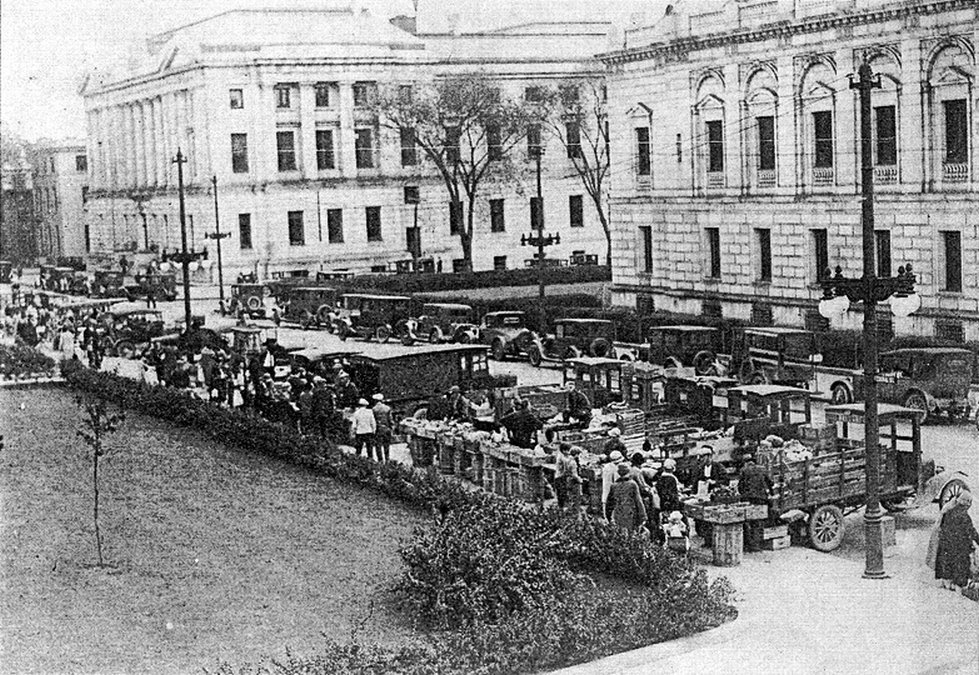
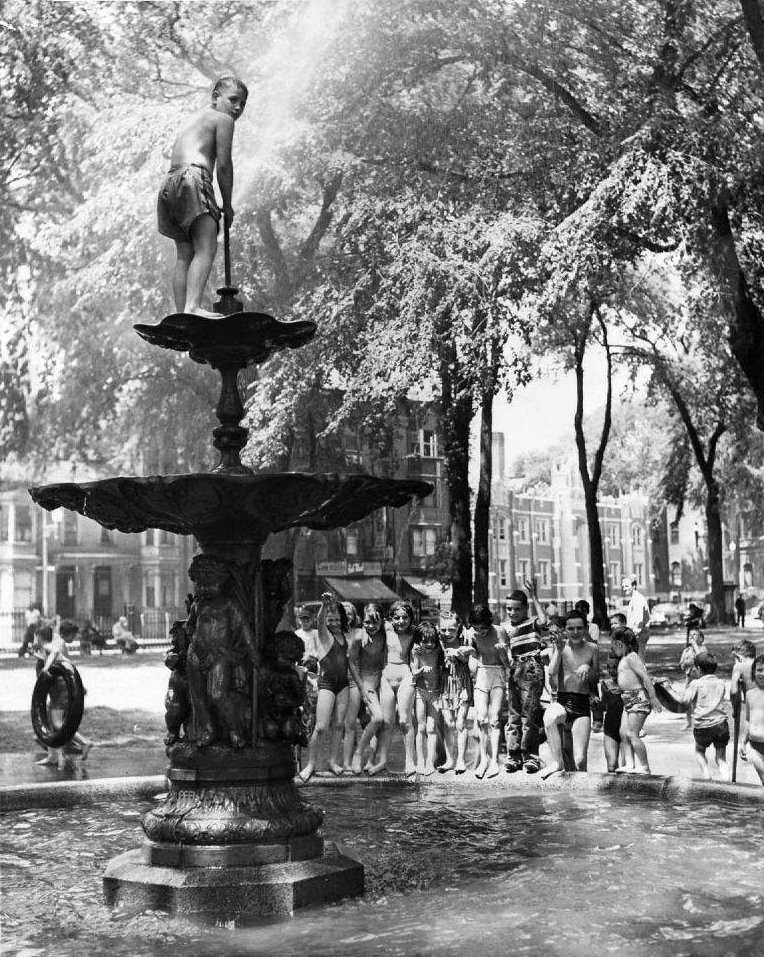
In 1904 Burnham beat out eight other architects from Portland and Massachusetts, including John Calvin Stevens, Frederick Tompson, and Francis Fassett, to win the competition to design the Cumberland County Courthouse. The deciding factor for him to be chosen over these other established architects seems to have been the fact that his design achieved the right balance of architectural grandeur at a reasonable cost. According to newspaper accounts at the time, other designs were favored but would have been more expensive. The courthouse construction kept Burnham busy from 1905 until its completion in 1909. He did, however, work on smaller projects including design of the B.H. Bartol Library in Freeport in 1905. In 1910 he designed the Stanley Pullen Memorial Horse Trough just down from the Courthouse on Federal Street.
Cumberland County Courthouse

Cumberland County Courthouse

Pullen Fountain

Pullen Fountain

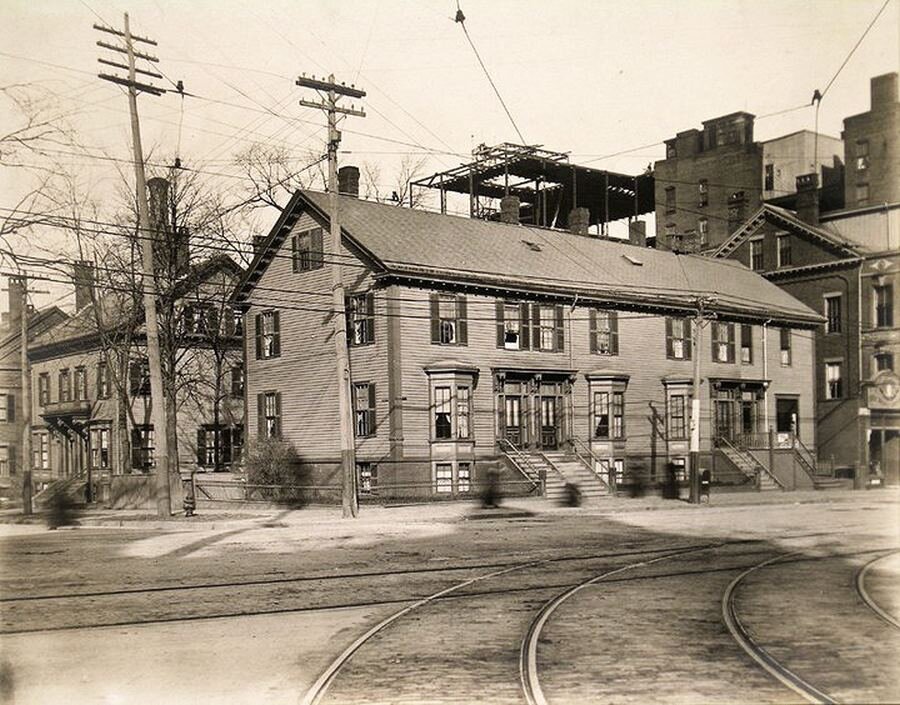
In 1909 Burnham took on E. Leander Higgins, a fellow M.I.T. graduate, who became a partner in 1912. Together they designed plans for houses and factories. The houses they designed were large, spacious and comfortably laid out.  In 1912 he built a semi-detached double house at the corner of Carroll and Chadwick Streets, and lived in one of the houses for two years before designing a house and one for his mother next door in Falmouth Foreside.

Carroll Street House

Carroll Street House

In 1913 Burham and Higgins designed two large factories in two quite different settings. The Burnham & Morrill Plant, with its highly visible location, highlighted the more ornamental aspects of the building by contrasting the concrete, brick and glass of the exterior. The building immediately became a local landmark and remains one today.

Burnham & Morrill Factory

Burnham & Morrill Factory

The Portland Shoe Manufacturing Company, on the other hand, was located on Pearl Street in a dense urban setting. The building was tall and narrow following the latest architectural trend of simplicity of design. In both buildings the architects chose to emphasize the building materials used in their structures rather than applied decorations.

Portland Shoe Factory

Portland Shoe Factory

By 1917, Burnham & Higgins was one of the leading architectural firms in Maine designing for individuals and businesses, but when the U.S. entered World War I, George Burnham enrolled in the Army’s Officer’s Candidate School where he thought his engineering skills could be put to good use. While in training in Kentucky he became seriously ill and had to take a medical discharge. By 1919 he retired to his home in Falmouth Foreside. His final work in the 1920s was a remodel of a friend’s house in Yarmouth. In his final years Burnham experienced severe mental depression and took his own life in April, 1931.

George Burnham and his partner, E. Leander Higgins, designed both residential and commercial buildings and created several exceptional examples of early 20th century architecture in the Portland area that remain local landmarks today.

Source: Maine Historic Preservation Commission’s Biographical Dictionary of Architects in Maine.

Greater Portland Landmarks’ Urban Renewal Roots

By Julie Larry

Demolition!

Greater Portland Landmarks emerged as an organization in response to the demolition of Union Station (1888) in August 1961. The train station, beloved by people throughout the community, was immediately replaced by a strip shopping center. Edith Sills, civic leader and wife of the former president of Bowdoin College, gathered concerned citizens in her Vaughan Street living room in 1962 to form an organization to advocate for the preservation of Portland’s historic architecture. Among those present was Deering High School student Earle G. Shettleworth, Jr., who later became the director of the Maine Historic Preservation Commission. In 1964, Greater Portland Landmarks was incorporated, with John Calvin Stevens II (grandson of acclaimed Portland architect John Calvin Stevens) as President. While the loss of the train station was a rallying cry to those who wished to preserve Portland’s identity, it was not the only demolition that caused an outcry.

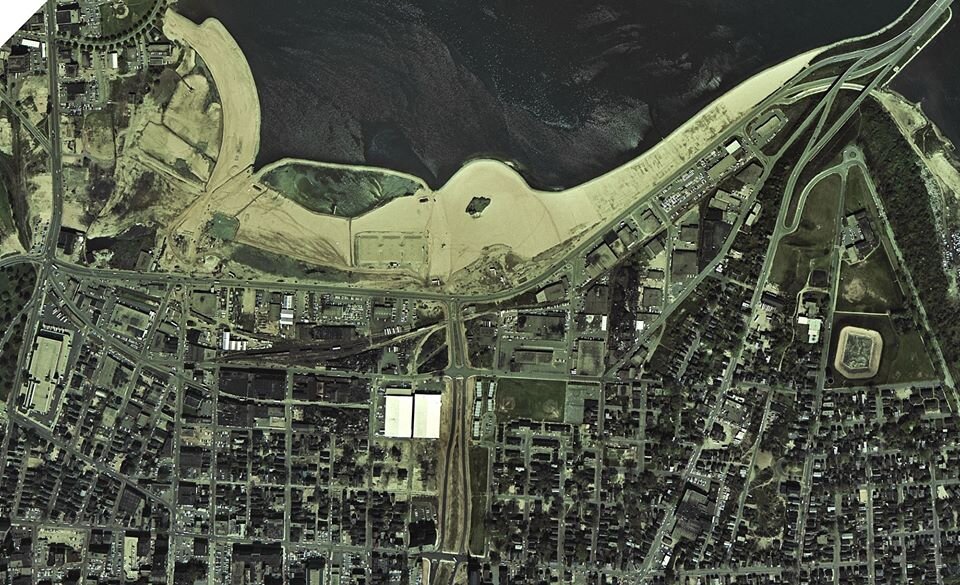
The only remaining building in the former Vine-Deer-Chatham (VDC) neighborhood is the former Curtis Chewing Gum Factory, now HUB furniture.

The only remaining building in the former Vine-Deer-Chatham (VDC) neighborhood is the former Curtis Chewing Gum Factory, now HUB furniture.

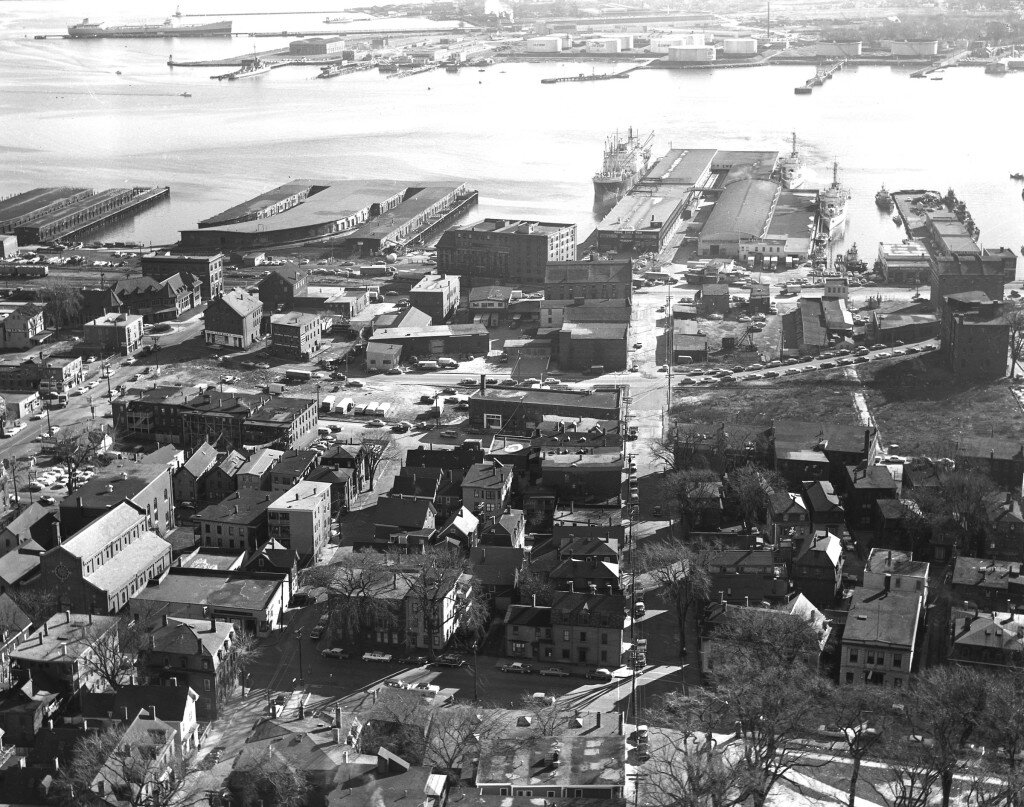
1951 saw the creation of the Slum Clearance and Redevelopment Authority in Portland, but city officials had started thinking about “the problem of the central city” much earlier. In a report published by the Portland City Planning Board in 1946, planners struck a patriotic note when they asked, “Will those who sent their sons out to fight a war on foreign shores approach the achievement of a better and more spacious way of living at home, as fearlessly as their sons did abroad?” Today’s India Street neighborhood abutted two other neighborhoods that were slated for clearance and redevelopment in the post-war years: the Vine-Deer-Chatham area (between Middle and Fore Streets, bounded by Franklin and Pearl Streets) and Munjoy South (northeast side of Mountfort Street). Half the population of Vine-Deer-Chatham, like the India Street neighborhood, was Italian, either foreign-born or first generation. Other residents included Russian-born Jews and Armenians. Residents did not take kindly to their neighborhood being called a “slum” and rejected plans for their removal. The neighborhood was popular with immigrant families as there was acceptance for members of minority groups and, as in other neighborhoods, there were no landlord restrictions against large families.

In 1955 this project was the first in Portland’s slum clearance and redevelopment program. The 6-acre parcel displaced 100 families and 25 commercial establishments. The one building exempt from the clearance was the former Curtis & Son Chewing Gum factory on Fore Street. Initially properties were acquired by negotiation rather than condemnation, and relocation assistance was provided to families. After 18 months, the remaining six properties were taken by condemnation. By 1961, Fore Street was realigned to create a larger development parcel to the north and Jordan’s Meats factory occupied the block bounded by Fore, Middle, India, and Franklin Streets.

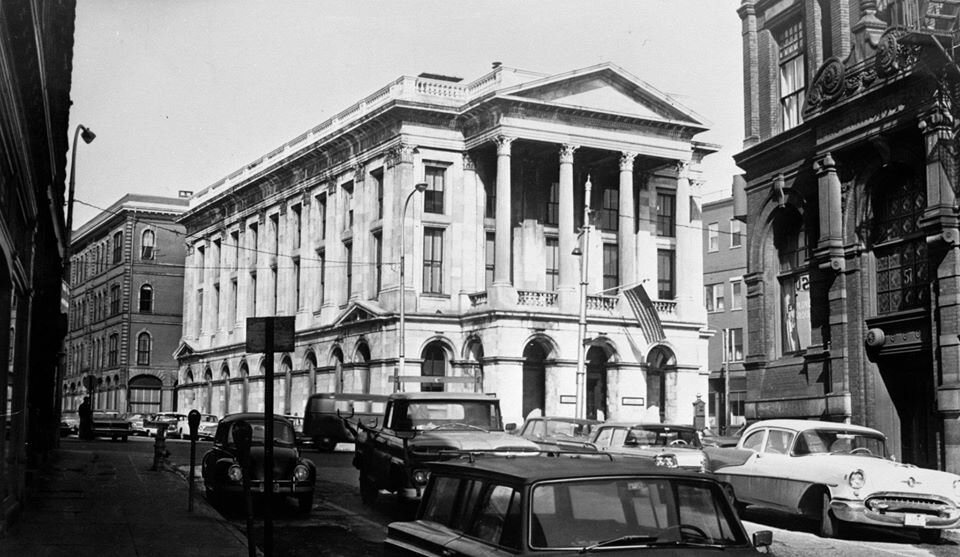
The U.S. Post Office and Courthouse (1868) at the corner of Middle and Exchange Street. Torn down in 1965 for a parking lot, it is now Post Office Park.

The U.S. Post Office and Courthouse (1868) at the corner of Middle and Exchange Street. Torn down in 1965 for a parking lot, it is now Post Office Park.

The Falmouth Hotel (1868), formerly at the corner of Middle Street and Union Street.

The Falmouth Hotel (1868), formerly at the corner of Middle Street and Union Street.

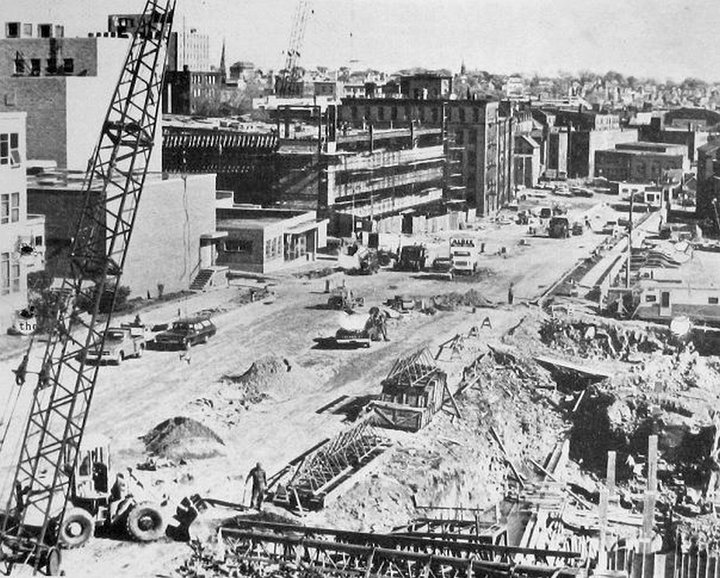
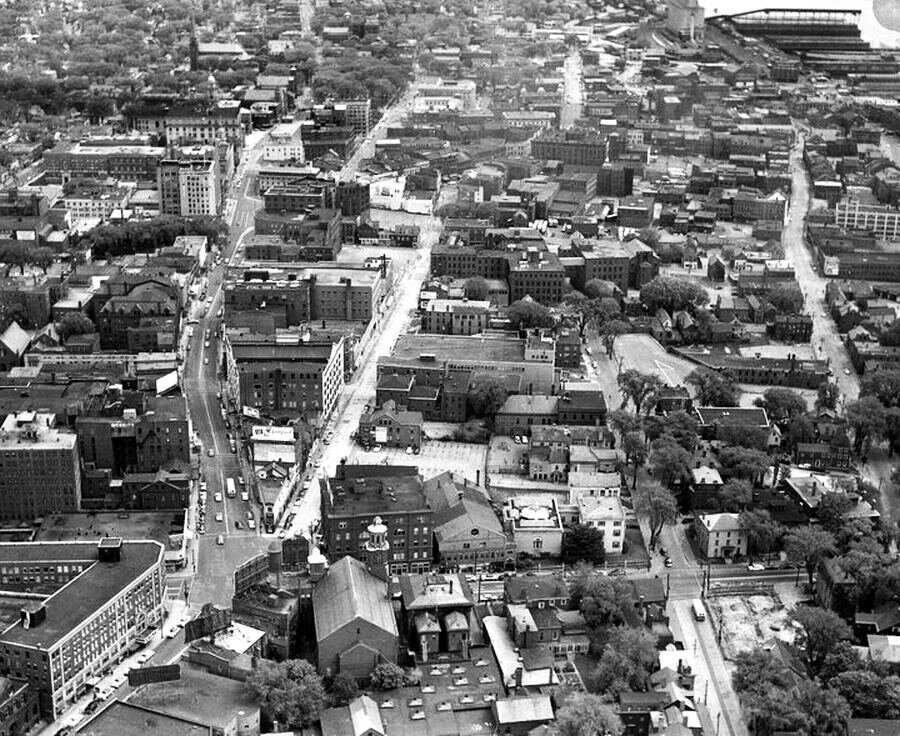
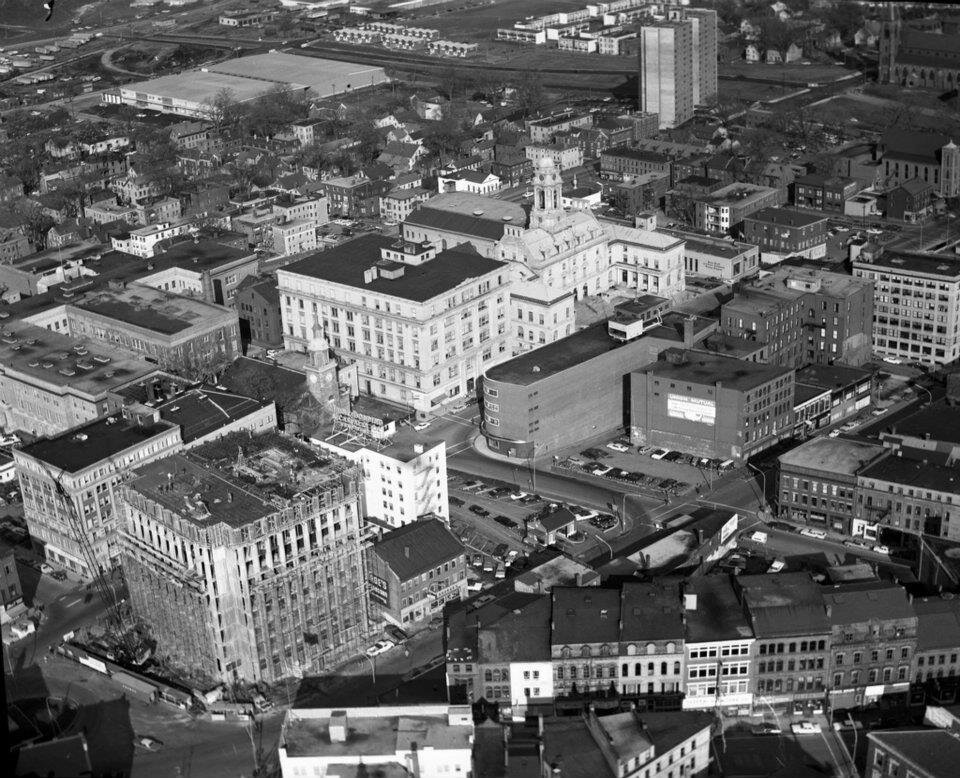
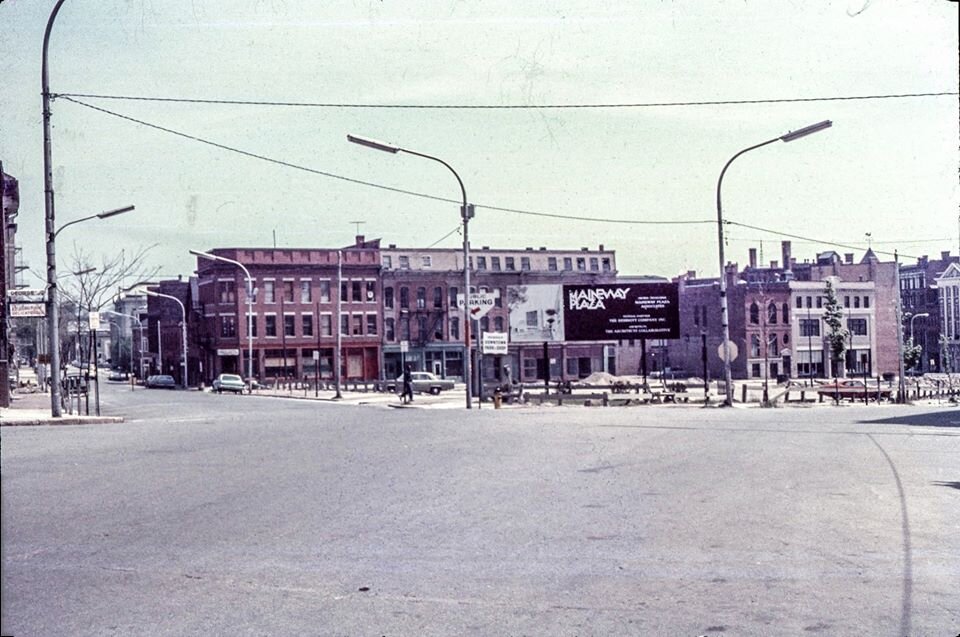
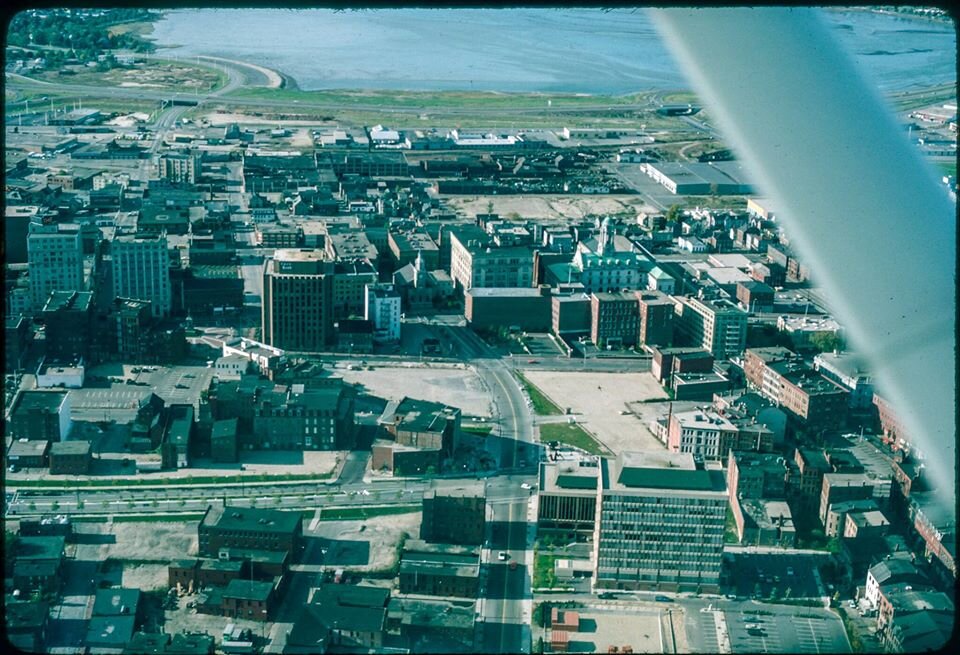
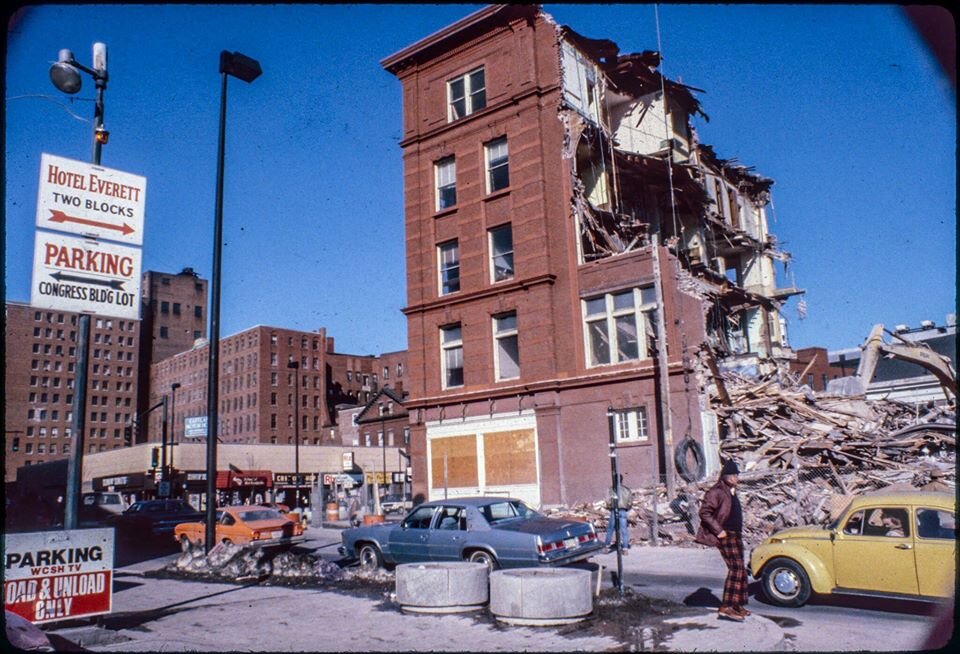
In the 1960s and early 1970s, Urban Renewal was in full swing in Portland. Across the country urban renewal programs encouraged large-scale demolition and reconfiguration of urban areas to accommodate “modern” development, high capacity traffic corridors, and parking lots and garages for the automobile. While some projects in Portland were undertaken by the City’s renewal authority, other demolitions were completed by private owners. Many historic buildings fell to the wrecking ball - the Falmouth Hotel (left), the Old Post Office (left), and the Grand Trunk Railroad Terminal (below) to name a few. Many of the demolition sites were used as parking lots until they could be redeveloped (below).

Cars park on the cleared lot once occupied by the Falmouth Hotel in the early 1970s. Collection of Greater Portland Landmarks

Cars park on the cleared lot once occupied by the Falmouth Hotel in the early 1970s. Collection of Greater Portland Landmarks

FB_Grand Trunk 1956.jpg
Grand Trunk Railroad Station (1903) demolition in 1966.

Grand Trunk Railroad Station (1903) demolition in 1966.

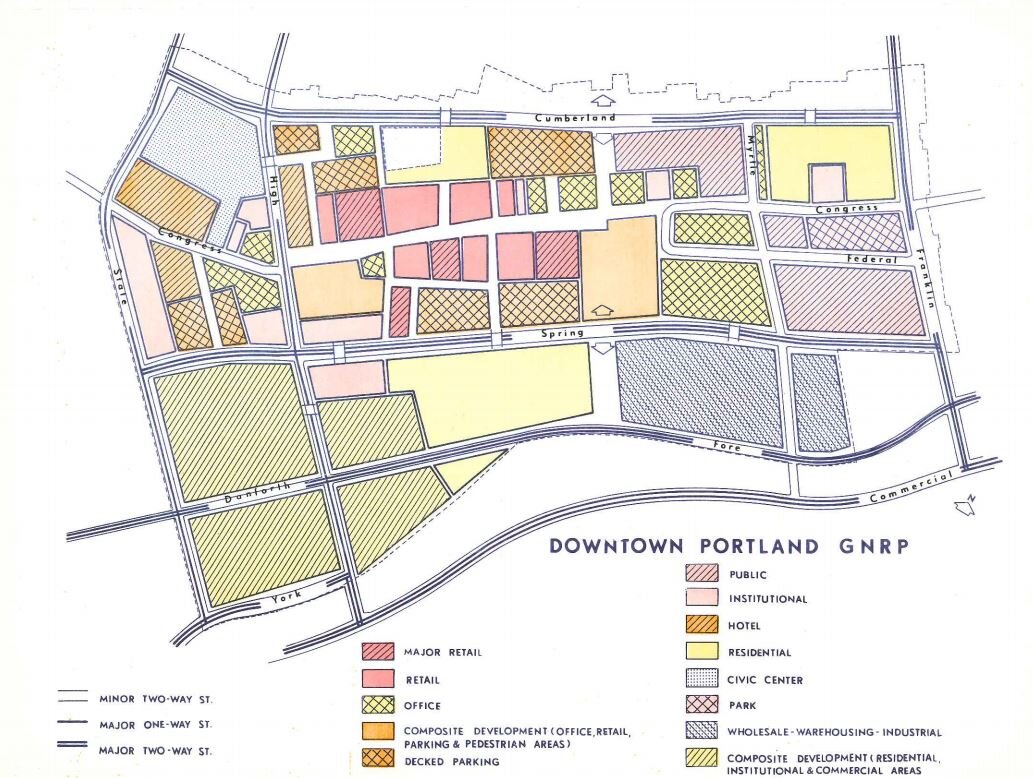
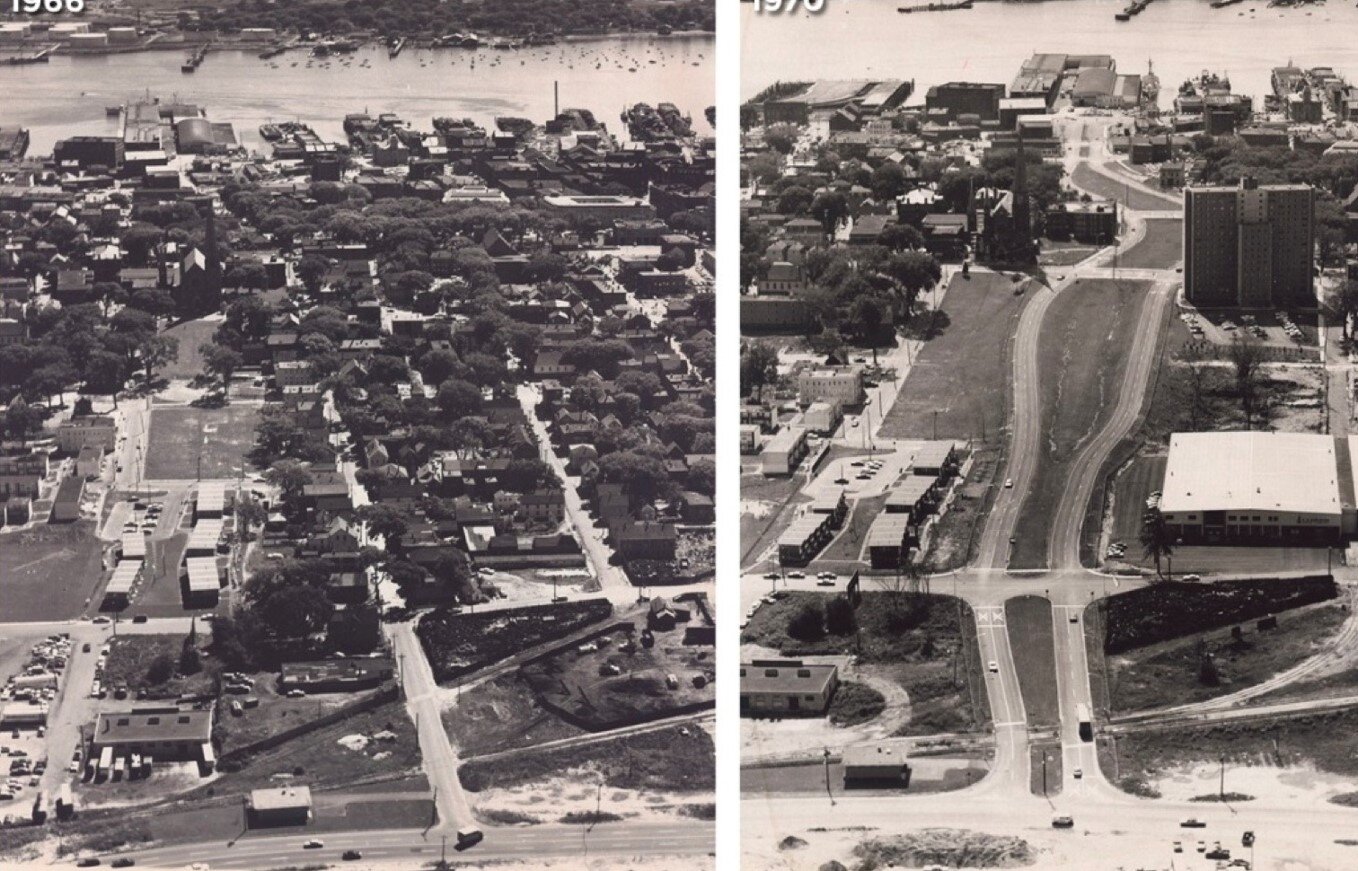
In 1965, on the heels of the publication of his book The Heart of Our Cities, The Urban Crisis: Diagnosis and Cure, architect and planner Victor Gruen was hired by the city leaders to develop a downtown renewal plan, Patterns for Progress, which was published in 1967. The report advocated for clearing numerous areas and redevelopment of the downtown with large office buildings and parking garages as well as a new traffic circulation system with an arterial on Spring Street connecting to a new arterial on Franklin Street. This Urban Renewal plan would have a remarkable impact on the landscape of the city and, along with Union Station’s demolition, was the impetus for the city’s preservation movement.

Collection of Greater Portland Landmarks

Collection of Greater Portland Landmarks

Numerous residential and commercial buildings across the city, particularly along the newly planned arterial corridors, were recommended to be removed. The fledgling Landmarks began surveying the city’s historic architecture in 1965 to identify the buildings that should be saved and then set out to save as many as possible. The passage of the National Historic Preservation Act in 1966 helped Landmarks slow some demolitions. Landmarks sought designation of historic districts on the newly-formed National Register of Historic Places to raise awareness and influence development projects in historic neighborhoods.

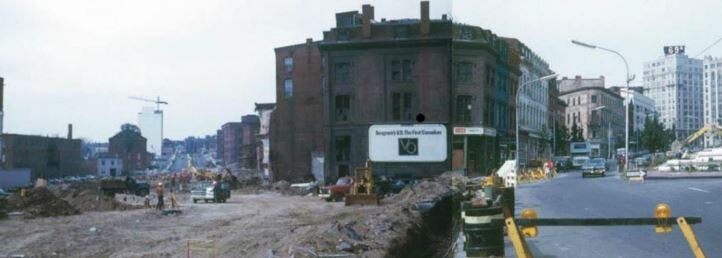
The strategy worked. Many neighborhoods and buildings, including the Old Port, were listed on the National Register of Historic Places in the 1970s. Landmarks saved the Park Street Row and several blocks of historic buildings from destruction on the west end of the city. The city had to stop the Spring Street arterial at the corner of High and Spring Streets because the newly-designated Spring Street Historic District would be adversely impacted by the federally-funded transportation project. Despite theses successes, swaths of buildings were cleared to make way for the Franklin Street and Spring Street arterials.

Spring Street Arterial

The Spring Street Arterial is a half-mile long stretch of highway in the middle of the City. Historically Spring Street did not extend to Union Street as it does today. The arterial construction necessitated the removal of numerous historic resources. Spring Street was extended from Center to Union, and Middle Street was discontinued between Monument Square and Temple Street. Spring Street’s expansion eastward to Franklin Arterial was stopped by preservationists and allies where the intersection of Union and Temple Streets was realigned. Landmarks played an active role in halting the arterial’s expansion in the Old Port and westward to State Street.

Franklin Arterial

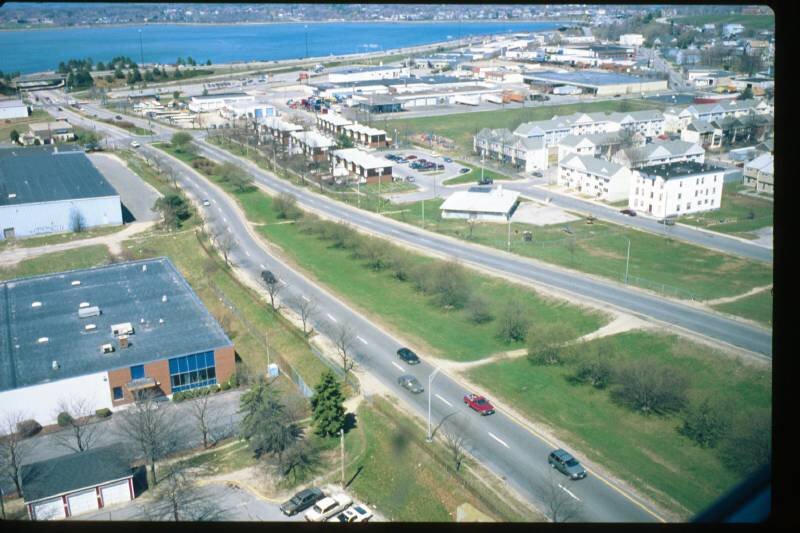
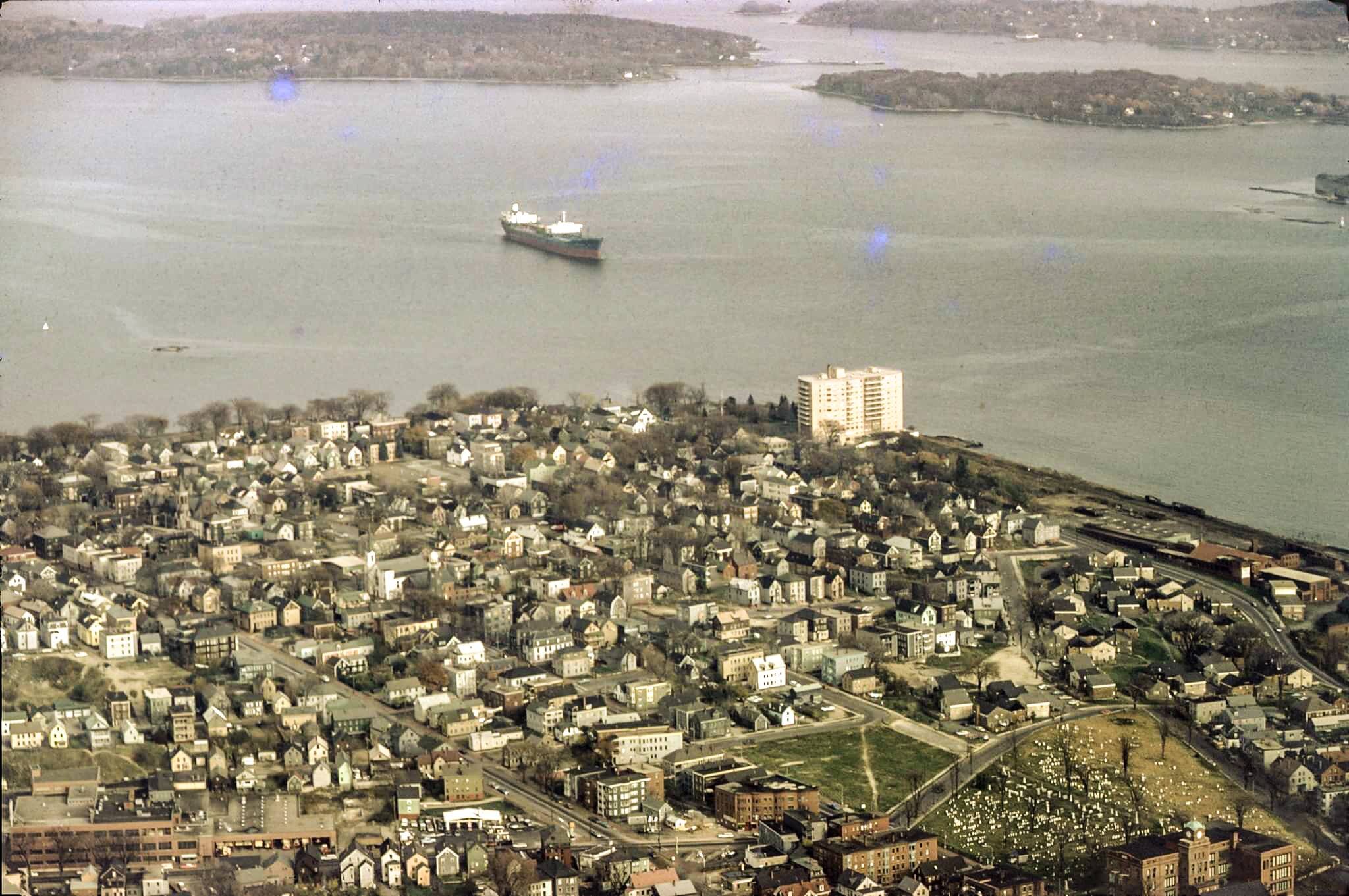
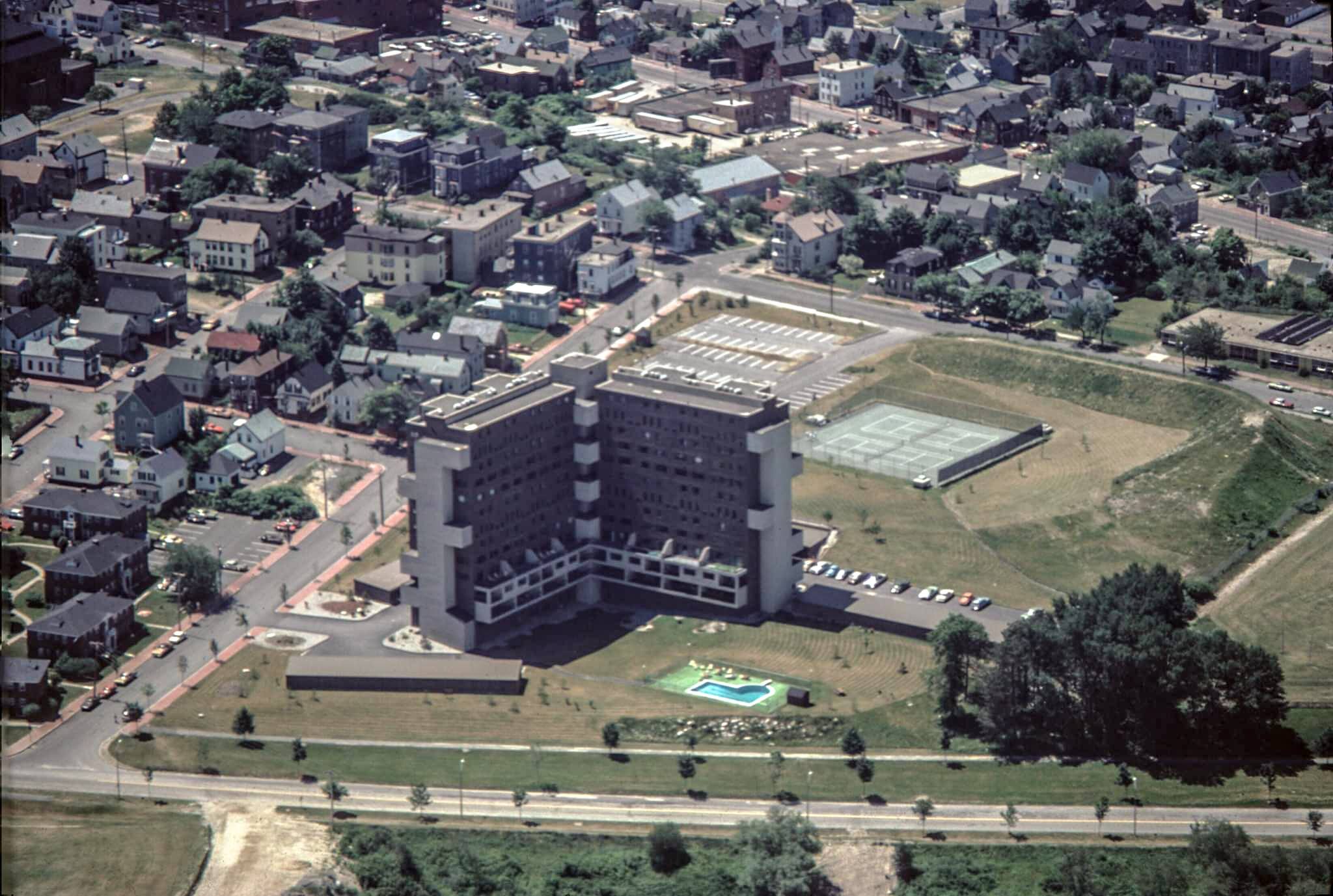
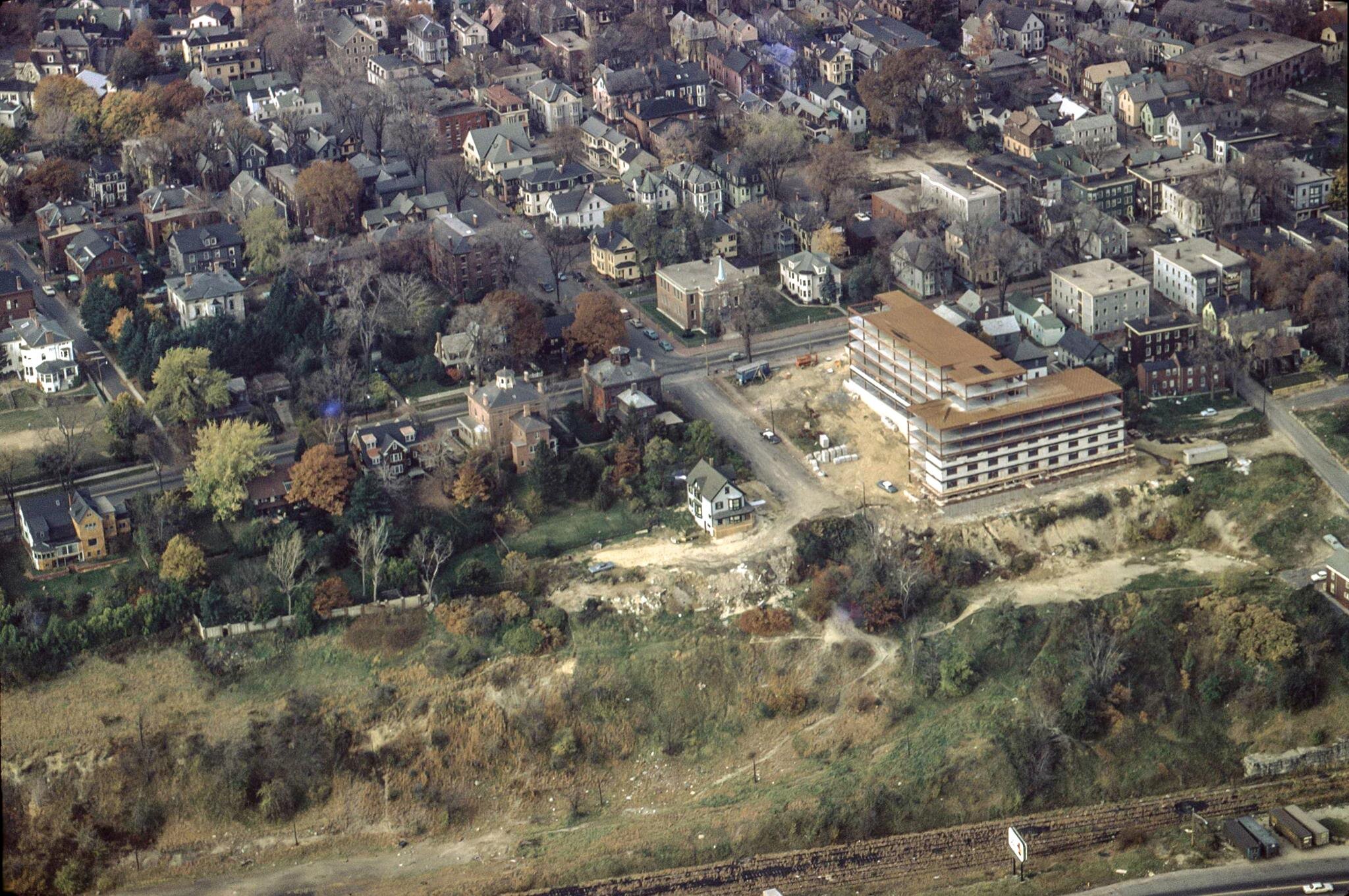
Several of the urban renewal projects disproportionally affected immigrant and minority residents, fragmenting their tight knit communities. This was particularly true with the Franklin Arterial. Franklin Street began in the 18th century as Essex Street, running from Back (now Congress) Street to Tyng’s Wharf at Fore Street. It was later extended to the new Commercial Street and Back Cove when those areas were filled in the 19th century. In the early 20th century, the neighborhoods around Franklin became a dense, mixed-use neighborhood of Jewish and Italian immigrants. In 1958, Portland's Slum Clearance and Redevelopment Administration demolished the mixed‐use area between Lancaster, Pearl, Somerset, and Franklin Streets in a phase of "slum clearance” making way for the “Bayside West” project. The area demolished included 44 housing units, at least 31 households, and was home to more than 85 residents. Across Franklin Street another 54 units were razed for the "Bayside Park" urban renewal project. This area, now called "Kennedy Park,” had through streets that were truncated in an attempt to limit access to outside traffic. The razing of the old Franklin Street began in 1967. 100 structures were demolished and an unknown number of families re‐located. The prominent 16- story residential building beside the arterial is Franklin Tower, designed by John Leasure and built in 1969.

Lincoln Park

Lincoln Park is Portland's oldest public park. It was designed by Portland's civil engineer Charles Goodell and was strategically planned as a protective fire-break between the commercial downtown and residential east end in reaction to the Great Fire of 1866. Lincoln Park served as the green space for a densely populated neighborhood at the base of Munjoy Hill and a place of respite for downtown workers. The construction of Franklin Arterial appropriated the eastern third of the park. Bounded by Congress, Pearl, Federal, and Franklin Streets, the park was placed on the National Register of Historic Places in 1989 for its significance in landscape architecture. It is also recognized as a local Portland Historic Landscape District.

“The Golden Triangle” - Middle Street

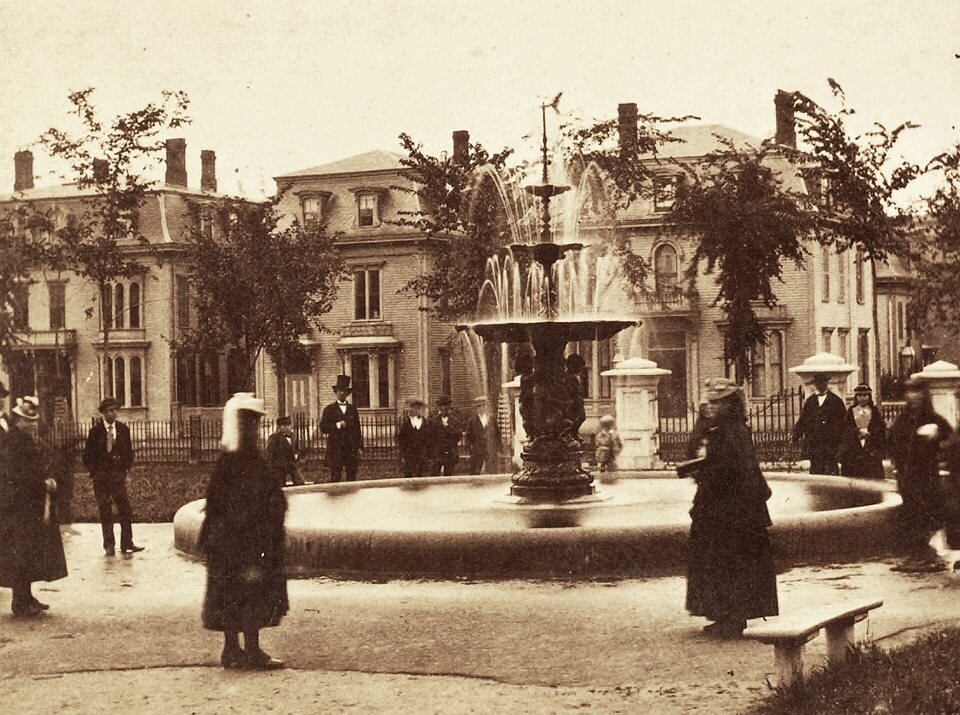
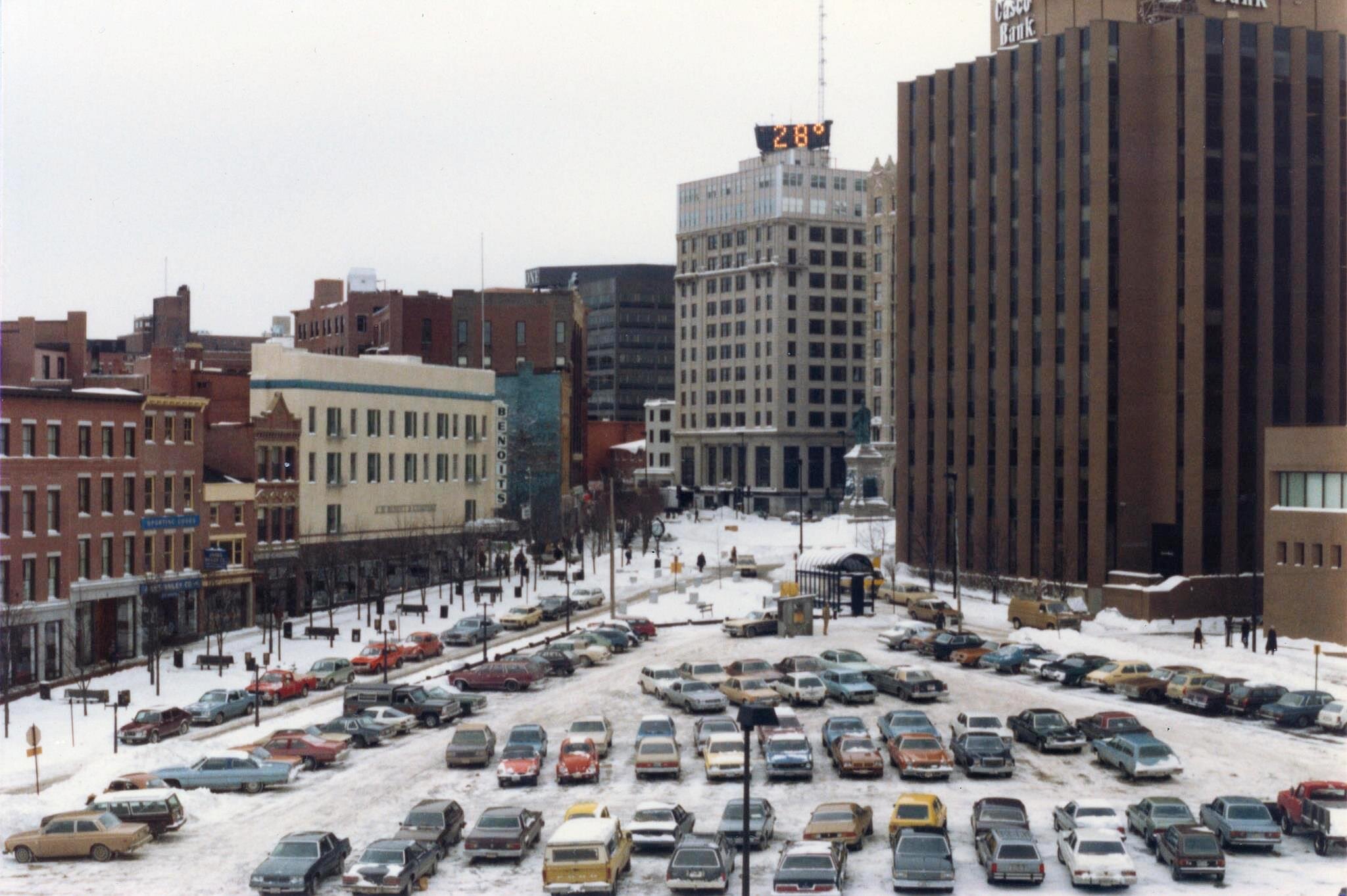
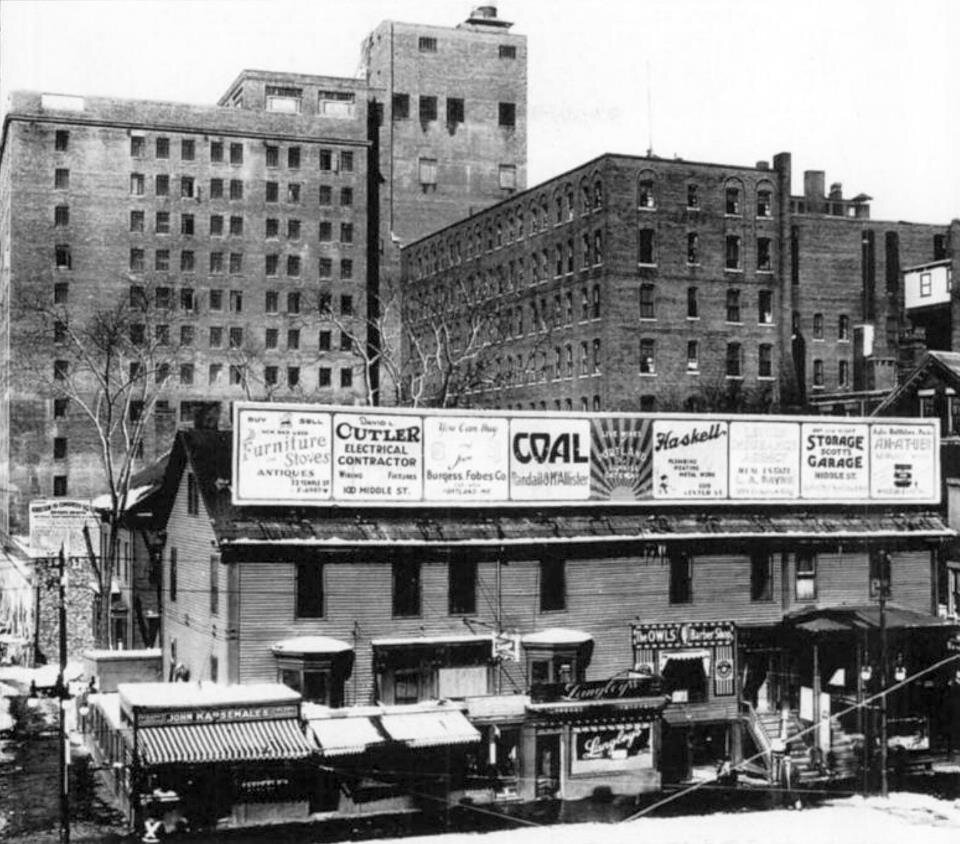
In 1970, the area known as the Golden Triangle between Middle, Temple and Federal Streets was cleared for redevelopment. While plans for a new library or park were considered, the lot at a critical connection between the Downtown and Old Port was used for more than a decade as a parking lot for 160 cars. In 1982 the city put out a request for development proposals and in 1984, One City Center was constructed.

After some success at stopping the demolition of buildings in the West End and Old Port for the extension of the Spring Street Arterial westward to State Street and eastward to Franklin Arterial, in 1975 Landmarks began to focus its political energy on establishing a local historic preservation ordinance. An early effort failed to gain approval in 1978, but the battle continued until the City Council passed the ordinance in 1990.

Congress Square

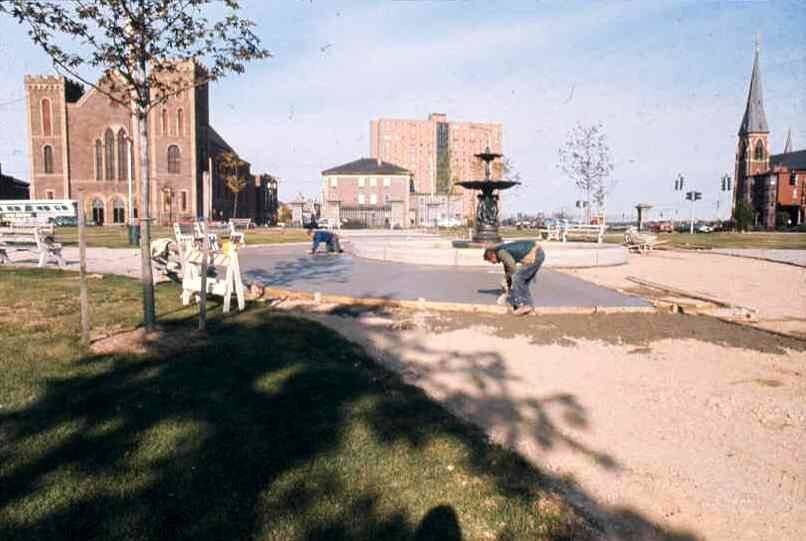
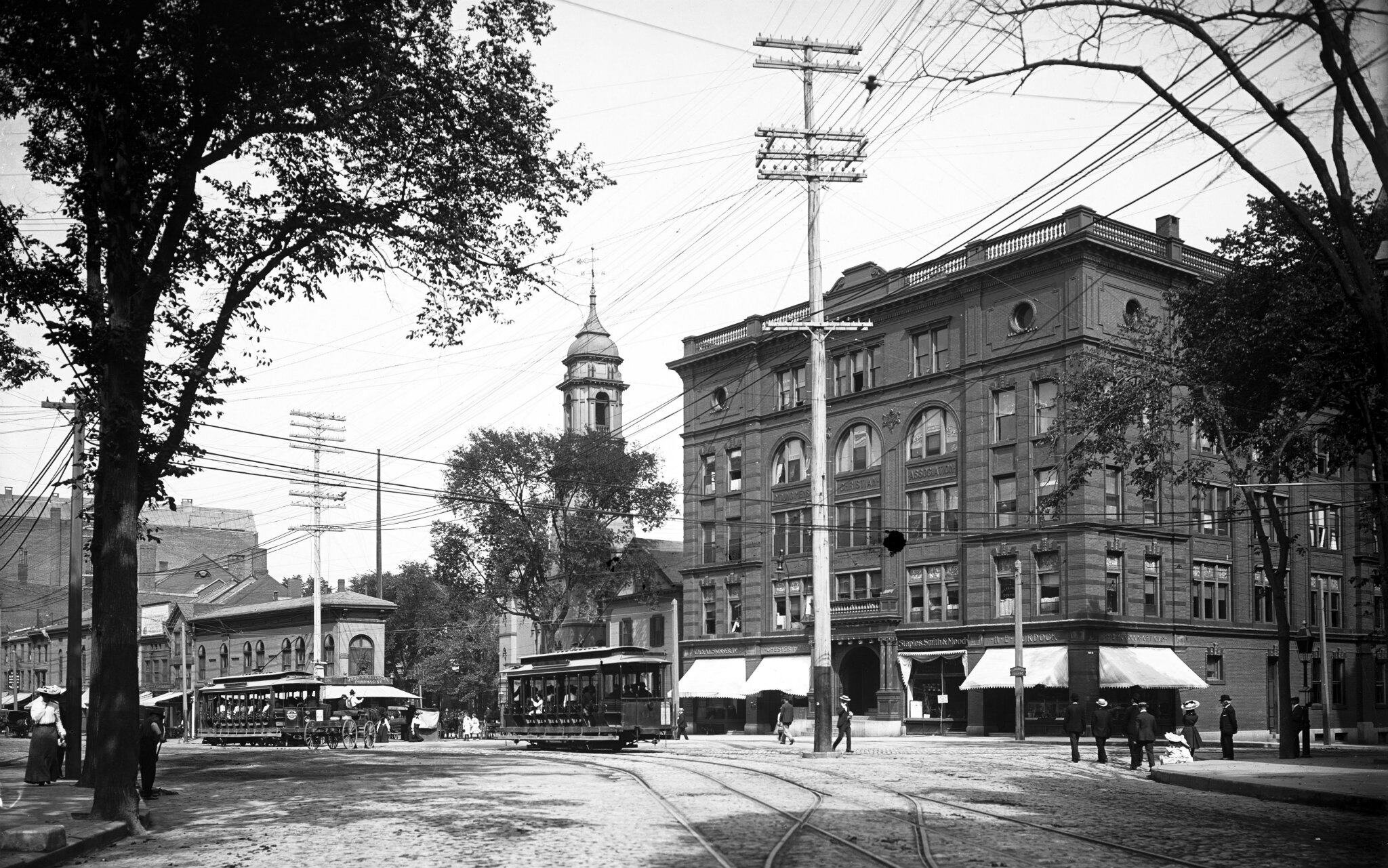
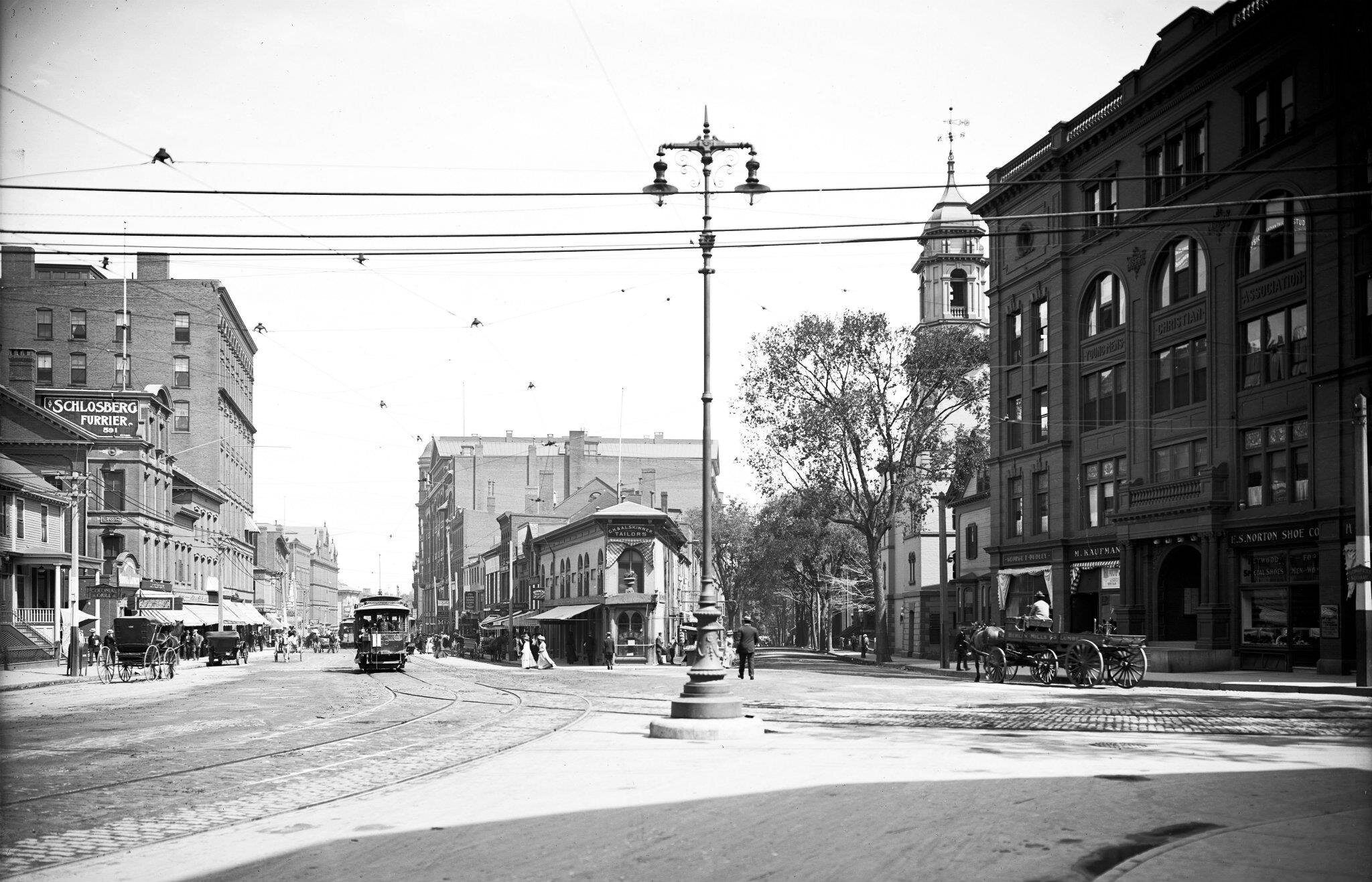
The one-way traffic pattern of High Street was completed as a recommendation of the City’s arterial traffic plan. Congress Square Park was created in 1982 with an urban development grant from the United States Department of Housing and Urban Development. The goal was to make a showplace for the city and add to the vitality of the area with a new open space opposite the city’s newly expanded art museum. In 1976 plans began for an addition to the Portland Museum of Art’s L.D.M. Sweat Memorial Galleries. The new addition necessitated the removal of several buildings, the largest of which was the Libby Building (1898-1981). The Libby Building was built for the Y.M.C.A in 1898 on the former site of the Cobb/Cahoon/Libby mansion. The new museum building, designed by I.M. Pei & Partners, opened in 1983.

The Tracey Causer Block on Fore Street in 1991.

The Tracey Causer Block on Fore Street in 1991.

During the 1980s, development pressures increased as Portland became part of the New England real estate boom. It was a race to try to save buildings like the John B. Carroll Block (1857) and the Tracy-Causer Building (1866). Some attempts were successful, many were not. In June 1988, Citizens rallied in front of bulldozers and risked arrest at the site of the Carroll block on Park Street when it was demolished in anticipation of the new preservation ordinance that could have saved it. While Landmarks’ efforts to build awareness about preservation were paying off, the loss of this Italianate duplex demonstrated that more work was needed.

The Tracy-Causer Building on Fore Street was slated for demolition to clear a development site. This building stood just outside the newly proposed historic district. It was vital to save one of the last surviving Greek Revival commercial buildings in an area that had lost much of its character to real estate speculation. Landmarks advocated for a demolition delay ordinance, approved in 1989, which saved the building. The individually landmarked Tracy-Causer Building is now a vital part of connecting the Old Port area to the Gorham’s Corner neighborhood. The parking lots to the east of the block may finally be developed decades after they were first cleared for redevelopment.

While this blog post focuses mainly on Portland’s downtown, other areas of the city were also cleared for redevelopment, particularly residential areas in Bayside and Munjoy Hill. Urban renewal activity between 1961 and 1972 destroyed approximately 2,800 units of housing (Bayside alone lost over 1,100 units of housing), housing units that today the city is struggling to replace. A little more than 525 units were created in new housing developments during the same period. We’ll leave those stories for another day, in the meantime, a few more photos:

Special thanks to the Portland Maine History 1786 to the Present Facebook group. Without their wonderful collection of Portland images it would be difficult in this time, when we have limited access to our own photographic files, to have completed this blog. Thank you too to all the individuals that contribute images and their memories of Portland in the past to the group, particularly the family of Dr. Henry Pollard. Many of his aerial images of Portland in the 1970s are featured in this blog. If you aren’t following their Facebook page, you should! - Julie

Architect of the Week: John Leasure

By Alessa Wylie

John Leasure in 2012 with his painting of the South Portland Public Library

John Leasure in 2012 with his painting of the South Portland Public Library

If you drive around greater Portland chances are you’ve noticed a building designed by John Leasure. They are usually hard to miss because of their notable Mid-Century Modern design. The South Portland Library, Franklin Towers in Portland, Saint Bartholomew Catholic Parish in Cape Elizabeth are just a few. Let’s learn a little bit more about this interesting man whose work reflects his like of simple, “clean” architectural lines and minimalist shapes.

A native of Altoona, Pa., John Leasure joined the Navy for two years and then went to Penn State as a music major. However, after seeing Gary Cooper’s performance as architect Howard Roark in the 1949 movie “The Fountainhead” Leasure changed his mind and decided that was what he wanted to do.

“When I went in to see “The Fountainhead” I had no idea what an architect was,” said Leasure. “I mean, I never drew a line. But I came out of that move and I thought, that’s great, that’s what I’m going to do with my life.”

He moved to Maine in his early 30s and opened his own office. At first, he worked on smaller jobs but then in 1965 he secured his first big municipal project, the South Portland Library. There he learned the politics of municipal design and budgets.

SoPo Library.png

Drawings were scrutinized for ways to cut costs. A reflecting pool with fountains and a sculpture to be along the Broadway entrance was cut as were the stonewalls that he envisioned extending past the corner of the roof. Nevertheless, the building was hailed as an excellent example of functional modern architecture and was, for the time, one of the most modern buildings in the state of Maine.

Leasure continued to work on municipal projects for South Portland including the swimming pool portion of the South Portland Community Center on Nelson Road and the recently demolished Cash Corner fire station in addition to several building on the Southern Maine Community College Campus.

In 1970 he designed Saint Bartholomew Catholic Church in Cape Elizabeth to be a modern, “functional” building that could be used as a church, hall and meeting and social space. In Westbrook he designed the Public Safety Building and the Warren municipal pool. 

warren pool.png

In Portland, Leasure’s work includes the tallest building currently in the State of Maine, the Franklin Towers, standing 16 stories, 175 feet tall. He also designed the Cumberland County Jail and the Bramhall Fire Station.

Outside of greater Portland Leasure’s work includes the Diplomat Condominiums in Old Orchard Beach, the chapel at the veteran’s cemetery in Augusta and the hotels at the Sunday River ski resort in Bethel.

the dipolmat.png

But perhaps his most appreciated building is the house he designed as his family home in 1972. The building, incorporating a classic Mid-Century Modern into the rocky hillside terrain of Littlejohn Road in Cape Elizabeth, was recently restored by Laurel and Richard LaBauve of SoPo Cottage. The yearlong restoration was recently featured in Maine Homes Magazine by Down East.

Laurel house.jpeg

“Big boxes full of people,” Leasure has called many of his commercial projects. But they remain some of the most recognizable buildings all over the state and reflect the classic designs of Mid-Century Modern buildings.

Sources: Portland Press Herald, August 15, 2012


The Early History of Preservation

By Julie Larry

Every year in May, local preservation groups, state historical societies, and business and civic organizations across the country celebrate Preservation Month through events that promote historic places and heritage tourism, and that demonstrate the social and economic benefits of historic preservation. Preservation Month began as National Preservation Week in 1973. In 2005, the National Trust for Historic Preservation extended the celebration to the entire month of May and declared it Preservation Month to provide an even greater opportunity to celebrate the diverse and unique heritage of our country’s cities and states. Please join us as all month long as we look at the past, present and future of historic preservation in Greater Portland.

Greater Portland Landmarks started in the mid-1960s following the demolition of Portland’s Union Station. Our early work sought to save buildings being demolished by urban renewal. But the roots of the modern preservation movement nationally and in Maine are even older, beginning in the early 19th century. Take a look below at some of the key moments in the early history of historic preservation.

TimelineJS Embed

Timeline compiled by Julie Ann Larry, Director of Advocacy

Architect of the Week: Charles Quincy Clapp

By Alessa Wylie

01 CQ Clapp.jpg

Charles Quincy Clapp might just be one of Portland’s most famous 19th century architects that you’ve probably never heard of.  He was described as “A man who took much interest in architecture and had a correct taste” and who happened to build some of Portland’s most interesting buildings.

Charles Quincy Clapp was born in Portland in May of 1799, the elder son of a prosperous Revolutionary War veteran and merchant, Asa Clapp and Elizabeth Wendell Quincy Clapp. Asa made his fortune as a shipowner, while also investing in banking and in real estate. Elizabeth was from the wealthy Quincy family of Boston. When Asa he died in 1848 he left an estate worth over $130,000.

Charles Quincy, or CQ, grew up in privilege however, not a lot is known about his early life or schooling although he probably attended Portland Academy. It is also not known where he developed his interest in architecture, but it is likely he learned it via builder’s guides and plan books. He must have had quite the collection since, in later years he donated copies of his books to the Maine Charitable Mechanics Association.

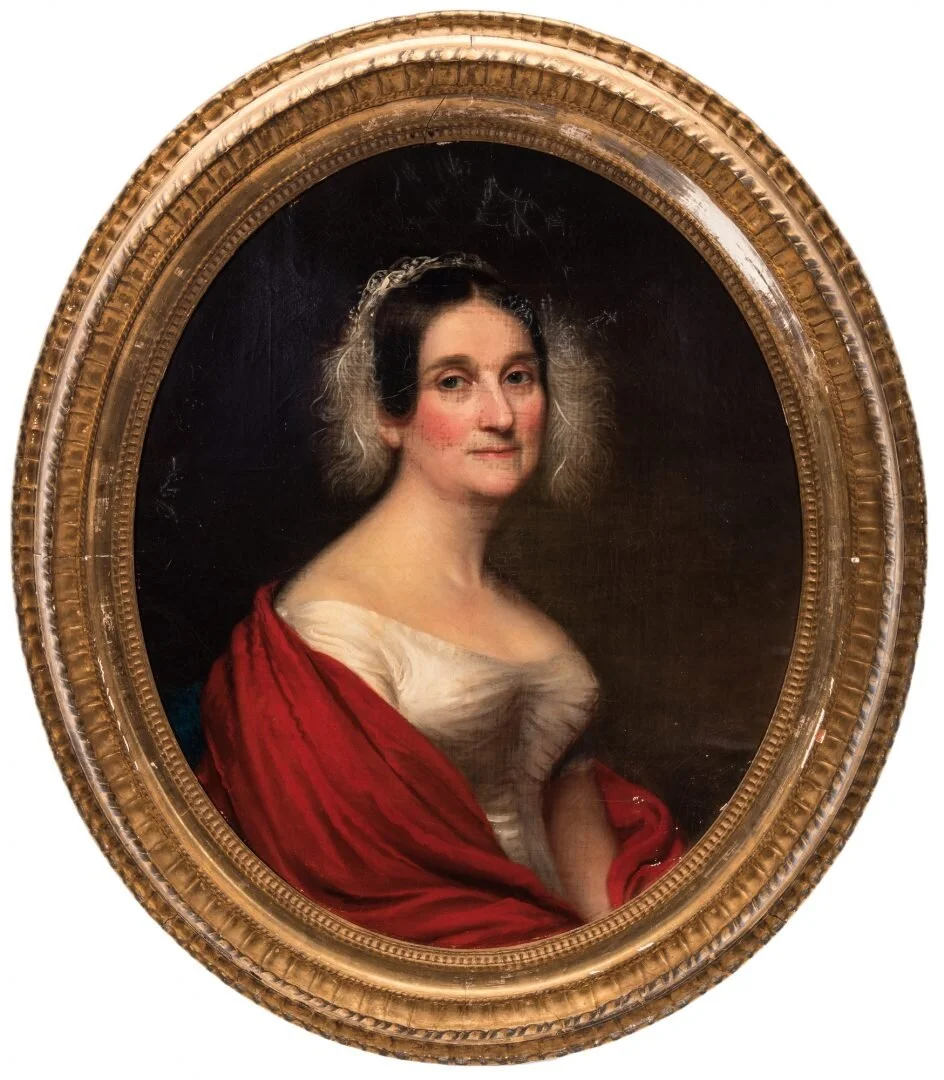
Octavia Clapp

Octavia Clapp

In the early 1820s, CQ married Julia Octavia Wingate, the granddaughter of General Henry Dearborn who served on Washington’s staff during the American Revolution. As a wedding present CQ’s father Asa gave the couple the former Hugh McLellan House at Spring and High Streets, today part of the Portland Museum of Art. In 1817 Asa had purchased the property for just $4,050 after McLellan, owner of Maine’s largest shipping fleet and founder of Maine’s first bank and insurance company, had his fortune wiped out by the Embargo Act of 1807 and then the War of 1812. McLellan had built the house in 1800 at a cost of $20,000 so Asa got quite the bargain.

Shortly after moving in CQ set about “modernizing” the Federal style McClellan House by lengthening the windows on the first floor and adding some Greek Revival touches on the interior. Was this the first small step in his career as a “gentleman architect?”

The first building attributed to CQ is the flatiron Hay Building at the corner of Congress and Free Streets. Constructed in 1826, it made good use of a narrow triangle of property and featured a row of handsome arched windows on its Congress Street facade. Originally two stories in height, the third story was added on by John Calvin Stevens in 1922.

Hay Building

Hay Building

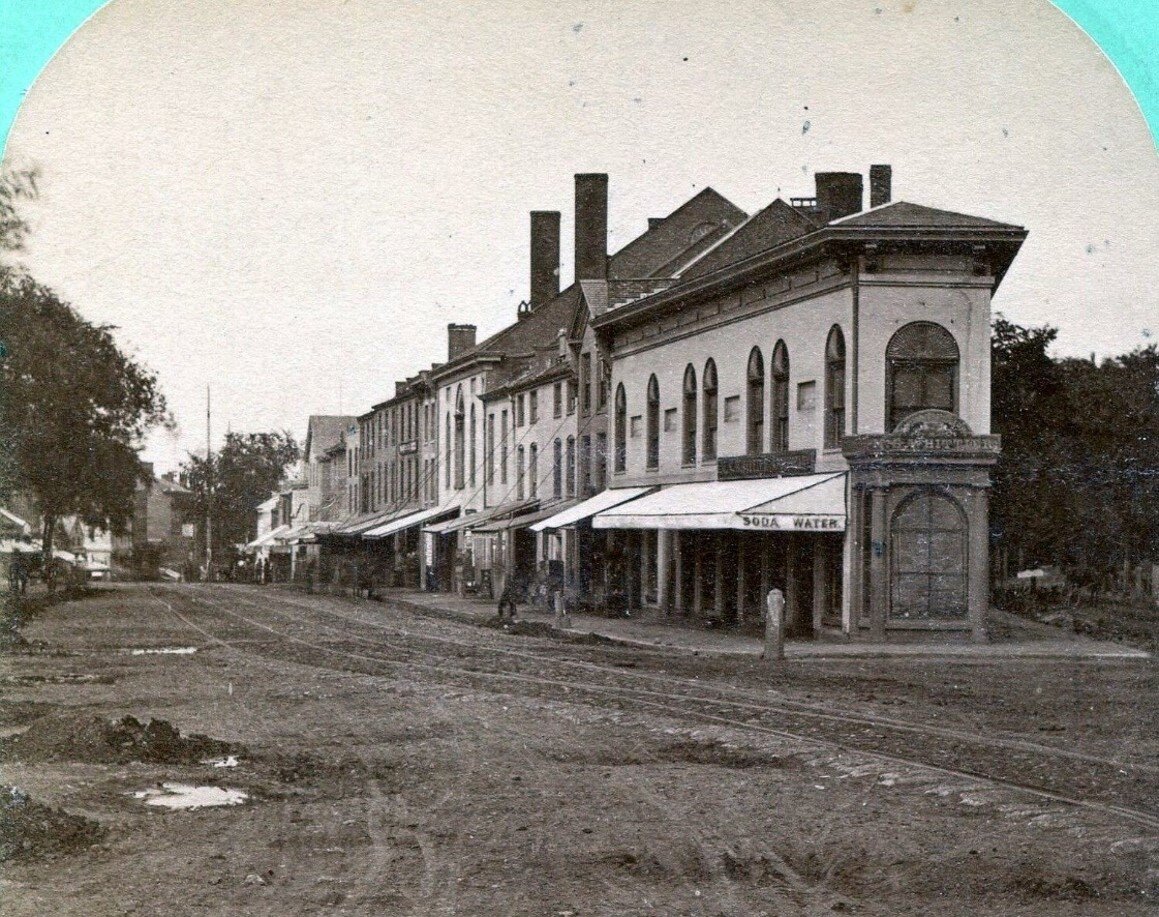
Next, CQ began his interest in hotels. The Portland Exchange Coffee House was built in 1828 at the corner of Fore and Market Streets. It was described as a brick structure four stories high on Fore Street but only three stories at the Market Street entrance. It had shops on the first floor, including bar and a hotel in the upper floors. When it opened on January 1, 1829 the Eastern Argus newspaper reported that “not a murmur of dissatisfaction” was heard about the structure. The building, along with several others owned by the Clapp family, was lost in the Great Fire of 1866.

04 Clapp.jpg

Just as CQ was finishing his work on the Coffee House, he began to plan a house for his family. He sold the McLellan House to his father-in-law and built his house right next door. It was not like any residence which Portland had seen before with its temple-like facade that was designed in the Greek Revival style that was popular in the United States at the time. A comparison of the McLellan House and this house shows the changes in architecture that had happened over a 30-year period.

The house was well-received by Portland residents and visitors alike. Thirteen-year-old Samuel Longfellow, younger brother of Henry Wadsworth wrote in his diary on January 2, 1833, that he “went to Mr. Clapp’s house on Spring Street. It is a very handsome house inside. The doors are of mahogany with glass handles, and three of the fireplaces are of handsome marble.” Later that year The Portland Advertiser published the remarks of an anonymous writer who commented that the house “presents a beautiful appearance. If situated at the termination of a wooded avenue, and surrounded by ornamental trees, it would be equal in point of beauty, to any mansion I know of in New England.”  CQ & Julia lived in their new house only a few years. In 1837 they returned to the larger McLellan House next door to live with Julia’s widowed mother. They did not move again.

An interesting side note about the Clapp House: the house was owned by Augustus E. Stevens who was Portland’s mayor during the Great Fire of 1866. Over 1,500 buildings were destroyed in the fire, including City Hall and in the aftermath of the fire bank and city records were stored in the house. It is also likely that city business was conducted in the house. It is now owned by the Portland Museum of Art.

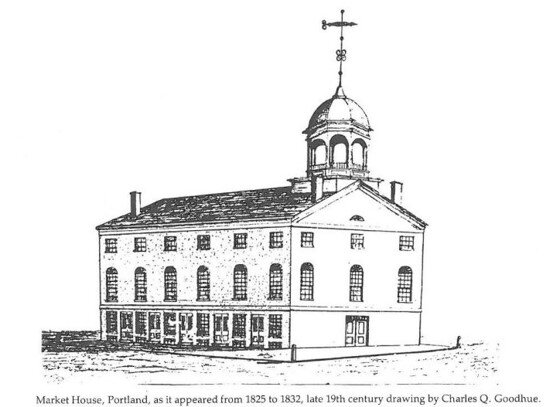
While CQ was building his own house, he was commissioned to redesign Portland’s seven-year-old Market Square/City Hall. Portland had just become Maine’s first city and it was felt that the late Federal style building needed an update so CQ offered his services. He had the cupola removed and made other changes to give it a more “modern” Greek Revival style appearance. Viewers agreed that the new facade was most elegant, but the city council found Clapp had spent much more than was expected and they debated long and bitterly before voting to pay the bills. The cupola that was removed ended up on one of the original buildings of the Westbrook Seminary which is now the University of New England and is still there today.

Market Square/City Hall before….

Market Square/City Hall before….

…and after Clapp’s redesign.

…and after Clapp’s redesign.

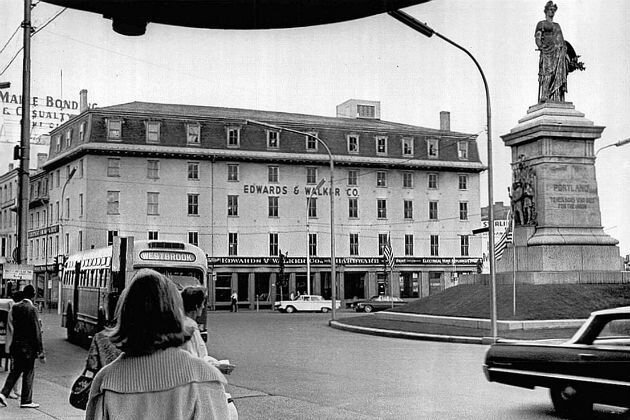
In 1836 CQ and Asa Clapp were among the incorporators of the Cumberland House, "a hotel—not a tavern” to be created by integrating several older buildings at Congress and Federal Streets to make a respectable and attractive establishment. It stood five stories tall and had 18 parlors and 57 bedrooms. Accommodations for men were offered in the Eastern Wing while the "tastefully prepared" rooms of the West Wing were reserved for women and families. It was considered to be a truly "magnificent hotel."

In 1900, the United States Hotel closed its doors and the wholesale/retail sporting goods dealer Edwards and Walker Company moved in. The building stood, with various modifications, until 1965.

07 Clapp Cumberland House.jpg
08 Edwards and Walker.jpg
Clapp’s Salem and Brackett Street duplex

Clapp’s Salem and Brackett Street duplex

In his role as a real estate developer, CQ found a way to help both his personal fortune and the City of Portland to grow. In the commercial districts he built stores and hotels while in residential areas he built houses. In 1831, speaking to the Maine Charitable Mechanic Association, CQ insisted “that though every mechanic could not have a splendid mansion, he might at least have a neat one.” After building his own “mansion” on Spring Street he adapted his ideas to smaller residences, giving each character without the cost of splendor. Examples of these include a small wooden duplex built at the corner of Salem and Brackett Streets in 1836, a block of three row houses erected on Park Street in 1846, and a large brick duplex at 126 Danforth Street.

Clapp’s “mustache” houses

Clapp’s “mustache” houses

More sutied to “mechanics” was Park Place, a series of ten smaller row homes built in 1848 with their own court opening off Park Street nearer the harbor affectionately call the Mustache Houses because of the wonderful decorative iron pieces above the windows. The buildings were advertised as seven-room units to be heated by stoves, not fireplaces, though they had decorative mantels.

However, not everything that CQ built at this time was scaled down. On Park Street, adjacent to the Victoria Mansion was the home of CQ’s daughter Julia and her husband John Carroll. CQ gave Julia the property in 1851 and is assumed to have designed the brick house, which, in keeping with changing styles, was Italianate in its external details though the interior reflected a transitional period with Greek Revival woodwork next to Italianate styled marble mantels in the parlor.

13 Clapp Carroll.jpg

Around this time CQ also took part in a more ambitious enterprise. In 1850 CQ and eight others undertook to develop part of Back Cove, proposing to construct a bridge with a dam and locks at the entrance, to excavate a basin and to fit it with wharves. Although the plan was not completed, about eleven acres of Back Cove did get filled in, producing both residential and commercial land popularly referred to as Clapp’s Dump.

Middle Street after the Great Fire

Middle Street after the Great Fire

The Great Fire of 1866 totally changed Portland overnight. On July 4, 1866, a fire started down on the waterfront and quickly spread through Portland destroying over 1, 500 buildings and leaving over 10,000 people homeless. CQ lost fourteen buildings and while no longer young or in good health, he went to work to replace most of them. By October 13th, he had eleven brick buildings under construction, with five already roofed in and the other six built at least up to their second stories.

CQ’s post fire buildings were constructed in the Italianate style, although two buildings, 373 Fore Street (Bull Feeney’s) and 103-107 Exchange Street, have second-story Gothic windows. And, CQ wasn’t just rebuilding for himself. On Market Street he built two structures, one for him and one next door for his son-in-law John Carroll. On Middle Street he built a building for his brother A.W. Clapp.

373 Fore Street (now Bull Feeney’s)

373 Fore Street (now Bull Feeney’s)

When Charles Quincy Clapp died in 1868, he had been associated with more than 600 recorded property transactions. Portland newspapers praised his contributions to the city, noting that “Possessing an unusual taste for architecture, in which he was excelled by few, every building erected under his auspices was designed and modelled by himself…” The papers went on to claim that “he has erected, probably a greater number of buildings on his own account than any other person.”  His obituary further stated that “Though possessing a large estate he was unostentatious in his bearing; though his charities were never paraded in the press he always remembered the poor and the humblest of our population often in him found a warm and generous friend.”

20 Clapp.png

NOTE: The primary source of biographical information for this article is from Joyce Bibber’s bio of Charles Quincy available at the Maine Historic Preservation’s website. The source for many of the photos is the Maine Historical Society and the Maine Memory Network.

Building Munjoy Hill: The Houses of William Hoit

By Kate Burch

William Hoit (1799-1888) was a prolific builder on Munjoy Hill in the first half of the 19th century. He is responsible for building at least a dozen homes between 1845-1852, mostly in the Greek Revival Style that was prevalent at the time. Many of his homes are located on the southwestern slope of the hill, overlooking the former Portland Company complex and the former Atlantic and St. Lawrence Railroad yard.  

Hoit was a minor stockholder in the railroad company. He purchased a number of lots 1845-1847 from Eliphalet Clark, a partner with Moses Gould in the subdivision and development of Munjoy Hill in the mid 19th century. At least three, possibly five, dwellings on Monument Street are known to have been built by Hoit. He also built dwellings on Atlantic Street, St. Lawrence Street and Congress Street. His eldest sons, including William H. Hoit, were also carpenters and joiners. William Sr. moved to Minneapolis, Minnesota sometime before 1857 with his wife and six youngest children, James, Thomas, Ann, Johanna, and Emily. He continued to work as a builder in Minneapolis along with sons James and Thomas.  

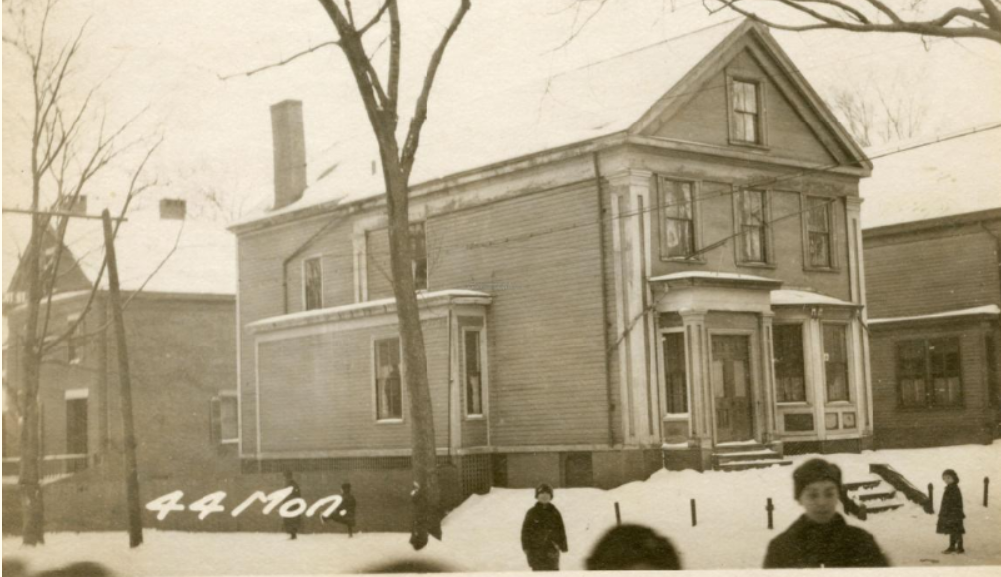
44 Monument Street 
Josiah W. Smith House (1845) 

hoit_44monument.PNG

Josiah W Smith bought the land at 44 Monument St from William Hoit in 1846, ‘together with the dwelling house and outhouses standing thereon.’ Smith sold the 2 ½ story wood framed Greek Revival dwelling house in 1850. Smith was a stone cutter. It believed he is the Josiah W Smith (1819-1857) buried in Evergreen Cemetery. He died young of consumption, a common ailment for his profession.  

hoit_48monument.PNG

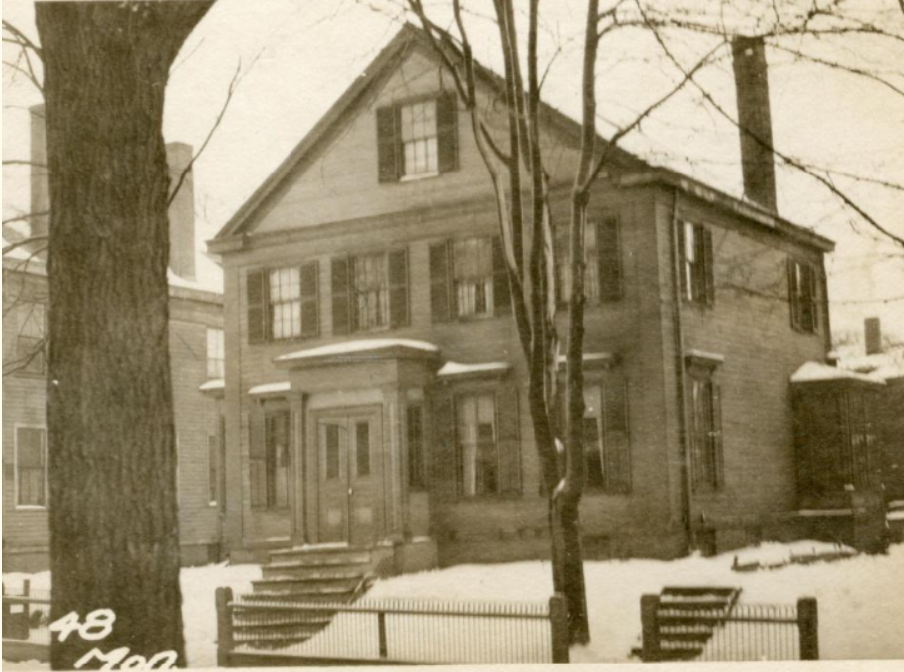
48 Monument Street
Godfrey Mark House (1845) 

Godfrey Mark (1807-1878) was an immigrant from Switzerland. He arrived in Portland in 1828 at age 20 with his parents and siblings on the Globe. Godfrey and his father Gabriel worked as a cutler in their knife repair business G&G Mark’s on Exchange Street, later on Pearl Street.  He bought the 2 ½ story Greek Revival dwelling on Monument Street from William Hoit in 1845 and sold it in 1867. 

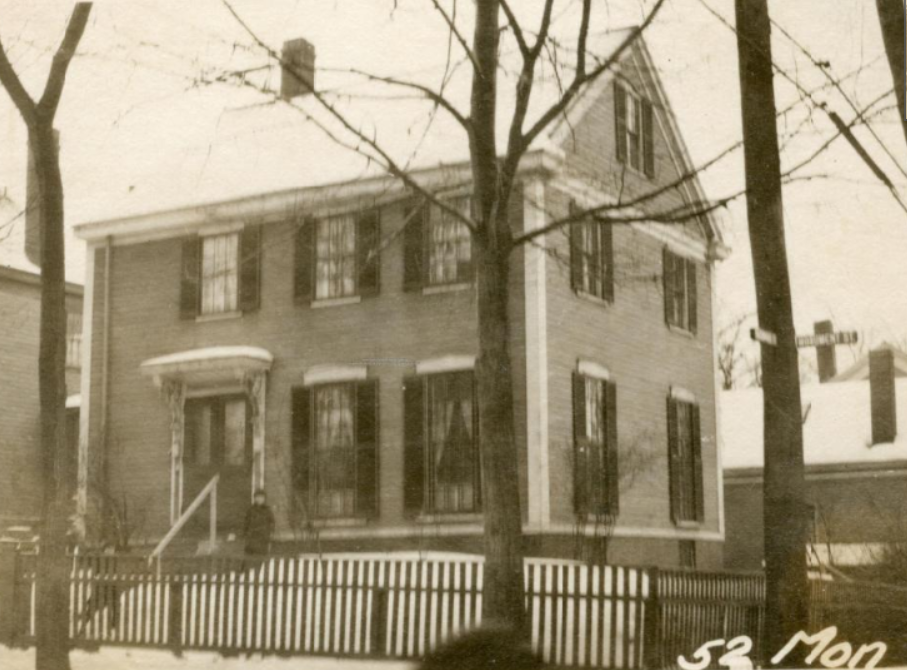
52 Monument Street
Wealthy Hallett House (c. 1850), probably built by William Hoit 

hoit_52monument.PNG

Wealthy D. Hallett purchased the property in 1852. Born in 1817, Wealthy D. Hallett married her first husband, Daniel at age 17, and then moved to Boston. She divorced Daniel in 1849. She remarried in 1855 to Cuban born Audrias Cederbloom, but retained her name as Mrs. W. D. Hallett. She sold the property to Benjamin Hallett in 1859 and his heirs sold it in 1864 to James Knowlton, a patternmaker and foreman in the pattern shop at the Portland Company. 

Other Munjoy Hill buildings attributed to William Hoit:

hoit_83stlawr.PNG

83 St. Lawrence Street, c1847 

87 St. Lawrence Street, c1852 

86 Congress Street, 1851 

104 Congress Street, 1845-1847 

17 Atlantic Street, c1845 

He is also believed to have built 23 Atlantic Street circa 1846, 26 Monument Street circa 1850, and may be the builder of 51 Monument Street. His son William H. Hoit is responsible for the move and reconstruction of an early cape at 62 Munjoy Street, circa 1857. 

We’re all staying at home, but our houses don’t always stay in one place!

By Kate Burch

A house being moved down Danforth Street in Portland by teams of oxen c1892. The photo was taken from 384 Danforth Street.

A house being moved down Danforth Street in Portland by teams of oxen c1892. The photo was taken from 384 Danforth Street.

Structural relocation has a long history. One of the earliest references to moving a building is a London house that was relocated in 1598 due to a dispute between neighbors. In the 18th and 19th century buildings were moved using constructed wooden carriage systems and pulling buildings with teams of horses or oxen. It was not an easy process – primitive jacks and the uneven force of the animals made it difficult for buildings to stay level, and often caused chimneys to collapse.  

Moving a building across the bridge that crosses the Mousam River at Bridge Street in Springvale. Photographed in 1906.

Moving a building across the bridge that crosses the Mousam River at Bridge Street in Springvale. Photographed in 1906.

Contemporary sources describe Americans as enthusiastic house relocators in the 19th century. In Domestic Manners of the Americans (1832) Frances Trollope writes, "One of the sights to stare at in America is that of a house being moved from place to place... .The largest house that I saw in motion was one containing two stories of four rooms each; forty oxen were yoked to it. The first few yards brought down the two stacks of chimneys, but afterwards all went well.”’ 

Moving Fred Hall's house down Pine Point beach in Scarborough. The August 3, 1924 Portland Sunday Telegram ran the picture with the following caption: “Fred W. Hall has solved the disagreeable problem of moving. Instead of packing up his furniture, …

Moving Fred Hall's house down Pine Point beach in Scarborough. The August 3, 1924 Portland Sunday Telegram ran the picture with the following caption: “Fred W. Hall has solved the disagreeable problem of moving. Instead of packing up his furniture, piling it into a truck, and unpiling it at the end of the trip, Mr. Hall moves the house and all, thereby relieving Mrs. Hall of the onerous duty of 'settling.'" The house was moved a mile and a half at a pace of about 600 to 700 feet a day. The crew of men continuously moved greased skids onto tracks laid ahead of the house.

Mid-19th century improvements in technology made structural relocation less difficult. The invention of the hydraulic jack, replacing wooden screw jacks, allowed houses to be lifted more easily and evenly. Locomotives and boats were also employed to move houses, preventing damage through a steadier pull – although as you can see from photos, many local projects in Maine still employed animals well into the 20th century. 

In 1905, the Benjamin Green House in Brunswick was moved from its original location at the corner of Maine and Cumberland Streets to 259 Maine Street. The photograph shows a train blocking the house from moving over the train tracks on Maine Street.…

In 1905, the Benjamin Green House in Brunswick was moved from its original location at the corner of Maine and Cumberland Streets to 259 Maine Street. The photograph shows a train blocking the house from moving over the train tracks on Maine Street. The railroad company was afraid the house would damage its tracks. After hours of negotiation, the train finally moved and the house could continue on its journey.

A large colonial mansion, known as "Spite House," was loaded on a railroad lighter at Phippsburg Center to be transported 85 miles to Rockport on July 26, 1925. The 119-year-old mansion had been sold to Donald D. Dodge of Philadelphia, who wanted it…

A large colonial mansion, known as "Spite House," was loaded on a railroad lighter at Phippsburg Center to be transported 85 miles to Rockport on July 26, 1925. The 119-year-old mansion had been sold to Donald D. Dodge of Philadelphia, who wanted it located in the summer colony of Rockport. It took three hours to load it onto the lighter (a flat-bottomed boat usually used in inland waterways) and then was delivered the same day.

gothichouse1.PNG

The Gothic House

Greater Portland Landmarks is responsible for one of Portland’s well-known house moves. As part of a larger urban renewal plan for downtown Portland, in 1967 plans were developed to widen the section of Spring Street east of High Street to create an arterial in the middle of the city. That plan required the removal of many buildings on both sides of the planned roadway, including the 1845 John J. Brown House – also known as the Gothic House – at the site of the current Holiday Inn.  

Portland’s urban renewal movement was the driving force behind the creation of Greater Portland Landmarks in 1964, and Landmarks’ campaign for the Spring Street Historic District stopped the Spring Street Arterial project from progressing west of High Street.  

gothichouse2.PNG
gothichouse3.PNG

The developers of the Holiday Inn gave the Gothic House to Landmarks, and Landmarks arranged for the building to be moved from 87 Spring Street to its current location at 387 Spring Street in the West End. Because of the width of the streets, the house was moved down to Commercial Street and back up Danforth Street to Spring Street. The house was then sold for the cost of the move to Mrs. Austin Lamont. 

The John J. Brown House in its current location of 387 Spring Street.

The John J. Brown House in its current location of 387 Spring Street.

Photos from the Maine Historical Society, via Maine Memory Network

Landmarks Recommends: Alessa Wylie's Favorite Books

Looking for something new to read? We’ll be sharing some staff favorites on the blog over the next few weeks. Sadly the library is currently closed, but titles are available from online retailers - and you can order online and have titles shipped from many of our local bookstores. Enjoy, stay safe, and #stayhome!

Alessa Wylie, local history expert and Education Manager at Landmarks, shared a list of some of her favorite books, including history and nonfiction as well as some fun fiction titles.

Tender at the Bone by Ruth Reichel: A funny, poignant memoir of Ruth Reichel’s early life. Stories of her Mom’s cooking made me laugh-out-loud. There are some great recipes interspersed in the chapters too.

mrmrsprince.jpg

Mr. and Mrs. Prince by Gretchen Holbrook Gerzina: This book is part genealogical detective story and part history of a remarkable 18th century African American couple from New England, Abijah and Lucy Prince. It is one of my favorites because it aptly portrays the trials and tribulations that are encountered when you are doing historical and genealogical research : the tedium of the search and then the thrill of finding the tidbit of information that you were searching for. I had to keep reading to see what other information the author and her husband could uncover about this amazing couple.

The Destiny of the Republic: A Tale of Madness, Medicine and the Murder of a President by Candice Millard: This book is one of my all-time favorites. It’s the story of the shooting of President James Garfield and the shockingly outdated treatment he received from a team of physicians who tried for months to find and remove the bullet. The phrase “ignorance is bliss” is said to have come about because of Dr. Willard Bliss, one of the physicians. This book does what I think a great book should do, it peaked my interest to read about related subjects. Because of this book I’ve read books on Dr. James Lister, the British surgeon who pioneered the use of antiseptics, and President Chester Arthur, who succeeded Garfield.

bullypulpit.jpg

Leadership in Turbulent Times and The Bully Pulpit: Theodore Roosevelt, William Howard Taft, and the Golden Age of Journalism, both by Doris Kearns Goodwin: I would read and have read almost everything written by Doris Kearns Goodwin. She is a fantastic writer and her books are like the best fiction – they pull you in to the story and you don’t want to put the book down. Both books focus on past presidents. Leadership in Turbulent Times is a fascinating look at four presidents: Abraham Lincoln, Teddy Roosevelt, Franklin D. Roosevelt and Lyndon B. Johnson and the crises that each of them faced. I really liked it because I learned so much about each of the men, especially LBJ who I really didn’t know that much about. Don’t be alarmed by the size of The Bully Pulpit. Like most Doris Kearns Goodwin’s books, is not a quick read but it is a fascinating one. It essentially combines the stories of the friendship of Presidents Teddy Roosevelt and William Howard Taft, their presidencies and the evolution of the press during the early 20th century. I have a totally different view of William Howard Taft after reading this book.

Confederates in the Attic: Dispatches from the Unfinished Civil War and Spying on the South: An Odyssey Across the American Divide, both by Tony Horwitz: I love the writings of the late, great Tony Horwitz. His books combine travel log, history, and social commentary, and are endlessly fascinating. These are two of my favorites. Confederates in the Attic was the first of Tony’s books that I read, and I loved the way he combined Civil War reenactors, Civil War battles, and a look at present day (2010) civil rights in the South. His last book, Spying on the South, retraced the steps of Fredrick Law Olmsted’s early career as an undercover correspondent in the 1850’s South for the fledgling New York Times. I was listening to Tony Horwitz’s audio recording of this book when he died unexpectedly last May and I felt like a lost a friend.

dogonit.jpg

Dog On It: A Chet and Bernie Mystery – Book 1 by Spencer Quinn: As a fan of mysteries and a dog lover, this series is one of my favorites. The narrator of the stories is Chet, a large, mixed-breed dog that, having flunked out of police school, helps his owner Bernie, a private investigator, solve mysteries. Now, I have to admit that I’ve never read a Chet and Bernie Mystery – I’ve listened to them all on audiobook and the narrator, Jim Frangione is fantastic. These books are laugh-out-loud funny and good stories too.

Louisiana Longshot by Jana DeLeon – Book 1 of the Miss Fortune Mystery Series: If you are looking for a serious, intense mystery, this is not for you but, if you are looking for something light and funny with a good story, dive in. The characters are off-the-wall, as our some of their situations, but the books are fast-paced, mindless fiction which is certainly what I’m looking for right now.