


Local:
Waterfront Summit:
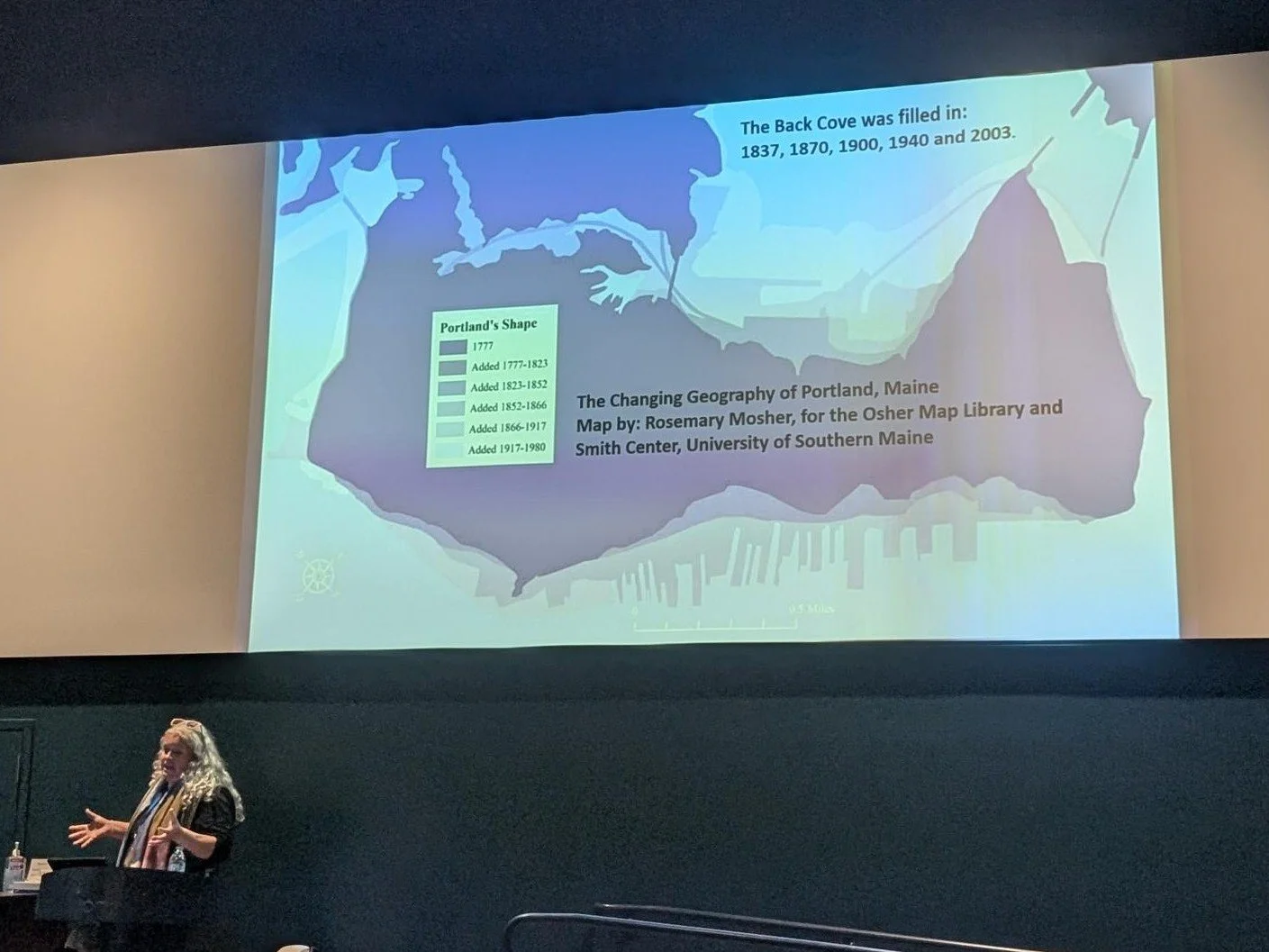
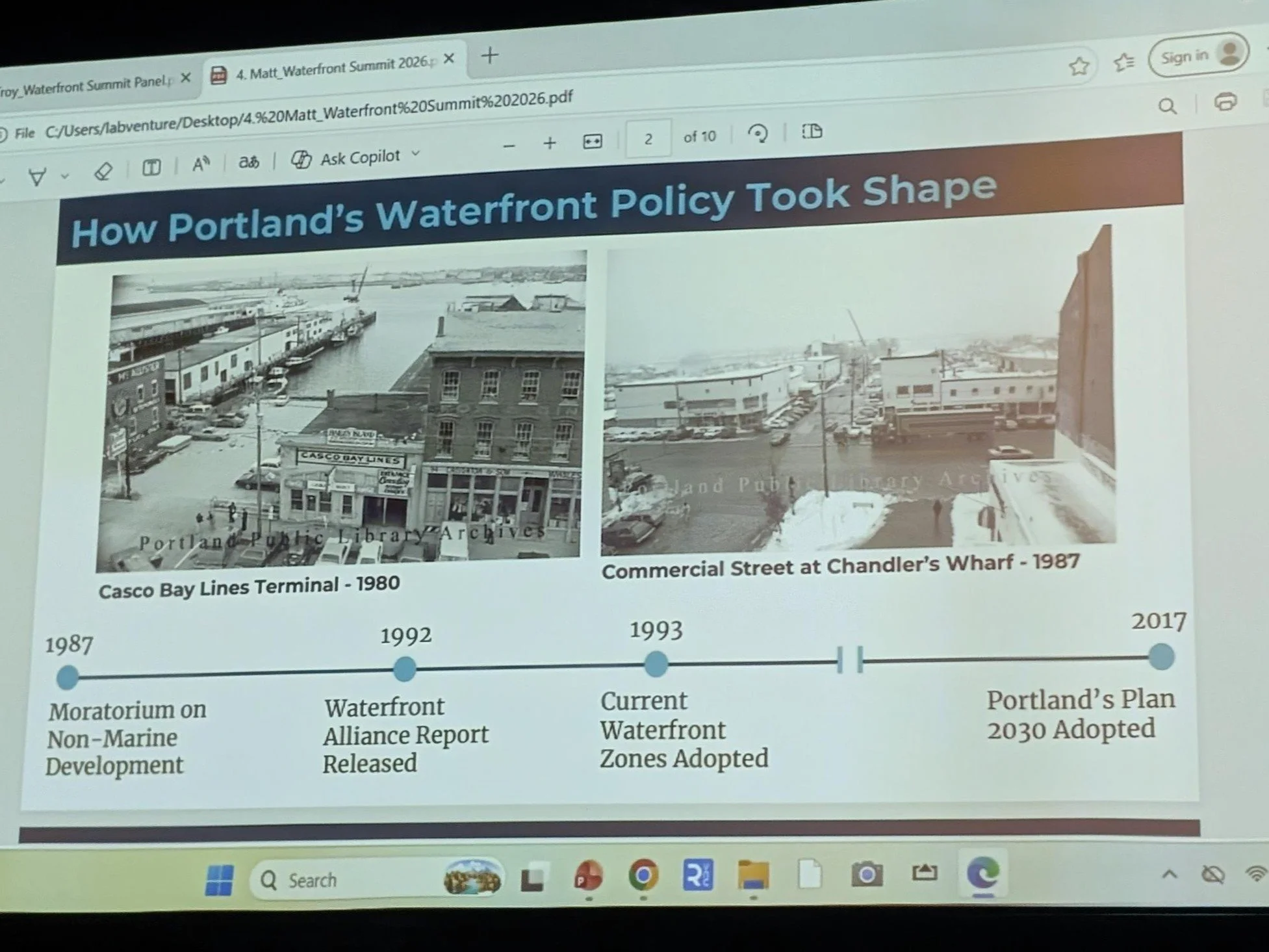
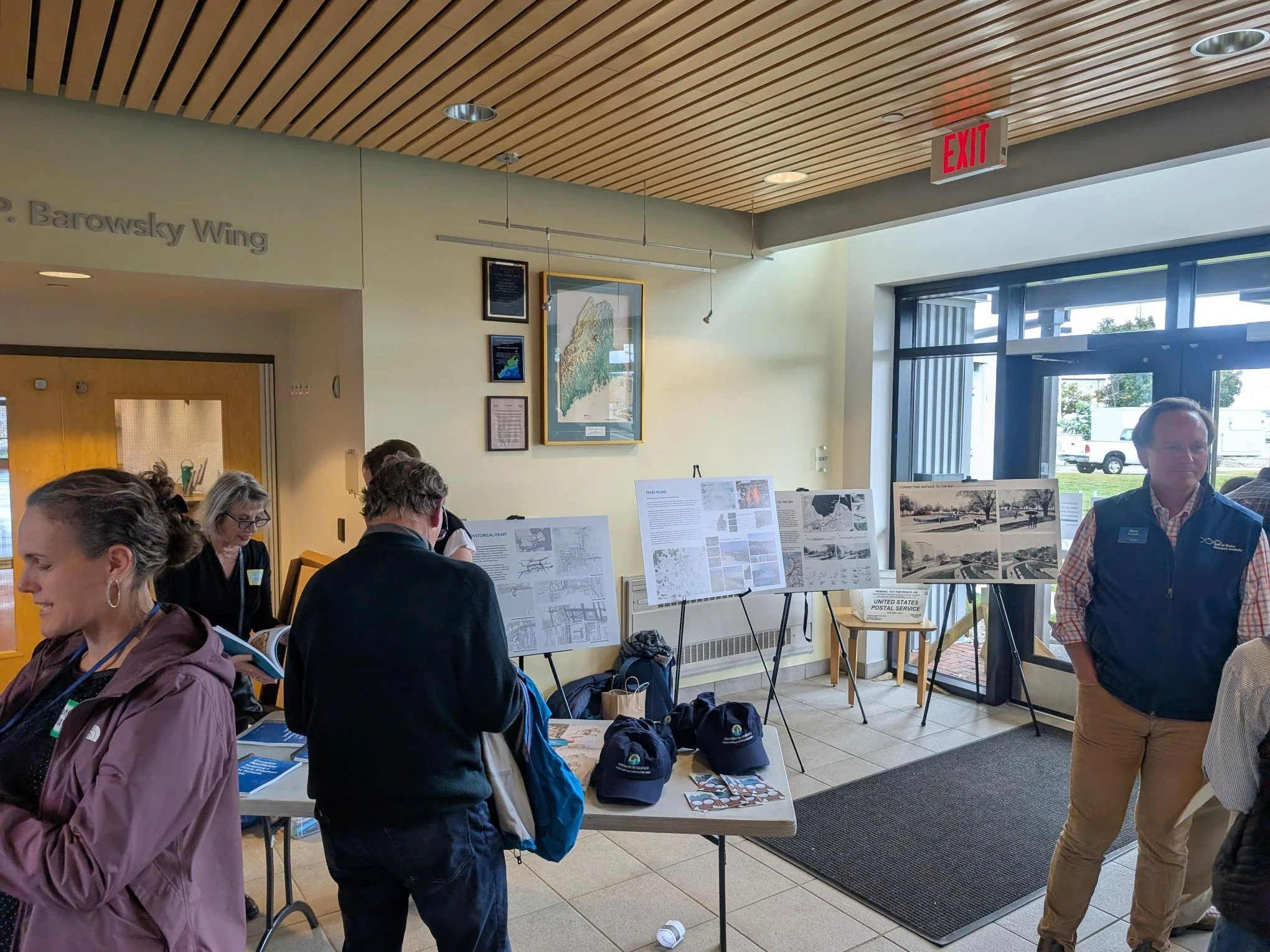
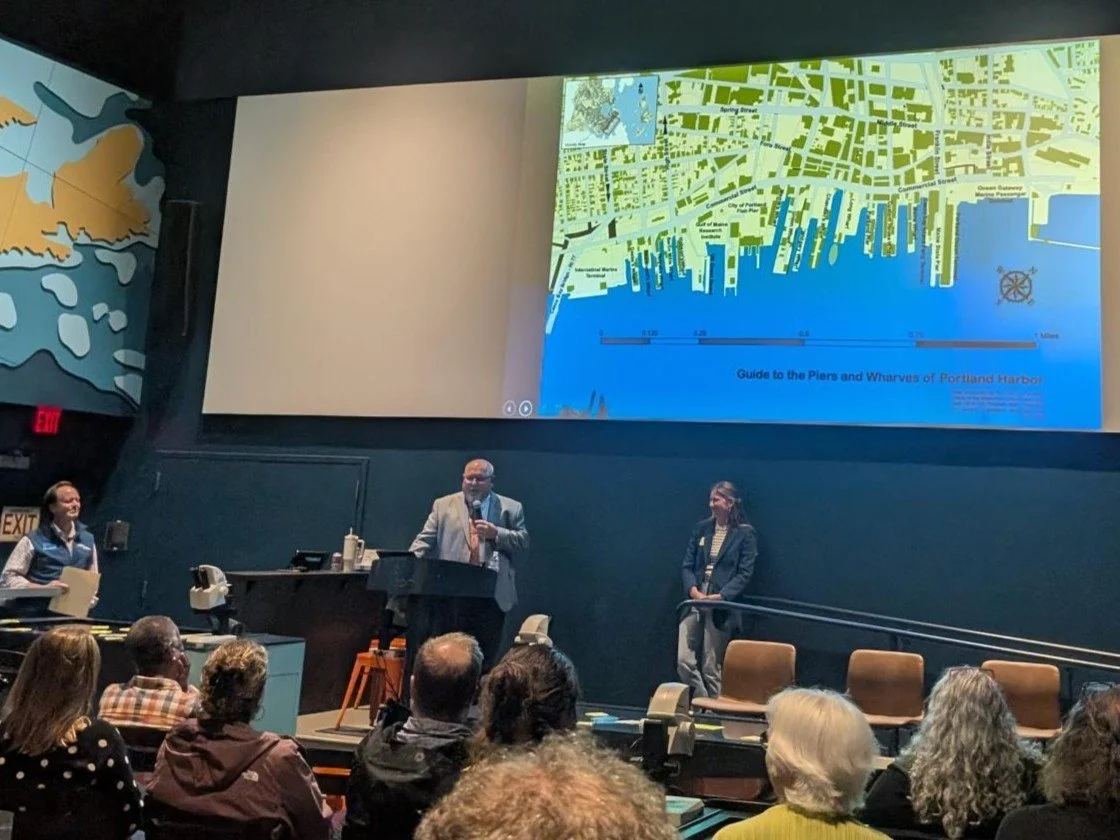
GPL attended Portland’s first Waterfront Summit, hosted by the Gulf of Maine Research Institute. Mayor Dion gave opening remarks, followed by a presentation of the history of the waterfront by Libby Bischof, Executive Director of USM’s Osher Map Library. Panelists from GMRI and the City of Portland provided context and updates about future planning processes, including a Community Action Grant focusing on Commercial Street and the upcoming launch of Portland Plan 2040 to create the next Comprehensive Plan. GPL will continue to engage in efforts to understand the impacts of rising seas and climate change on our coastal historic fabric and heritage industries and work closely with other stakeholders to prepare for and mitigate those impacts.
Tree Festival: Join our friends at the Portland Parks Conservancy for the Tree Festival at Deering Oaks Park, October 3rd 10 – 12:30. Celebrate Portland’s trees with a fun, family-friendly morning filled with hands-on activities, tree education, music, fairy houses and crafts, and more! Since the 1850s Portland has been known as “Forest City” – trees are an important part of our heritage and sense of place. Learn how to protect them!
Urban Forest Master Plan: Speaking of trees, it’s time to speak FOR the trees! Help shape Portland’s Urban Forest Master Plan. Take the Community Survey by October 31st and learn more at the website.
Candidate Survey: Early voting begins soon and ten candidates are on the ballot in Portland for City Council: four for Councilor At Large, two for District 4, and four for District 5. GPL circulated a Candidate Survey about preservation issues to all the candidates. We will post their responses on our website and share them in the next issues of The Column. As a 501(c)3 nonprofit, GPL does not endorse candidates, but we do provide information and encourage everyone to thoughtfully vote on November 3rd!
National:

Saving Section 106: Section 106, a bipartisan law protecting historical and cultural resources for 60 years, is under serious threat. We are tracking the latest developments and providing resources to learn more and get involved on our website.
As the revisions to Section 106 are evaluated internally by the government, we are anticipating and preparing for a public comment period sometime in October. These revisions erode the most critical preservation tool available at the federal level, which for some states, like Maine, protects historic places and identifies historic resources that may not have been known otherwise.
Simultaneously, on September 30th Senators released a permitting reform bill that also rewrites and severely weakens Section 106. The Senate proposal was developed without consultation with the Tribal Nations, affected communities, preservation organizations, SHPOs/THPOs, local governments, and practitioners who actually participate in Section 106 reviews.
But preservationists are pushing back and bringing receipts- according to the Maine Historic Preservation Commission (MHPC), the state agency who manages Section 106 reviews, last year 1,500 federal projects went through the process and only nine required a memorandum of agreement due to adverse effects on historic resources. The vast majority of federal projects are reviewed in less than the required 30 days - usually half that time. So, while Section 106 does not delay or disrupt projects, it DOES identify historic resources, provide a pathway for mitigation, and has led to the preservation and interpretation of sites across the state.
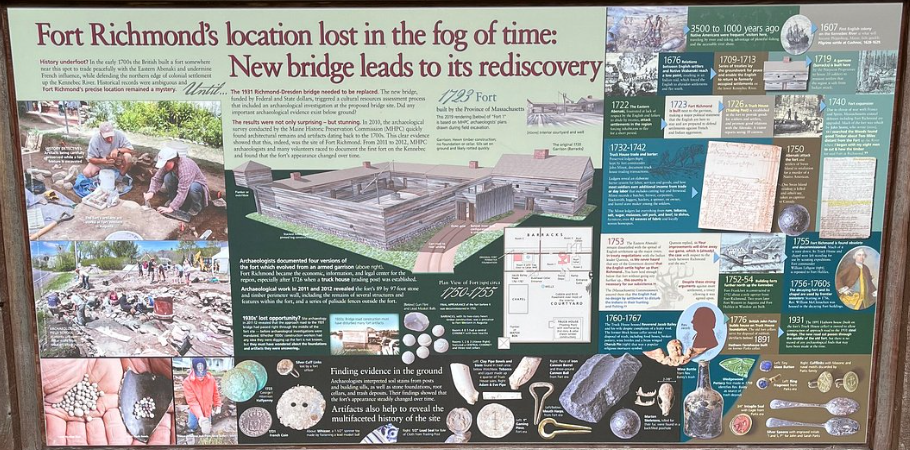
Richmond Dresden Bridge Storyboard
For example, according to MHPC, the replacement of the Richmond-Dresden bridge and the reconstruction of River Road in Windham, both of which were funded by the Federal Highway Administration and therefore required Section 106 review, are excellent examples of how consultation leads to the identification of new historic properties. Through early and regular consultation with MHPC and the involvement of knowledgeable members of the public, archaeologists were able to pinpoint the exact locations of two colonial era forts: Fort Richmond in Richmond and Province Fort in Windham. Complete data recovery was subsequently undertaken at both sites prior to the commencement of work in the affected areas. These efforts uncovered valuable information about the cultural heritage of Maine that might very well have been lost if not for the consultation process.
In Lewiston, federal Housing and Urban Development funds were used to redevelop an entire block to provide new housing units. The property also included the historically designated Dr. Milton Wedgewood House, and the design of the housing units took into consideration the architectural elements of the historic building that is located on a corner of the block. Early Section 106 consultation with MHPC enabled the architect and developer to develop the design for the rehabilitation of the Wedgewood house in a manner that enabled the use of federal and state historic rehabilitation tax credits.
These are just two examples of how the Section 106 process helps identify, protect, inform, and interpret sites and projects. Maine has no statewide review process for above-ground historic resources, making Section 106 critical to the preservation of our state history.
What you can do: contact the Maine Congressional delegation and ask them to reject the proposed revisions to Section 106, both the ACHP’s revisions and the Senate’s permitting bill. If they haven’t already, encourage them to sign on to the bipartisan, bicameral Dear Colleague letter to the Advisory Council of Historic Preservation that rejects the proposed revisions. There are ways to improve the Section 106 process including investing in our state historic preservation offices to increase trained staff and technology. These improvements should be explored before any substantial revisions are considered.
Two national leaders are leading efforts to fight back:
The National Trust for Historic Preservation has launched a Historic Preservation Defense Fund – an effort to raise $10M for legal defense, public advocacy, and community action. The National Trust is working behind the scenes to push back on the destruction of our national historic resources like the East Wing of the White House, the construction of a Triumphal Arch, and the erosion of preservation tools like Section 106 of the National Historic Preservation Act.
Cultural Heritage Partners, an experienced law firm, is preparing to take legal action and has created a strong coalition of advocates. Nearly 1,000 organizations from across the country, including Greater Portland Landmarks, have signed on to an Open Letter to Congress. Their campaign, called 106 Strong, is a fast-moving coalition of partners working together to push back. Donations to 106 Strong will support litigation and legal defense, advocacy, communications, and resource development.
Learn more on our website.
Congresswoman Pingree condemns gutting of Section 106: Congresswoman Chellie Pingree, Ranking Member of the House Appropriations Subcommittee on Interior, Environment, and Related Agencies, joined U.S. Representative Teresa Leger Fernández, Ranking Member of the House Natural Resources Subcommittee on Indian and Insular Affairs to publicly condemn the proposal to erode Section 106 of the National Historic Preservation Act. “The ACHP’s decision to rewrite Section 106—behind closed doors, on an absurdly rushed timeline, and without meaningful input from states, Tribes, preservation experts, or the public—is beyond reckless and will dramatically weaken one of our nation’s most important historic preservation laws,” Congresswoman Pingree said. “For nearly 60 years, the National Historic Preservation Act has ensured that communities have a voice before the federal government moves forward with projects that could affect the places, stories, and cultural resources that help tell our nation’s story. These changes would make it easier for federal agencies to ignore public input, sideline Tribes, and rush ahead with projects that could permanently damage irreplaceable historic and cultural resources.” Pingree promised to fight back saying, “As the Ranking Member on the House Appropriations subcommittee that oversees the ACHP, I will fight every attempt to weaken these critical safeguards or silence the communities and experts who deserve to have a seat at the table when it comes to preserving our shared history.” We thank Congresswoman Pingree for her strong advocacy and encourage you to let her and the rest of Maine’s Congressional delegation know that this issue matters to you.
