City of Portland
City Council Election 2026

On November 3 voters in the City of Portland will elect three new City Council members. Portland operates under a Council-Manager government form, with a nine-member City Council comprised of the Mayor, five district Councilors, and three at-large members. The eight Councilors serve three-year staggered terms. This year, one at-large seat and seats in Districts 4 and 5 are being vacated.

In preparation for this election cycle, Greater Portland Landmarks created a City Council Candidate Survey to learn more about the candidates' visions for the future and views on historic preservation in Portland, to begin a dialogue about issues that are important to us, and to share what we learned with our supporters. We are encouraged by the participation in the survey and the very thoughtful responses on a range of important issues that affect our city.

We encourage you to read the candidates’ responses as you consider your votes this election. Their responses are organized by Council race and a sample question, Historic Preservation means different things to different people, from preserving significant architecture, to researching and uplifting underrepresented history, to maintaining historic neighborhood character, to sustainably reusing existing buildings and materials, and more. What aspect of historic preservation is most important to you personally? What ways would you support historic preservation on City Council?

To view the full survey and all questions and responses, please click each race here (At-Large, District 4, District 5, ) or the district maps embedded below.


At Large Seat

At Large

Atiim B.C. Boykin
The aspect I care about most is the one that's easiest to overlook: the history that doesn't have a plaque yet. When I'm canvassing, I hear it at the door, not from a brochure. A man near the Jetport told me his grandfather ran a bakery and a grocery store on a street that doesn't exist anymore, taken for the Franklin Arterial in the 1960s. That kind of story is preservation work too, even once the building is gone. On City Council, I'd support preservation by making sure the Historic Preservation Board and city staff have the capacity to do their work well, by treating the history of working-class and immigrant Portland with the same seriousness as architecturally significant buildings, and by making sure preservation decisions include the people whose family history is actually tied to a place.

Joey Brunelle
My first love was history. My undergrad degree is in Art History and Archaeology, and I almost went into museum curation as a career. I even had a podcast about history a decade ago. For me it’s not enough to just preserve historical artifacts - it should be legible to the public as well. I want to always have an eye towards communicating to the public that they are in historic spaces, that there are landmarks all around them. And, as I try to do in all things, I want us to think beyond the basics like plaques and signs and really make Portland history come alive. I love the Evergreen cemetery walks, Janes Walks, and other historic tours that are offered. (Now that I think about it, is there a tour of our historic City Hall? Hmm…) But I think it would also be cool for Historic Preservation to partner with Creative Portland or MECA or other local groups to help the public learn about our history through social media, videos, a podcast, or other modern media. Make it really come alive for folks, so we can all take even more pride in our beautiful, unique, historical city.

Kate Snyder
For me, it's reuse. Nathan Clifford School is my favorite example. It's a beautiful 1907 yellow brick building designed by John Calvin Stevens, and it's where our three children attended elementary school. Although I had hoped for a renovation of the school structure when the time came to address deficiencies!, after the school closed, its reuse met two important needs in our city: housing, because the building is now condominiums, and open space, because the back play yard and field is now a city park. Nathan Clifford continues to enhance and serve the neighborhood in good and meaningful ways.

As a councilor, I would support preservation by funding the Historic Preservation Program so that staff and the Board can do their work well, by encouraging the reuse of existing buildings for housing and business, and by making sure preservation rules stay workable for the people who live in and care for historic homes.


District Four
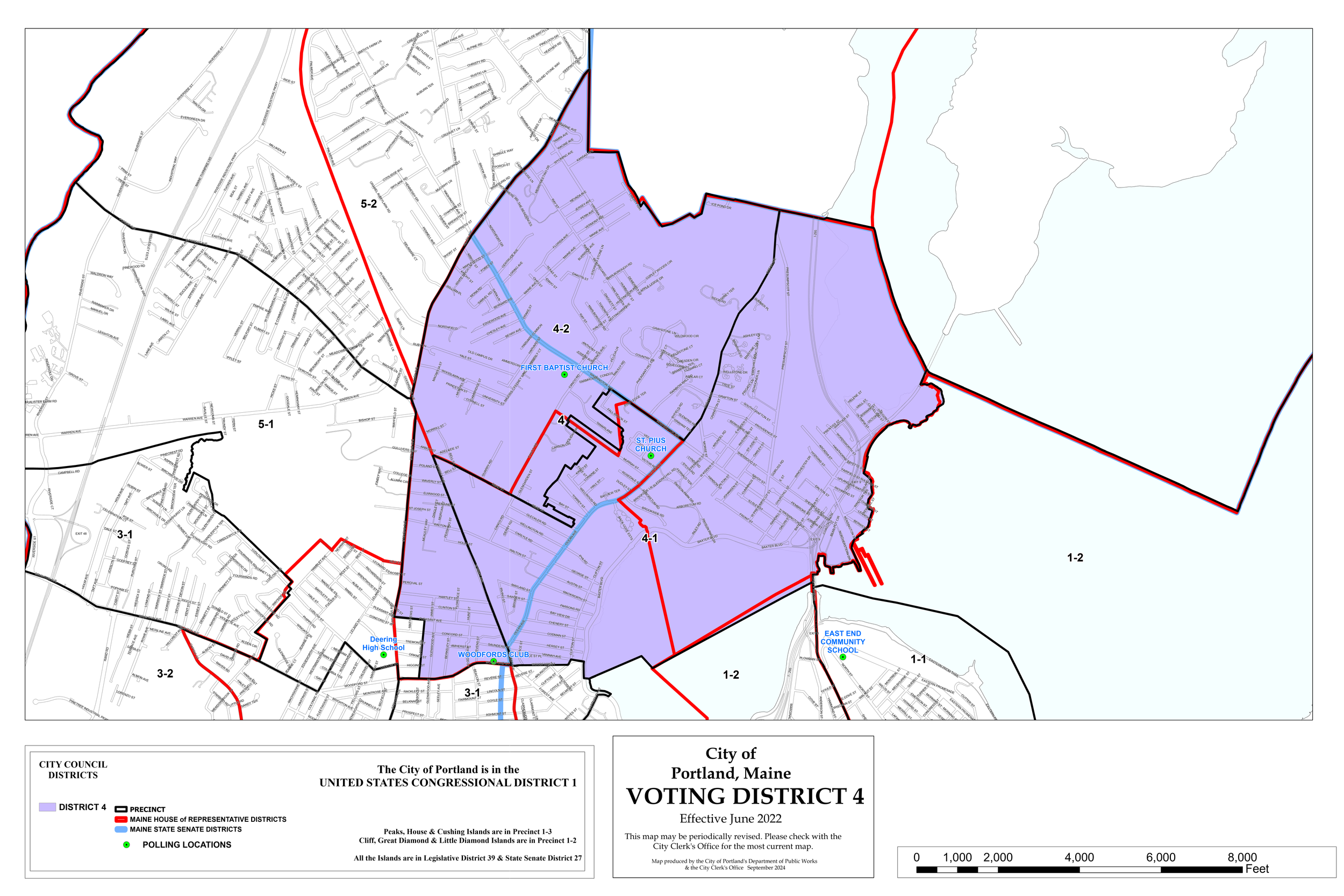
District Four

Anna Bullett
The Indigenous and environmental history of the land on which Portland sits provides critical information of how we might become better stewards of the earth today and in the future. As a member of the Sustainability & Transportation committee, I worked with the Interim Director of Diversity, Equity, and Inclusion to establish a city asset naming policy. Previously, no established process existed. Now, when new parks or buildings are created, there is a historical review of the land on which the new asset is located and a deep look into the history of those who resided there. After a community input process, an ad-hoc committee is formed, a report is made to the Sustainability & Transportation committee with the top 3 suggestions, and ultimately a council vote is taken. In addition to the cultural history, I am deeply interested in the functional history of places and buildings. From farms to schools to train stations, I have a deep and vested interest in preserving functions of spaces and places. I, like so many in Portland, am deeply saddened that the leaders who came before us chose to dismantle Union Station, and I have spent the last three years advocating for reclamation of that property for the purpose of building a beautiful new train station there! I think neighborhood character is critical to one's quality of life and believe that historic preservation has an important role to plan maintaining what makes many Portland neighborhoods feel so unique and truly timeless.

Jacob Viola
My great-grandparents came from Italy to Portland around 1912, and my grandfather grew up on Newbury Street. My family made a living by commercial fishing. Some of my earliest memories are of mornings on the working waterfront with my dad, my grandfather, and my uncle. So the part of preservation that matters most to me is the people's history: the working-class, immigrant, and everyday stories that are part of Portland's buildings and neighborhoods but don't always make it onto the plaque.

I also value adaptive reuse. Giving an existing building a new life is often the most sustainable and most affordable option available to us.

I'd support preservation by treating the Historic Preservation Program and Board as partners, not obstacles. I'd make sure staff have the resources to do timely, high-quality review, and I'd keep my door open to Landmarks and to residents.


District Five
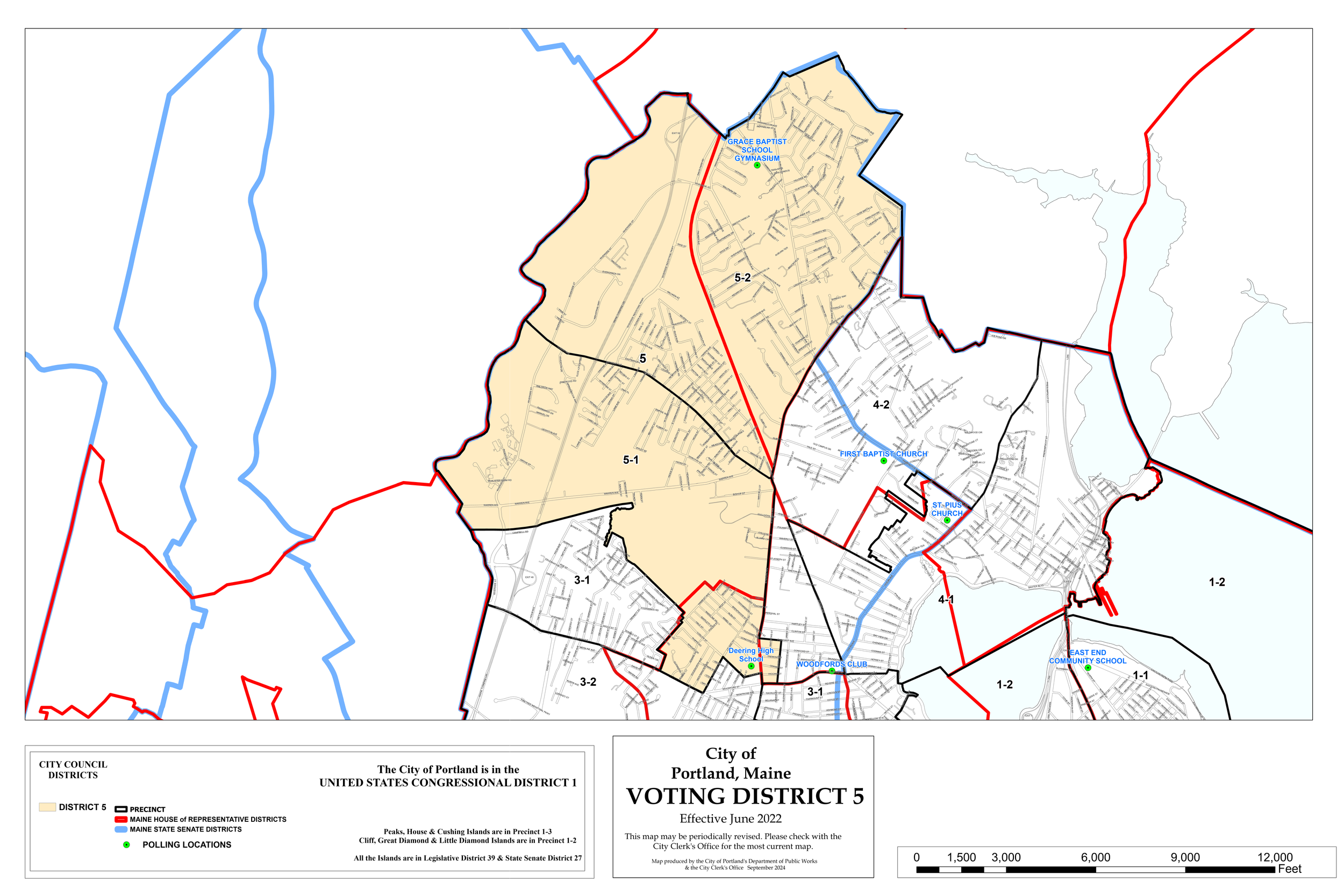
District Five

Todd Chretien
My favorite thing about Portland's history is that we can still see and touch so much of it rather than just reading about it in books. The Abyssinian Meeting House brings the centuries-long struggle for African American freedom life and reminds us that the work is far from complete. The Maine Jewish Museum invites people of all faiths to engage with thousands of years of Jewish faith and culture and ethics and brings that tradition's commitment to civil and human rights to life in the fight against antisemitism and all forms of bigotry today. Mechanics' Hall emphasizes the legacy and continuing power of organized labor. In my mind, preservation's single most valuable contribution to our community is the ability to keep history within our grasp so we may learn from the triumphs and disasters of those who have gone before.

Jakobi Delgado
Historic preservation to me is the preservation of the cities culture without blocking growth, it's finding a way to incorporate historic sites into a city, learning more about the history of the site and our own past.

As someone who is in favor of encouraging growth in Portland, it's important to ensure that we don't lose what made Portland home to me and thousands of others. I will continue to champion funding for historic research and preservation in the city so that generations after mine can experience it in person.

Kevin Gardella
What matters most to me is keeping Portland’s classic buildings standing and useful. They connect us to the city’s history of trade and commerce and give people a reason to visit. The Time and Temperature Building is the kind of architecture I want to protect. I would support exploring housing affordable to working people in buildings like it, where conversion is practical. We have buildings and space already. City Hall should help owners understand what they can do, what it will cost, and how to get approval. On the Council, I would support preservation incentives and clear standards for new construction.

Ilma Lopez
When we talked about Portland you can not choose one or another, to preserve it we have to take all of them into consideration. I will support their efforts and follow their lead.

At Large Candidates

Atiim B. C. Boykin, https://atiim.org/

Joey Brunelle, https://joeyforportland.org/

Kate Snyder, https://katesnyderforportland.com/


(1) Historic Preservation means different things to different people, from preserving significant architecture, to researching and uplifting underrepresented history, to maintaining historic neighborhood character, to sustainably reusing existing buildings and materials, and more.

What aspect of historic preservation is most important to you personally? What ways would you support historic preservation on City Council?

  • Atiim B.C. Boykin

    The aspect I care about most is the one that's easiest to overlook: the history that doesn't have a plaque yet. When I'm canvassing, I hear it at the door, not from a brochure. A man near the Jetport told me his grandfather ran a bakery and a grocery store on a street that doesn't exist anymore, taken for the Franklin Arterial in the 1960s. That kind of story is preservation work too, even once the building is gone. On City Council, I'd support preservation by making sure the Historic Preservation Board and city staff have the capacity to do their work well, by treating the history of working-class and immigrant Portland with the same seriousness as architecturally significant buildings, and by making sure preservation decisions include the people whose family history is actually tied to a place.

  • Joey Brunelle

    My first love was history. My undergrad degree is in Art History and Archaeology, and I almost went into museum curation as a career. I even had a podcast about history a decade ago. For me it’s not enough to just preserve historical artifacts - it should be legible to the public as well. I want to always have an eye towards communicating to the public that they are in historic spaces, that there are landmarks all around them. And, as I try to do in all things, I want us to think beyond the basics like plaques and signs and really make Portland history come alive. I love the Evergreen cemetery walks, Janes Walks, and other historic tours that are offered. (Now that I think about it, is there a tour of our historic City Hall? Hmm…) But I think it would also be cool for Historic Preservation to partner with Creative Portland or MECA or other local groups to help the public learn about our history through social media, videos, a podcast, or other modern media. Make it really come alive for folks, so we can all take even more pride in our beautiful, unique, historical city.

  • Kate Snyder

    For me, it's reuse. Nathan Clifford School is my favorite example. It's a beautiful 1907 yellow brick building designed by John Calvin Stevens, and it's where our three children attended elementary school. Although I had hoped for a renovation of the school structure when the time came to address deficiencies!, after the school closed, its reuse met two important needs in our city: housing, because the building is now condominiums, and open space, because the back play yard and field is now a city park. Nathan Clifford continues to enhance and serve the neighborhood in good and meaningful ways.

    As a councilor, I would support preservation by funding the Historic Preservation Program so that staff and the Board can do their work well, by encouraging the reuse of existing buildings for housing and business, and by making sure preservation rules stay workable for the people who live in and care for historic homes


(2) Portland’s Comprehensive Plan 2030 states, “Identifying and preserving historic resources stabilizes neighborhoods, makes economic sense, and contributes to a distinct sense of place that makes Portland such a desirable place to live, to visit, and to invest.” Portland’s award-winning Historic Preservation Program was established in 1990 to maintain and enhance the patterns of development that make Portland special. Program staff and the Historic Preservation Board review hundreds of development applications every year to provide guidance and protect Portland’s historic fabric, and Greater Portland Landmarks offers resources to support the City and property owners, and to further historic preservation goals.

If a historic preservation related issue were to come before you as a City Councilor, how would you educate yourself to encourage solutions that balance historic preservation goals with other city or constituent goals?

  • Atiim B.C. Boykin

    My approach to any issue starts with the people closest to it. That's how I helped build San Francisco's Young Adult Court: by bringing every stakeholder to the same table before a decision got made. On a preservation question, that means talking directly with GPL and Historic Preservation Board staff, reading the technical findings instead of just the summary, and hearing from the residents and property owners the decision actually affects. I don't think preservation and other city goals have to be in permanent conflict. The City's own Comprehensive Plan and the 2023 Trends report both point to preservation supporting density and sustainability goals rather than working against them, and I'd want any solution to start from that evidence instead of treating it as a zero-sum fight.

  • Joey Brunelle

    My respect for history runs deep. I don’t just want to read the materials in the packet about an issue, I want to truly understand the issue from all angles, particularly looking at the primary documents and by speaking with people either with lived experience or expertise. (It’s the historian in me!) I want to find ways not just to balance historic preservation with growth and change, but to incorporate historicity into that growth and change in a seamless, complementary way. Development and historic preservation do not have to be seen as adversarial concepts. There are examples from around the world of historic buildings or spaces being updated or enhanced in ways that protect the historical character and value while serving the needs of modern times, and simultaneously protecting that history for the future. That can look like clever, creative reuse, thoughtful building standards for new developments, and preservation initiatives that don't just rehab our history but illuminate it in new ways so it's more accessible to a broader audience. That should be done collectively - it’s not just the job of the Historic Preservation staff but can be shared with the schools, our universities, community and neighborhood groups, religious communities, and others.

  • Kate Snyder

    I'd start with the people who know the most: the Historic Preservation Board, city staff, and Greater Portland Landmarks. (When I was Mayor, I met with Deb Andrews as well as staff and board members from Landmarks.) I'd read the record, visit the site, and do my best to talk with the property owner and neighbors. Then I'd ask what other goals there may be: whether that's housing, accessibility, or energy efficiency, and look for solutions that serve as many goals as possible. In my experience, the best outcomes come when people with different priorities sit down early, before positions harden.


(3) ReCode Portland was the first rewriting of the City’s Land Use Code in over 50 years and created a new, unified development code to serve Portland for the 21st century and is designed to better equip the city to address needs in areas such as housing, design, preservation, conservation, the working waterfront, energy, and transportation.

To what extent have you engaged with development in Portland? Now that we have seen outcomes from the changes made during the ReCode Portland process, how do you feel about ReCode’s revisions to the Land Use Code?

  • Atiim B.C. Boykin

    My engagement with development in Portland comes mostly through housing policy rather than the ReCode process itself. I serve on the board of Avesta Housing, and I spent most of my adult life as a renter, moving often while trying to find the right fit, which shapes how I look at zoning and permitting fights now. On ReCode's results, the number that stands out to me is the fee-in-lieu data: the city approved 1,420 units in 2025, but only 187 were completed. That tells me there's still a real gap between what the Land Use Code allows and what's actually getting built. Going forward, the city needs to look hard at any area still coded in a way that doesn't allow for housing density, and recode it where it makes sense to build, with the neighborhood at the table, not after the fact. ReCode was a necessary modernization of a code that hadn't been touched in fifty years, but the work isn't finished until the areas still standing in the way of housing get the same honest look, with the people who live there in the room.

  • Joey Brunelle

    I supported ReCode at the time, as well as the changes made to be compliant with LD2003. I believe it's important for us to develop our dense urban core and neighborhoods along transit lines. We need to build more housing to remain a vibrant city. Change can be difficult, but necessary to remain a healthy city. Some of the ways we can do this are with thoughtful design and by respecting Portland's historic context, and I believe ReCode strikes that balance. It was created through an almost decade-long process with a large degree of public input to determine its direction and details. We risk becoming a suburb of Scarborough and Gorham right now, unfortunately, because we're not building enough housing. We have a lot of underutilized land on the peninsula that also serves no historic value, which could be developed - e.g. surface parking lots that litter downtown - and updating our land use code to allow for higher, denser development makes it more attractive to finally turn those parcels into mixed used development and housing. ReCode’s revisions support the kind of growth we need.

  • Kate Snyder

    I've been part of Portland's public policy making for more than 20 years, including as Mayor from 2019 to 2023. I was involved with ReCode during my term; the process spanned three mayors' terms, and final adoption came after I left office. More recently, I served on the fundraising committee for Rising Eddy Pool, and I currently serve on a Portland Parks Conservancy working group for First Light Park.

    I believe evaluating and updating our land use code is good for Portland. ReCode opened real opportunities for growth and density, and we should take them. I also know that waivers will always be requested, and that change is hard for people. Both are part of the work, and both deserve a fair hearing.

    When a policy stands in the way of the outcome we want, we should evaluate it and change it. Inclusionary Zoning at 10% had positive impacts, including funding for the Jill Duson Housing Fund. At 25%, I believe it is slowing the housing we need. Good public policy is designed to be implemented, evaluated, and amended to get the results we seek.


(4) The City’s 2023 report, Trends in Portland’s Historic Districts, compared trends in historic districts, the peninsula, and the city across a number of different measures. The Trends study found historic districts on average have a much higher housing density per square mile than both the city overall and elsewhere on the peninsula. The report also found that historic districts, where buildings are reused more than demolished, support the City's sustainability goals as laid our in the Comprehensive Plan and One Climate Future plan.

Do you support increasing housing density in Portland? If so, describe how you feel Portland can add housing while maintaining the qualities often found in historic neighborhoods such as human-scale massing, contextual design and materials, safe and walkable streets, healthy tree canopies, etc.

  • Atiim B.C. Boykin

    Yes, I support increasing housing density in Portland, but how we do it matters as much as whether we do it. My Housing That Works platform is built around getting homes built within our existing fabric: bringing chronically vacant buildings, three or more years empty, back into use through a structured "Other Doors" process, rather than demolishing historic structures to start over. Where we do build new, I want it built to a standard that keeps the charm Portland is known for: contextual materials, human-scale massing, and design that reads as a continuation of the block it's on, not a break from it. The same Trends report GPL cites found historic districts already carry higher housing density than the city average while reusing more buildings than they demolish. That's the model I want to build on.

  • Joey Brunelle

    Yes I support increasing housing density in Portland. For us to remain a world class city, for us to grow our property tax base, for us to be a place where workers can afford to also live, we need denser housing. However I think it’s important that the densest areas be concentrated to Portland’s urban core and along transit lines. Residential neighborhoods should remain residential, but I would like to see more in the way of human-scale 3-4 story developments (“triple deckers”) in select areas off peninsula, when appropriate. To do that I want to identify ways to make it easier for smaller-scale developers to build smaller-scale developments - including speeding up our Permitting process, and providing assistance to smaller developers when navigating our historic preservation process or other city processes. Rather than only focusing on the largest developers let’s broaden the pool of people who can build housing by making it easier to do so at a smaller scale. But let's make it easier for these small developers to work *with* historic preservation without compromising standards. Other cities around the world have found successful ways to do these partnerships, so there's less of an adversarial relationship between "development" and "preservation." It doesn't need to be an either-or.

  • Kate Snyder

    Yes. Portland needs more housing, and I don't think there's a cap on that need right now. When we looked at the creation of a Munjoy Hill Historic District we learned that housing supply additions are not only possible, but they're happening in some of our most dense neighborhoods (which happen to have a Historic designation). I think old, new and expansion can exist side by side.

    I'd like to see us grow through neighborhood nodes. I refer to the Muskie School report Growing Portland: Not Whether, but How, as I was and am a big Dick Barringer fan and also because this report offers great insights into how to build for housing, local businesses, and safe and accessible walking and biking routes so people can meet their everyday needs close to home. I think reuse of existing buildings, new housing supply that meets real needs, safe streets and sidewalks all contribute to a good quality of place and life.


(5) Portland’s identity is strongly associated with our historic buildings, landscapes, neighborhoods, and streetscapes, but less than 10% of the city's land area is currently protected with historic designation. How much importance do you place on Portland's historic preservation programs and their role in shaping the city's future? Would you support additional areas of the city being protected through historic designations? Please explain.

  • Atiim B.C. Boykin

    I place real importance on Portland's historic preservation programs. They protect something that, once it's gone, as Franklin Arterial taught this city the hard way, doesn't come back. Less than 10 percent of the city's land currently carries historic designation, which tells me there's room to look at more, particularly in working-class and immigrant neighborhoods whose history is just as much a part of Portland's identity as its landmark buildings, but hasn't always gotten the same recognition.

    My focus there is mainly on commercial buildings. Storefronts and main street facades carry a lot of Portland's historic character, and they're also where historic standards hit hardest: the specific window styles, materials, and veneers a historic district can require are expensive to install and maintain, and that cost falls hard on small business owners trying to keep a building up to code. I'd support expanding designations paired with real funding, grants or low-interest loans that help property and business owners afford those historic-standard upgrades, so the standard is something they can meet without it becoming another barrier to keeping a small business open on a historic block.

  • Joey Brunelle

    Portland’s historic preservation programs help keep Portland the special little city it is today. We have centuries of history here, from our historic cemeteries to our historic buildings, to plazas where history happened to landmarks built by our Portland ancestors. I look forward to considering new programs and designations as they come up on the Council, and I commit to doing thorough research as well as extensive discussions with stakeholders about each new opportunity as it arises.

  • Kate Snyder

    I think they're very important. Historic designations help preserve our sense of place by retaining and respecting our history. As Mayor, I voted to support historic designations, including Munjoy Hill.

    I'm open to additional designations, and I'm also open-minded about flexibility. If designation makes the care and upkeep of housing meaningfully more expensive than in non-designated areas, we disadvantage residents and limit who can afford to live there. Preservation should help keep our neighborhoods within reach for the people who live in them.


(6) Thank you for taking the time to respond to our survey! Is there anything else related to historic preservation that you would like for GPL supporters to know?

  • Atiim B.C. Boykin

    Portland has already lost neighborhoods it didn't get to choose to lose. Franklin Arterial took more than 100 buildings and displaced hundreds of Italian, Jewish, Polish, Irish, and Armenian families in the name of urban renewal, and that history is the reason today's preservation conversation matters. I want to bring that same care to how this city makes decisions about its built environment going forward: slower, more honest about who's affected, and more willing to ask whose voice got left out last time. I'd welcome the chance to keep talking with GPL after November 3rd, win or lose.

  • Joey Brunelle

  • Kate Snyder

    Thank you all for your work. I know that the example of Union Station is both your origin story, and the often referred to example of what not to do. But, it's true and enduring as a lesson. Having stewards of our history is critical as we navigate change and growth.

District four

Anna Bullett, https://www.annabportlandme.com/

Jake Viola, https://jakeviola.com/


(1) Historic Preservation means different things to different people, from preserving significant architecture, to researching and uplifting underrepresented history, to maintaining historic neighborhood character, to sustainably reusing existing buildings and materials, and more.

What aspect of historic preservation is most important to you personally? What ways would you support historic preservation on City Council?

  • Anna Bullett

    The Indigenous and environmental history of the land on which Portland sits provides critical information of how we might become better stewards of the earth today and in the future. As a member of the Sustainability & Transportation committee, I worked with the Interim Director of Diversity, Equity, and Inclusion to establish a city asset naming policy. Previously, no established process existed. Now, when new parks or buildings are created, there is a historical review of the land on which the new asset is located and a deep look into the history of those who resided there. After a community input process, an ad-hoc committee is formed, a report is made to the Sustainability & Transportation committee with the top 3 suggestions, and ultimately a council vote is taken. In addition to the cultural history, I am deeply interested in the functional history of places and buildings. From farms to schools to train stations, I have a deep and vested interest in preserving functions of spaces and places. I, like so many in Portland, am deeply saddened that the leaders who came before us chose to dismantle Union Station, and I have spent the last three years advocating for reclamation of that property for the purpose of building a beautiful new train station there! I think neighborhood character is critical to one's quality of life and believe that historic preservation has an important role to plan maintaining what makes many Portland neighborhoods feel so unique and truly timeless.

  • Jake Viola

    My great-grandparents came from Italy to Portland around 1912, and my grandfather grew up on Newbury Street. My family made a living by commercial fishing. Some of my earliest memories are of mornings on the working waterfront with my dad, my grandfather, and my uncle. So the part of preservation that matters most to me is the people's history: the working-class, immigrant, and everyday stories that are part of Portland's buildings and neighborhoods but don't always make it onto the plaque.

    I also value adaptive reuse. Giving an existing building a new life is often the most sustainable and most affordable option available to us.

    I'd support preservation by treating the Historic Preservation Program and Board as partners, not obstacles. I'd make sure staff have the resources to do timely, high-quality review, and I'd keep my door open to Landmarks and to residents.


(2) Portland’s Comprehensive Plan 2030 states, “Identifying and preserving historic resources stabilizes neighborhoods, makes economic sense, and contributes to a distinct sense of place that makes Portland such a desirable place to live, to visit, and to invest.” Portland’s award-winning Historic Preservation Program was established in 1990 to maintain and enhance the patterns of development that make Portland special. Program staff and the Historic Preservation Board review hundreds of development applications every year to provide guidance and protect Portland’s historic fabric, and Greater Portland Landmarks offers resources to support the City and property owners, and to further historic preservation goals.

If a historic preservation related issue were to come before you as a City Councilor, how would you educate yourself to encourage solutions that balance historic preservation goals with other city or constituent goals?

  • Anna Bullett

    In my first term on Council, my practice was to seek as much community and expert input as possible before a vote, a practice I plan to continue in a second term. I have been fortunate to hear from many passionate planners for the future and preservers of the past. I am proud of Portland’s historic preservation staff who do an excellent job seeking out and securing modern solutions for old buildings that stay in-line with historic preservation standards, thus ensuring the continued unique and rich character of city structures. The reality is that funding is a serious barrier to historic preservation, and environmental hazards and lack of climate control in older city-owned buildings are not to be taken lightly. I look forward to continuing learning from and partnering with all impacted constituents and city staff as we enact Portland's Comprehensive 2030 plan.

  • Jake Viola

    I'd start by listening. Then I’d look at the data. Before forming a position, I'd meet with Historic Preservation staff and read the Board's findings, consult Greater Portland Landmarks, talk directly with the property owners and neighbors most affected, and walk the site myself.

    I'd also lean on evidence like the City's 2023 Trends in Portland's Historic Districts report. It found that historic districts are doing what they were designed to do, and it found no evidence that designation drives displacement or higher housing costs. It also recommended a review process that is fair, consistent, timely, and easy to understand.

    My background in government operations taught me that bringing people together early usually leads to better solutions. I'd bring an open mind to every preservation question.


(3) ReCode Portland was the first rewriting of the City’s Land Use Code in over 50 years and created a new, unified development code to serve Portland for the 21st century and is designed to better equip the city to address needs in areas such as housing, design, preservation, conservation, the working waterfront, energy, and transportation.

To what extent have you engaged with development in Portland? Now that we have seen outcomes from the changes made during the ReCode Portland process, how do you feel about ReCode’s revisions to the Land Use Code?

  • Anna Bullett

    I was honored on November 4, 2024 to vote to pass the City’s new Land Use Code, the first revision in over 50 years. I was proud of the planning staff for their community engagement, the many hours they spent one-on-one with each of the interested councilors, including myself, and I am proud of the resulting documents which emphasized urban density, green space, and public transit. I brought two significant ReCode amendments which were passed by council, one to add theaters and performance halls as allowed in Transit Oriented Development Zones, and one that removed barriers to the feasibility of opening a childcare center or home daycare. I always remind my colleagues and the public that the code should NOT sit on the shelf for another 50 years. The climate, the economy, building materials, and our society are constantly changing, as such I like to think of our code as a living breathing document that can adjust as necessary to meet the moment. I have spent significant time during my first term building trusted relationships with a variety of developers, both of commercial and residential properties. It has allowed me to get real time input from community experts when a hard question is in front of me, rather than relying solely on the information presented by city staff. Thanks to a first term on council, I also understand the scope of Planning Board duties and council duties, and where they sometimes intersect.

  • Jake Viola

    My engagement with development has come as a resident, a homeowner, a neighbor, and a candidate. Through door knocking, I've had numerous conversations with residents about what gets built in their neighborhoods and how. A clear, predictable process matters.

    ReCode was an accomplishment in that it consolidated 50 years of patchwork policy into one unified code. Because it's still relatively new, I think the right approach is to measure how it's performing before making major changes. I'd want to see data on housing production, review timelines, and design outcomes, including in historic districts, and to hear from staff, the Preservation Board, builders, and neighbors about what's working. Where the evidence shows a provision isn't delivering, I'd be open to refining it.


(4) The City’s 2023 report, Trends in Portland’s Historic Districts, compared trends in historic districts, the peninsula, and the city across a number of different measures. The Trends study found historic districts on average have a much higher housing density per square mile than both the city overall and elsewhere on the peninsula. The report also found that historic districts, where buildings are reused more than demolished, support the City's sustainability goals as laid our in the Comprehensive Plan and One Climate Future plan.

Do you support increasing housing density in Portland? If so, describe how you feel Portland can add housing while maintaining the qualities often found in historic neighborhoods such as human-scale massing, contextual design and materials, safe and walkable streets, healthy tree canopies, etc.

  • Anna Bullett

    My first residence in Portland was a building listed on the National Register of Historic Places. It was a multiunit building with community garden plots, plenty of green space, and walkable to many city sites. I know that it is possible to increase Portland’s housing density while preserving design integrity and achieving our climate goals, because I lived it! I have since become friendly with that developer and look forward to learning more from them about their special sauce recipe for adaptative reuse. My worry, of course, is the ongoing federal government interference in global conflicts that negatively impact the shipping and building materials industry, and the gutting of federal infrastructure funding that makes intentional municipal planning achievable. There are glimpses of hope here and there, but it will be crucial to partner with the state and neighboring communities to pool resources and political power, something I will be able to do in a second term based on the relationships I have built. I look forward to helping Portland meet the goals established in the Comprehensive Plan and One Climate Future.

  • Jake Viola

    The Trends report makes the case that preservation and density can work together. Portland's historic districts average about 8,770 housing units per square mile. That's far denser than the rest of the peninsula and roughly ten times the citywide average. Much of that growth came from creative reuse, like converting single-family homes into two-family homes and commercial buildings into apartments.

    I'd build on what works: materials, active and walkable streets, and room for trees. I'd support making adaptive reuse easier and encouraging gentle, incremental density across more neighborhoods. Clear design standards and a predictable review process help produce both better design and more housing.


(5) Portland’s identity is strongly associated with our historic buildings, landscapes, neighborhoods, and streetscapes, but less than 10% of the city's land area is currently protected with historic designation. How much importance do you place on Portland's historic preservation programs and their role in shaping the city's future? Would you support additional areas of the city being protected through historic designations? Please explain.

  • Anna Bullett

    When deciding on any topic, I first review all the data, community input, fiscal impact, and comparable examples from other cities. Land use and historical designation decisions are no different. Historic preservation is very important for a city like Portland in which tourism and arts & culture are critical for our economy and our quality of life. Also important is the success of small businesses, the building of affordable housing, ensuring our public schools are equitable and excellent, and taking significant leaps toward climate resilience. I know that historic preservation, modernity, climate readiness, and public transit can co-exist. Every time I travel, I look for insights into how other cities are balancing those priorities, using this to inform my holistic approach to urban decisions. Next time you see me, ask me about where I have traveled and the insights I gained!

  • Jake Viola

    One in four Portland residents lives in a historic district. These places are a big part of why people want to live in, visit, and invest in our city. The 2023 Trends report shows that historic buildings are being preserved, new construction fits its context, and the districts are adding homes rather than holding them back.

    The program also supports our climate goals. Historic districts see far more renovation and far less demolition than the rest of the city. The report estimates this keeps more than 11 million pounds of waste out of landfills each year and avoids tens of thousands of tons of carbon emissions. I'd also support continuing to make it easier to add heat pumps and solar panels to historic buildings, so preservation and sustainability keep moving forward together.

    On new designations, I'd evaluate each proposal on its merits through the established process. That means relying on the research of staff and the Historic Preservation Board, and especially on input from the property owners and residents who would be affected. I support continuing to track outcomes, as the report recommends, so decisions stay grounded in evidence.


(6) Thank you for taking the time to respond to our survey! Is there anything else related to historic preservation that you would like for GPL supporters to know?

  • Anna Bullett

    Please, read more about my time on council and my re-election campaign at annabportlandme.com and follow me on Instagram @annabportlandme.

  • Jake Viola

    I grew up across the bridge in South Portland and moved to Portland after years in public service in Washington, D.C., and Massachusetts. I'm running because I love this place, its history, and the people who've made it what it is.

    I'd welcome the chance to take one of your walking tours and learn more about your work. Whatever the issue, I promise to listen, to keep an open mind, and to respond. Anyone who contacts me will hear back within 24 hours.


(1) Historic Preservation means different things to different people, from preserving significant architecture, to researching and uplifting underrepresented history, to maintaining historic neighborhood character, to sustainably reusing existing buildings and materials, and more.

What aspect of historic preservation is most important to you personally? What ways would you support historic preservation on City Council?

  • Todd Chretien

    My favorite thing about Portland's history is that we can still see and touch so much of it rather than just reading about it in books. The Abyssinian Meeting House brings the centuries-long struggle for African American freedom life and reminds us that the work is far from complete. The Maine Jewish Museum invites people of all faiths to engage with thousands of years of Jewish faith and culture and ethics and brings that tradition's commitment to civil and human rights to life in the fight against antisemitism and all forms of bigotry today. Mechanics' Hall emphasizes the legacy and continuing power of organized labor. In my mind, preservation's single most valuable contribution to our community is the ability to keep history within our grasp so we may learn from the triumphs and disasters of those who have gone before.

  • Jakobi Delgado

    Historic preservation to me is the preservation of the cities culture without blocking growth, it's finding a way to incorporate historic sites into a city, learning more about the history of the site and our own past.

    As someone who is in favor of encouraging growth in Portland, it's important to ensure that we don't lose what made Portland home to me and thousands of others. I will continue to champion funding for historic research and preservation in the city so that generations after mine can experience it in person.

  • Kevin Gardella

    What matters most to me is keeping Portland’s classic buildings standing and useful. They connect us to the city’s history of trade and commerce and give people a reason to visit. The Time and Temperature Building is the kind of architecture I want to protect. I would support exploring housing affordable to working people in buildings like it, where conversion is practical. We have buildings and space already. City Hall should help owners understand what they can do, what it will cost, and how to get approval. On the Council, I would support preservation incentives and clear standards for new construction.

  • Ilma Lopez

    When we talked about Portland you can not choose one or another, to preserve it we have to take all of them into consideration. I will support their efforts and follow their lead.


(2) Portland’s Comprehensive Plan 2030 states, “Identifying and preserving historic resources stabilizes neighborhoods, makes economic sense, and contributes to a distinct sense of place that makes Portland such a desirable place to live, to visit, and to invest.” Portland’s award-winning Historic Preservation Program was established in 1990 to maintain and enhance the patterns of development that make Portland special. Program staff and the Historic Preservation Board review hundreds of development applications every year to provide guidance and protect Portland’s historic fabric, and Greater Portland Landmarks offers resources to support the City and property owners, and to further historic preservation goals.

If a historic preservation related issue were to come before you as a City Councilor, how would you educate yourself to encourage solutions that balance historic preservation goals with other city or constituent goals?

  • Todd Chretien

    I hold a Masters Degree in US History and value the expertise and knowledge of professionals and committed volunteers in this work. I will take all applications seriously, listen carefully to the HPB, and consult with neighbors and specialists alike in determining the merits of individual applications in the context of overarching preservation priorities and new city development.

  • Jakobi Delgado

    If an issue of historic preservation came to the city council, I would consult the historians. I am a huge history buff, but I am not an expert on the local history of the city. I would communicate to the historians and learn what's important about the issue at hand and use the judgement of those in this community to make a well-informed decision.

  • Kevin Gardella

    At 75 State Street, I ran an oral and video history program that collected stories from people who had experienced Portland firsthand.

    That experience shapes how I think about preservation. A building’s history includes the people who lived, worked, and gathered there. I would listen to those accounts and consult preservation staff, Greater Portland Landmarks, the Historic Preservation Board, owners, and neighbors. I would ask what makes a property significant, what can reasonably be preserved, and how it could serve people today. Housing, accessibility, and cost all deserve serious consideration.

  • Ilma Lopez

    I will look for support in out historic preservation department and permitting department and see where we can find the balance between evolution and keeping our city's character and foundation


(3) ReCode Portland was the first rewriting of the City’s Land Use Code in over 50 years and created a new, unified development code to serve Portland for the 21st century and is designed to better equip the city to address needs in areas such as housing, design, preservation, conservation, the working waterfront, energy, and transportation.

To what extent have you engaged with development in Portland? Now that we have seen outcomes from the changes made during the ReCode Portland process, how do you feel about ReCode’s revisions to the Land Use Code?

  • Todd Chretien

    I applaud GPL's engagement with Recode Portland. Streamlining regulation in order to make planning and preservation more easily understood by the public was the right choice. For instance, making it easier for home owners to build ADUs is one critical piece of the puzzle to expanding housing. Improving walkability, maintaining neighborhood cohesion, and preserving our culturally valuable (and economically generative) historic sites must be brought into line with Portland's need to grow in the coming decade. More people lived in Portland in 1950 than do so today. Portland must encourage smart growth for affordable housing, accessibly transit, and greater community engagement while protecting our past.

  • Jakobi Delgado

    I was too young to have a say in recode. However, I feel as if it's a step in the right direction. I am a big proponent of mixed-used zoning and medium scale development is what we need in the city to fix our housing crisis. However, I think it failed to protect the working waterfront to the scale needed and has not done enough to conserve the environment.

  • Kevin Gardella

    As a homeowner, I have paid particular attention to ADU permitting, housing conversions, and what development means for surrounding neighbors. I agree with making the rules easier to understand and allowing homes and businesses closer together. But I believe ReCode went too far with downtown building heights. The approved 380-foot Old Port Square tower is exactly my concern. To me, that scale does not belong in the Old Port. I would revisit those allowances and push for earlier neighborhood involvement. Making housing easier to build should include helping homeowners and the small builders.

  • Ilma Lopez

    I think is too early to judge how the recode is working. I will like to be more involve in the next phase, and be able to see the long term plan


(4) The City’s 2023 report, Trends in Portland’s Historic Districts, compared trends in historic districts, the peninsula, and the city across a number of different measures. The Trends study found historic districts on average have a much higher housing density per square mile than both the city overall and elsewhere on the peninsula. The report also found that historic districts, where buildings are reused more than demolished, support the City's sustainability goals as laid our in the Comprehensive Plan and One Climate Future plan.

Do you support increasing housing density in Portland? If so, describe how you feel Portland can add housing while maintaining the qualities often found in historic neighborhoods such as human-scale massing, contextual design and materials, safe and walkable streets, healthy tree canopies, etc.

  • Todd Chretien

    I absolutely support increasing housing density in Portland. However, siting new development must be done in partnership with neighbors. Reimagining Franklin Street (Arterial) is a great example of how to creating denser housing can open up opportunities for small businesses, maintain human-scale architecture, and enhance pedestrian and bike safety. All the while strengthening Portland's tourism economy. In District 5, we have hundreds of acres of underutilized land that could be used to build healthy neighborhoods and spart economic revitalization for Allen's Corner. For instance, the old Consolidated Communications HQ out on Davis Farm Road has sat unused for years. We have childcare and schools and commercial groceries and a great trail system, but why can't District 5 have a thriving, walkable center? Our historic farmland has largely been lost at this point, but many of the old farm buildings remain (a great opportunity for preservation and education) and the area could, for instance, host a year-round farmers market embedded in North Deering's rich agricultural past. And speaking of trees, the Presumpscot River Trail system is a gem enjoyed by thousands of people per year. But it needs more support from Portland and more cooperation from our partners in Falmouth and Westbrook to upgrade the trails, establish bikeability to the trail heads, and tie what is a spectacular outdoor activity back to our North Deering Neighborhoods.

  • Jakobi Delgado

    If I could change one thing about my country it would be the destruction of the car-centric city. I would use our past as a model for my vision of increased housing density in the city, for centuries we had it correct before the car. We need mixed-use zoning that maintains a human scale by allowing business and housing to mix together in a natural way allowing us to maintain walkability, build wider sidewalks, safer streets, and keep in line with the way our downtown is actually currently designed.

  • Kevin Gardella

    Yes. We should start by looking at buildings and properties we already have. Older commercial buildings may offer opportunities for housing, and I would support rezoning where needed to make suitable conversions possible. Old buildings can serve new purposes. ADUs and smaller buildings on appropriate lots can also add homes without overwhelming a neighborhood. We need to pay attention to height, materials, sidewalks, and the trees that make a street comfortable to walk along.

    More housing should help people become part of a neighborhood while keeping the qualities residents already value.

  • Ilma Lopez

    Yes, We need housing, however I will like to see more of our empty long standing buildings be part of the plan. Making shiny for years to come. and when we are planning new buildings adding more green space, make sure we have walkaway and public transportation access, design being according to the neighborhood, a plan with the future in mind without losing who we are.


(5) Portland’s identity is strongly associated with our historic buildings, landscapes, neighborhoods, and streetscapes, but less than 10% of the city's land area is currently protected with historic designation. How much importance do you place on Portland's historic preservation programs and their role in shaping the city's future? Would you support additional areas of the city being protected through historic designations? Please explain.

  • Todd Chretien

    In District 5, we have hundreds of acres of underutilized land that could be used to build healthy neighborhoods and spart economic revitalization for Allen's Corner. For instance, the old Consolidated Communications HQ out on Davis Farm Road has sat unused for years. We have childcare and schools and commercial groceries and a great trail system, but why can't District 5 have a thriving, walkable center? We need a plan. Our historic farmland has largely been lost at this point, but many of the old farm buildings remain (a great opportunity for preservation and education) and the area could, for instance, host a year-round farmers market embedded in North Deering's rich agricultural past. And we could engage our Wabanaki Nations and Tribes to cocreate a center for historical understanding and cultural exchange. Too often, Wabanaki history and present is left as an afterthought, or a plaque tacked on. The Presumpscot River Trail system is a gem enjoyed by thousands of people per year. But it needs more support from Portland and more cooperation from our partners in Falmouth and Westbrook to upgrade the trails, establish bikeability to the trail heads, and tie what is a spectacular outdoor activity back to our North Deering Neighborhoods. I love the peninsula. I miss the Movies on Exchange Street! But District 5 has just as much rich history as any part of the city. All we have to do is look for it, honor it, and make it visible.

  • Jakobi Delgado

    I am unsure which areas would be applied for to gain the designation, so I am unable to make a comment about a case not yet proposed to me. However, as I stated before historic districts of our city serve as the cultural cornerstone that make Portland home. I will be a champion for historic preservation while increasing our development.

  • Kevin Gardella

    Yes. Portland’s desirability brings investment, but it also brings pressure to replace what made people want to come here. I am concerned that we have allowed the Arts District to become increasingly focused on expensive condominiums. We need to keep room for artists, studios, and independent businesses. I would support additional historic designations based on research and conversations with the people who live and work there. Owners also need practical help maintaining their buildings. Preservation should keep these places useful and connected to the community, with room for housing and businesses that fit.

  • Ilma Lopez

    Yes, I will. i think when we think about the Casco/ peninsula of Portland all the buildings should have gone by historic development and see how we can keep the new vision with some of the old character.


(6) Thank you for taking the time to respond to our survey! Is there anything else related to historic preservation that you would like for GPL supporters to know?

  • Todd Chretien

    District 5 has some of the largest neighborhoods of New Mainers in Portland. We also have some of the Mainers who have lived in Portland the longest. It's not always easy to overcome language barriers and different cultural starting points. Broadening our conception of what we value and how we do it can serve as a bridge to narrowing some of these obstacles to building cohesive and neighborly streets. Putting our heads together in District 5 to honor and uplift our different histories while deciding what we want to create together as our common legacy is not only an opportunity and a duty of historic preservation, it can be a community building exercise that strengthens our democracy and makes our share commitment to one another stronger.

  • Jakobi Delgado

    None at this time but I would love to meet soon!

  • Kevin Gardella

    Portland is home to me, and its future is personal. I have spent countless evenings painting and drawing in the Old Port, taking time to notice the buildings and details that make it unlike anywhere else.

    It hurts to watch large development projects threaten the character I have come to know and love. I do not want us to lose those places one approval at a time. We need homes working people can afford, old buildings given new life, and an arts district where artists can afford to stay. The people who keep Portland alive deserve a future here. I would fight for stronger historic protections and development guidelines that respect our city. Before approving a project, we should ask: Are we making Portland better for the people who call it home?

  • Ilma Lopez

    Thank you and I am looking forward to learn more about our it and its history.