The Transforming Triple-Decker

Preservation Portland
The Planning Board unanimously approved recommending passage of the revised zoning language for the R6 Zone on Munjoy Hill on Tuesday, May 15th. The City Council is expected to hold a public hearing and vote on the recommended changes on June 4th.
The zoning recommendations reflect months of city and neighborhood conversations about the future of Munjoy Hill. Landmarks believes the package is a good balance between conserving what makes the neighborhood attractive, while allowing new compatible development to occur in this desirable neighborhood.
City staff has recommended moving forward with historic district designations later this year and we are encouraging City Councilors to express their desire to see that process move forward as soon as possible, hopefully with public hearings this fall.
Throughout the moratorium period, Landmarks has met with various stakeholders and the Munjoy Hill Neighborhood Organization (MHNO). In advance of the planning board public hearing we met with MHNO and the newly formed Munjoy Hill Conservation Collaborative. The three groups found we have major areas of agreement.
Landmarks is asking the City Council:
Please contact the city council and let them know that you support Landmarks position and the position of our neighborhood allies. Thank you!
We uploaded all 4 of the Munjoy Hill walking tours to our website.
A Diverse Neighborhood, Early Settlement and Immigration on Munjoy Hill
The Eastern Promenade Takes Shape: Turn-of-the-Century Development of Munjoy Hill
19th Century Real Estate Development: Moses Gould & Eliphant Clark
Housing Worker for Portland's Growing Waterfront: The St. Lawrence & Munjoy Street Neighborhood
Having an older building can be overwhelming but you don’t have to do everything all at once…
On Tuesday, May 8th at 7:00 PM in City Council Chambers, the Portland Planning Board will hold a public hearing to consider a zoning map amendment and text amendments to the R-6 zone on Munjoy Hill. The purpose of the map and text amendments are to create an overlay district, the Munjoy Hill Neighborhood Conservation Overlay District, to implement new dimensional, design, and performance standards related to new construction and demolitions in the R-6 zone on Munjoy Hill. Included in the public hearing are text amendments, applicable city-wide, to divisions of the Zoning Ordinance relating to extensions of non-conforming buildings in Division 23 & Division 25.
The full text of the proposed changes is available on the city website.
We encourage you attend Tuesday night and speak out in favor of protecting the Hill's historic resources or to email the planning board at planningboard@portlandmaine.gov with supportive comments urging the planning board to:
Read more about Landmarks comments on the proposed changes.
Also...
The Historic Preservation Office will be offering an informational session on Monday, May 7th at 6:30 PM in the Merrill Rehearsal Hall at 20 Myrtle Street. The meeting is intended for owners of property in Portland’s historic districts as well as anyone interested in learning more about the City’s historic preservation program. Whether you’ve recently purchased a property in a historic district, are thinking about undertaking a project, or are simply curious about the potential effect of designation on your neighborhood, this is your chance to learn more. City staff and members of the Historic Preservation Board will describe Portland’s historic preservation program, provide examples of typical reviews and answer your questions.
The short answer is YES.
Landmarks has been discussing how Historic Preservation and Affordable Housing fit together. Here are 4 resources that we found helpful that we want to share!
2) Directory of Advocacy, Julie Ann Larry, is attending a conference called "Preserving Affordability, Affording Preservation" and you can too!
From the mid 19th century onward the neighborhood on Lafayette and Merrill Streets was home to a number of Portland’s black residents. using US Census records we know that some black residents were native to Maine, but many were from Canada, particularly from Nova Scotia. Others came to Portland from Guadaloupe, Jamaica, Cape Verde, West Indies, Portugal, and other states like North Carolina, Virginia, New York, Wisconsin, and Georgia. Using city directories and US Census records we know that some men worked as seaman, waiters, janitors, stewards, cooks, clerks, hotel porters, house painters, and laborers. While many women in the neighborhood stayed home, others worked as laundresses, seamstresses, housekeepers, and elevator operators.
From the mid 19th century onward the neighborhood on Lafayette and Merrill Streets was home to a number of Portland’s black residents, many of whom worked on Portland’s waterfront or in nearby businesses. While some black residents were native to Maine, many were from Canada, particularly from Nova Scotia. Others came to Portland from Guadaloupe, Jamaica, Cape Verde, West Indies, Portugal, and other states like North Carolina, Virginia, New York, Wisconsin, and Georgia. The men worked as seaman, waiters, janitors, stewards, cooks, clerks, hotel porters, house painters, and laborers. While many women stayed home, others worked as laundresses, seamstresses, housekeepers, and elevator operators.
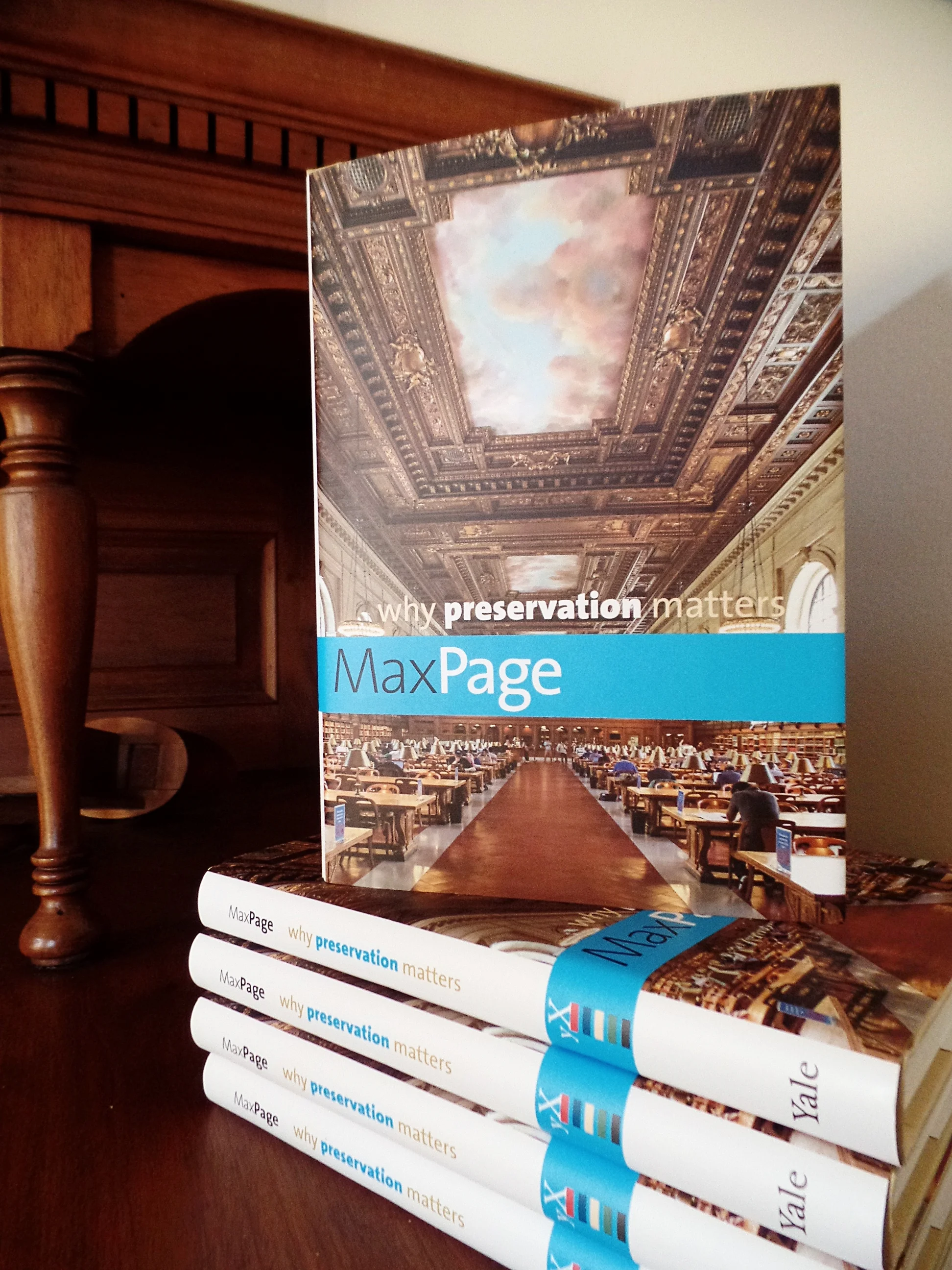
rofessor Page teaches and writes about the history of cities and architecture. His lecture will draw on his most recent book Why Preservation Matters (Yale University press, 2016), a thought-provoking assessment of the preservation movement that offers a progressive vision for the future of preservation. Anyone interested in how to honor our past while working toward an equitable and sustainable future for our community will gain insight from Professor page’s ideas.
On December 19 & 20, 2017, the House and Senate voted to pass the final version of the Tax Cuts and Jobs Act released by a joint House-Senate conference. It includes the 20% Historic Tax Credit.
The House and Senate Conference Committee reconciled the differences between the two versions of the tax bill. They eliminated the pre-1936 10% non-historic tax credit and included the 20% Historic Tax Credit (HTC) with a provision that it will be claimed over five years. Also, the Conference Committee included additional transition rule language that now clearly covers phased rehabilitations for which the taxpayer may select a 60-month period.
President Trump is expected to sign the bill before the end of the year.
While advocates may be disappointed they could not fully restore the 20% HTC to current law and prevent the elimination of the 10% pre-1936 rehabilitation credit, there is plenty to celebrate! While hundreds of deductions and credits have been reduced or eliminated in tax reform, the HTC is expected to be retained as an incentive to protect and restore historic buildings in Maine and across the country.