

Local
Last Call – Portland in Motion Questionnaire – The City of Portland is requesting feedback on transportation at they launch a new planning effort called Portland in Motion. The questionnaire takes about five minutes and closes on Monday, July 27th. You can also review a report of the feedback received during the first Open House, which GPL attended. As we learned from our History of Transportation exhibit and lecture series earlier this year, transportation has always been a critical driver of the region’s development, design, and livability. It will continue to be in the future, so it is important that we advocate for interventions that prioritize our shared goals.
522 Congress Street (Maine College of Art + Design) – GPL’s Director of Advocacy provided comments at a recent Historic Preservation Board workshop about a proposal by the Maine College of Art + Design to renovate their Congress Street storefront. The 1904 Beaux Arts building has been home to the College since the 1990s, but the current red granite storefront was added in the 1940s and has been heavily altered since its original Streamline Moderne design was applied to the first floor of the building. The sleek canopy was replaced at some point with the heavy canopy that exists today and the midcentury design expression has been irreparably compromised. The doors and windows have changed and will be updated by the College to better define the school’s entrance.
The Congress Street Historic District recognizes and protects a significant collection of buildings contributing to the evolution of Congress Street as the commercial and cultural spine of Portland and does not assign a specific period of significance. Thus, it recognizes the historical evolution of buildings within the district may include significant alterations. In many cases, such as with the former Chamber of Commerce Building at 142 Free Street, the designation report noted the significance of changes made to buildings after their original design. That is not the case for this building, where in fact just the original configuration of the storefronts is described. When buildings have a long period of significance, or a period of significance has not been defined, a range of approaches may be considered appropriate. This may include restoration to the appearance of an alteration deemed significant, or restoration to the original design.
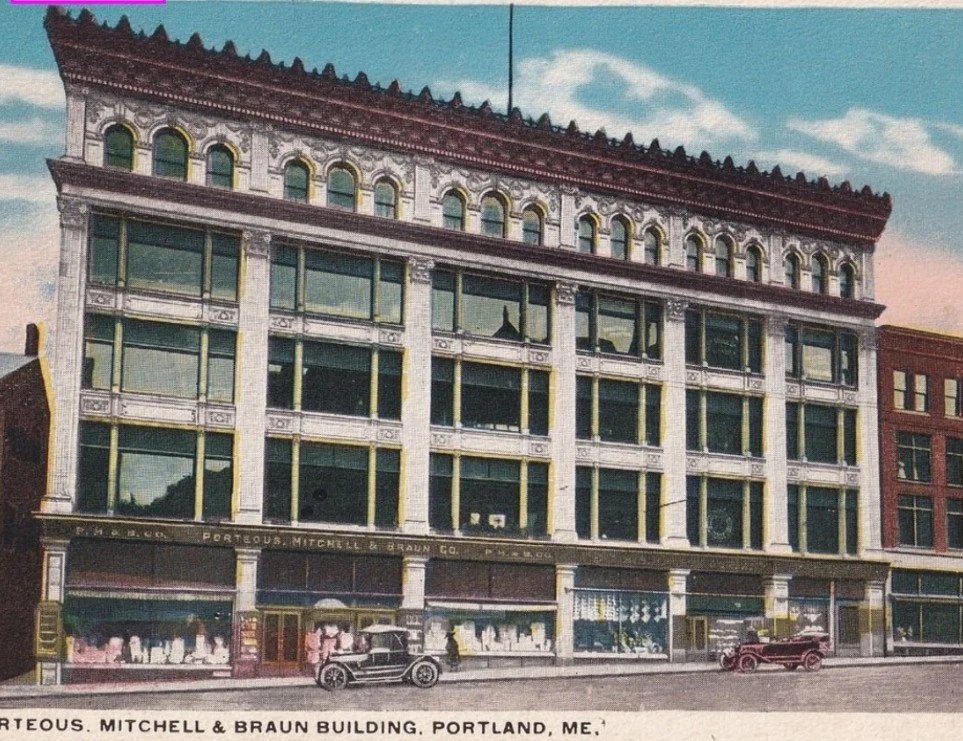
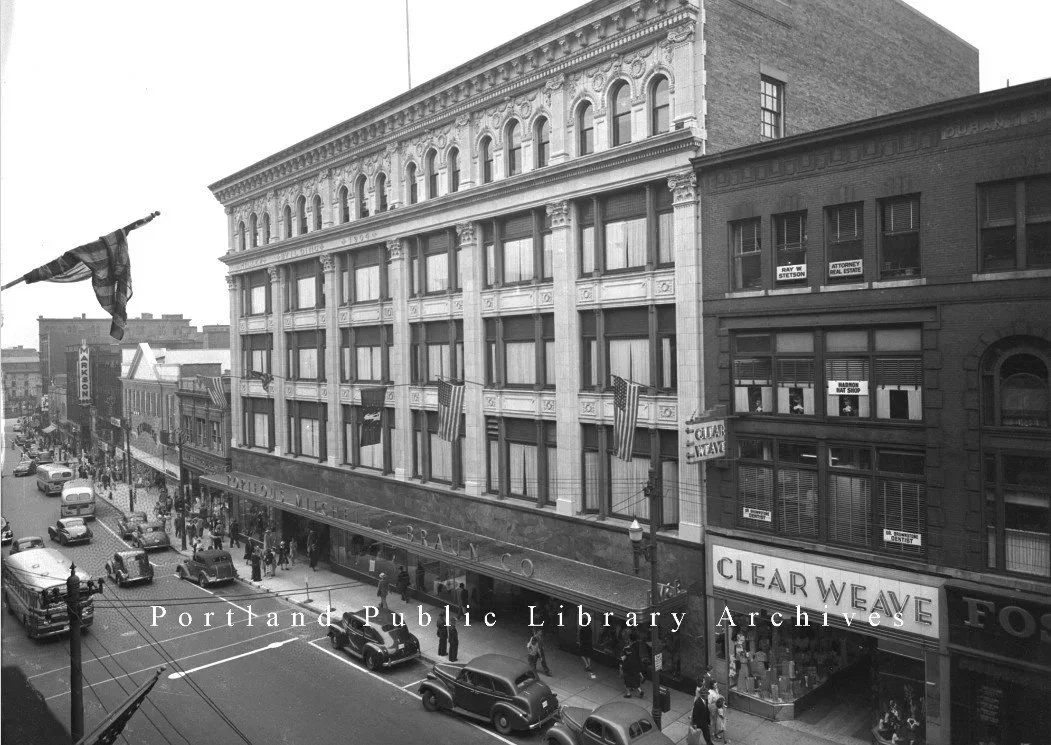
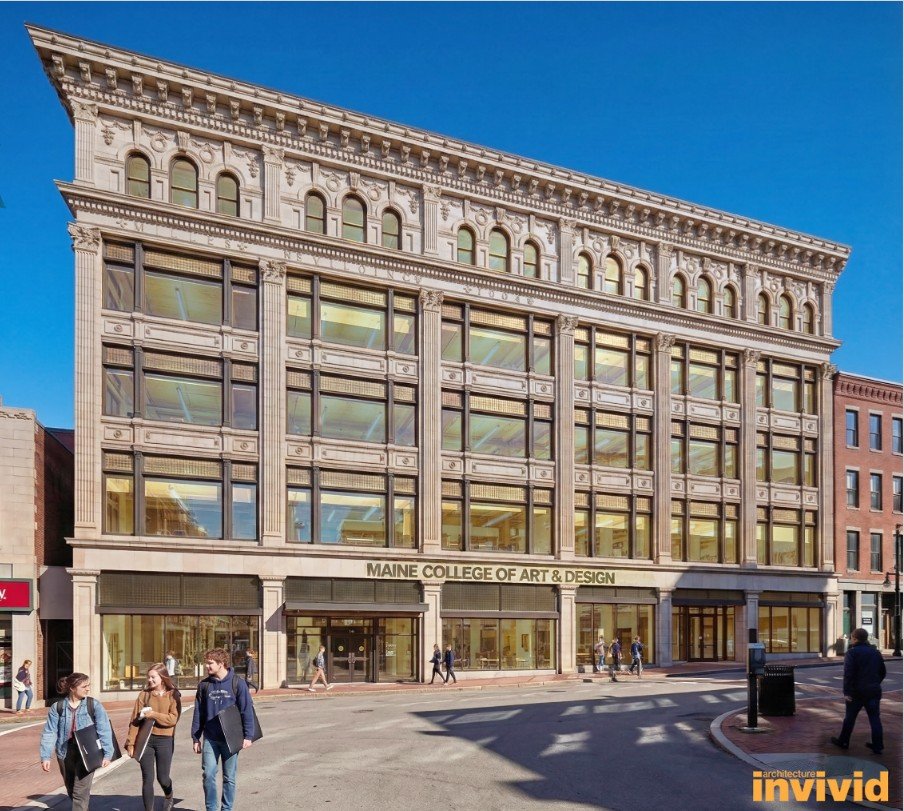
GPL supports the College’s proposal to restore the original configuration of the ground floor and recreate its Beaux-Arts expression with a modern lens, which helps unify the architectural design of the entire façade. We feel that while the 1940s alteration represented a significant moment in the building’s history, not enough of the materials remain to make that moment legible and communicate its design intention.
In their review and discussion, the HP Board found that the 1940s alterations were significant and, according to the standards for the historic district, must be preserved. We will urge the Board to reconsider this position. We do not believe retention of the remaining red granite veneer, which has lost its context and no longer represents its original design intent, is the only approach that would meet the standards, nor do we feel it accomplishes preservation goals. Alternatively, the College could consider reusing the granite panels in a lobby or interior space with interpretive panels to record that moment in the building’s history, while restoring the original design intention of the building.
Funding for the Abyssinian: The African American Cultural Heritage Fund at the National Trust for Historic Preservation announced recipients of grants to support 27 sites across the country that represent Black American joy, resilience, innovation, and activism. We were thrilled to see Portland’s own Abyssinian Meeting House on the list of recipients! According to the announcement, the Abyssinian was “created by free Black residents in 1828 who grew tired of being discriminated against in Portland’s predominately white religious spaces. For nearly a century, the meeting house served as a worship center, school for Black children, and a community and performance space. Following its closure in 1917, it was turned into residential housing before being purchased by the Committee to Restore the Abyssinian Meeting House in 1998. Grant funding will support continued preservation of the Abyssinian Meeting House and improved ADA accessibility for visitors.” Congratulations to the stewards of this critical piece of Portland history!
Reimagining Franklin Street: The City of Portland issued an update on the Reimagining Franklin Street project, which continues to move forward after last year’s open house, public survey, and community design workshop. In a memo to the Sustainability and Transportation Committee this month, Planning and Urban Development Director Kevin Kraft noted that the plan will advance many of the city’s goals, including preservation goals such as “restoring portions of Portland’s historic street grid” and expanding historic Lincoln Park. The memo lists Greater Portland Landmarks as a stakeholder group, noting that we met with City staff to discuss the project. The team is now refining their proposed street design based on a technical analysis and incorporating public input and best practices. Once this design has been further developed, it will be shared with the public with opportunities for additional feedback before eventually coming to the Sustainability and Transportation Committee for approval.
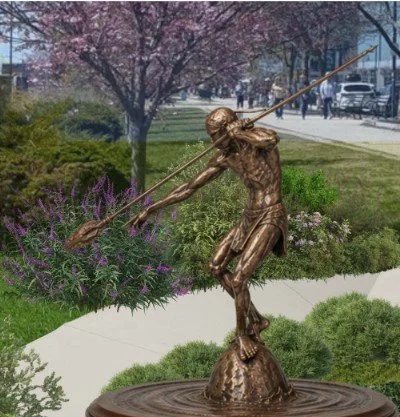
First Light Common: After selecting the name “First Light Commons” for Portland’s new waterfront park that is currently under construction, the city’s Public Art Committee has chosen Wabanaki artist Gabriel Frey to create a new public artwork for the space. Frey's proposed artwork, Amewin, depicts a Wabanaki spear fisherman holding a traditional fishing spear. Designed to be experienced from all sides, the sculpture is envisioned as a bronze figure mounted on a bronze base, creating a durable. The Committee's selection reflected the site's prominent location along Portland's waterfront and the opportunity to honor, reflect, and celebrate the region's cultural heritage and enduring relationship with the waters of Casco Bay. Frey's work is deeply rooted in the cultural traditions, artistic expression, and living heritage of the Wabanaki people.
Portland Expo: The City of Portland issued an update on July 1st regarding next steps for the historic Portland Expo. The update says, “As a result of [the Housing and Economic Development] Committee feedback, staff adjusted the project scope to include enhanced public outreach and a life-cycle cost analysis. These additions will ensure we pursue the most environmentally and financially sustainable strategy and that members of the public can meaningfully engage in this process. Staff anticipate that the cost of this work will exceed the available funds. Given this budget gap, staff have temporarily paused the project, and will submit a CIP request in the 2028 cycle to secure the necessary funding. By doing so, we can retain a single design consultant to manage the entire process, ensuring the Council is presented with a complete picture related to various options and comparative costs.” GPL will continue to engage with this effort and promote rehabilitation of the Expo and a larger conversation about opportunities for the surrounding sports complex.
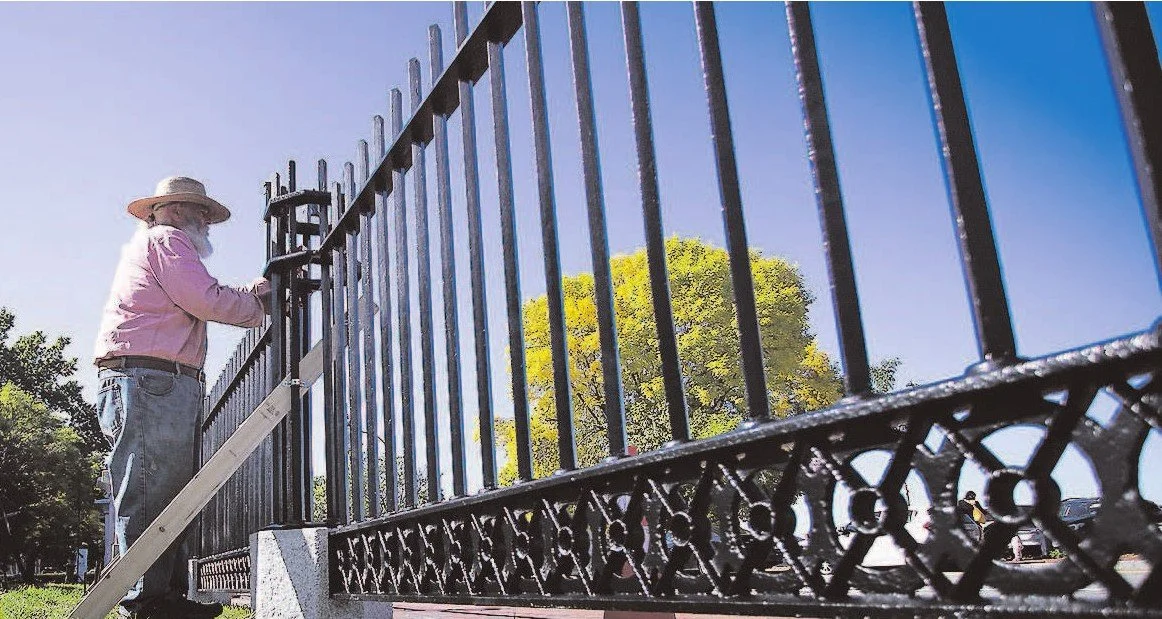
Lincoln Park: Friends of Lincoln Park has donated $45,000 to fund Phase III of the Lincoln Park Fence Restoration Project. We commend the Friends for stewardship of this historic space! Go to their website to learn more about their commitment to the park, how to support their efforts, and their free Summer Concert Series which runs every Tuesday from 6 to 7:30 pm.
State
Grant Opportunity: In 2024, Maine voters approved $10 million for the preservation and restoration of historic community buildings owned by nonprofits and government entities. The Maine Historic Preservation Commission (MHPC) is opening round 2 of the Historic Community Buildings Grant program at the end of July. If you’re interested in applying and would like more information, register to attend the Prospective Applicant Virtual Workshop on Monday, August 10 at noon. This workshop is free and open to all.
National
Gutting of Preservation Laws: The preservation and conservation communities across the country are organizing to fight back as the Trump administration announces plans to gut critical review processes known as Section 106. The Advisory Council on Historic Preservation, a core group of preservation professionals that have been largely replaced by Trump loyalists, has drafted a rewrite of the Section 106 regulations that would hollow out requirements for the federal government to assess and mitigate historic and culture resources that would be affected by federal projects, like highways and infrastructure initiatives.
According to Cultural Heritage Partners, here’s what’s at stake: the ability to protect and preserve historic sites; the right of Tribes, states, local governments, descendant communities, historic property stewards, and the public to have a say in what the federal government allows to happen to historic properties; the future of the Cultural Resource Management industry and countless preservation jobs; the character and richness of the places we call home.
With these changes, the consultation process would become optional which means fewer projects and places would be reviewed for negative impacts to historic resources. The changes would reduce the scope of what is considered “historic” and what would be considered an “adverse effect” to those resources. Government agencies could bypass the review altogether, eliminate field investigations and identification work, and opt out of public comment based on nothing more than additional cost or delay of the project.
Furthermore, the draft says explicitly, “noncompact, unimproved natural features such as mountains, valleys, bodies of water, or landscapes, including ethnographic landscapes, do not qualify.” The draft removes entirely consideration of indirect effects and cumulative effects on historic properties as well as “introduction of visual, atmospheric, or audible elements that diminish the integrity” of a property, and effects that “change the character of the property’s use.”
Ultimately, this means that our country will lose untold numbers of historic and cultural places, viewsheds, and archaeological sites. You may not have been aware that this process was quietly protecting places all around you, like unmarked burial grounds, but once it’s gone we will all feel the consequences to our cities, towns, and national monuments. This will mean permanent, irreversible loss. It represents the Trump administration’s ongoing efforts to undermine and ignore historic preservation principles and processes.
So what happens now? The Advisory Council is expected to vote in favor of these draft changes at their July 24th meeting and then the draft moves to the Office of Information and Regulatory Affairs for interagency review. Once it is published in the Federal Register, a public comment period of likely only 30 days will open. GPL will join colleagues across the country to oppose these changes and will share instructions for you to do so as well. Then, the Advisory Council is required to respond to substantive comments before it can finalize the regulations. Legal challenges will follow and those legal cases will rely on the magnitude of public opposition, so your voice in public comments and to your elected officials will be crucial.
In a video shared by Cultural Heritage Partners about this crisis, Marion Werkheiser closed the presentation by sharing that in her time working with the preservation community she has found that though we are small, we are fierce and we do not back down when there is something worth protecting. This is Historic and we will not back down.
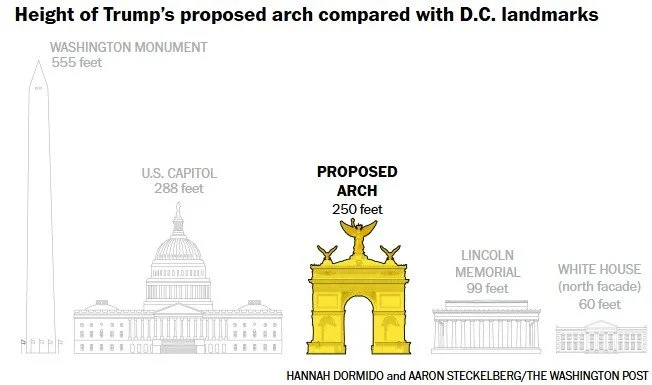
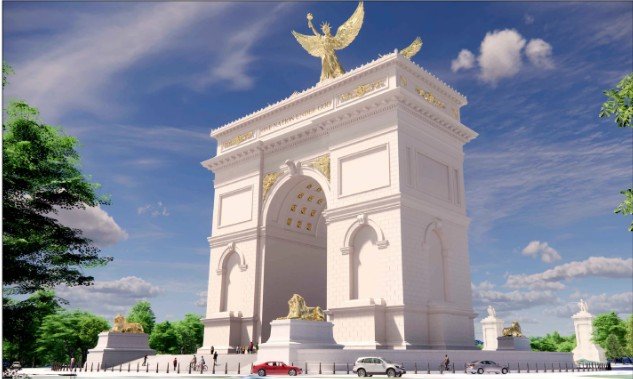
Trump’s Arch: The Trump administration is advancing plans to construct a 250-foot arch near the National Mall, claiming a longstanding law restricting building heights in D.C. does not apply to this project or any federal structures at all. In May, the Commission of Fine Arts, a panel now packed with Trump appointees, quickly approved the incomplete design and earlier this month the National Capital Planning Commission reviewed the proposal. This commission voted 8-1 to approve the preliminary site and building plans with three members voting “present” despite more than two hours of public comment in opposition as well as nearly 2,000 written comments. This pattern of bypassing rules, regulatory processes, public opinion, and best practices has manifested across our nation’s capital and is now becoming law, as we are seeing with the proposed changes to Section 106. The next commission meeting is in September so we encourage you to contact your elected officials and ask them to investigate and oppose this proposal.
