
(1) Historic Preservation means different things to different people, from preserving significant architecture, to researching and uplifting underrepresented history, to maintaining historic neighborhood character, to sustainably reusing existing buildings and materials, and more.
What aspect of historic preservation is most important to you personally? What ways would you support historic preservation on City Council?
Todd Chretien
My favorite thing about Portland's history is that we can still see and touch so much of it rather than just reading about it in books. The Abyssinian Meeting House brings the centuries-long struggle for African American freedom life and reminds us that the work is far from complete. The Maine Jewish Museum invites people of all faiths to engage with thousands of years of Jewish faith and culture and ethics and brings that tradition's commitment to civil and human rights to life in the fight against antisemitism and all forms of bigotry today. Mechanics' Hall emphasizes the legacy and continuing power of organized labor. In my mind, preservation's single most valuable contribution to our community is the ability to keep history within our grasp so we may learn from the triumphs and disasters of those who have gone before.
Jakobi Delgado
Historic preservation to me is the preservation of the cities culture without blocking growth, it's finding a way to incorporate historic sites into a city, learning more about the history of the site and our own past.
As someone who is in favor of encouraging growth in Portland, it's important to ensure that we don't lose what made Portland home to me and thousands of others. I will continue to champion funding for historic research and preservation in the city so that generations after mine can experience it in person.
Kevin Gardella
What matters most to me is keeping Portland’s classic buildings standing and useful. They connect us to the city’s history of trade and commerce and give people a reason to visit. The Time and Temperature Building is the kind of architecture I want to protect. I would support exploring housing affordable to working people in buildings like it, where conversion is practical. We have buildings and space already. City Hall should help owners understand what they can do, what it will cost, and how to get approval. On the Council, I would support preservation incentives and clear standards for new construction.
Ilma Lopez
When we talked about Portland you can not choose one or another, to preserve it we have to take all of them into consideration. I will support their efforts and follow their lead.
(2) Portland’s Comprehensive Plan 2030 states, “Identifying and preserving historic resources stabilizes neighborhoods, makes economic sense, and contributes to a distinct sense of place that makes Portland such a desirable place to live, to visit, and to invest.” Portland’s award-winning Historic Preservation Program was established in 1990 to maintain and enhance the patterns of development that make Portland special. Program staff and the Historic Preservation Board review hundreds of development applications every year to provide guidance and protect Portland’s historic fabric, and Greater Portland Landmarks offers resources to support the City and property owners, and to further historic preservation goals.
If a historic preservation related issue were to come before you as a City Councilor, how would you educate yourself to encourage solutions that balance historic preservation goals with other city or constituent goals?
Todd Chretien
I hold a Masters Degree in US History and value the expertise and knowledge of professionals and committed volunteers in this work. I will take all applications seriously, listen carefully to the HPB, and consult with neighbors and specialists alike in determining the merits of individual applications in the context of overarching preservation priorities and new city development.
Jakobi Delgado
If an issue of historic preservation came to the city council, I would consult the historians. I am a huge history buff, but I am not an expert on the local history of the city. I would communicate to the historians and learn what's important about the issue at hand and use the judgement of those in this community to make a well-informed decision.
Kevin Gardella
At 75 State Street, I ran an oral and video history program that collected stories from people who had experienced Portland firsthand.
That experience shapes how I think about preservation. A building’s history includes the people who lived, worked, and gathered there. I would listen to those accounts and consult preservation staff, Greater Portland Landmarks, the Historic Preservation Board, owners, and neighbors. I would ask what makes a property significant, what can reasonably be preserved, and how it could serve people today. Housing, accessibility, and cost all deserve serious consideration.
Ilma Lopez
I will look for support in out historic preservation department and permitting department and see where we can find the balance between evolution and keeping our city's character and foundation
(3) ReCode Portland was the first rewriting of the City’s Land Use Code in over 50 years and created a new, unified development code to serve Portland for the 21st century and is designed to better equip the city to address needs in areas such as housing, design, preservation, conservation, the working waterfront, energy, and transportation.
To what extent have you engaged with development in Portland? Now that we have seen outcomes from the changes made during the ReCode Portland process, how do you feel about ReCode’s revisions to the Land Use Code?
Todd Chretien
I applaud GPL's engagement with Recode Portland. Streamlining regulation in order to make planning and preservation more easily understood by the public was the right choice. For instance, making it easier for home owners to build ADUs is one critical piece of the puzzle to expanding housing. Improving walkability, maintaining neighborhood cohesion, and preserving our culturally valuable (and economically generative) historic sites must be brought into line with Portland's need to grow in the coming decade. More people lived in Portland in 1950 than do so today. Portland must encourage smart growth for affordable housing, accessibly transit, and greater community engagement while protecting our past.
Jakobi Delgado
I was too young to have a say in recode. However, I feel as if it's a step in the right direction. I am a big proponent of mixed-used zoning and medium scale development is what we need in the city to fix our housing crisis. However, I think it failed to protect the working waterfront to the scale needed and has not done enough to conserve the environment.
Kevin Gardella
As a homeowner, I have paid particular attention to ADU permitting, housing conversions, and what development means for surrounding neighbors. I agree with making the rules easier to understand and allowing homes and businesses closer together. But I believe ReCode went too far with downtown building heights. The approved 380-foot Old Port Square tower is exactly my concern. To me, that scale does not belong in the Old Port. I would revisit those allowances and push for earlier neighborhood involvement. Making housing easier to build should include helping homeowners and the small builders.
Ilma Lopez
I think is too early to judge how the recode is working. I will like to be more involve in the next phase, and be able to see the long term plan
(4) The City’s 2023 report, Trends in Portland’s Historic Districts, compared trends in historic districts, the peninsula, and the city across a number of different measures. The Trends study found historic districts on average have a much higher housing density per square mile than both the city overall and elsewhere on the peninsula. The report also found that historic districts, where buildings are reused more than demolished, support the City's sustainability goals as laid our in the Comprehensive Plan and One Climate Future plan.
Do you support increasing housing density in Portland? If so, describe how you feel Portland can add housing while maintaining the qualities often found in historic neighborhoods such as human-scale massing, contextual design and materials, safe and walkable streets, healthy tree canopies, etc.
Todd Chretien
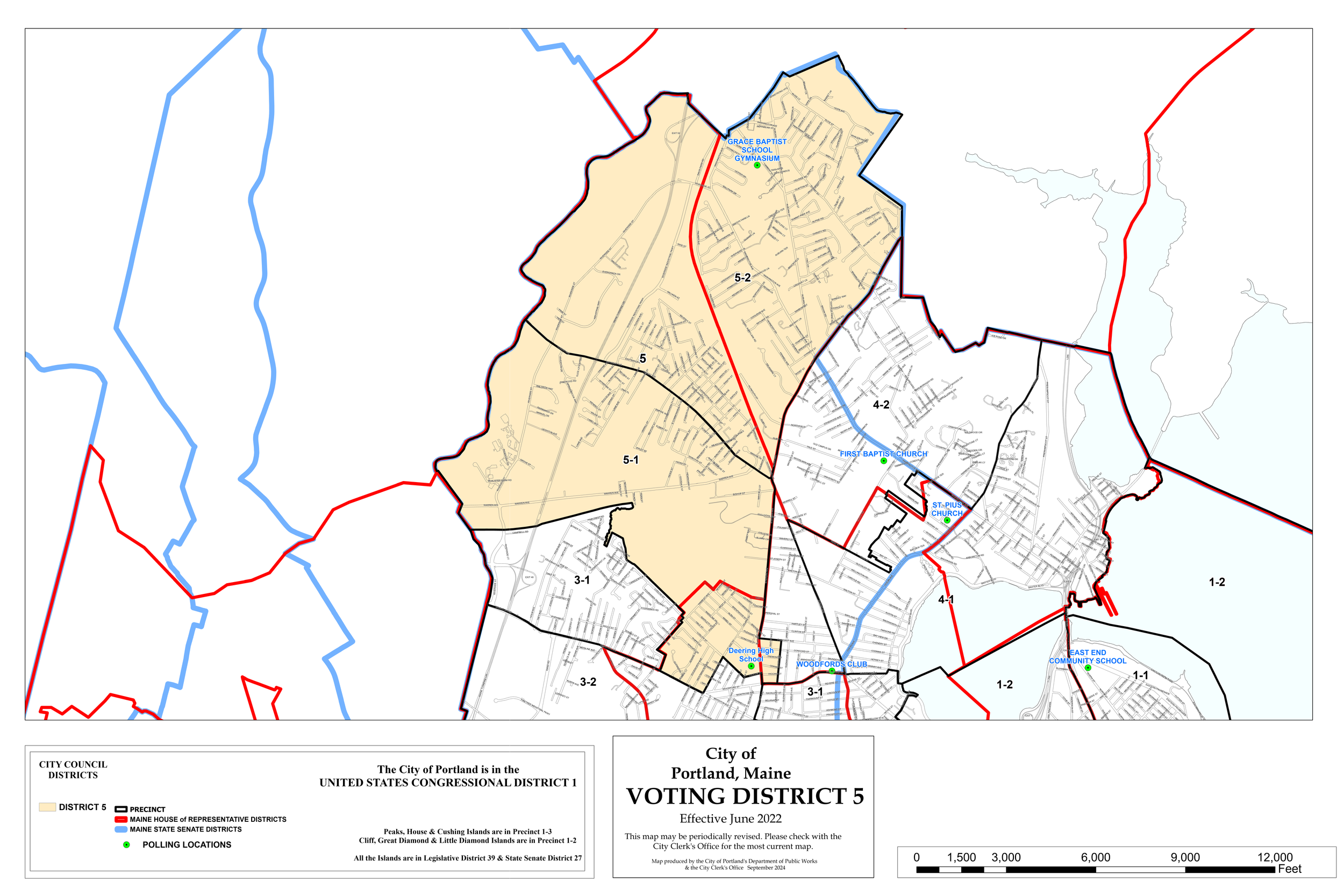
I absolutely support increasing housing density in Portland. However, siting new development must be done in partnership with neighbors. Reimagining Franklin Street (Arterial) is a great example of how to creating denser housing can open up opportunities for small businesses, maintain human-scale architecture, and enhance pedestrian and bike safety. All the while strengthening Portland's tourism economy. In District 5, we have hundreds of acres of underutilized land that could be used to build healthy neighborhoods and spart economic revitalization for Allen's Corner. For instance, the old Consolidated Communications HQ out on Davis Farm Road has sat unused for years. We have childcare and schools and commercial groceries and a great trail system, but why can't District 5 have a thriving, walkable center? Our historic farmland has largely been lost at this point, but many of the old farm buildings remain (a great opportunity for preservation and education) and the area could, for instance, host a year-round farmers market embedded in North Deering's rich agricultural past. And speaking of trees, the Presumpscot River Trail system is a gem enjoyed by thousands of people per year. But it needs more support from Portland and more cooperation from our partners in Falmouth and Westbrook to upgrade the trails, establish bikeability to the trail heads, and tie what is a spectacular outdoor activity back to our North Deering Neighborhoods.
Jakobi Delgado
If I could change one thing about my country it would be the destruction of the car-centric city. I would use our past as a model for my vision of increased housing density in the city, for centuries we had it correct before the car. We need mixed-use zoning that maintains a human scale by allowing business and housing to mix together in a natural way allowing us to maintain walkability, build wider sidewalks, safer streets, and keep in line with the way our downtown is actually currently designed.
Kevin Gardella
Yes. We should start by looking at buildings and properties we already have. Older commercial buildings may offer opportunities for housing, and I would support rezoning where needed to make suitable conversions possible. Old buildings can serve new purposes. ADUs and smaller buildings on appropriate lots can also add homes without overwhelming a neighborhood. We need to pay attention to height, materials, sidewalks, and the trees that make a street comfortable to walk along.
More housing should help people become part of a neighborhood while keeping the qualities residents already value.
Ilma Lopez
Yes, We need housing, however I will like to see more of our empty long standing buildings be part of the plan. Making shiny for years to come. and when we are planning new buildings adding more green space, make sure we have walkaway and public transportation access, design being according to the neighborhood, a plan with the future in mind without losing who we are.
(5) Portland’s identity is strongly associated with our historic buildings, landscapes, neighborhoods, and streetscapes, but less than 10% of the city's land area is currently protected with historic designation. How much importance do you place on Portland's historic preservation programs and their role in shaping the city's future? Would you support additional areas of the city being protected through historic designations? Please explain.
Todd Chretien
In District 5, we have hundreds of acres of underutilized land that could be used to build healthy neighborhoods and spart economic revitalization for Allen's Corner. For instance, the old Consolidated Communications HQ out on Davis Farm Road has sat unused for years. We have childcare and schools and commercial groceries and a great trail system, but why can't District 5 have a thriving, walkable center? We need a plan. Our historic farmland has largely been lost at this point, but many of the old farm buildings remain (a great opportunity for preservation and education) and the area could, for instance, host a year-round farmers market embedded in North Deering's rich agricultural past. And we could engage our Wabanaki Nations and Tribes to cocreate a center for historical understanding and cultural exchange. Too often, Wabanaki history and present is left as an afterthought, or a plaque tacked on. The Presumpscot River Trail system is a gem enjoyed by thousands of people per year. But it needs more support from Portland and more cooperation from our partners in Falmouth and Westbrook to upgrade the trails, establish bikeability to the trail heads, and tie what is a spectacular outdoor activity back to our North Deering Neighborhoods. I love the peninsula. I miss the Movies on Exchange Street! But District 5 has just as much rich history as any part of the city. All we have to do is look for it, honor it, and make it visible.
Jakobi Delgado
I am unsure which areas would be applied for to gain the designation, so I am unable to make a comment about a case not yet proposed to me. However, as I stated before historic districts of our city serve as the cultural cornerstone that make Portland home. I will be a champion for historic preservation while increasing our development.
Kevin Gardella
Yes. Portland’s desirability brings investment, but it also brings pressure to replace what made people want to come here. I am concerned that we have allowed the Arts District to become increasingly focused on expensive condominiums. We need to keep room for artists, studios, and independent businesses. I would support additional historic designations based on research and conversations with the people who live and work there. Owners also need practical help maintaining their buildings. Preservation should keep these places useful and connected to the community, with room for housing and businesses that fit.
Ilma Lopez
Yes, I will. i think when we think about the Casco/ peninsula of Portland all the buildings should have gone by historic development and see how we can keep the new vision with some of the old character.
(6) Thank you for taking the time to respond to our survey! Is there anything else related to historic preservation that you would like for GPL supporters to know?
Todd Chretien
District 5 has some of the largest neighborhoods of New Mainers in Portland. We also have some of the Mainers who have lived in Portland the longest. It's not always easy to overcome language barriers and different cultural starting points. Broadening our conception of what we value and how we do it can serve as a bridge to narrowing some of these obstacles to building cohesive and neighborly streets. Putting our heads together in District 5 to honor and uplift our different histories while deciding what we want to create together as our common legacy is not only an opportunity and a duty of historic preservation, it can be a community building exercise that strengthens our democracy and makes our share commitment to one another stronger.
Jakobi Delgado
None at this time but I would love to meet soon!
Kevin Gardella
Portland is home to me, and its future is personal. I have spent countless evenings painting and drawing in the Old Port, taking time to notice the buildings and details that make it unlike anywhere else.
It hurts to watch large development projects threaten the character I have come to know and love. I do not want us to lose those places one approval at a time. We need homes working people can afford, old buildings given new life, and an arts district where artists can afford to stay. The people who keep Portland alive deserve a future here. I would fight for stronger historic protections and development guidelines that respect our city. Before approving a project, we should ask: Are we making Portland better for the people who call it home?
Ilma Lopez
Thank you and I am looking forward to learn more about our it and its history.