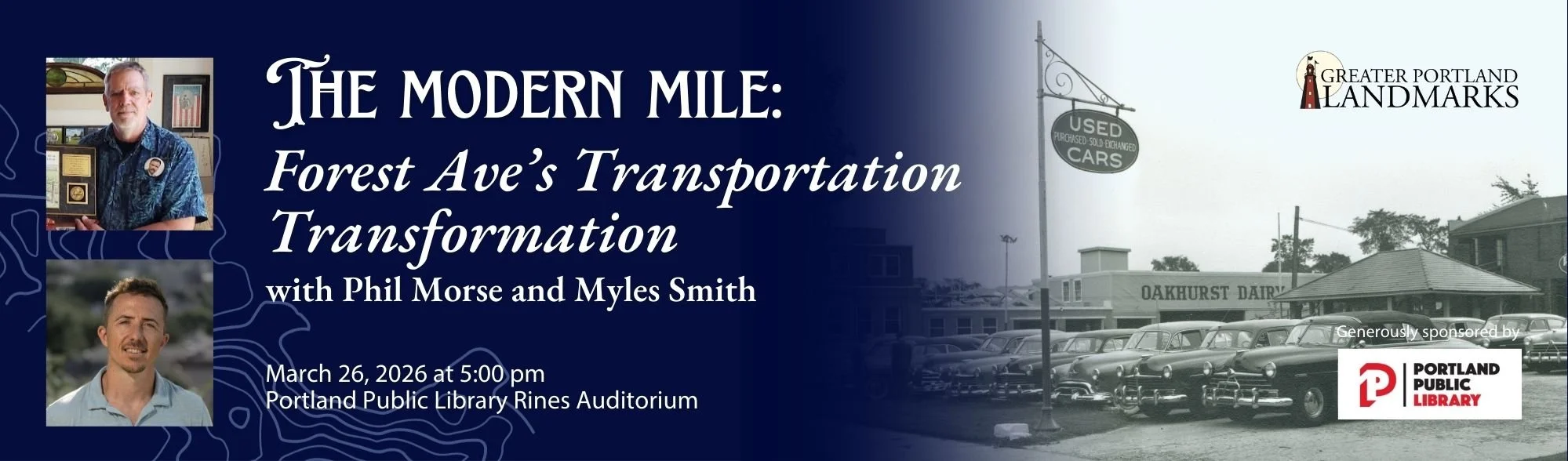
(L-R) Phil Morse; Myles Smith; Oakhurst Diary, 1951, courtesy of Maine Historical Society, MMN 20276.
In this two-part program, Phil Morse of the Seashore Trolley Museum traces the rise and fall of Maine's second-largest electric railway system, from the state's first horsecar line in 1863 through the final trolley run in May 1941 — when the last trolley car rolled through the streets of Portland, marking the end of more than three-quarters of a century of local public transit by rail. From the Pine Tree State's first horsecar line forming the nucleus of the Portland Railroad Company, to the essential services the line provided, Forest Avenue's role is featured throughout.
Myles Smith, co-founder of Mainers for Smarter Transportation, then picks up where the rails left off. With the arrival of the automobile, Forest Avenue quickly became Portland's first auto mile, as asphalt, car dealerships, gas stations, and strip malls replaced the horse stables, iron rails, power stations, and overhead electrical lines that had moved Portlanders for decades. After World War II, traffic engineers used borrowed money and unproven theories to prioritize the speed of drivers over the residents they sped past. Today's Forest Avenue is one of the state's most dangerous for all users, especially pedestrians — its design completely wrong for an area where thousands of residents, dozens of businesses, and hundreds of jobs exist side by side, where people live, work, study, shop, and play. Finally, though, residents and city leaders are looking to change its course, and make it the center of a place, a neighborhood, and a community.

Aerial view of Forest Avenue, Portland, c.1935, Portland Public Library Archives.
EVENT DETAILS
Date: Thursday, March 26, 2026
Time: 5:00-6:00 PM
Location: Rines Auditorium, Portland Public Library, 5 Monument Square, Portland
Fee: FREE admission but registration is encouraged. Donations greatly appreciated and will help us offer more free and low-cost programming.
Details: This is an in-person event. Street and garage parking nearby.
Please email Aimée Keithan or call 207.358.7064 with questions!
MEET OUR SPEAKERS
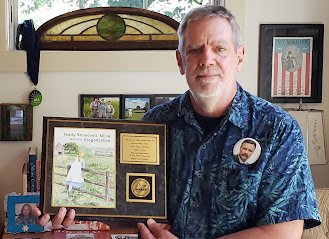
Phil Morse is a thirty-five year member of Seashore Trolley Museum in Kennebunkport; as well as a former trustee, President/CEO, Director of Community Relations, and Executive Director at the Museum. He is currently serving as the volunteer project sponsor for the restoration of the “Elegant Ride”, National Register of Historic Places member, 1912, the Portland-Lewiston Interurban No. 14, Narcissus. Read his blog about the restoration of this vintage interurban car here.
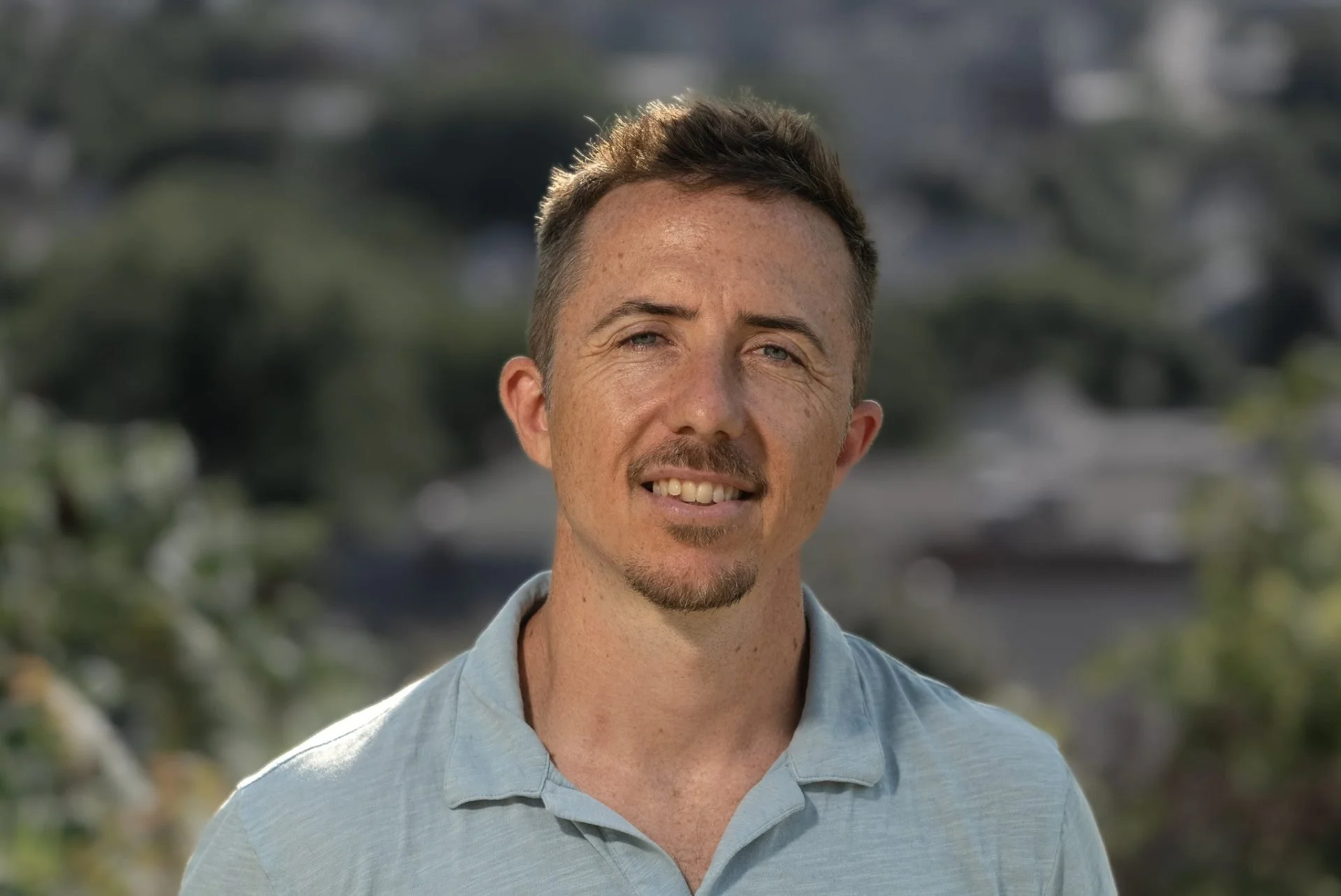
Myles Smith is an organizer, advocate, and consultant on sustainable land use and transportation. He co-founded Mainers for Smarter Transportation, which led the successful effort to stop a costly extension of the Maine Turnpike into Gorham in 2024. He is the current Chair of the Portland Bicycle-Pedestrian Advisory Committee, which advocates for safe streets and better transit for everyone in the city. He grew up in Portland and Cumberland, and spent 20 years in international development, trade, and journalism in Boston, London, Moscow, Turkmenistan, and Kyrgyzstan, and Washington, DC before returning home to Maine. He lives in Portland with his wife and two kids, their one car, and their five bikes. You can find him on Substack here.