Maine’s Climate Action Plan

December 2020 UPDATE:

The final Climate Action Plan, Maine Won’t Wait, was released in early December. Governor Mills welcomed the plan and announced actions her Administration will take to protect Maine people and communities and spur economic growth in the fight against climate change.

“From rising seas to warming temperatures to deadly natural disasters, humanity has been warned for generations that our climate is changing in profound and dangerous ways and yet not enough has been done to slow or stop it. Climate change will have profound implications for our state, our economy, and our people – both present and future. This is why Maine won’t wait, and can’t wait, to take action to ensure the resiliency of our communities, to create clean energy jobs and build a clean energy economy, and to support Maine families’ transition away from expensive, harmful fossil fuels to homegrown, renewable energy. I look forward to working with community leaders across our state to advance these goals and preserve and protect this place we all call home.” Maine Governor Janet Mills

The Issue

On June 26, 2019, the Governor and Legislature created the Maine Climate Council, an assembly of scientists, industry leaders, bipartisan local and state officials, and engaged citizens to develop a four-year plan to put Maine on a trajectory to reduce emissions by 45% by 2030 and at least 80% by 2050. By Executive Order of Gov. Mills, the state must also achieve carbon neutrality by 2045.

Six working groups spent months developing their climate mitigation and adaptation strategies for the council. Their recommendations were presented to the Maine Climate Council in June 2020. The Maine Climate Council sought public comment on the recommendations during the summer and fall, then prepared the report for release in early December 2020.

Threat

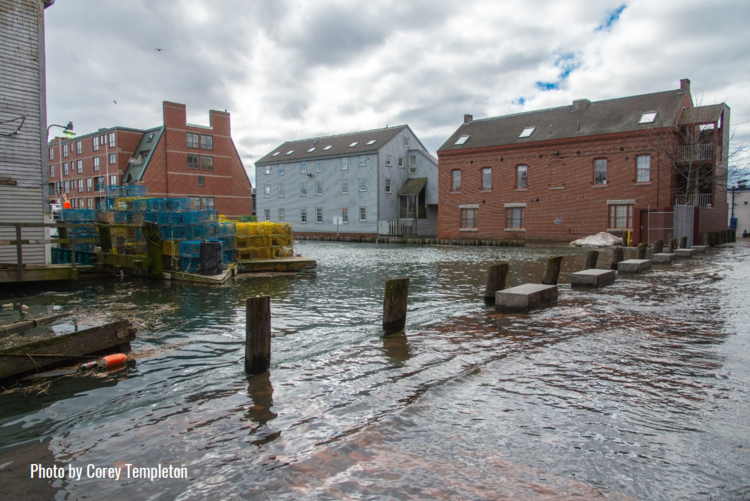
The preservation community is deeply concerned about the impact of climate change on our historic coastal and riverine communities. Landmarks believes immediate action is necessary to reduce greenhouse gases and to make our communities more resilient. Many of Greater Portland’s most treasured archaeological sites and historic buildings sit along the coast and its intersecting rivers and streams—areas at high risk because of rising sea levels. Immediate action is necessary to lessen the ongoing and escalating damage to local historic landmarks and sites.

Our Position

We know that our historic buildings, archaeological resources, and communities are at risk. While we work to document resources at risk and educate potentially impacted communities and property owners on best practices in hazard mitigation for historic resources, we are also engaged in local and statewide planning efforts.

Historic preservation and the conservation of existing resources are key to developing a strategy of resiliency, risk management and adaptation. Our historic downtowns, agricultural landscapes, and our working waterfronts are resource assets that should be considered as Maine’s communities implement Maine’s Climate Action Plan.

We cannot build our way out of this crisis. Re-use matters. In the 1970s Maine became a leader by enacting the “Bottle Bill” and changing the culture of recycling in Maine. We believe that Maine should build upon its assets and lead yet again, with a plan that includes a preference for the conservation of buildings and reusable building materials over new construction and replacement building materials. Many of these newer materials have short life spans and are produced at a high environmental cost. This would be a significant step forward towards achieving Maine’s climate goals. In Portland, Oregon a study concluded that if the 1% of their building stock expected to be demolished in the next 10 years was instead retrofitted and reused, 15% of their total CO2 reduction targets could be met.

The Maine Historic Preservation Commission and other preservation organizations are important resources for technical assistance to municipalities. Our organizations are able to help local communities, regional planning associations, and property owners identify vulnerable structures and offer guidance on land use and adaptation strategies. We can also help guide stakeholders as they make difficult decisions to establish benchmarks for when to adapt and when to retreat that will have an impact on their community’s culture, historic properties, and heritage industries.

Watch our 8/25/2020 conversation with members of the Maine Climate Council:

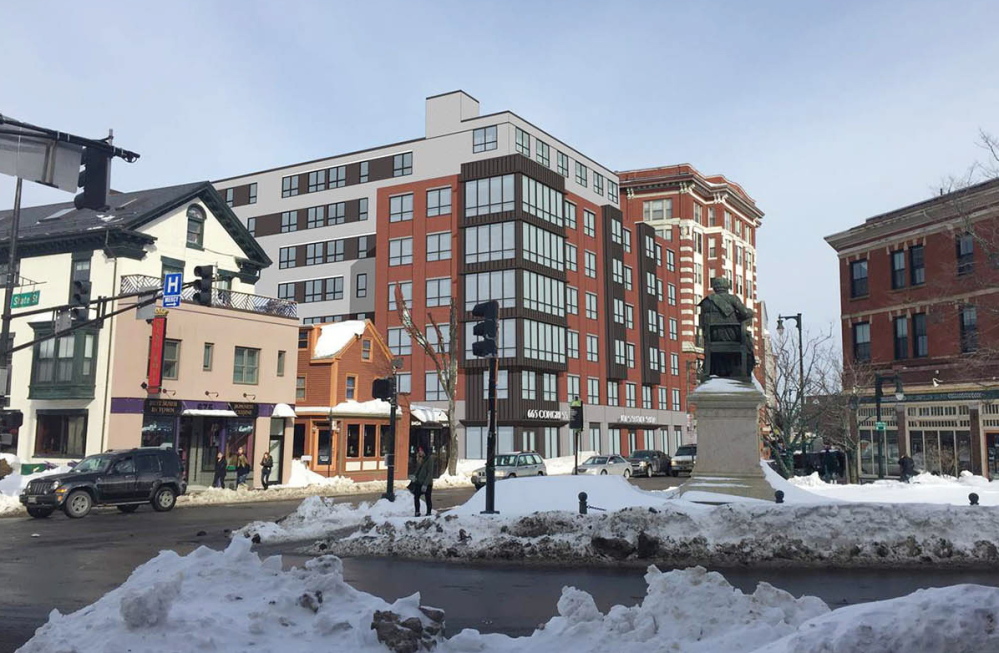
The Hiawatha, formerly Joe's Smoke Shop

665 Congress Street, Portland

The Issue

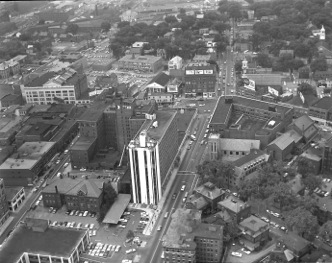
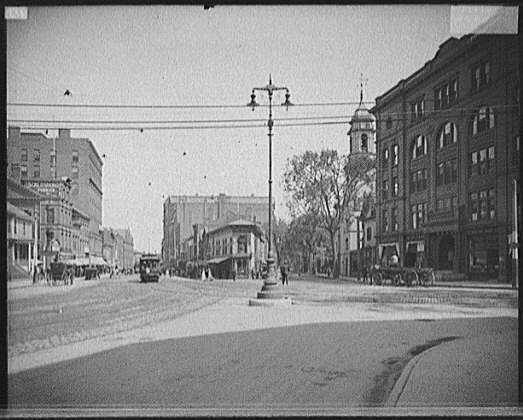
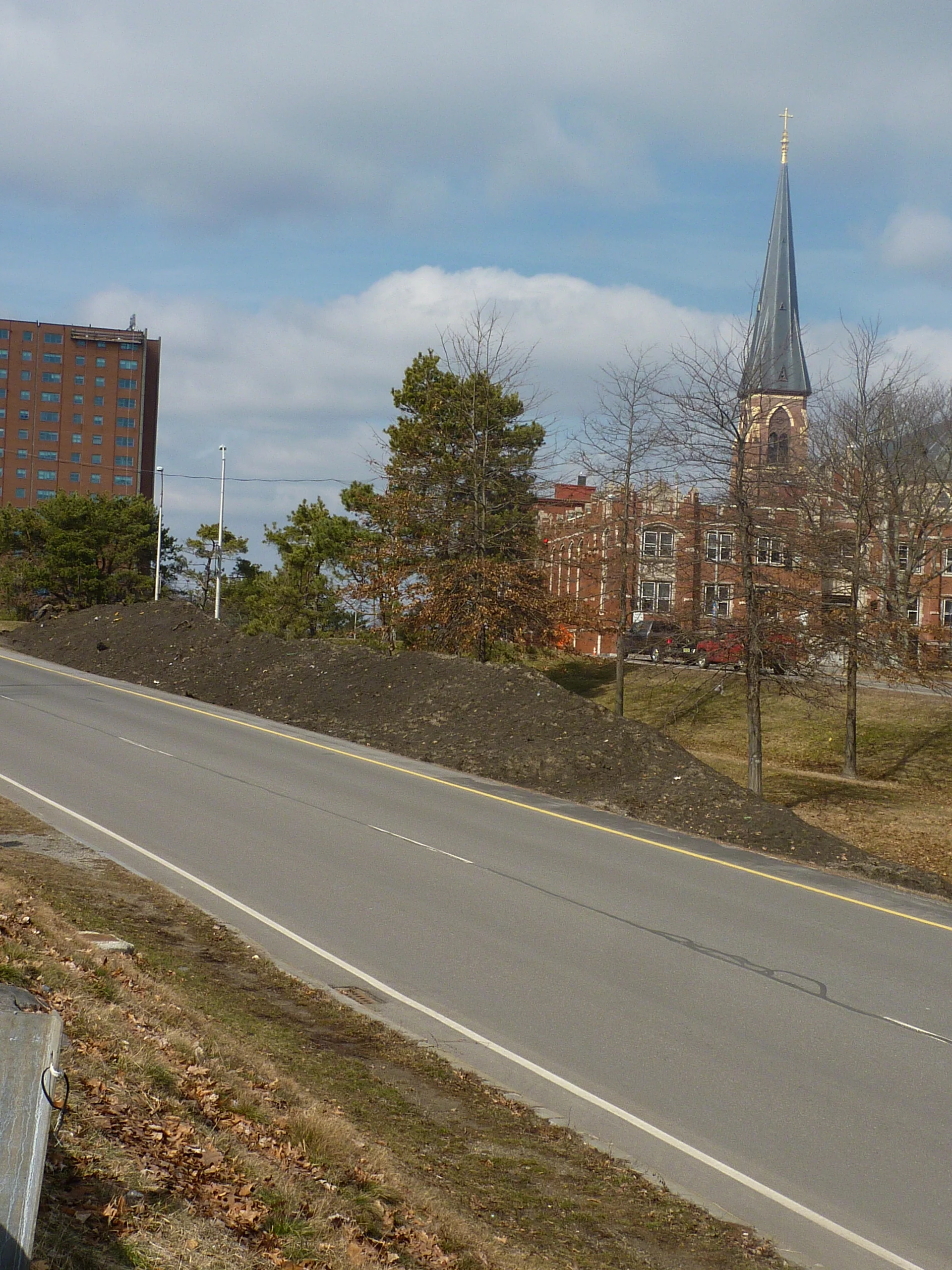
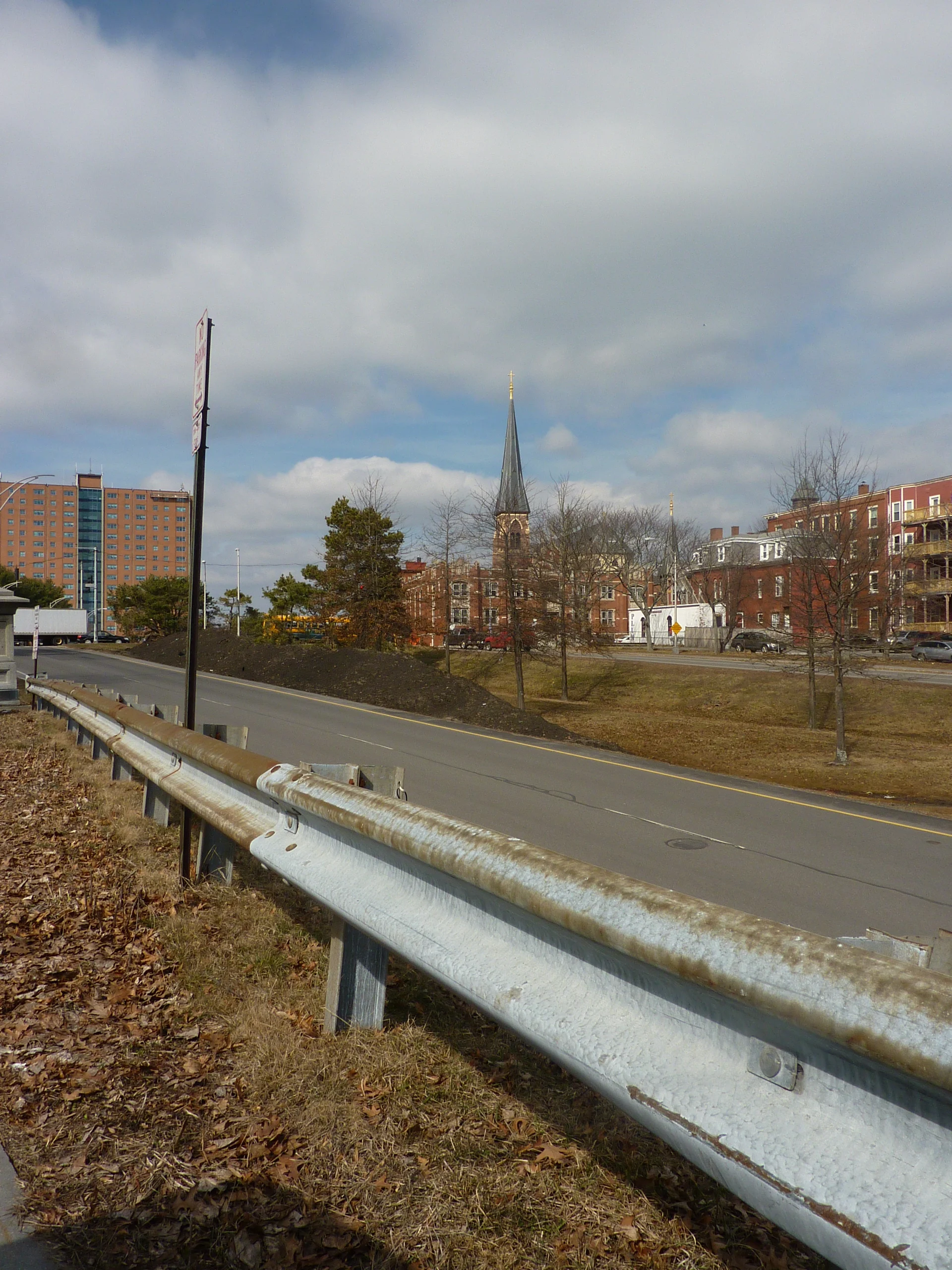
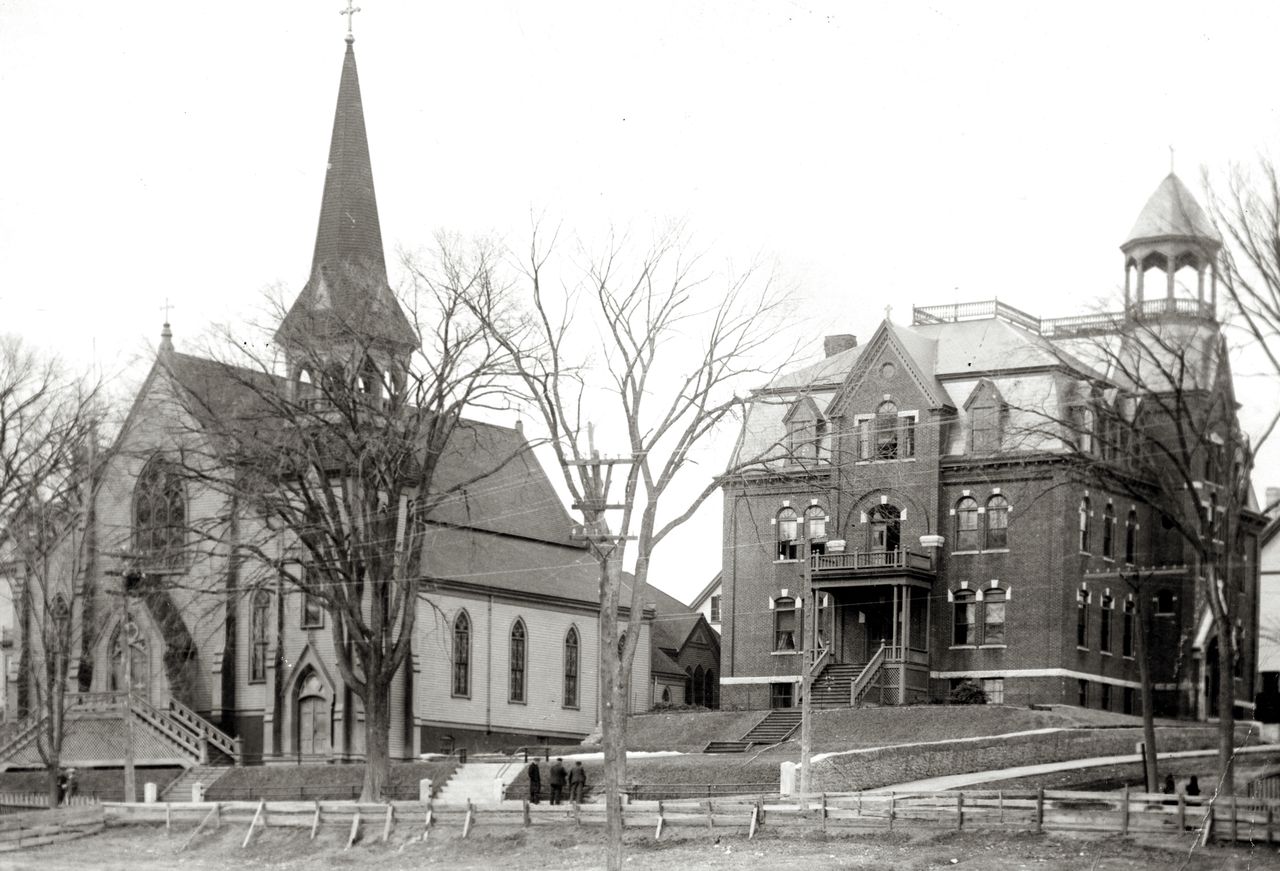
In 1965, St. Stephens Church at 669 Congress Street was demolished due to a declining congregation by the Episcopal Church. The stone Gothic Revival Building was completed in 1855 and was an important presence in Longfellow Square. The lot, long vacant, was used for parking.

Our Position

The large parking lot left by the demolition of St. Stephens Church fifty years ago and a beloved local business will be part of the proposed new development project that will reinforce the street wall on Congress Street. The developer proposes a twenty-million dollar mixed use building with 132 apartment units, a 100-car parking garage and a new storefront for Joe’s Variety Store, formerly known as Joe’s Smoke Shop. Part of the Congress Street Historic District, the proposed building was approved by the city’s Historic Preservation Board in 2015.

Press

Quick Links

What You Can Do

  • Keep an eye on the construction process at 667 Congress Street, and for the reopening of Joe's Variety Store (formerly Joe's Smoke Shop).

  • Join our mailing list to stay informed about advocacy efforts, educational programs, and upcoming events.

  • Support our advocacy efforts.


India Street Neighborhood

the issue

The City of Portland undertook development of a master plan for the India Street Neighborhood. Landmarks actively participated in the India Street Sustainable Neighborhood planning process. Staff and volunteers were involved in the development of a new zoning for the neighborhood and development of a historic district to protect the resources in the neighborhood from the rapid redevelopment the area has experienced in the last decade.

Our Position

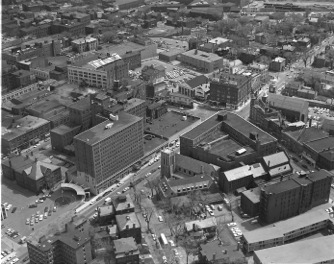
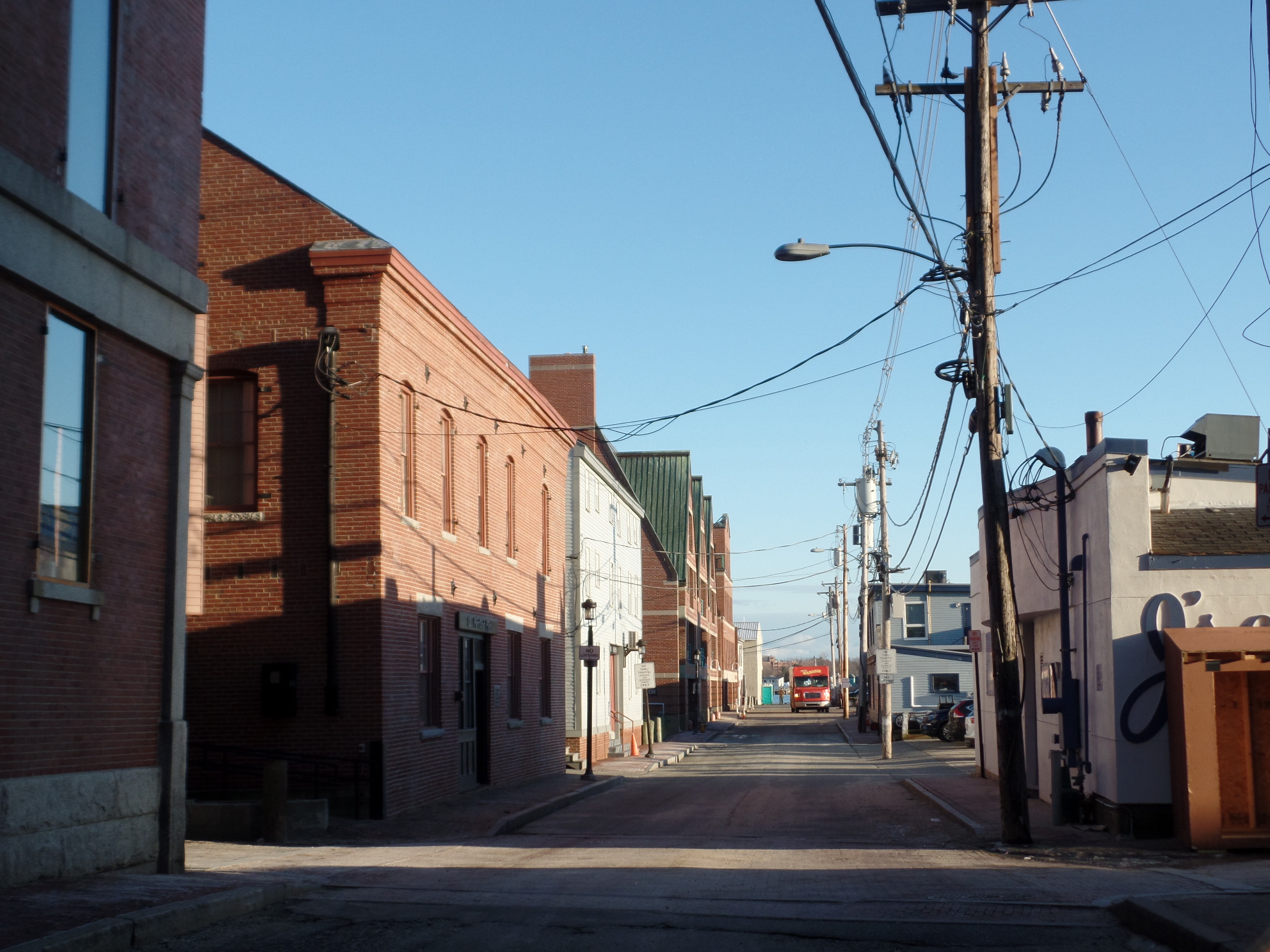
The India Street neighborhood is a small area between the densely-developed Old Port and downtown districts and the primarily residential neighborhood of Munjoy Hill. Large portions of the neighborhood were lost during slum clearance projects and the construction of Franklin Arterial in the 1960s and 1970s. In recent years, large scale development on empty lots near the waterfront has altered the small-scale character of the historic neighborhood.

Landmarks supported the India Street Sustainable Neighborhood Plan recommendation to create a historic district to protect the neighborhood’s historic commercial, institutional, and residential buildings. On November 2nd, 2015 the Portland City Council adopted the recommendation of the Historic Preservation Board and the Planning Board to create an India Street Historic District and a new form-based code for new development in neighborhood!

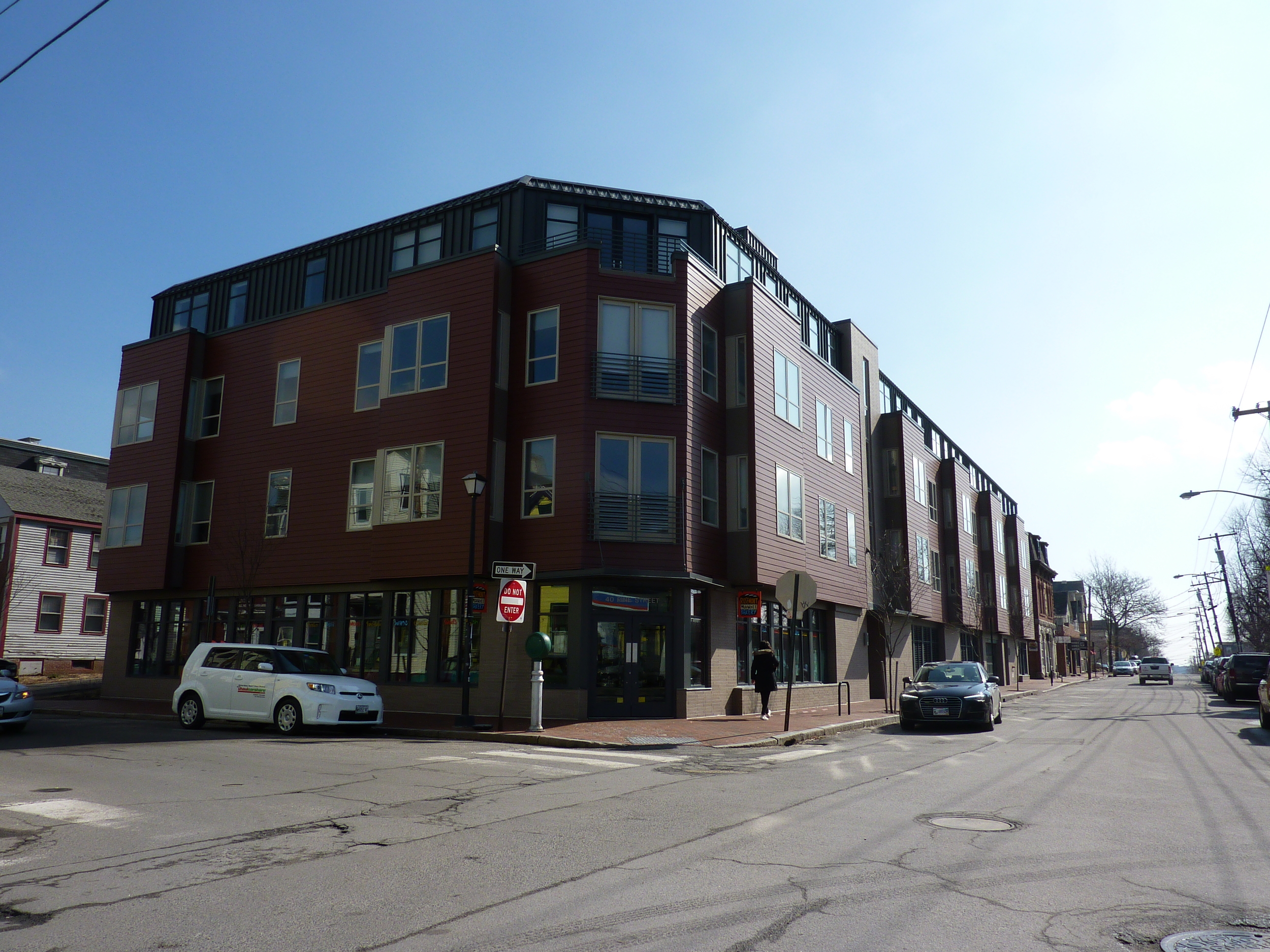
The India Street Historic District celebrates the history of immigrants and working people of Portland's past, while encouraging sensitive new infill construction on vacant lots, flexibility of building use, and architectural innovation. The district boundaries focus on the area with the highest concentration of historic synagogues and churches, commercial storefronts, schools and civic structures such as the North School, India Street Fire Station, Shaarey Tphiloh Synagogue, Cathedral of the Immaculate Conception, and St. Peter's Church. 

Update!

Since its adoption, several historic rehabilitation projects within the district's boundaries have successfully completed the review process and are under construction. In February 2016 an owner of a couple of historic residential properties just outside the boundaries of the district on Federal Street requested that their buildings be added to the district in order to qualify for historic preservation tax credits. The Historic Preservation Board and Planning Board unanimously recommended that the boundaries of the district be expanded and the owner’s multi-family residences 96 and 100 Federal Street be classified as contributing buildings in the historic district. 

The Portland City Council unanimously passed the owner-requested expansion of the India Street Historic District in late June.  Both residences are significant as examples of building forms constructed to accommodate a need for a greater density of housing in the neighborhood at the turn of the 20th century, a need created by Portland’s growing immigrant population. These two buildings were once home to immigrants from Russia, Scotland, Spain, Italy, Lithuania and France, occupants who reflect the past and ongoing diversity of the India Street neighborhood.

Landmarks supported the inclusion of the properties at 96 and 100 Federal Street in the India Street Historic District throughout the process in order to protect the remaining exterior character defining features; to support the goals of the India Street Sustainable Neighborhood Plan; and to provide the owners access to historic preservation tax credits. Local designation of the properties at 96 and 100 Federal Street, buildings that are not individually eligible for the National Register but do contribute to the overall historic character of this urban neighborhood, supports needed reinvestment in these historic residential properties. That reinvestment will benefit the ongoing revitalization of the India Street neighborhood and return needed housing units to the community. 

Press

Quick Links

What You Can Do

  • Support the advocacy efforts of Greater Portland Landmarks

  • Join our mailing list to stay informed about advocacy, educational programs, and upcoming events.

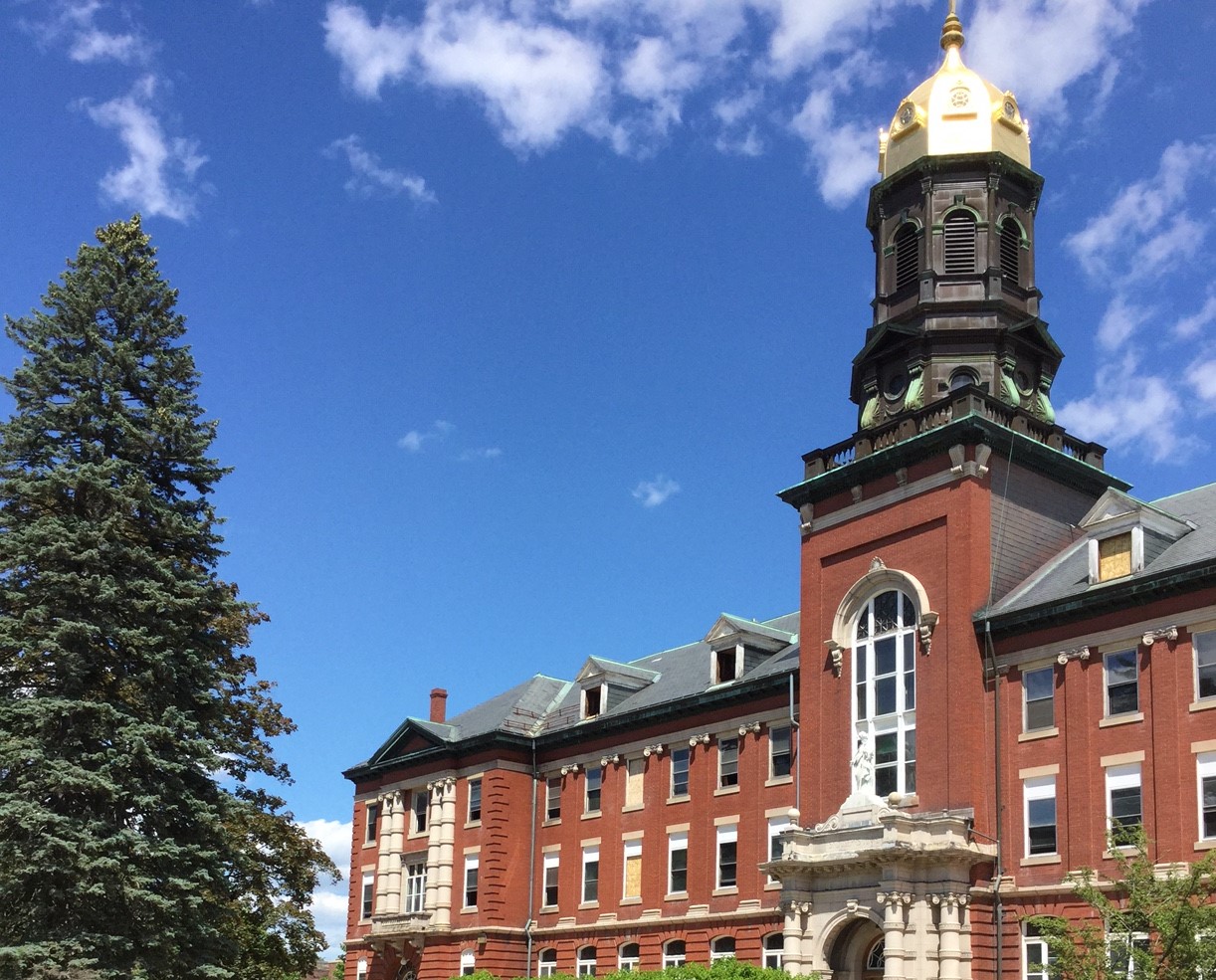
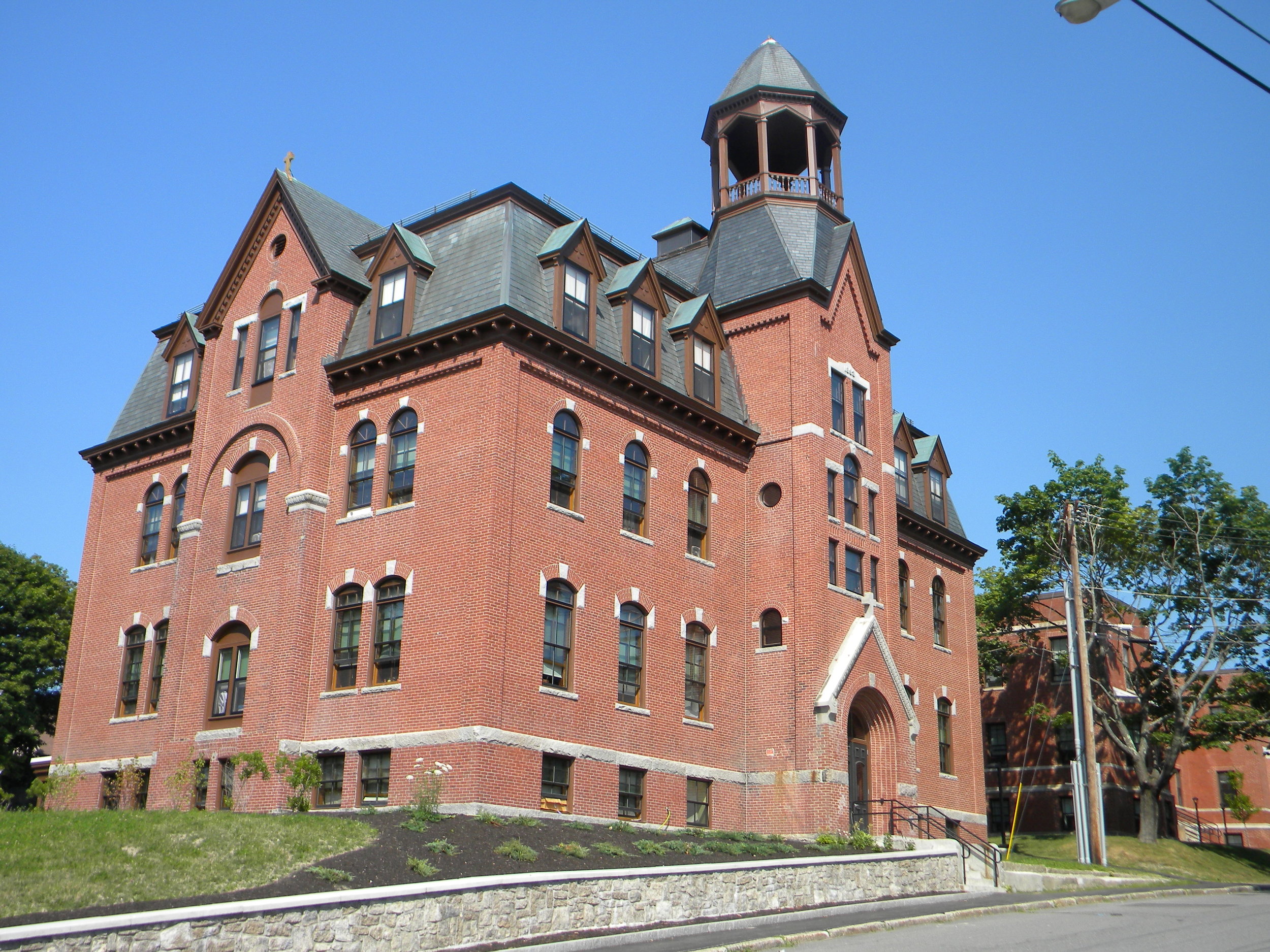
St. Joseph's Convent, The Motherhouse

Photo by Todd Caverly

Photo by Todd Caverly

605 Stevens Avenue, Portland

The Issue

With a dwindling number of Sisters of Mercy living in the large Motherhouse at 605 Stevens Avenue, the sisters decided to close their Motherhouse in 2005 and sell the 18.98 acre property on which it stands. The Motherhouse, once home to scores of nuns, has been vacant for years except for minimal use as administrative offices or use of the chapel by the McAuley students and staff. Since 1865 the Sisters of Mercy have created a long legacy of compassion and community service that remains in their affiliations at Mercy Hospital, Saint Joseph's College, and Catherine McAuley High School.

Our Position

As part of a larger redevelopment of the site into a senior living community, a developer proposes to rehabilitate the Motherhouse into senior housing. As a former convent, the structure has wide hallways, common areas, grand stairways and the stunning three story chapel complete with stained glass windows, altar, and a grand organ.  The building will be converted into 66 affordable and 22 market rate senior apartments and the common areas will be preserved to serve future phases of the redevelopment. The project will use Low Income Housing and Historic Preservation Tax Credits. All design and construction work and materials will conform to the Department of the Interior standards for rehabilitation and preservation under the Historic Tax Credit review process.

UPDATE

Work is underway! After a period of inactivity pending an appeal filed by neighborhood residents to the Maine Supreme Judicial Court interior demolition is now underway. The court found in late 2016 that the city acted within it authority when it approved rezoning the parcel to allow greater density.  Landmarks has supported the rehabilitation of the Motherhouse into senior housing as it provides a compatible reuse of the building, much needed housing, and the work will be undertaken in a manner that meets the Secretary of the Interiors Standards for Historic Preservation in order to receive historic tax credits. The proposed new construction of 161 market rate apartments behind the Motherhouse is set back from the historic building and is a compatible use. The new construction will help finance the rehabilitation project and is integral to a successful reuse of the historic building. 

During the interim while the court case was proceeding, the Convent and Academy buildings that comprise the Motherhouse were nominated to the National Register of Historic Places. The buildings were added to the register in March of 2017. The listing allows the project to be completed using Federal and State Historic Tax Credits, saving a historic Deering landmark and adding to the affordable senior housing stock in the city.


Press

Quick Links

What You Can Do

  • Join our mailing list to stay informed about advocacy, educational programs, and upcoming events.

  • Support the advocacy efforts of Greater Portland Landmarks.
Congress Square

Congress and High Streets, Portland  

The Issue

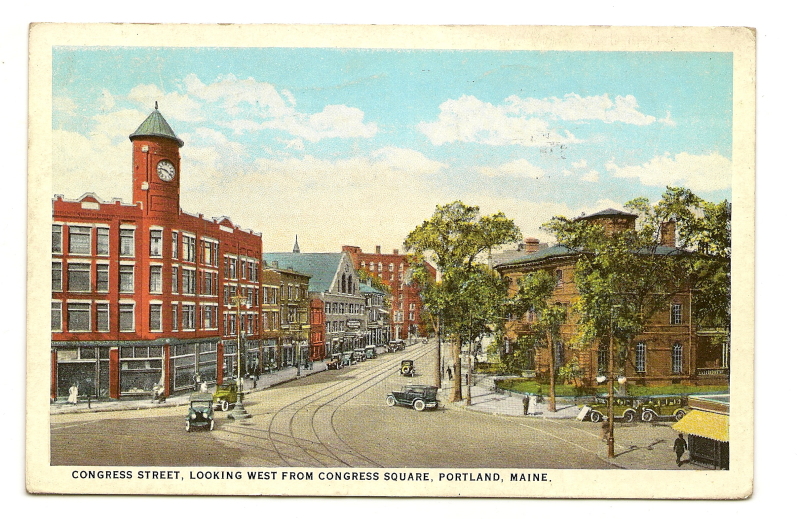
In 2013 Portland’s City Council approved a purchase and sale agreement for a portion of Congress Square at the corner of High and Congress Street. Rockbridge Capital, owners of the former Eastland Hotel, planned to develop an events center on the site of the park with remaining portion of the site to be redesigned by the city. Located at a key intersection in the Congress Street Historic District and in the Arts District, the existing open space was underutilized and in need of a creative redesign.

A lengthy public debate and court battle led to a vote by Portland voters to save the entirety of Congress Square for public use. A newly formed citizen’s group, the Friends of Congress Square Park, stepped in to organize events and finance improvements. Their hard work has enlivened the park and created a gathering space that benefits nearby residents, visitors, and local businesses.

The public process resulted in a new plan to redesign Congress Square and add new public art. The $2.5 million first phase of a redesigned Congress Square is expected to begin in July 2021 and be mostly finished by November. The first phase includes reconfiguring the intersection of Congress, High and Free streets to improve traffic flow, upgrade signal equipment and enhance safety for motorists and pedestrians, the city said. Changes intended to enhance pedestrian safety will include eliminating one entrance to Free Street and expanding the pedestrian plaza in front of the Portland Museum of Art.

Our Position

Landmarks supports the redesign of Congress Square Park as in our opinion it will fit into the context of the Congress Square intersection and the surrounding highly significant architecture including the State Theatre Building, the Portland Museum of Art complex, the Eastland Hotel, and the Congress Street Historic District.

Following the public debate, court battle and city-wide vote by Portland voters to save the entirety of Congress Square for public use, Landmarks directed their efforts to the future of the 1888 Union Station Clock works that were moved to the site in the 1980s. The clock was named to Landmarks 2013 Places in Peril list. The redesign of the park will necessitates the clocks removal.

Press

Quick Links

What You Can Do

  • Contact city leaders and urge them to support funding for final design plans for the park and the surrounding intersection.

  • Attend workshops to express the need for a new design of the intersection that is creative and includes high quality open space.

  • Learn more about the efforts of the Friends of Congress Square Park or attend one of their many 'In the Square' events!

  • Join our mailing list to stay informed about advocacy, educational programs, and upcoming events.

  • Support the advocacy efforts of Landmarks by becoming a member or making a donation today.

Franklin Street Arterial

Franklin Street Arterial, Portland, Maine

The Issue

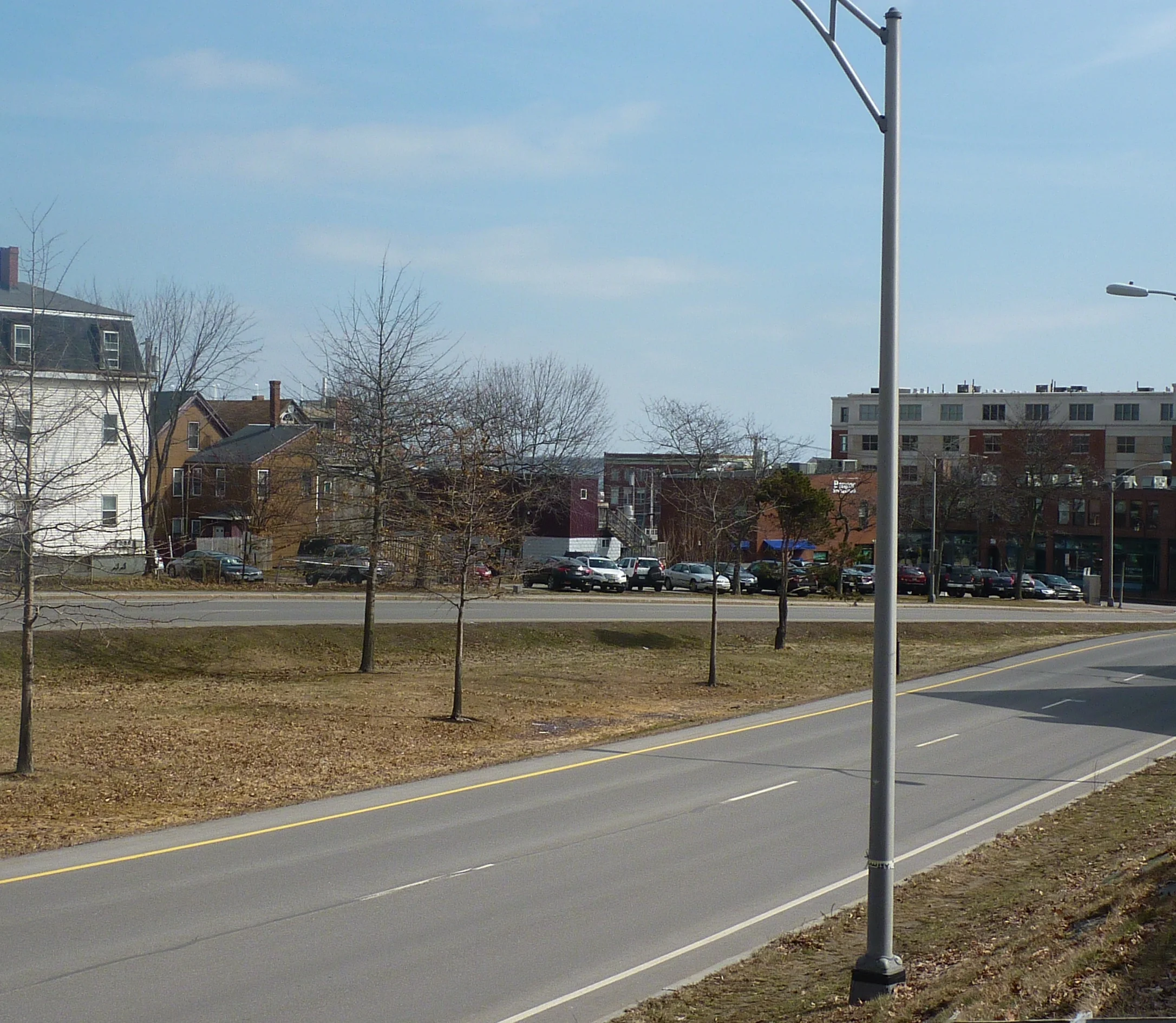
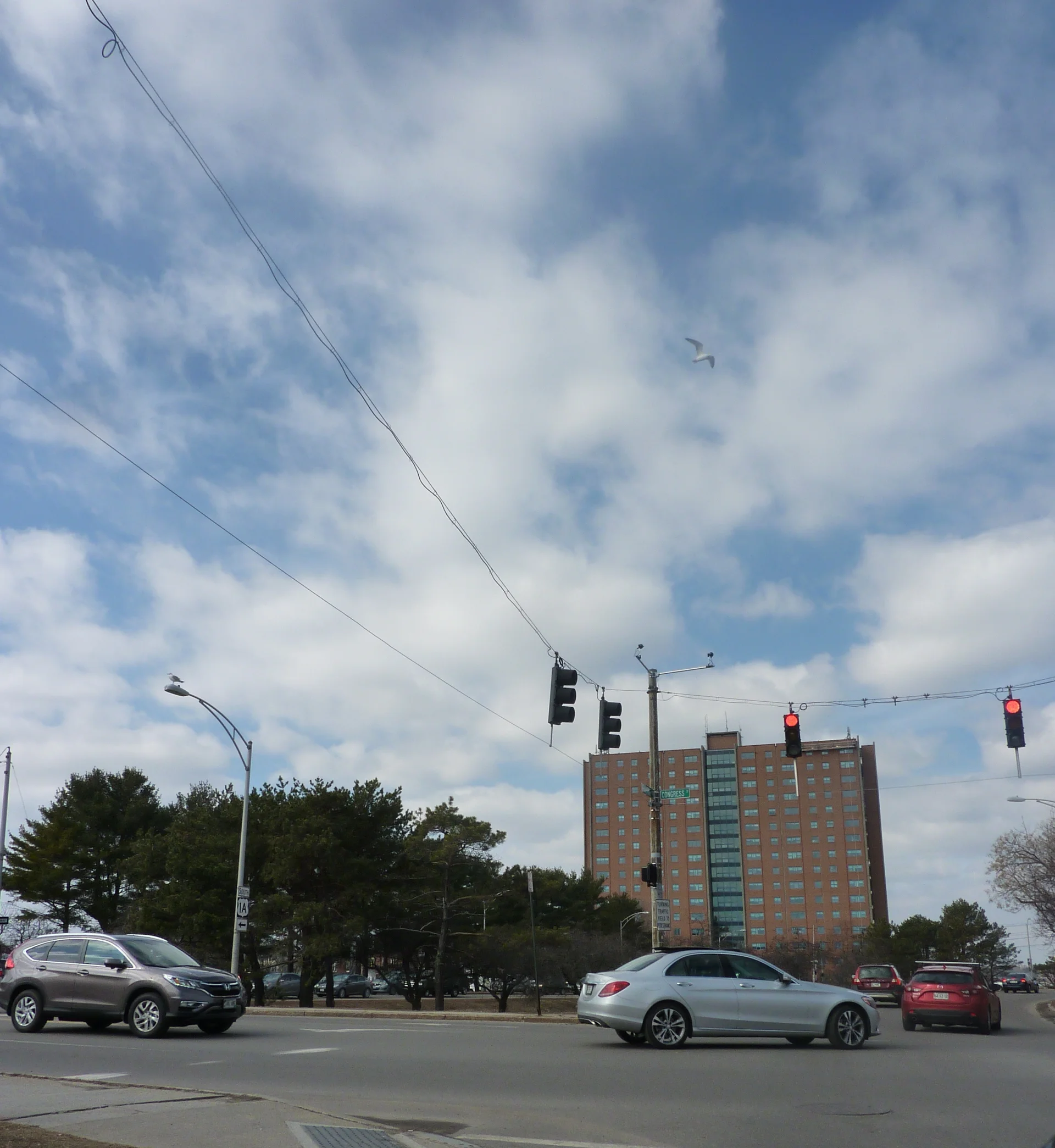
In 2009 the City of Portland began considering a redesign of Franklin Street, a 1970s urban arterial connecting I-295 with the waterfront. When constructed, the arterial severed the connection between historic neighborhoods and the downtown and required the demolition of numerous historic dwellings, businesses, and community buildings.

Our Position

A reconfigured Franklin Street should enhance the urban fabric of the city through the mixed-use development of residential, commercial and recreational space amid attractive streetscapes and possibly restore land taken for the creation of the arterial to Lincoln Park. As part of the City’s plan to redesign the arterial, Landmarks advocates for the following:

  • Restore land to Lincoln Park by realigning Franklin Street to the east of the existing right-of-way, in order to increase high-quality open space for gathering, passive recreation, and respite.

  • Creation of a pedestrian friendly connection between Lincoln Park and the India Street neighborhood to provide the neighborhood with much needed access to open space.

  • Restore and strengthen the East/West continuity of historic character and resources along Congress Street, not only by maintaining the existing historic architecture but also by encouraging infill development that is sensitive to the scale, height, and massing of its historic context and that serves to encourage use of Lincoln Park, thereby further enlivening that open space.

  • Reconnection of the historic street grid along the entire length of Franklin for all modes of transportation.

Press

Quick Links

What You Can Do

  • Learn more about the efforts of the Friends of Lincoln Park to preserve and activate the historic park.
  • Join our mailing list to stay informed about advocacy, educational programs, and upcoming events.
  • Support our advocacy efforts by making a donation or becoming a member today.

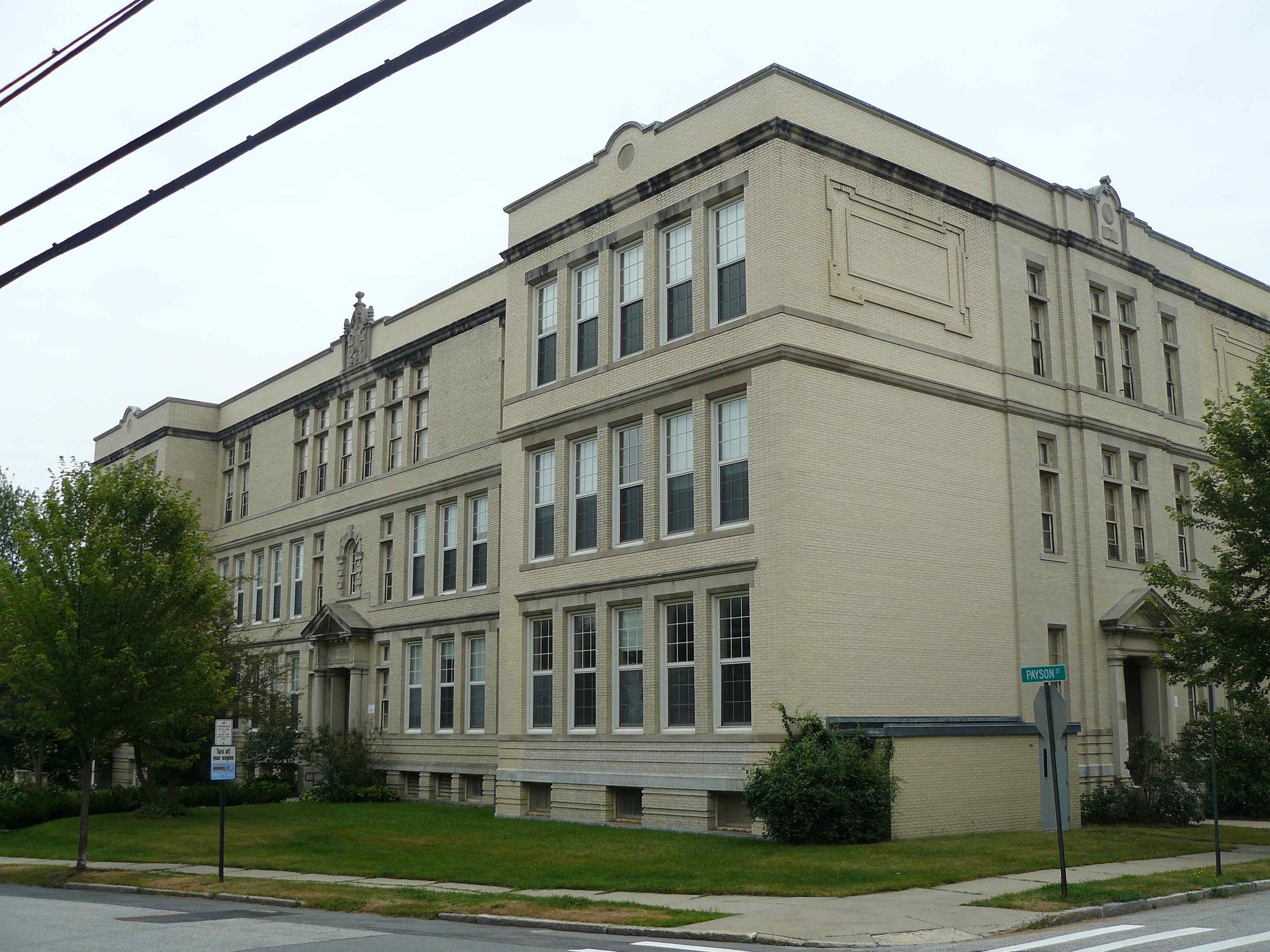
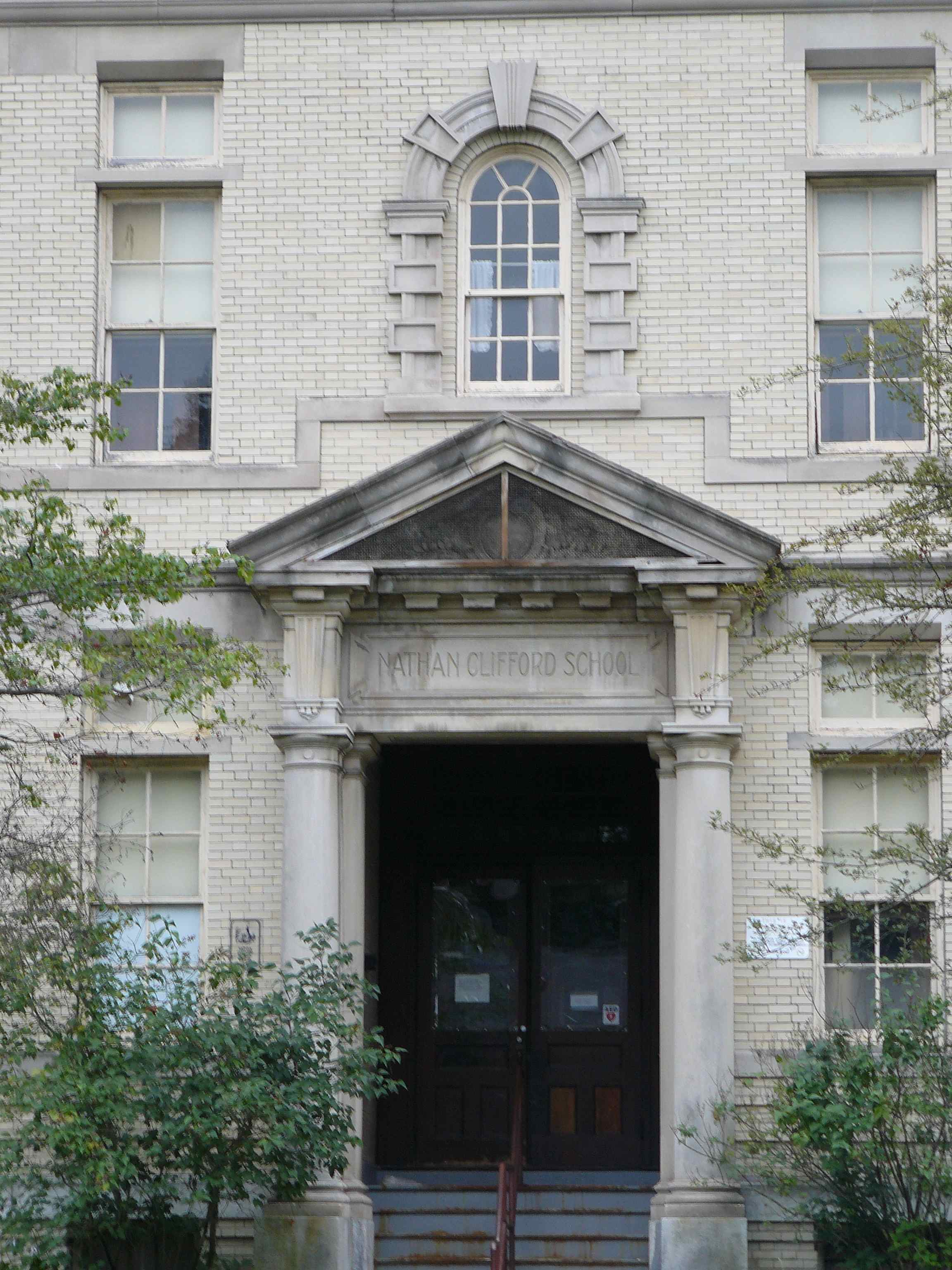
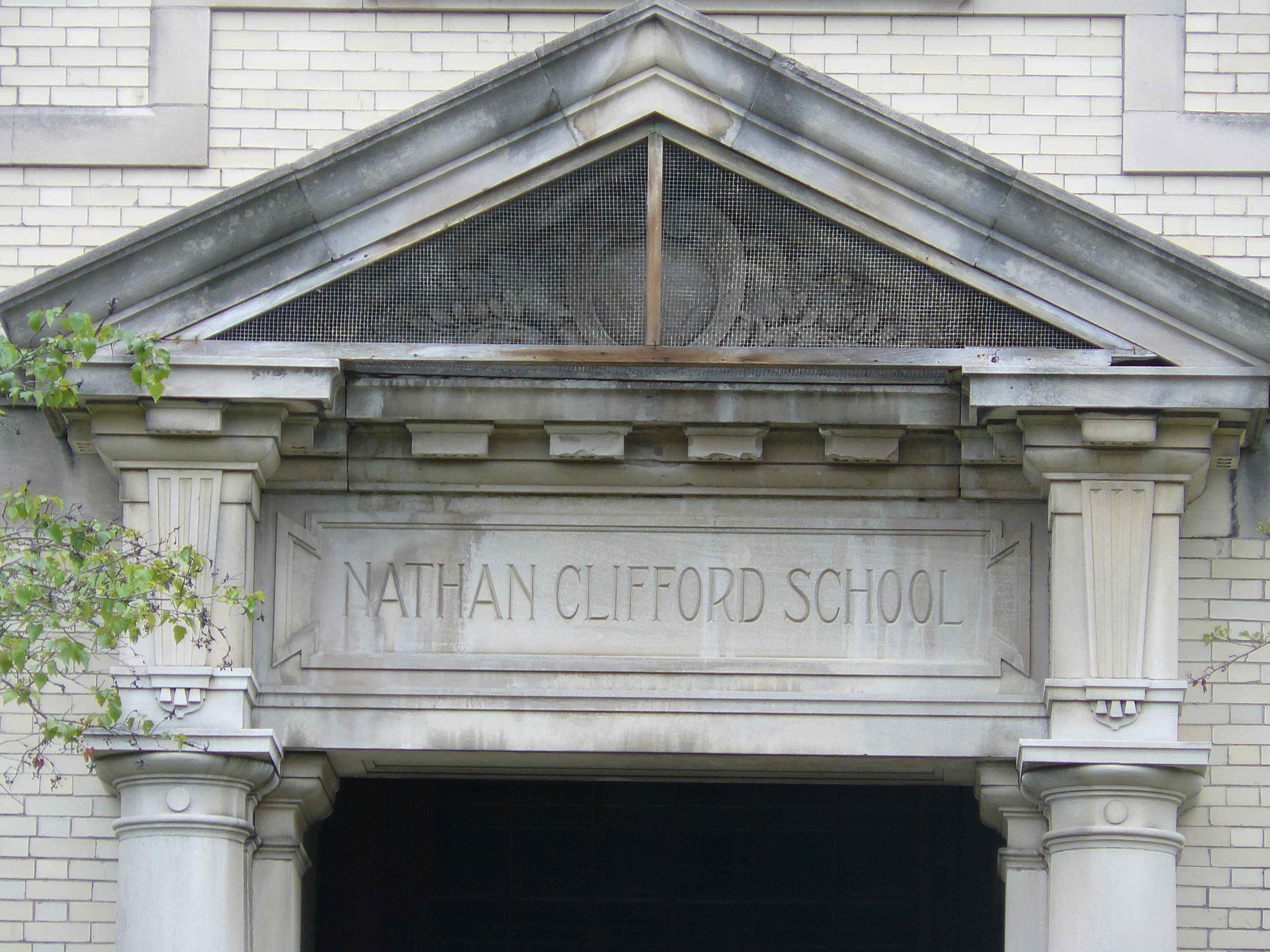
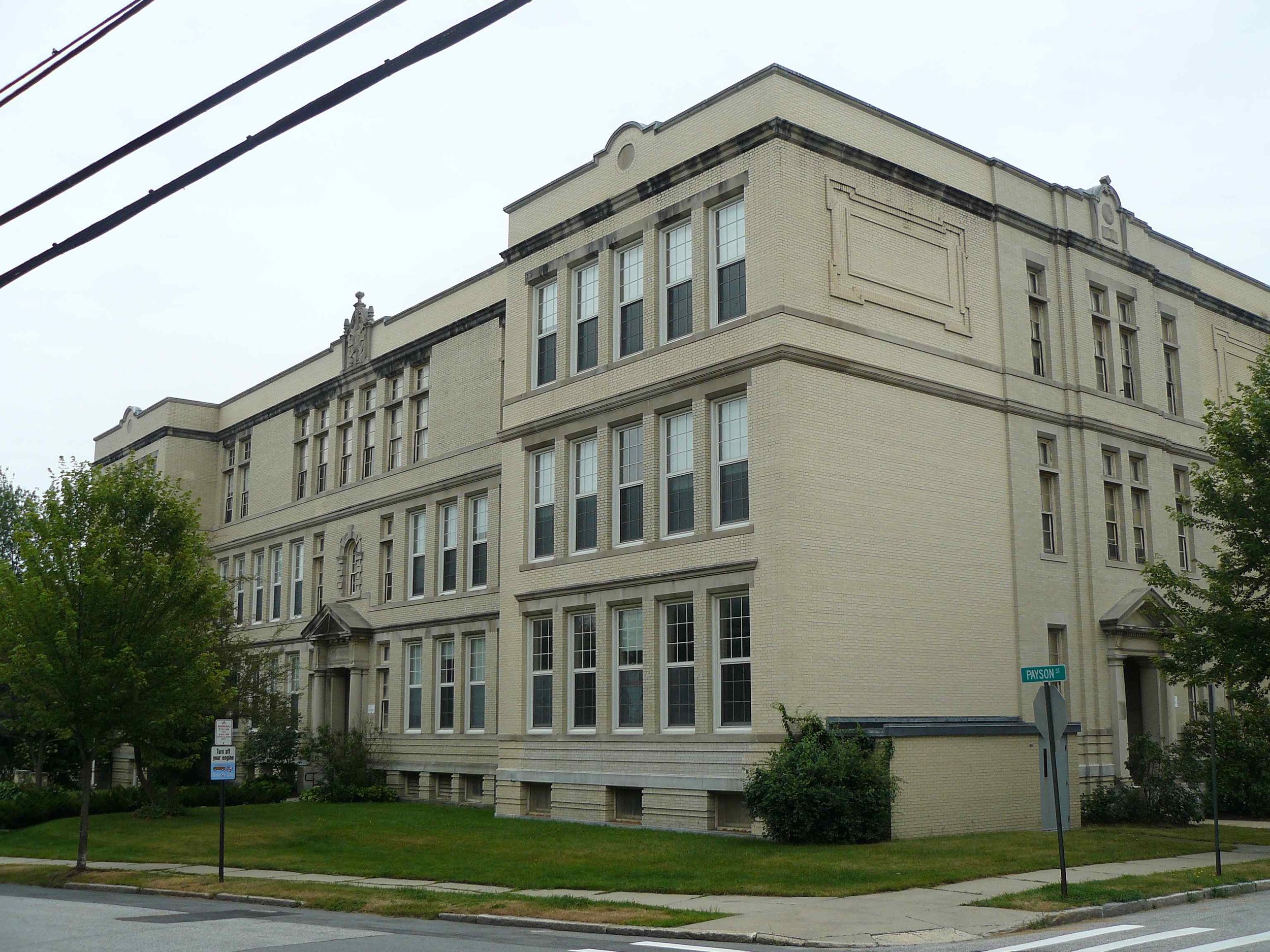
Nathan Clifford School

180 Falmouth Street, Portland, Maine

The Issue

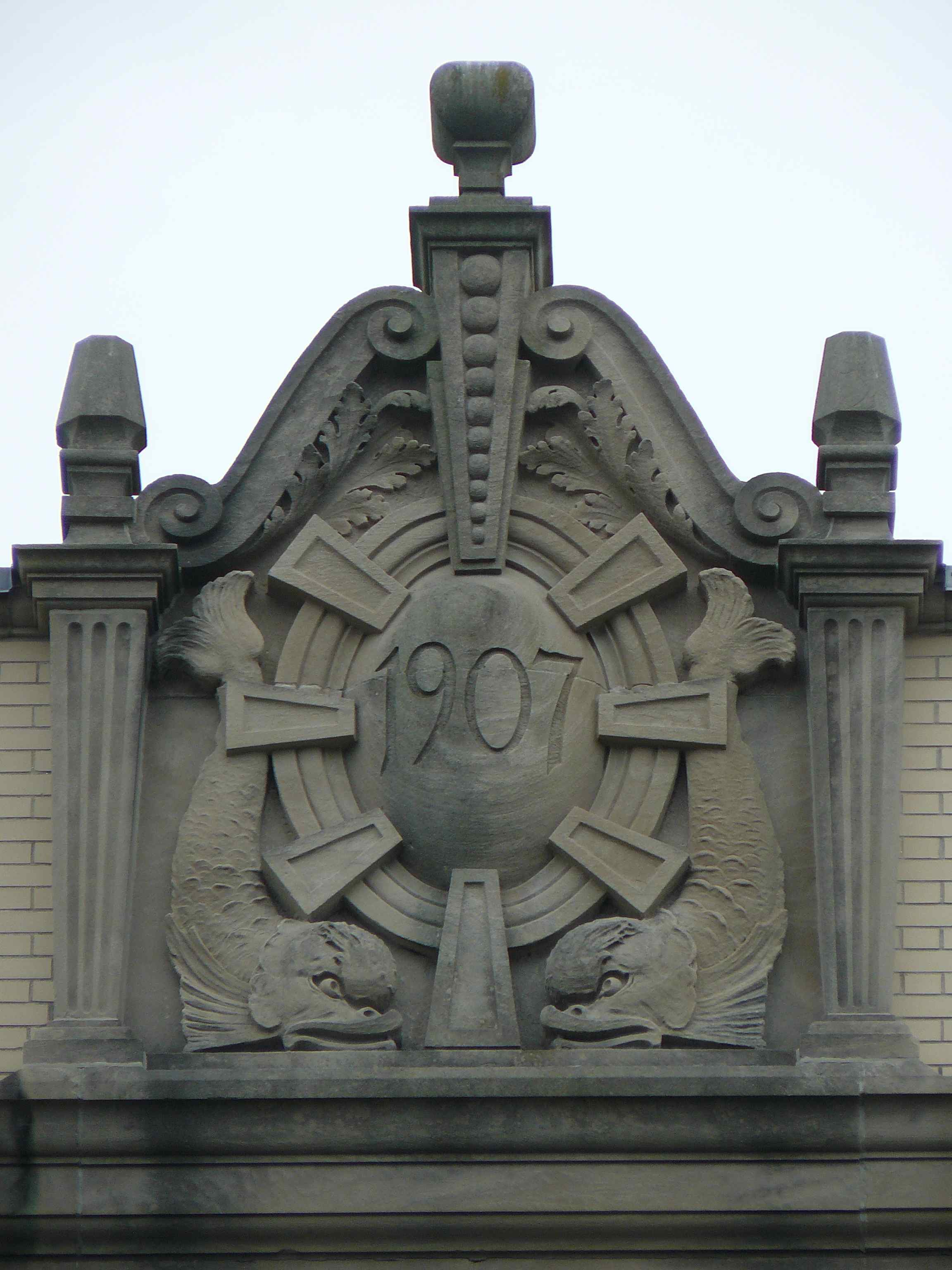
When the City of Portland announced it would close the 1907 neighborhood school and construct a new building outside the neighborhood, Landmarks, Maine Preservation, and the National Trust for Historic Preservation commissioned an alternative study for the school's reuse. Although the alternative study found renovation costs were comparable to new construction it was not enough to alter the state's funding process or stop the city from approving construction of a new school.

Our Position

In March 2010 the Maine Historic Preservation Commission ruled that the building is eligible for the National Register. Landmarks volunteers served on a City task force that recommended the Nathan Clifford School be listed on the National Register of Historic Places before being sold for development. The City of Portland nominated the school to the National Register and it was listed in Fall 2013.

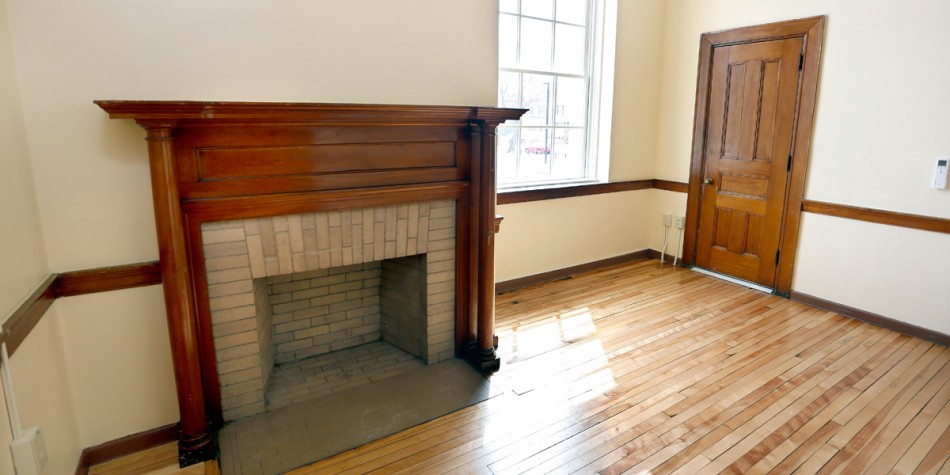
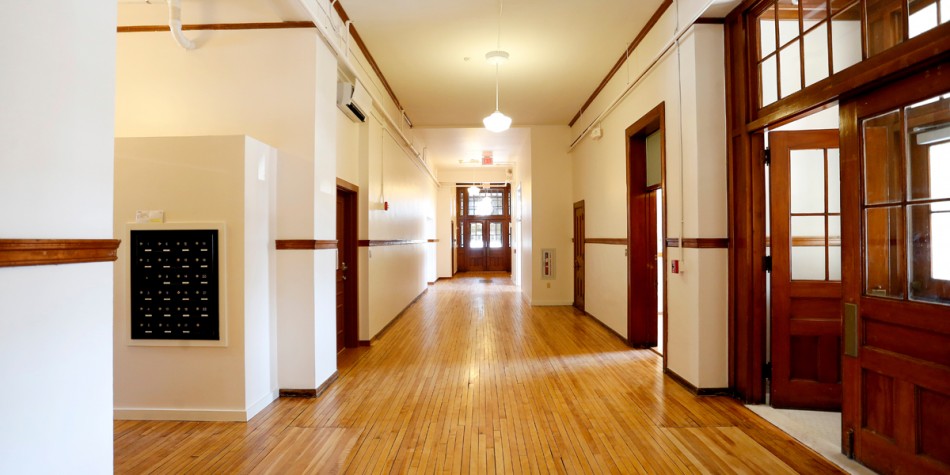
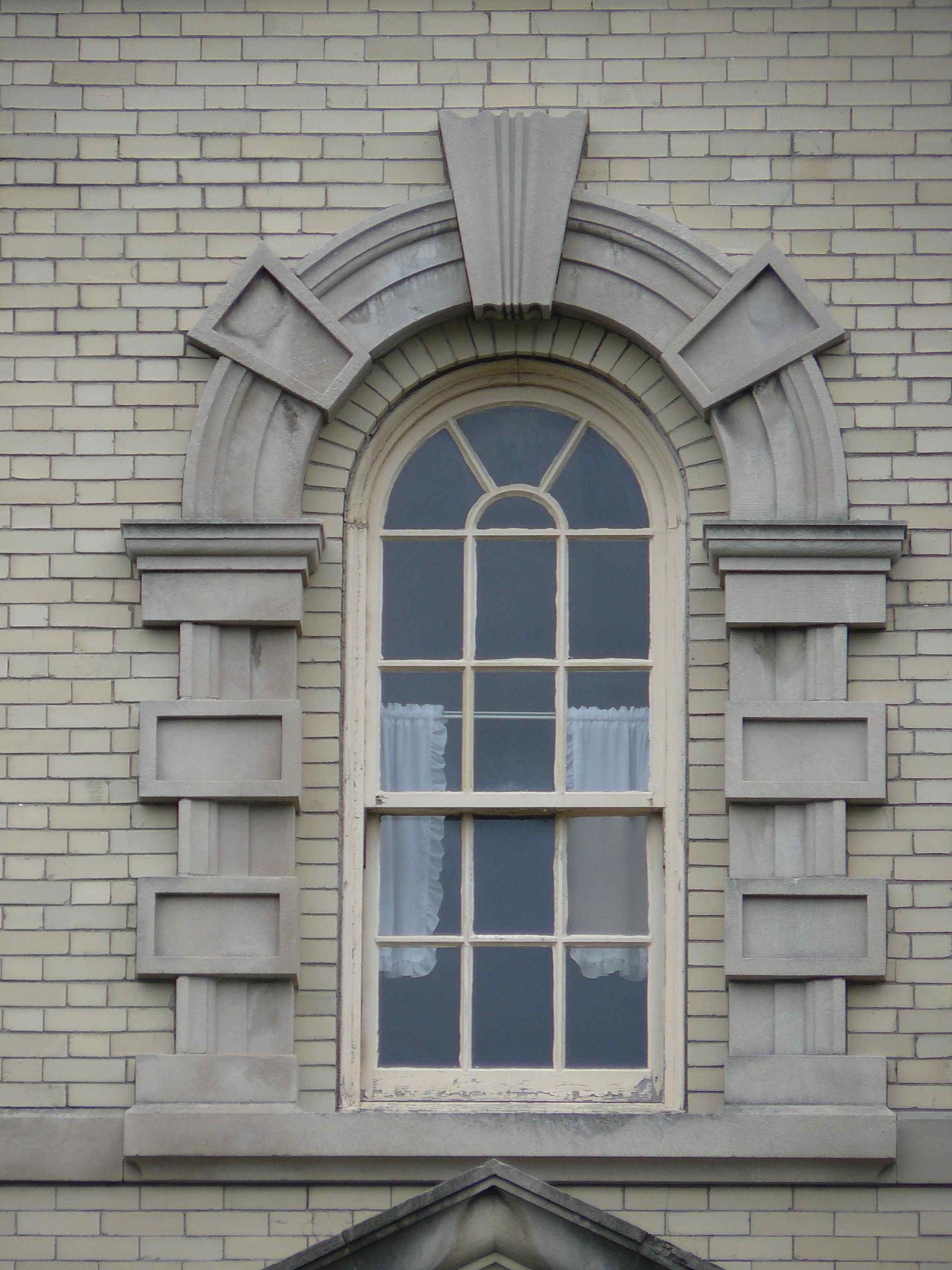
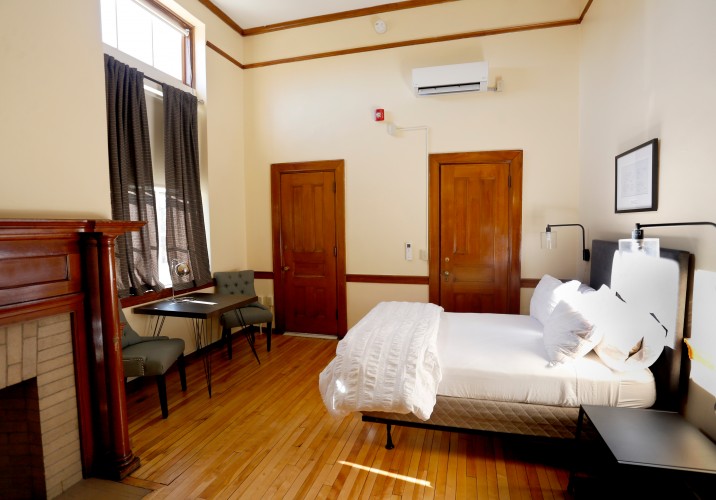
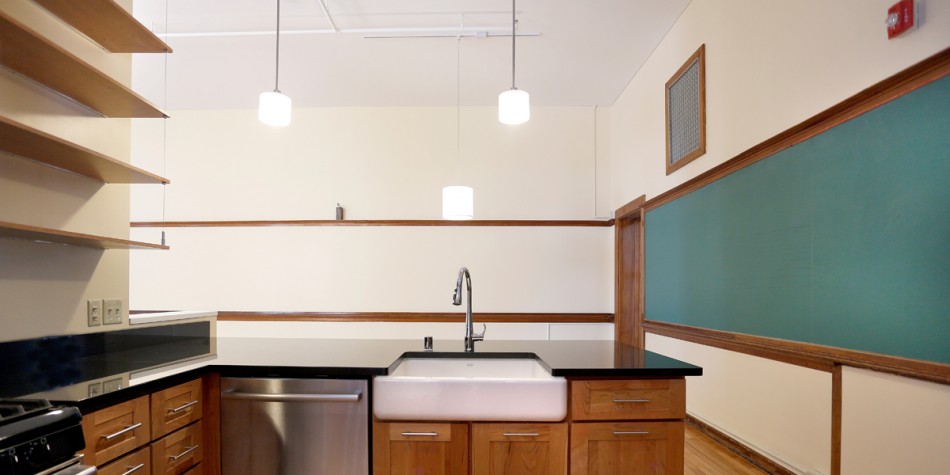
In October of 2013, Developer's Collaborative acquired the former school building from the City and received Planning Board approval for the conversion of the school into twenty-two one to three bedroom units. The development team has redeveloped the building using historic preservation tax credits and preserved the character defining features of the historic school.

Historic neighborhood schools like Nathan Clifford can continue to function as educational facilities or can be converted to new uses, preserving local landmark structures important to the character of the community.

2016 Preservation Award Winner!

Greater Portland Landmarks awarded the Nathan Clifford Residences a 2016 Preservation Award for the adaptive reuse of the former school building.

Project Team:

PRESS

QUICK LINKS

What you Can Do

  • Support Landmarks' advocacy efforts and education programs.

  • Support local, state, and national organizations that are working to protect these treasured national icons!

Spring Street Arterial

Spring Street, Portland, Maine

The Issue

Conceived as part of a larger urban renewal plan for the downtown in the late 1960s, the Spring Street Arterial is a half-mile long stretch of highway in the middle of the City that necessitated the removal of numerous historic resources. The continuation of the highway East and West was abandoned due to pressure from the nascent preservation movement. The central median and high speed traffic form a strong physical barrier between downtown neighborhoods and the uninviting concrete landscape is barren and hostile to pedestrians.

Our Position

Landmarks played an active role in halting the Spring Street Arterial expansion in the 1970s. Now out of context, the highway remnant mainly provides access to large parking lots and the recently renovated Cumberland County Civic Center.

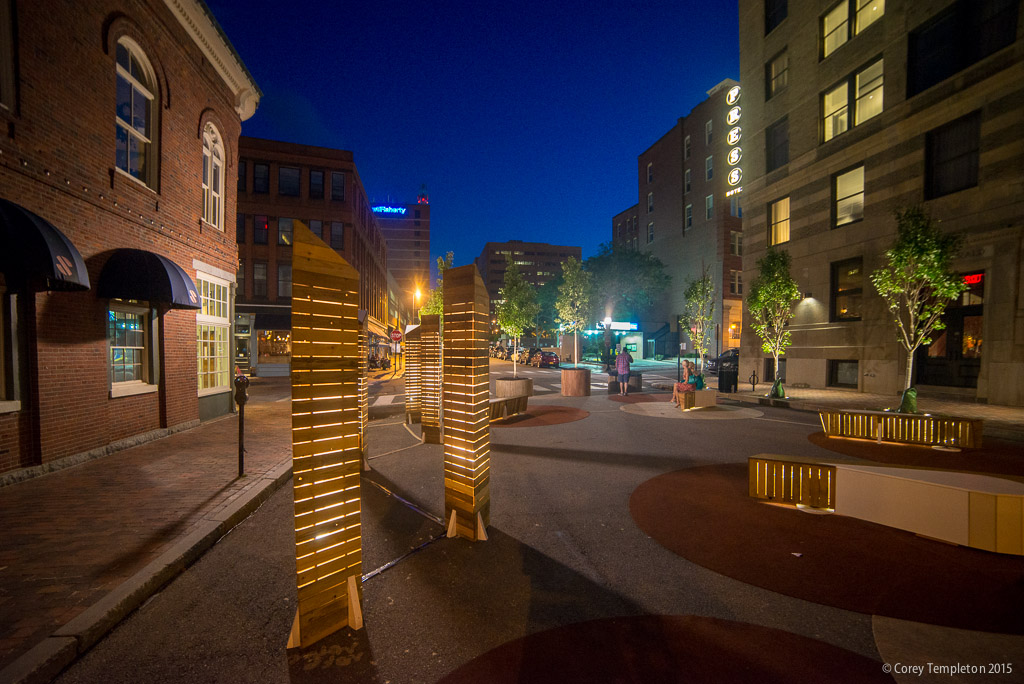
Landmarks convened a group of interested parties in 2012 to discuss the future of the Spring Street Arterial. The recommendations of this group, and anticipation of a planned repaving of the road by the Maine Department of Transportation in 2015, inspired the City to commission the Spring Street-Free Street Area Streetscape Plan to redevelop the arterial. Landmarks supports the City's plan to revert to a two lane street, increase pedestrian connectivity, and free up land for open space and new development on the South side of the street. As part of the street work, Landmarks is working with the City and community partners to develop a public outdoor exhibit and gathering place at the corner of Spring and High Street, adjacent to our office at 93 High Street.

Update: In 2015 the central median was removed and some portions of the street were narrows to accomodate street crossings. Budget constraints have limited full implementation of the plan.

Press

Quick Links

What You Can Do

  • Learn more about the City's Spring Street - Free Street Area Streetscape Plan
  • Encourage City Councilors to support funding to complete the streetscape plan
  • Support Landmarks' advocacy efforts
  • Sign up to stay informed about advocacy efforts, educational programs, and upcoming events.

United States Custom House

Looking for rental information, scroll to bottom.

312 Fore Street, Portland, Maine

The Issue

Built 1868-72, the United States Custom House on Commercial Street was listed on the National Register of Historic Places in 1973 and is designated as a City Landmark. Following the removal of the U.S. Customs offices to other office space in Portland, the building underwent a comprehensive restoration to correct damage from water infiltration.

Our Position

Because the building has such great significance architecturally and historically, Landmarks engaged with the U.S. General Services Administration (GSA) as a consulting party under Section 106 of the National Historic Preservation Act in order to participate in discussions regarding the building's preservation. As a consulting party, Landmarks was able to attend meetings regarding the preservation of the building with the GSA and the general contractor. The building is now leased to several federal agencies for office use and the great hall is available to the public for limited use, by prearrangement only through the GSA.

2014 Preservation Award Winner!

Project Team:
Oak Point Associates, Architects
General Services Administration, Client & Property Manager
CCB, Inc., General Contractors
TECTA America, Roofing Contractor
Building Conservation Associates, Historic Preservation Consultant
Masonry Preservation Associates, Masonry Contractor
Peter Lord Plaster & Paint, Plaster Contractor

Press

Quick Links

Courtyard Marriott Hotel

321 Commercial Street, Portland, Maine

The Issue

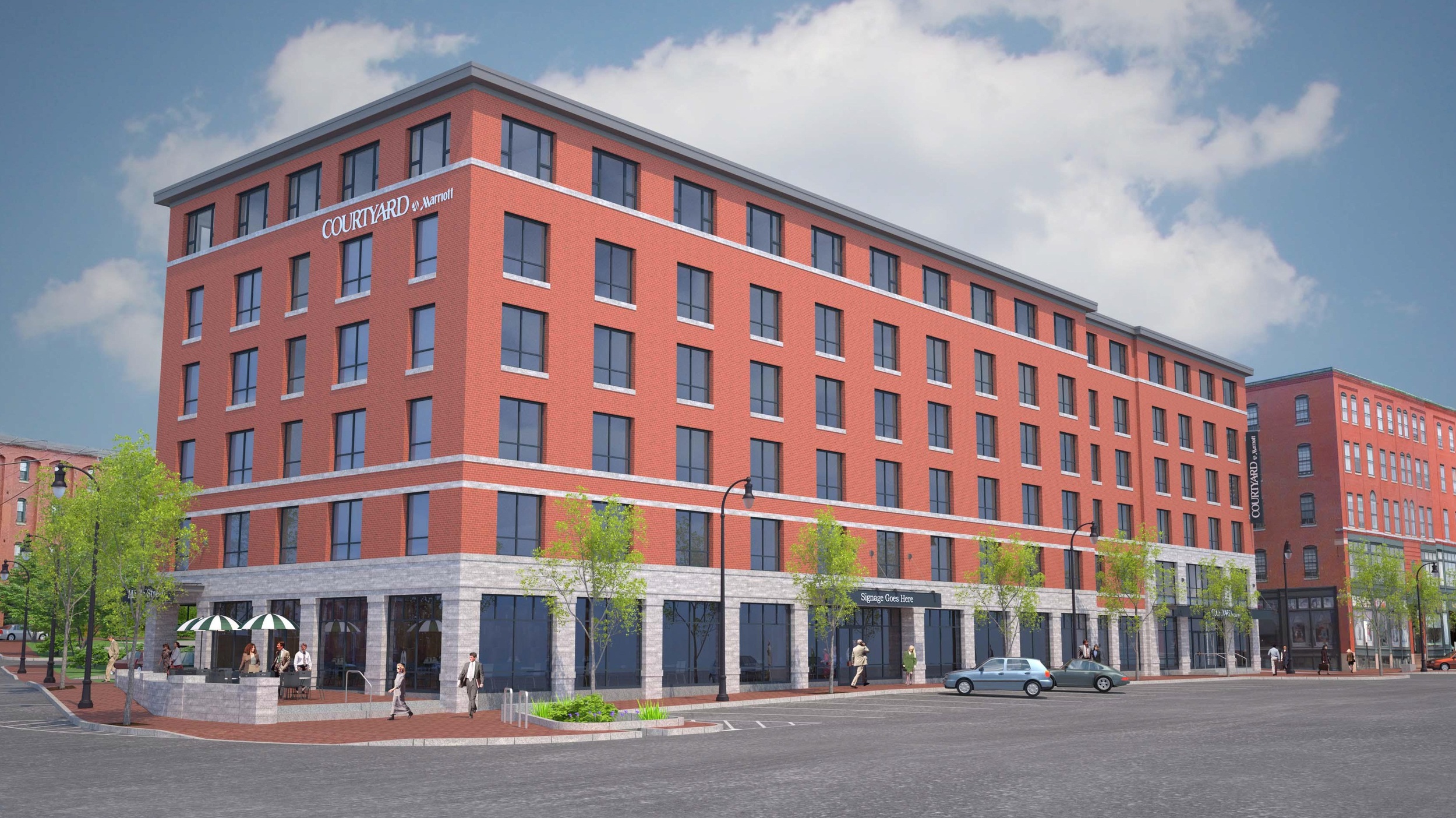
A new 131-room Courtyard Marriot hotel with 14 penthouse apartments was proposed for a dirt lot at 321 Commercial Street. The proposed site of the hotel development on the western end of Commercial Street is a gateway to the City and to the Old Port Historic District. It was imperative that the proposed building be compatible with the quality and character of its surroundings.

Our Position

Advocating for new construction that is contextually appropriate in historic areas is an important part of Landmarks' mission. Landmarks made several recommendations to the hotel development team asking that the building design respond to the historic and physical context of the site. Landmarks recommended the building's east wall run parallel to historic Foundry Lane and that the materials and proportion of the front facade relate to the strong street wall along the land side of Commercial Street. The developers adopted several key recommendations made by Landmarks in their final project plans. Historic Foundry Lane was redeveloped as a pedestrian passage between York and Commercial Streets and the new hotel extends the street wall of Commercial Street.

Press

Quick Links

What You Can Do

  • Visit the lobby of the Courtyard Marriott Hotel to see a large scale map of historic Portland!

  • Support the advocacy efforts of Greater Portland Landmarks.

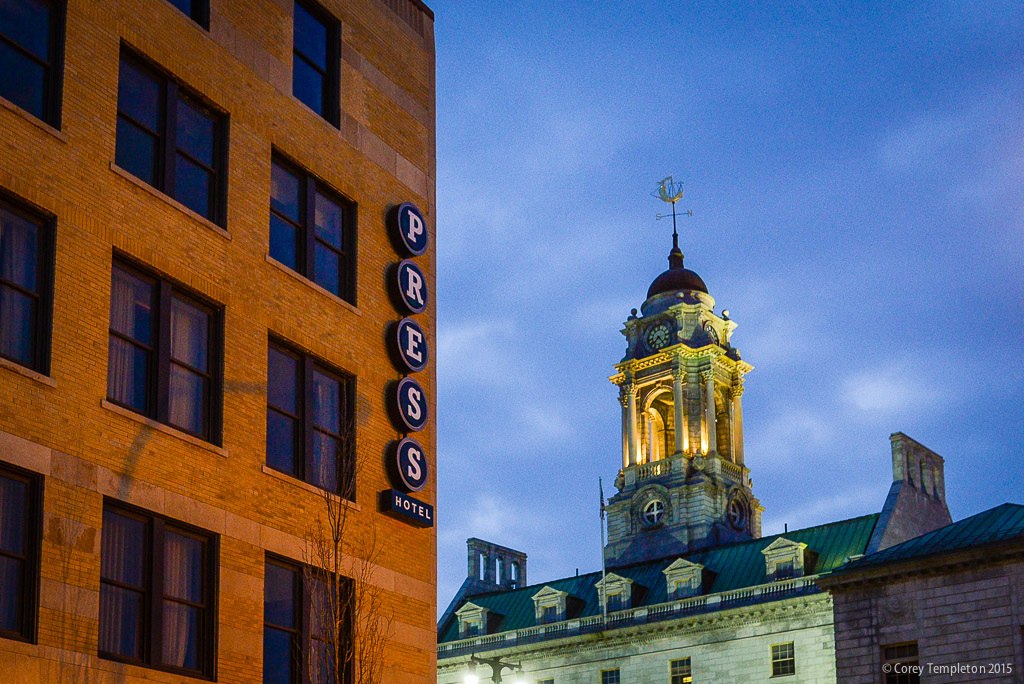
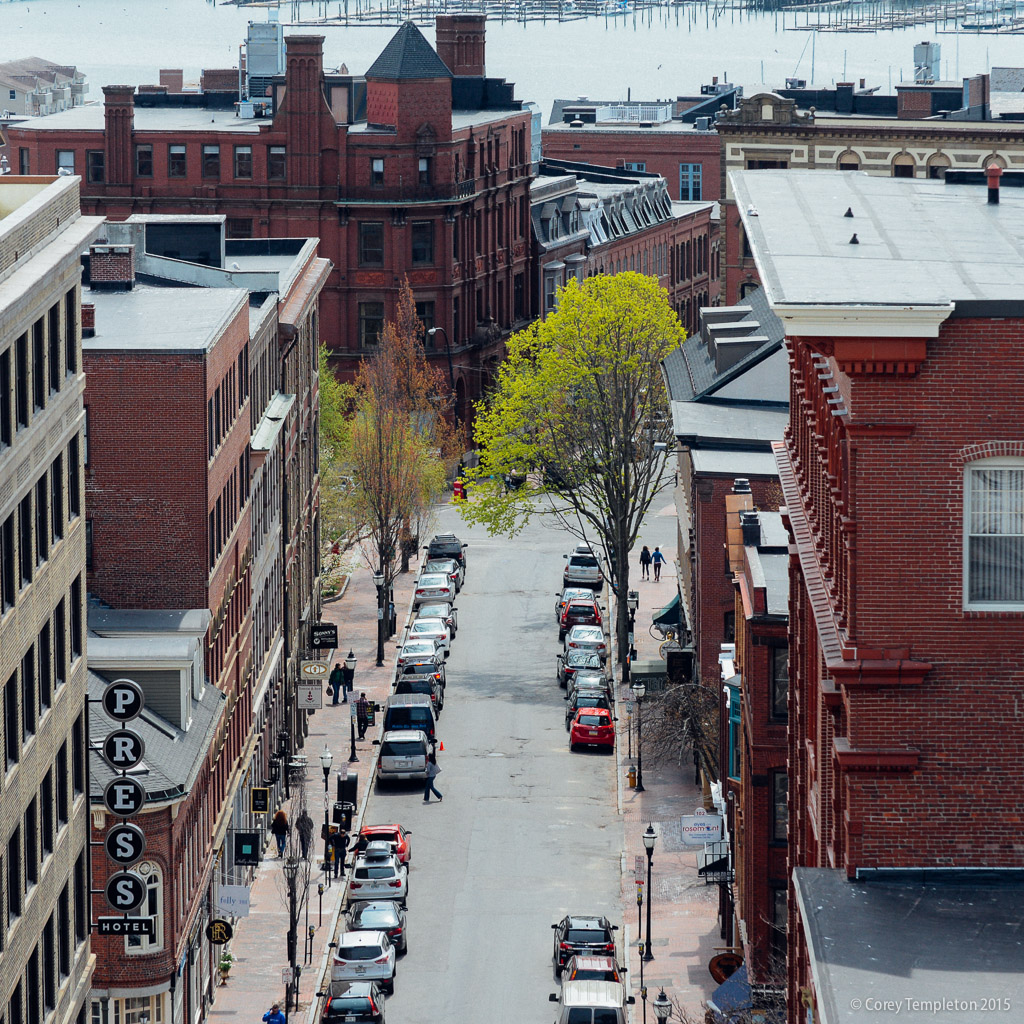
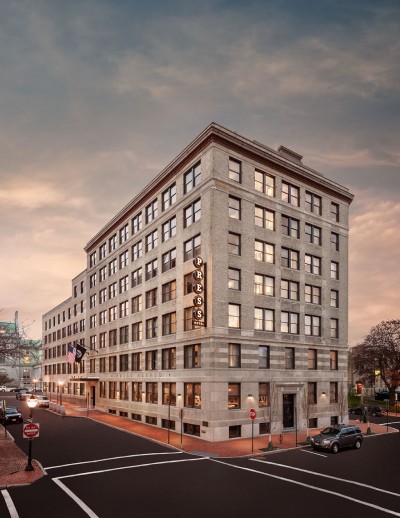
Portland Press Herald Building

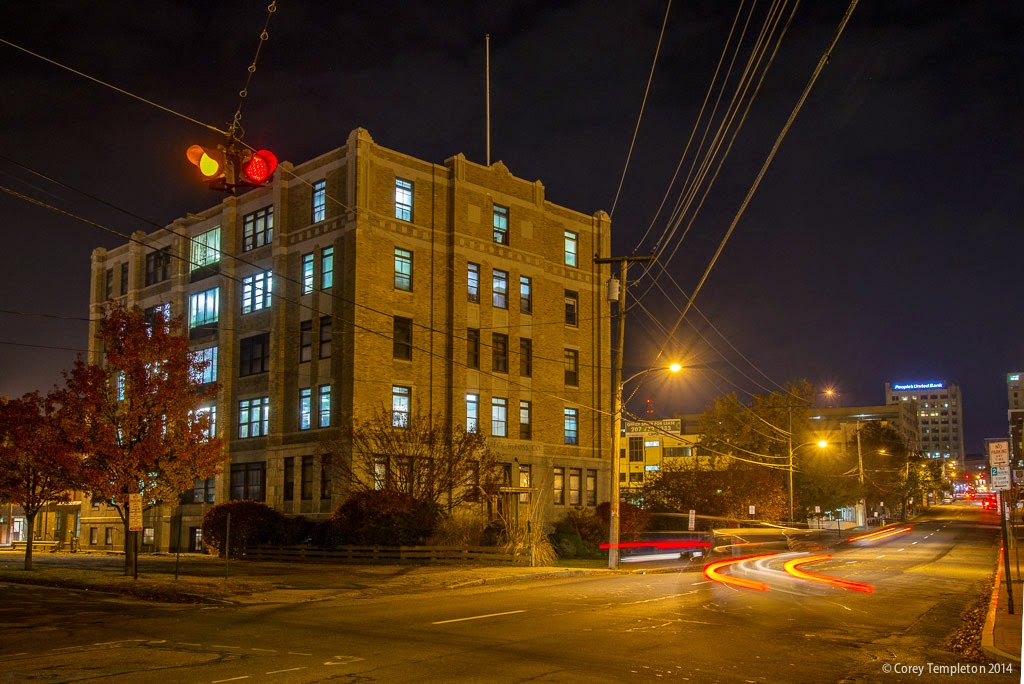
119 Exchange Street, Portland, Maine                                               Photos by Corey Templeton

The Issue

When the Portland Press Herald and Maine Sunday Telegram vacated their 1923 building at the corner of Exchange and Federal Streets, as well as the 1947 addition on Congress Street in 2010, the empty building in the heart of the Congress Street Historic District was in need of a new use.

Our Position

Landmarks supported development plans for the rehabilitation of the Press Herald building into a boutique hotel and restaurant. The reuse furthers the historic preservation goals of the City and contributes to the economic vitality of Portland's downtown.

The project was approved by Portland's Historic Preservation Board and funded in part by using state and federal historic preservation tax credits. Landmarks submitted a letter of support to the National Parks Service for the developer's plans to remove the altered historic fire escape. The hotel opened in 2015.

Press

Quick Links

2016 PRESERVATION AWARD WINNER!

Greater Portland Landmarks awarded the Press Hotel a 2016 Preservation Award for the adaptive reuse of the former newspaper buildings.

What You Can Do

  • Visit the Press Hotel in the Congress Street Historic District

  • Support the advocacy efforts of Greater Portland Landmarks

  • Sign up to stay informed about advocacy efforts, educational programs, and upcoming events

West End Place

Pine and Brackett Streets, Portland

The Issue

A four story residential building with thirty-nine apartments and a thirty-four space parking garage was proposed for a partially empty and neglected corner in the West End Historic District. Prior to the design, a historic dwelling located on the lot was reclassified from a contributing building to non-contributing due to its deteriorated state.

Our Position

Landmarks met with the development team and attended the workshop and public hearings held by the Historic Preservation Board. Landmarks encouraged the designers to blend the proposed building with its context and advocated for a design that reduced the building height and articulated the long façade on Brackett Street. The developer incorporated several of our comments into the final design approved by the Historic Preservation Board to reduce the building’s overall scale and enhance the pedestrian experience.

Press

Quick Links

What You Can Do

  • Sign up to stay informed about advocacy, educational programs, and upcoming events.

  • Support the advocacy efforts of Greater Portland Landmarks.

Maine Jewish Museum

267 Congress Street, Portland, Maine

The Issue

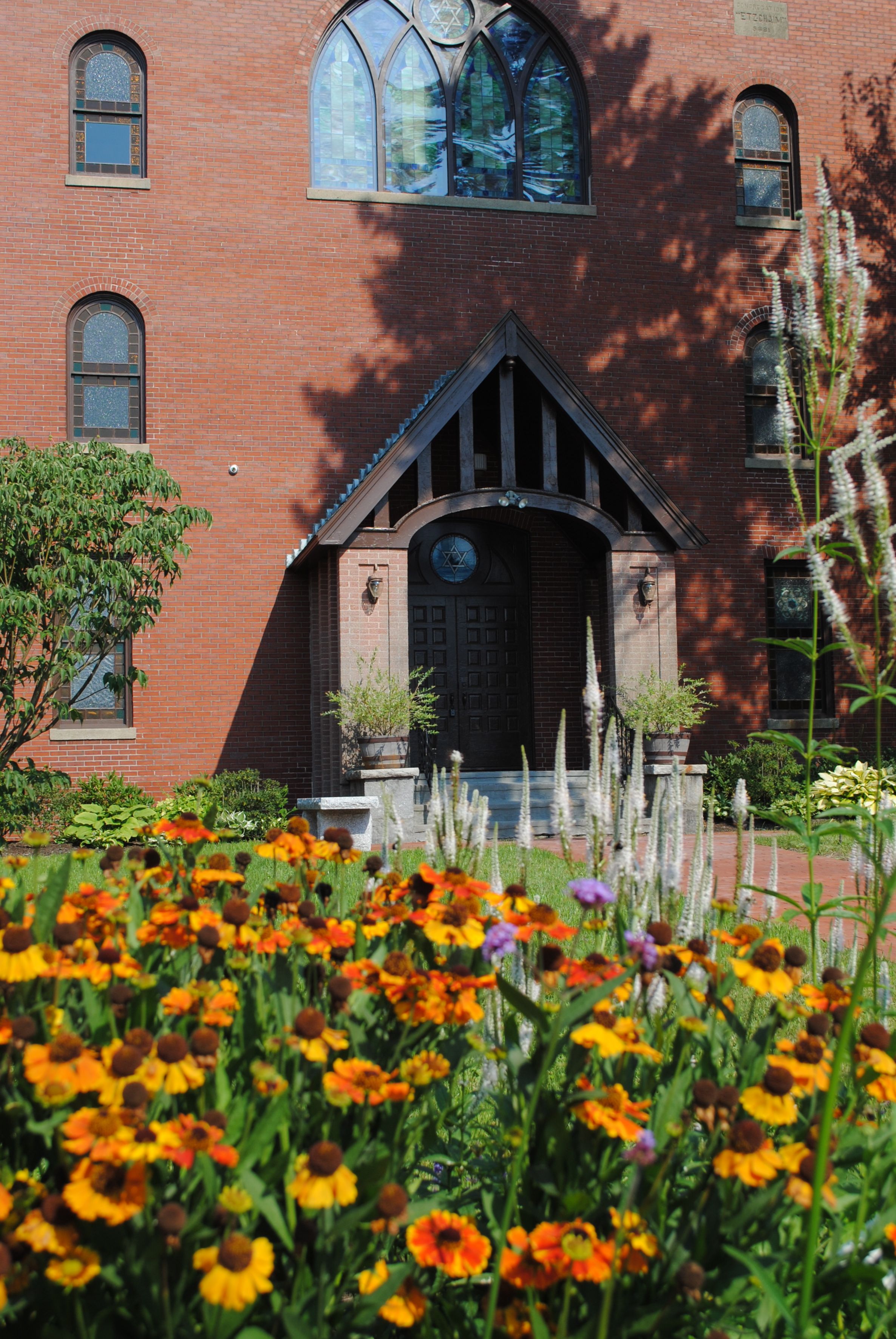
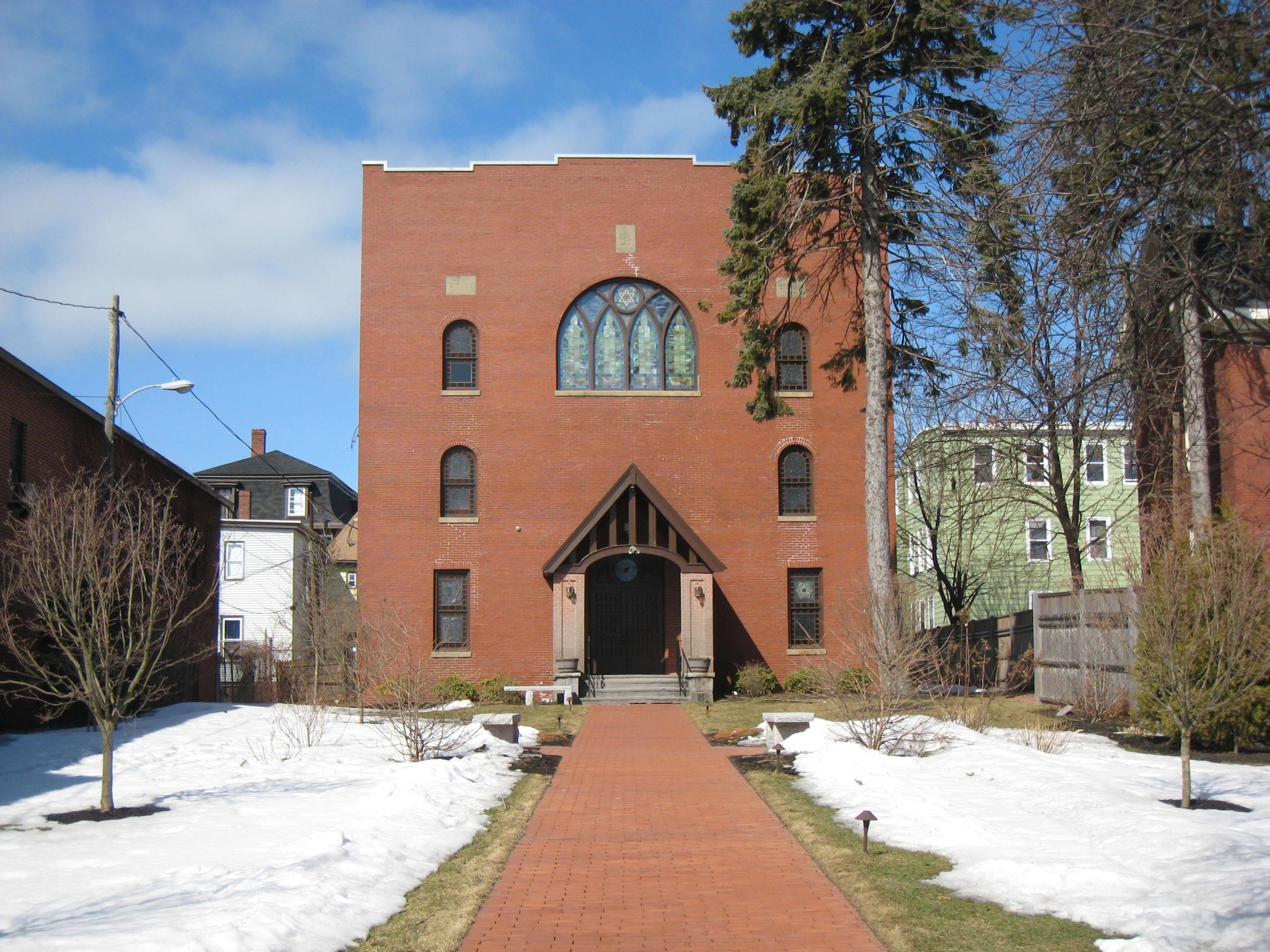
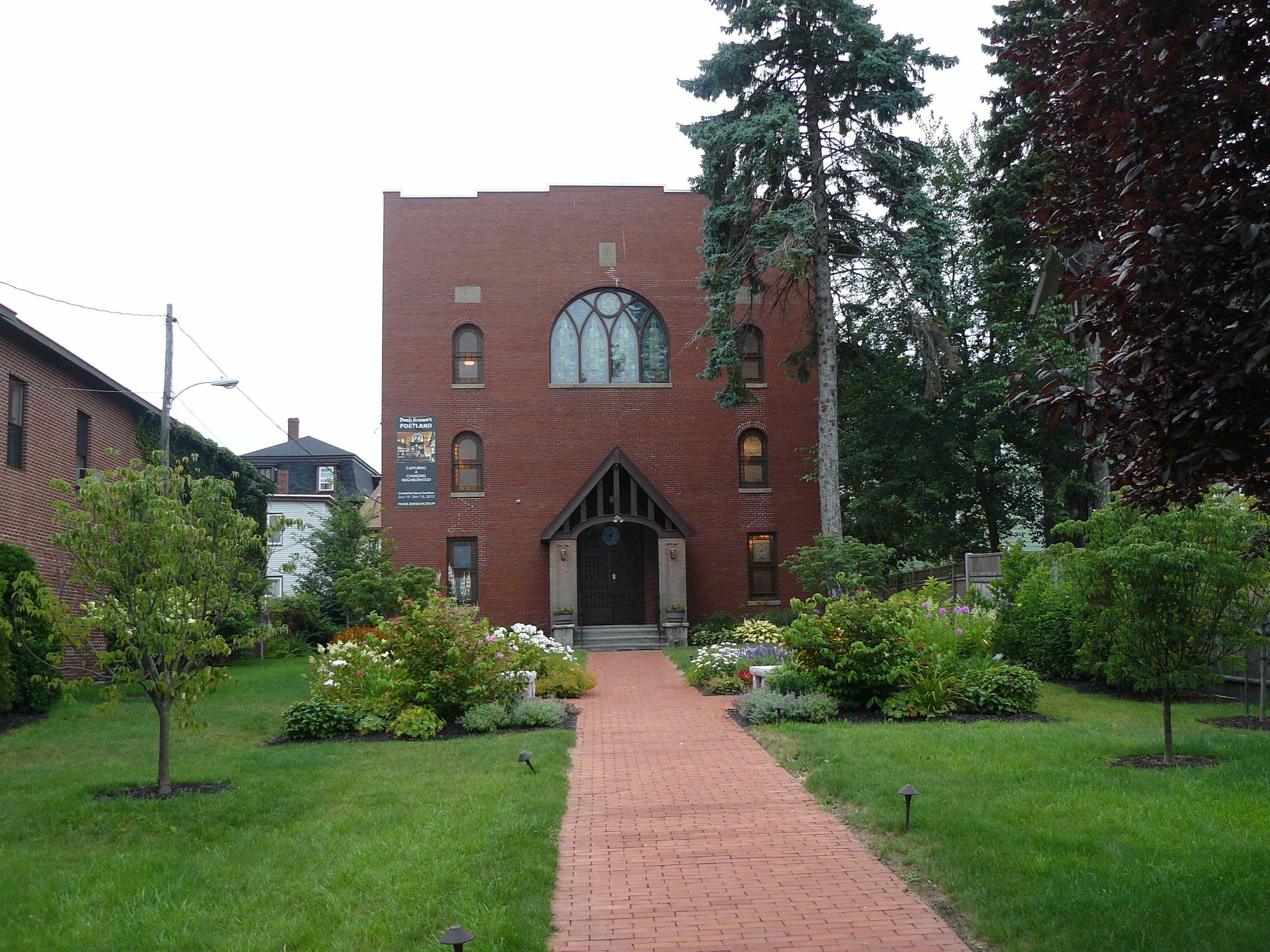
The Etz Chaim Synagogue was founded at a time when Portland’s Jewish population was concentrated on the peninsula. As congregants moved to Deering and the surrounding suburbs in the second half of the 20th century, attendance dwindled. The remaining congregation struggled to maintain and heat the historic building. 

Our Position

The formation of the Tree of Life Foundation in 2008 and the creation of the Maine Jewish Museum in 2009 have rescued the synagogue from closure. The building has been restored, and the story of Maine’s Jewish history and contributions to art and culture is being told, broadening public understanding of one of Portland’s immigrant communities. In addition the new museum significantly contributes to the vitality of the historic India Street neighborhood.

Greater Portland Landmarks awarded the Etz Chaim Synagogue their 2012 Special Preservation Honor Award to celebrate the preservation and revitalization of this piece of Jewish life and culture in Maine. In 2015 the Etz Chaim Synagogue was designated a landmark building in the new India Street Historic District.

Quick Links

What You Can Do

  • Visit the Maine Jewish Museum and attend one of their events.

  • Support Landmarks' advocacy efforts.

Forest Avenue


City of Portland designated 5 of 17 historic buildings on Forest Avenue as Individual City Landmarks

The Issue

Forest Avenue was and continues to be a critical transportation corridor connecting the peninsula to Deering’s historic neighborhoods and to suburban communities beyond Portland. Transportation nodes along Forest Avenue are significant economic and community centers for the historic neighborhoods on either side of the corridor. Influenced by the number of cars that travel the corridor, mid to late 20th century land uses led to a physical appearance which is out of character with its historic origins as a street car suburb and with the city’s vision for its future as a urban mixed-use neighborhood.

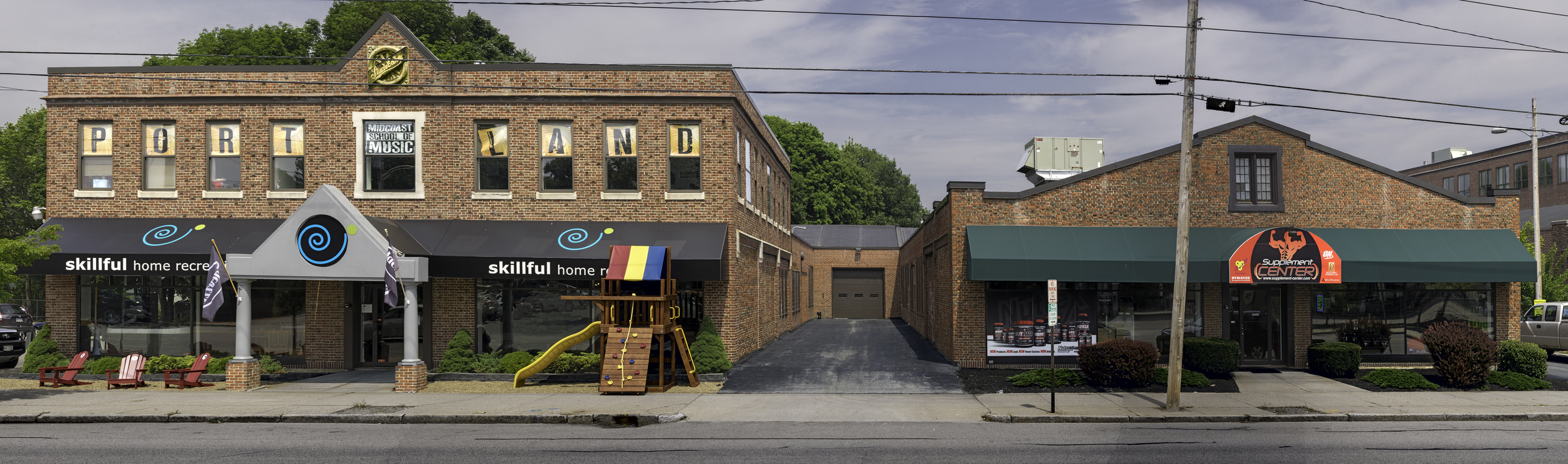
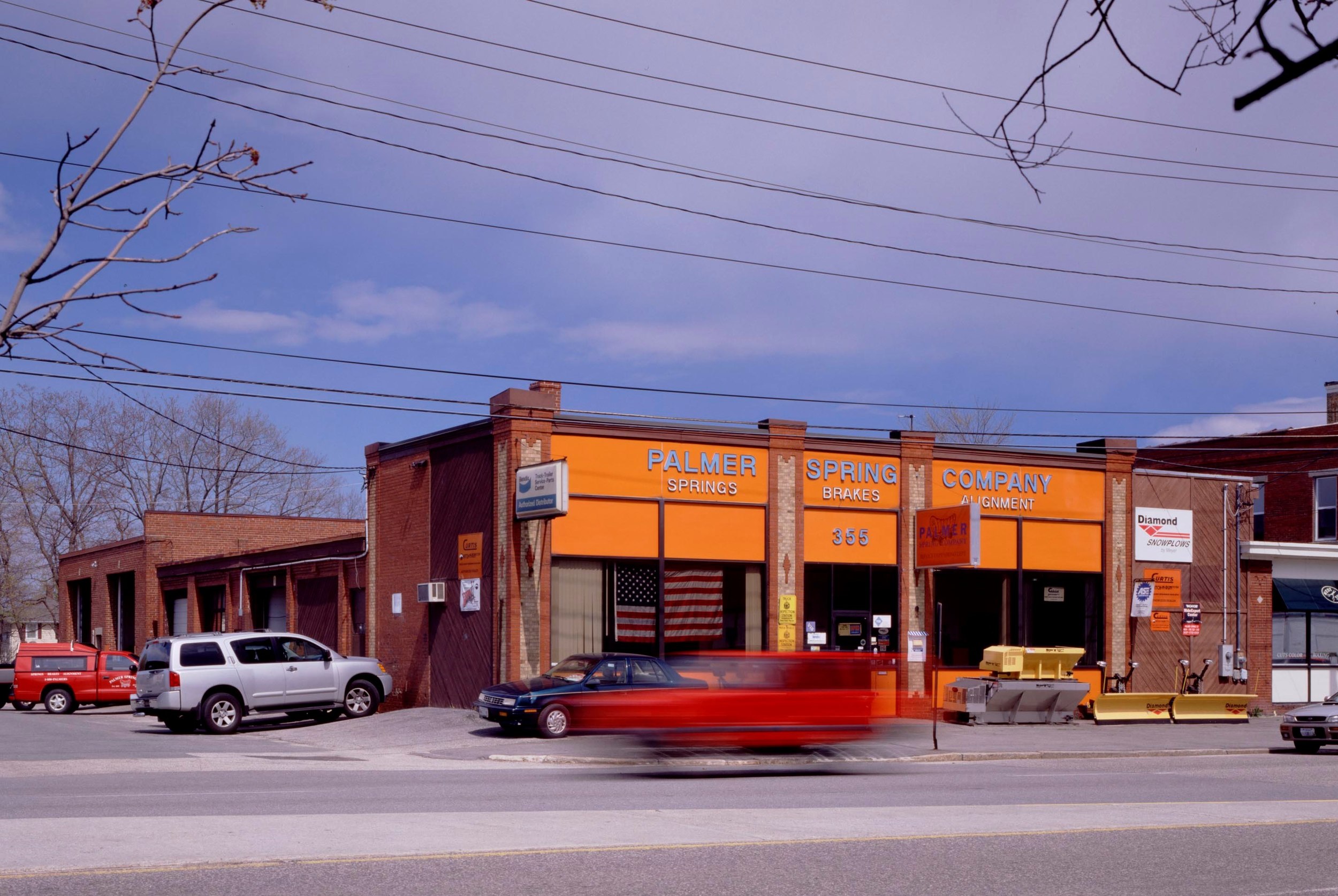
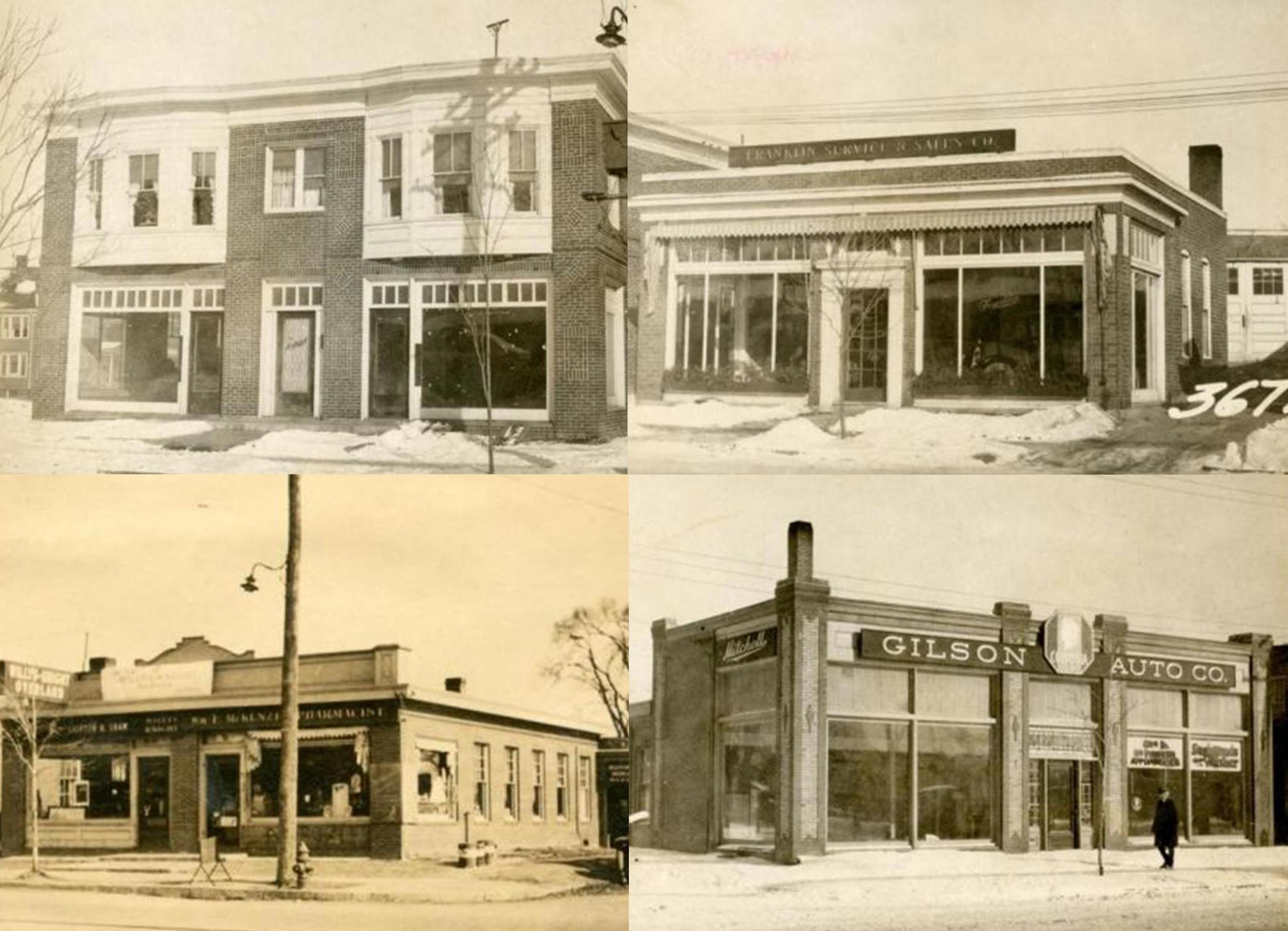
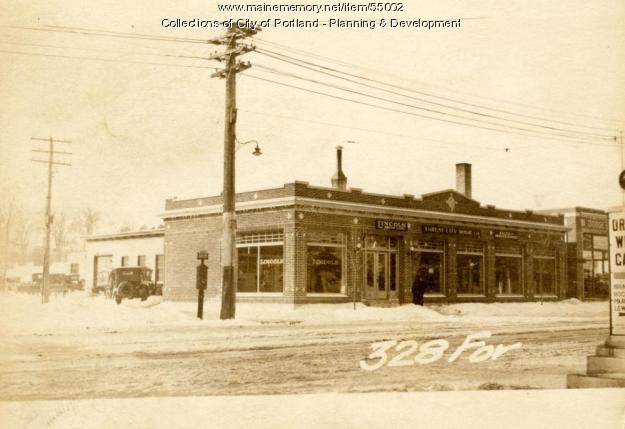
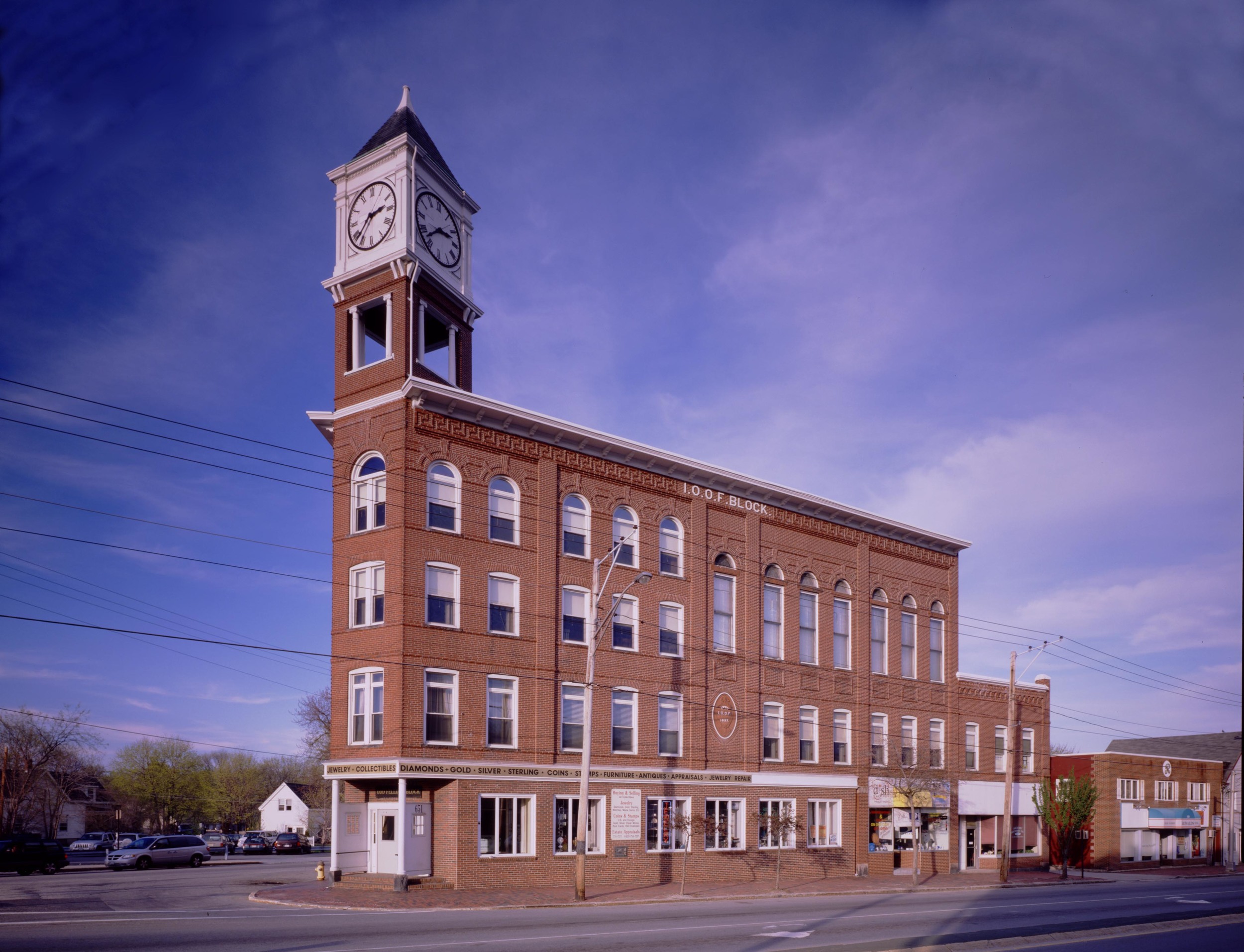
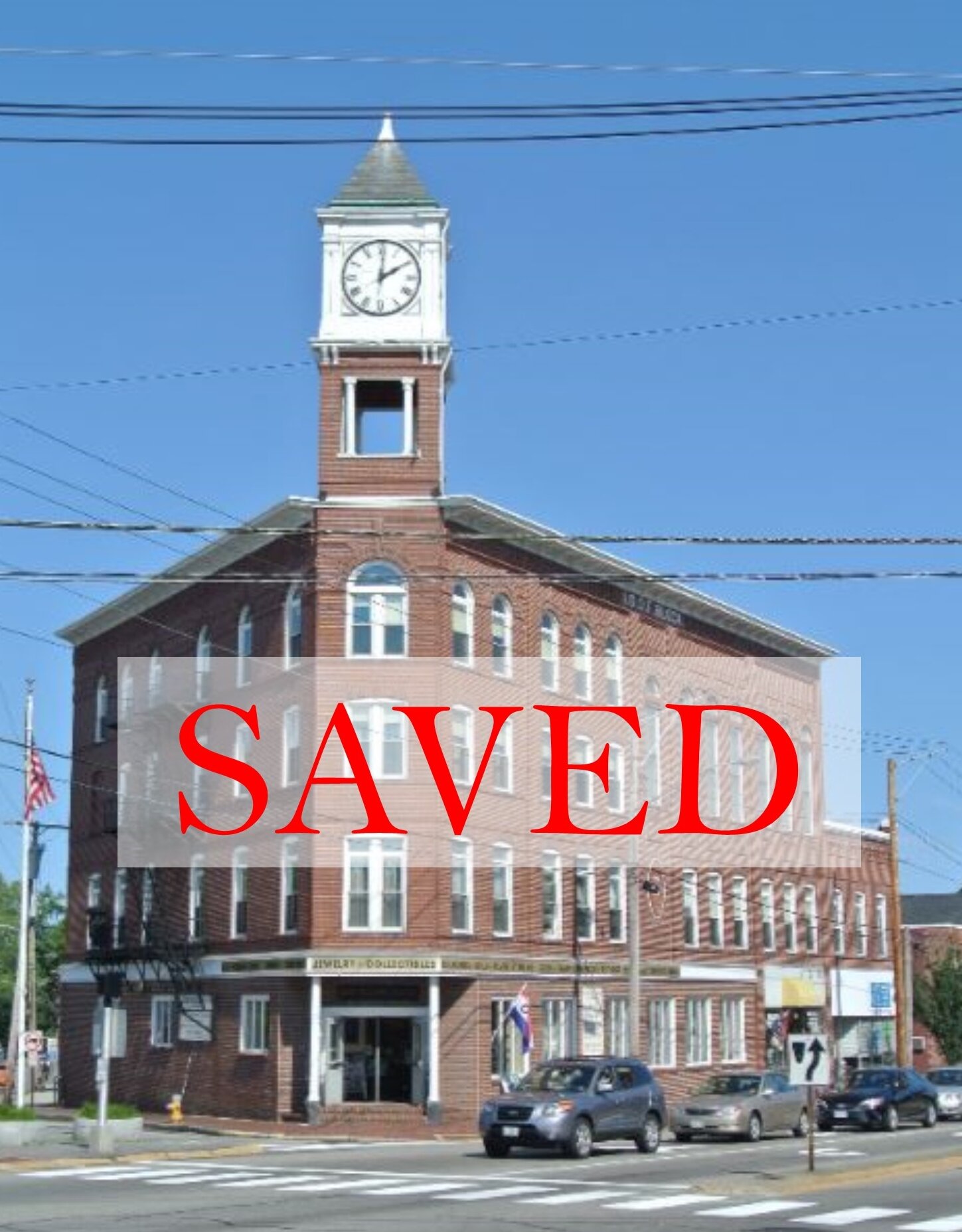
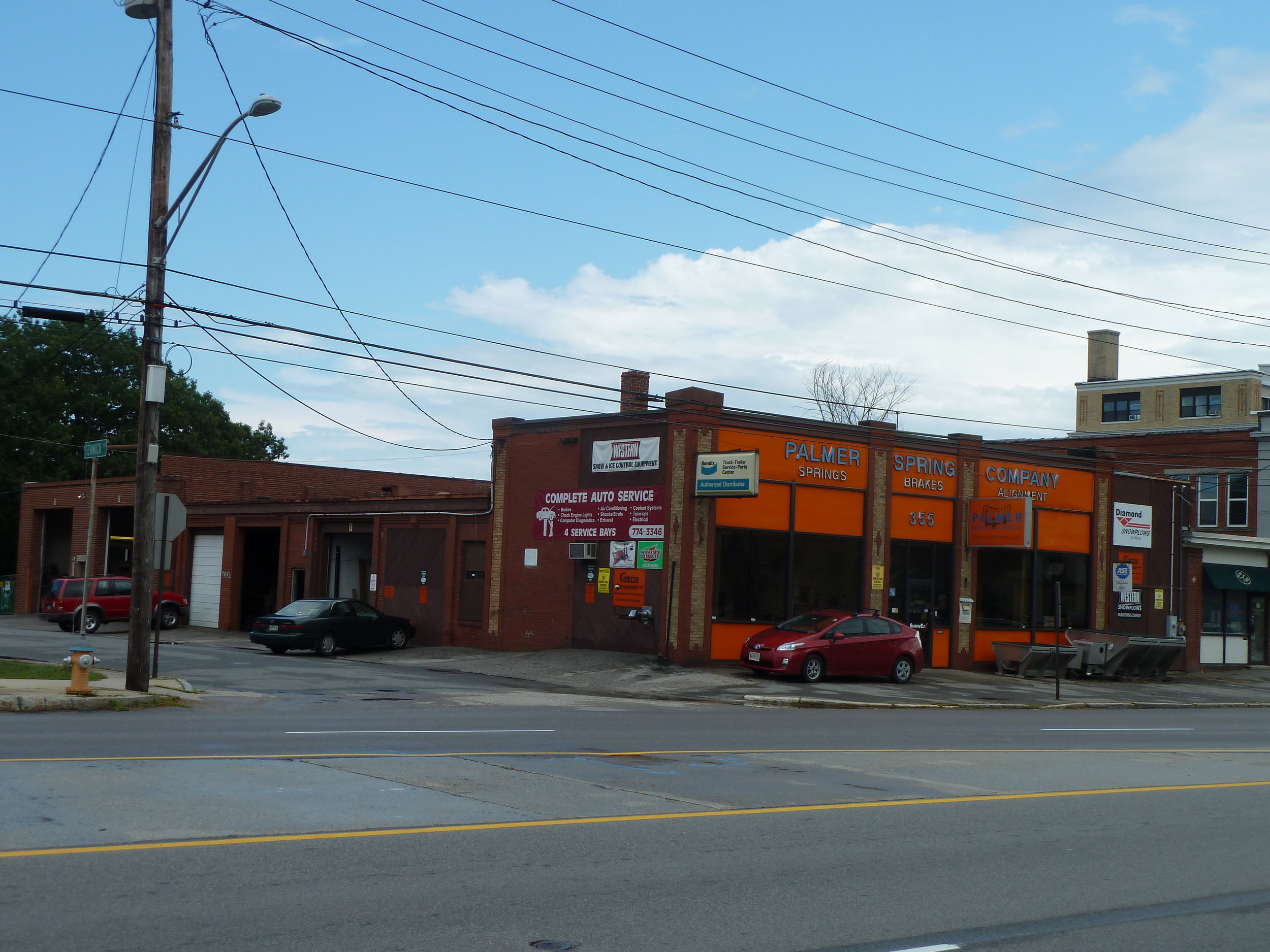
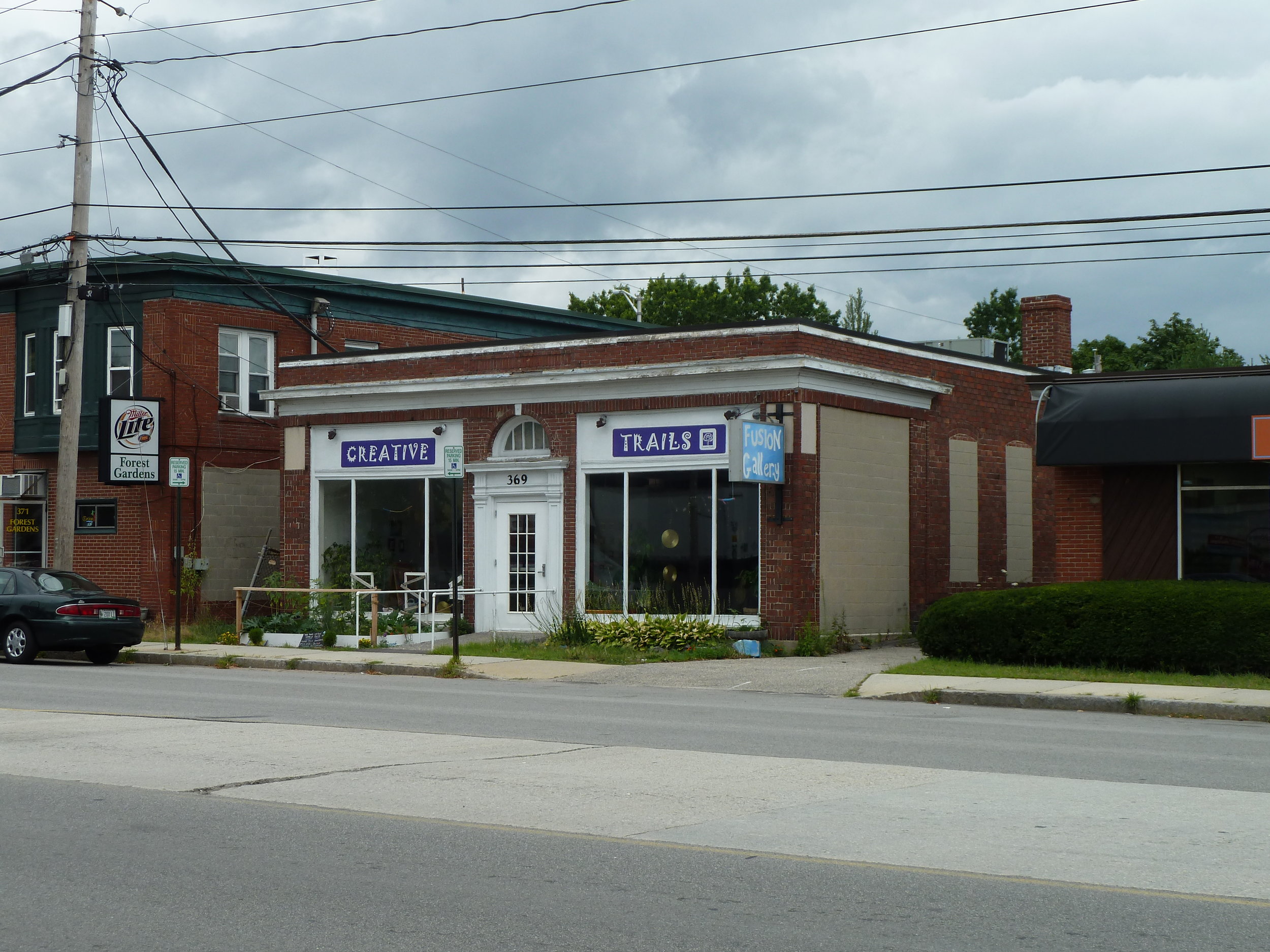
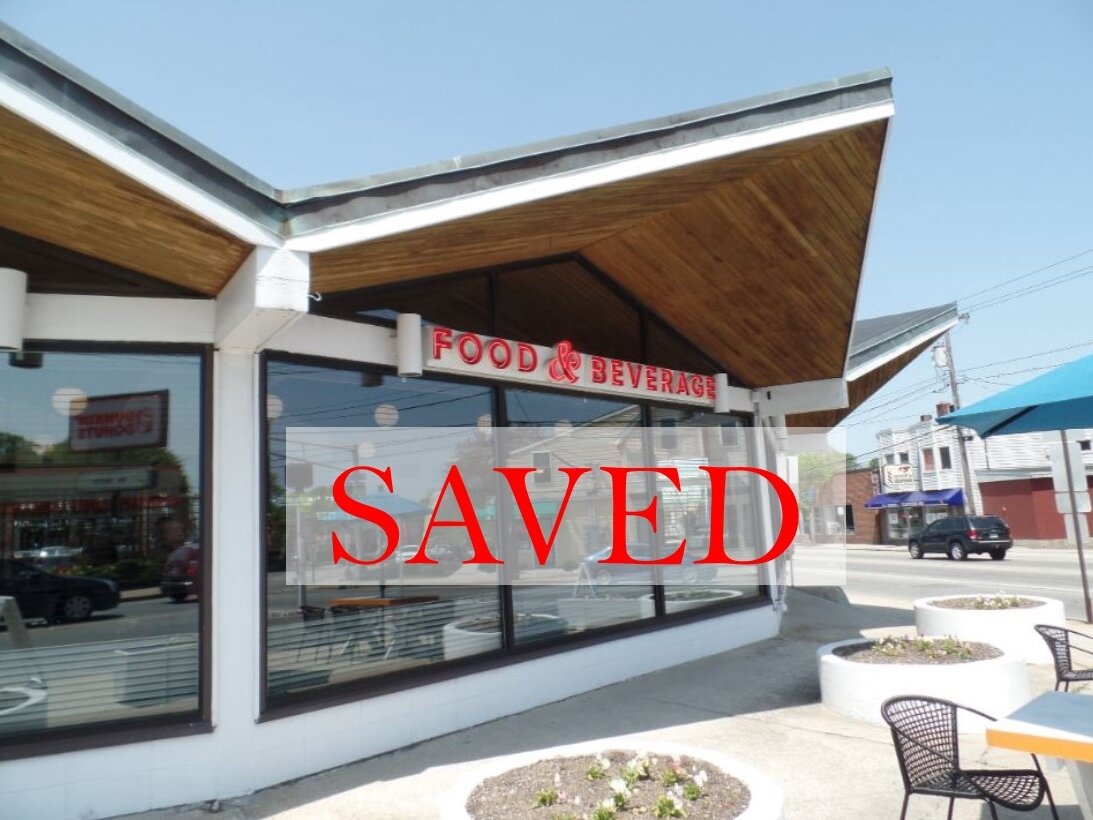
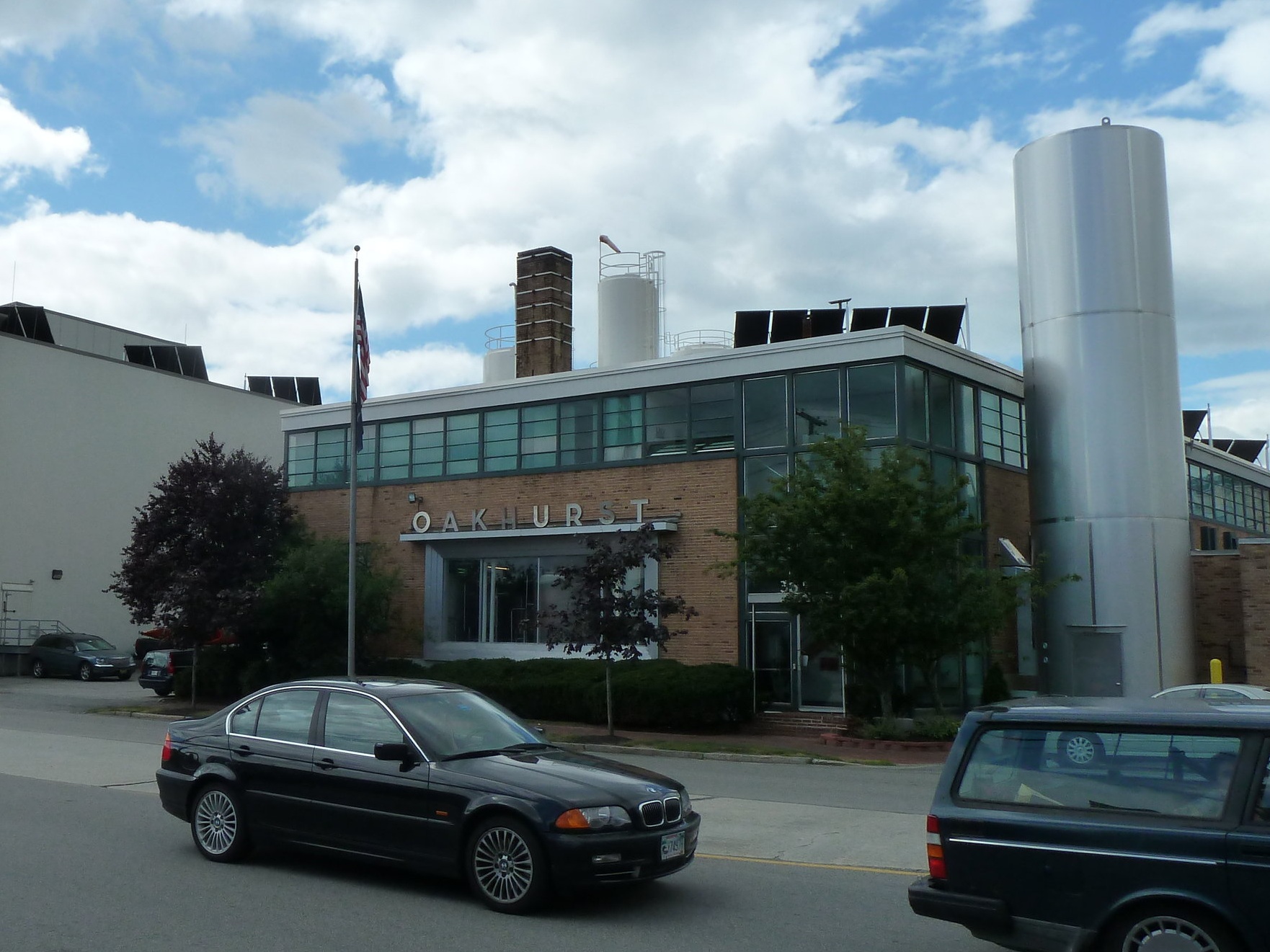
In anticipation of redevelopment along the corridor, city planning staff identified several buildings to be individually designated under the city’s historic preservation ordinance. The buildings included 19th century landmarks like the iconic Odd Fellows Hall, several early 20th century auto showrooms, and a couple of mid-20th century modern buildings like the former Valle’s restaurant, now occupied by Woodford F&B.

Our Position

Landmarks is working in collaboration with local community organizations to improve public awareness of Forest Avenue's history and significance in the development of Portland. As part of the City's long term development plans to enhance the urban fabric along the Forest Avenue corridor and improve its economic vitality, the City of Portland has created design guidelines that encourage new development that reflects the historic development patterns along the corridor. As part of the that planning, Landmarks continues to advocate for the following: 

  • Context sensitive solutions to new development and infrastructure improvements which contribute to the avenue’s historic character are important to achieving a multimodal transportation network that effectively serves the City of Portland and the surrounding communities.

  • Designation of potential landmarks properties. The Maine Historic Preservation Commission has identified several buildings at Woodfords Corner and near I-295 that reflect the economic and community importance of the area as individually eligible for listing on the National Register of Historic Places (NRHP). The City Council decided to only designate five buildings at Woodfords Corner as landmarks in advance of development pressures. We will continue to support the preservation of the remaining properties that have been identified by the State of Maine as eligible for listing in the National Register of Historic Places.

*** Indicates Individual Eligibility for the National Register of Historic Places as determined by the Maine Historic Preservation Commission.

Press

Quick Links

What You Can Do

  • Write the City Council and support the designation of individual buildings along Forest Avenue and at Woodfords Corner.

  • Sign up for our mailing list to stay informed about advocacy efforts, including meetings at city hall regarding Forest Avenue.

  • Support the advocacy efforts of Greater Portland Landmarks.

Thompson's Point

Thompson's Point, Portland

The Issue

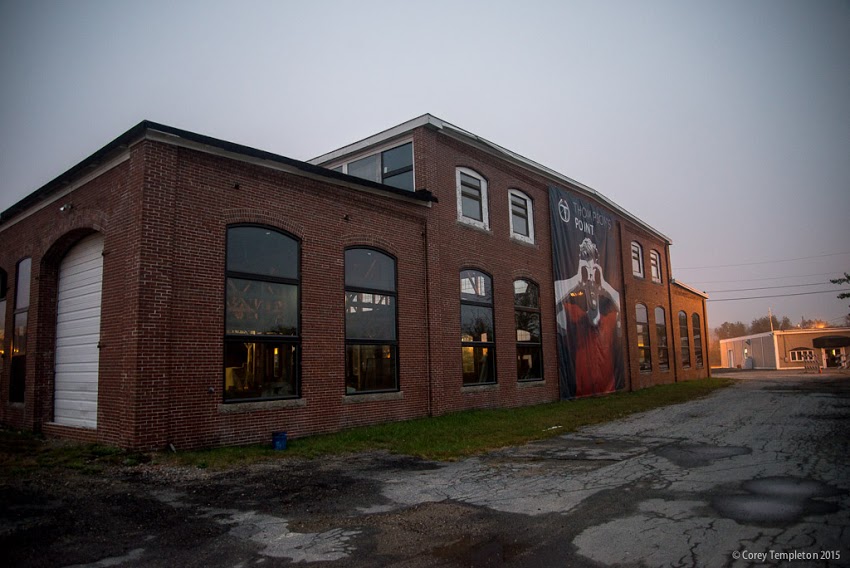
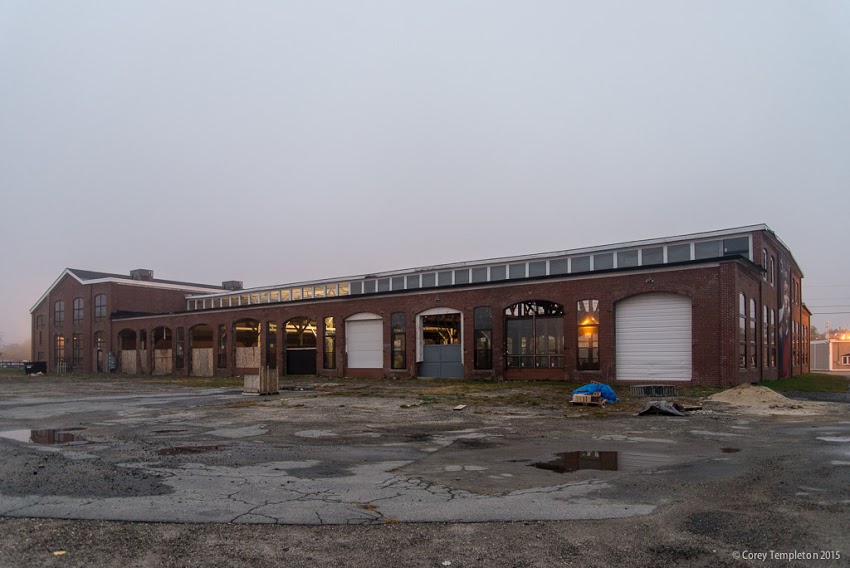
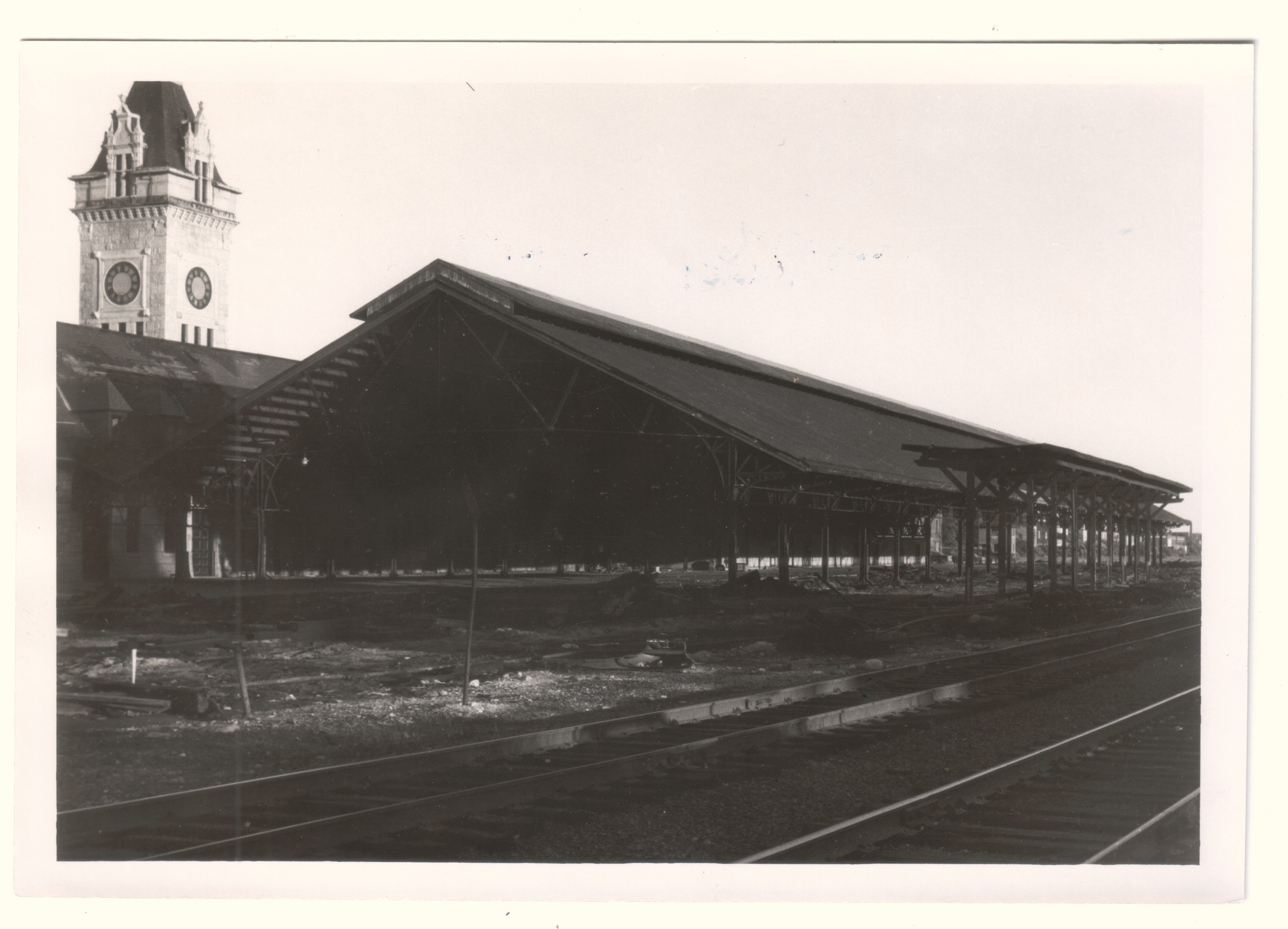
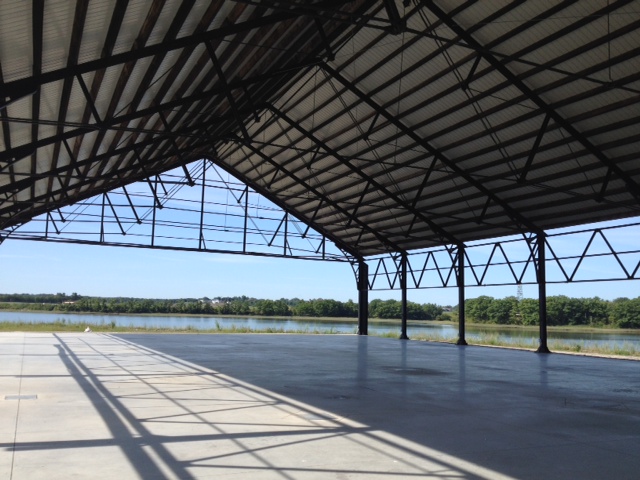
Located on a point of land that served in the early 19th century as a hub of barge and boat traffic on the Cumberland and Oxford Canal, Thompson's Point has been an underutilized industrial site for the last several decades. The site is highly visible and accessible from Interstate 295. The remaining brick historic structures at Thompson’s Point are related to its use as a train repair and storage facility in the second half of the 19th century. Also located on the site is a portion of the platform shed from Union Station. After the destruction of Union Station in 1961, a portion of the station's platform shed was relocated to the southern tip of the point. In 2011 a plan to demolish the remaining historic resources and redevelop the site was proposed by a local development team.

Our Position

Landmarks supports the revised plans for the redevelopment of Thompson’s Point that incorporate the preservation of the existing historic resources with future new development. The development team has saved and restored the former Union Station platform shed, creating a fantastic outdoor venue for concerts, festivals, and a seasonal ice skating rink. Two large-scale historic brick industrial buildings will be rehabilitated for a variety of businesses including a winery, event space, and shared maker space.

Press

Quick Links

What You Can Do

  • Attend an event at Thompson's Point!

Safford House

93 High Street, Portland

The Issue

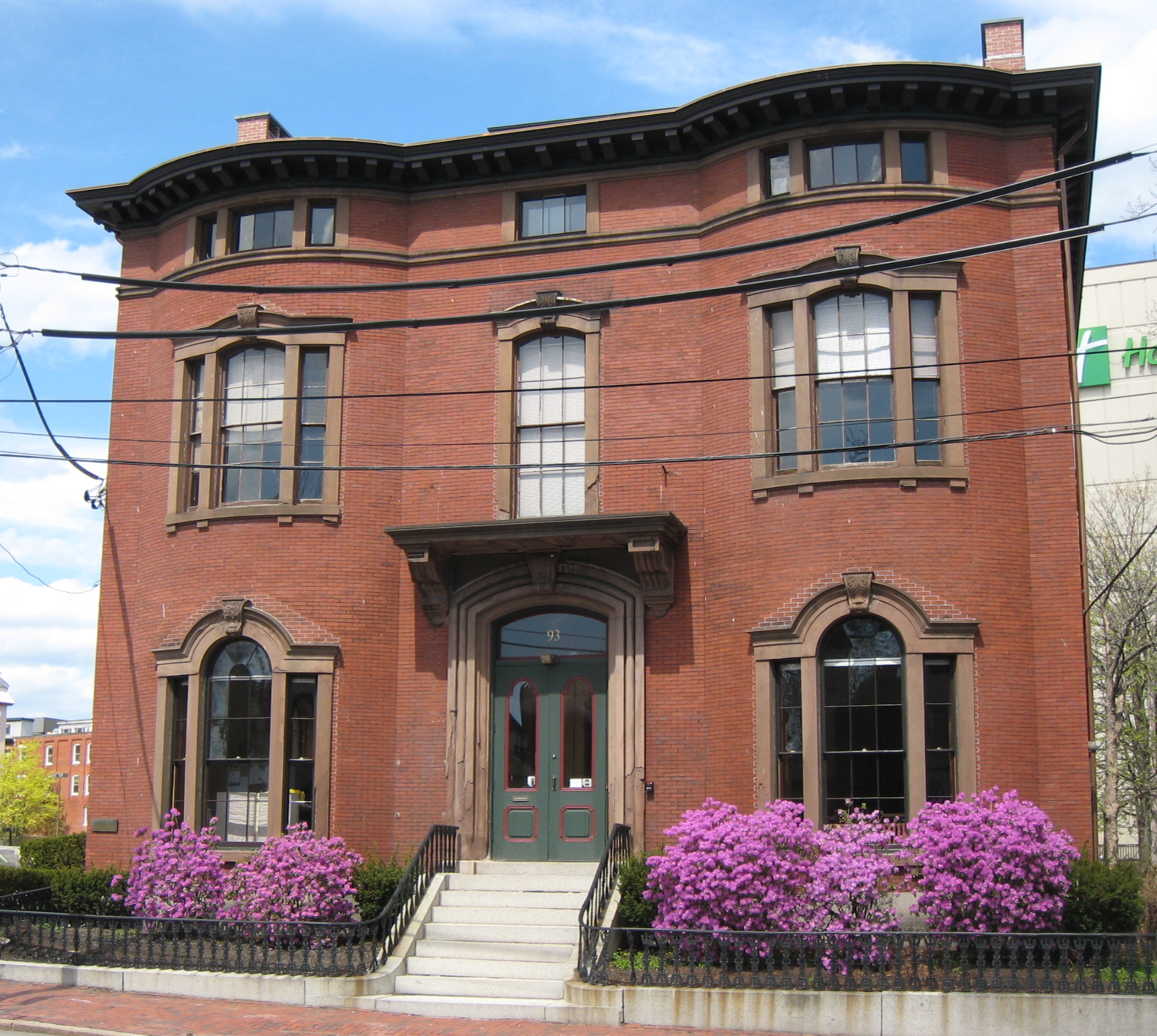
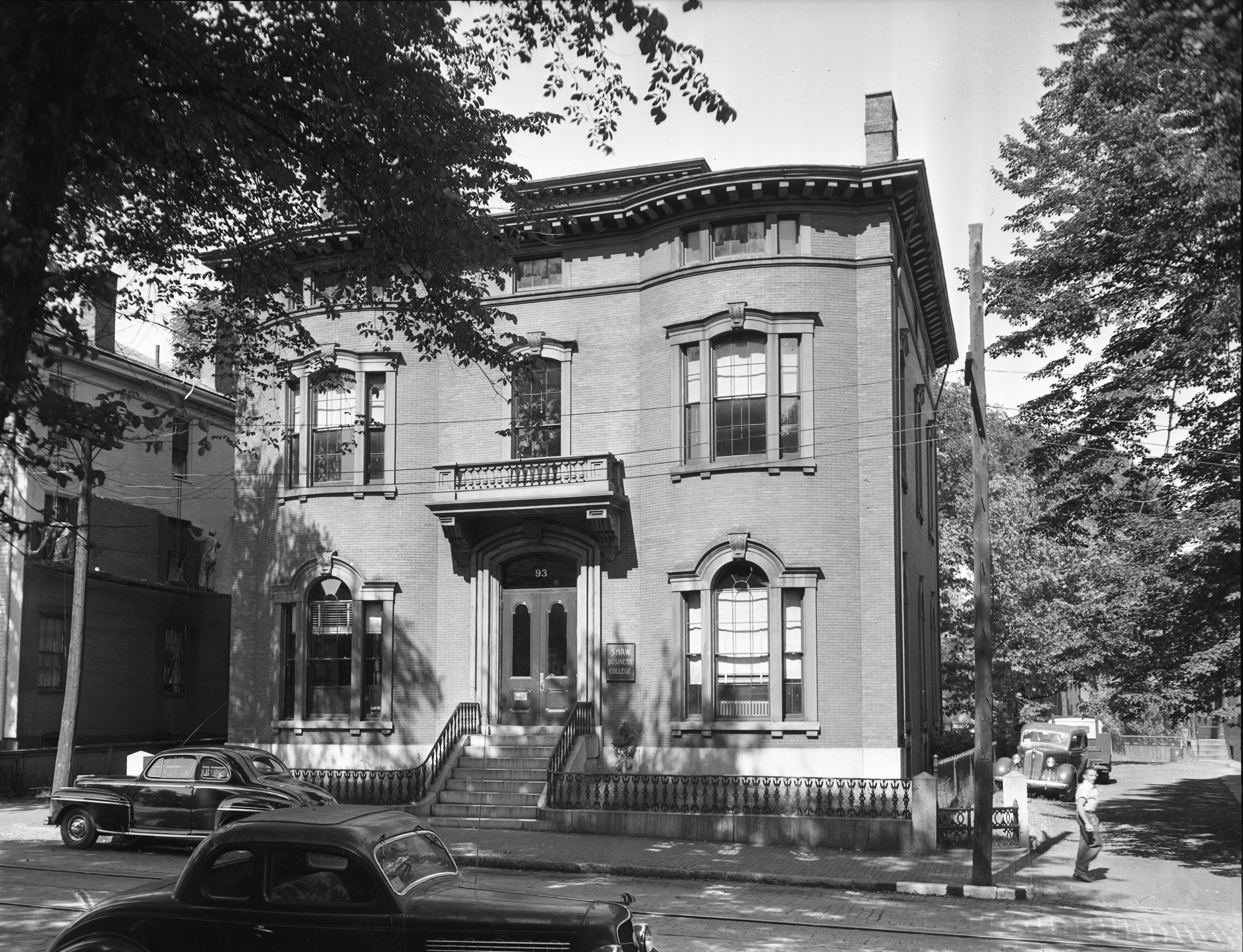
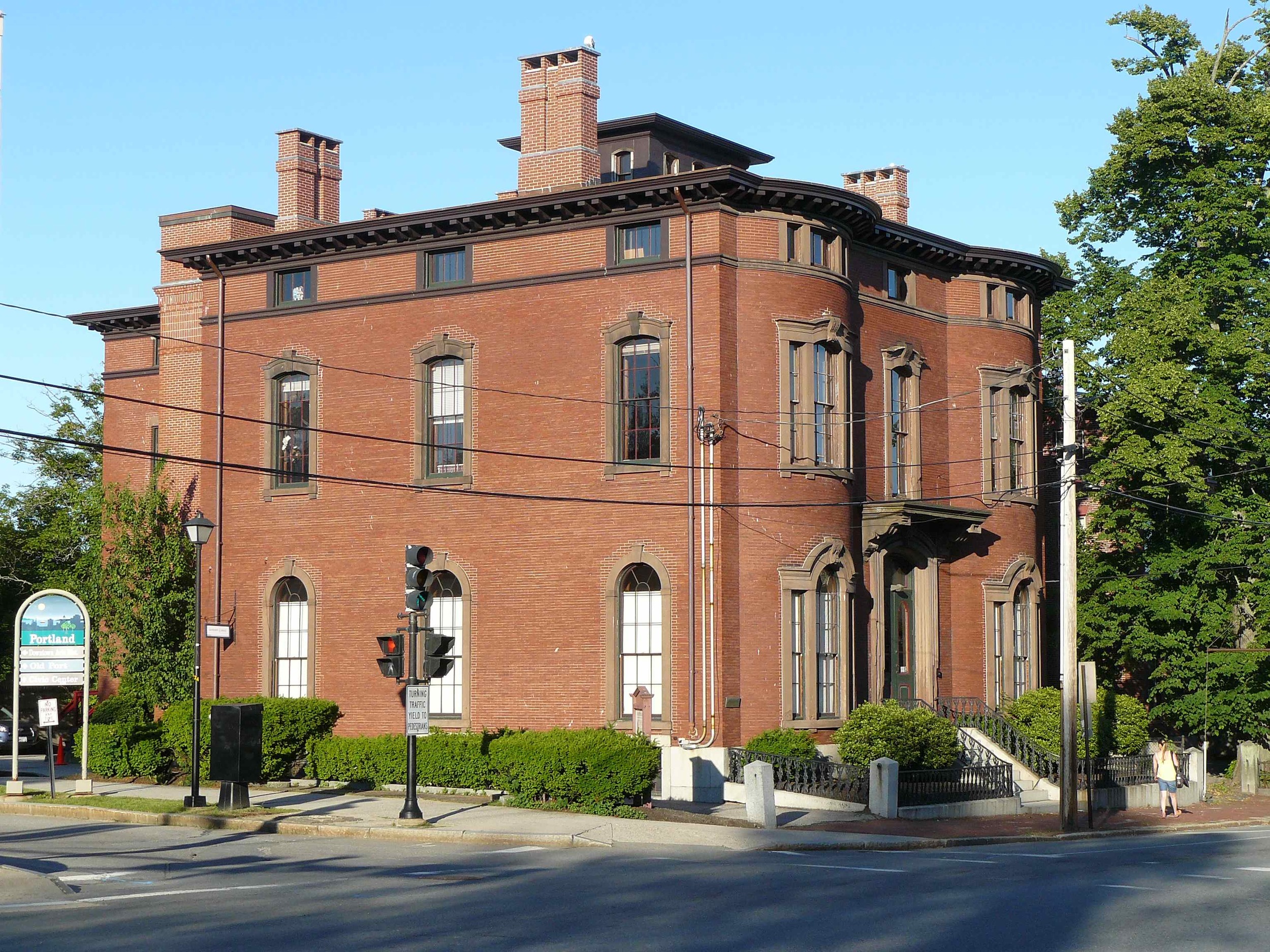
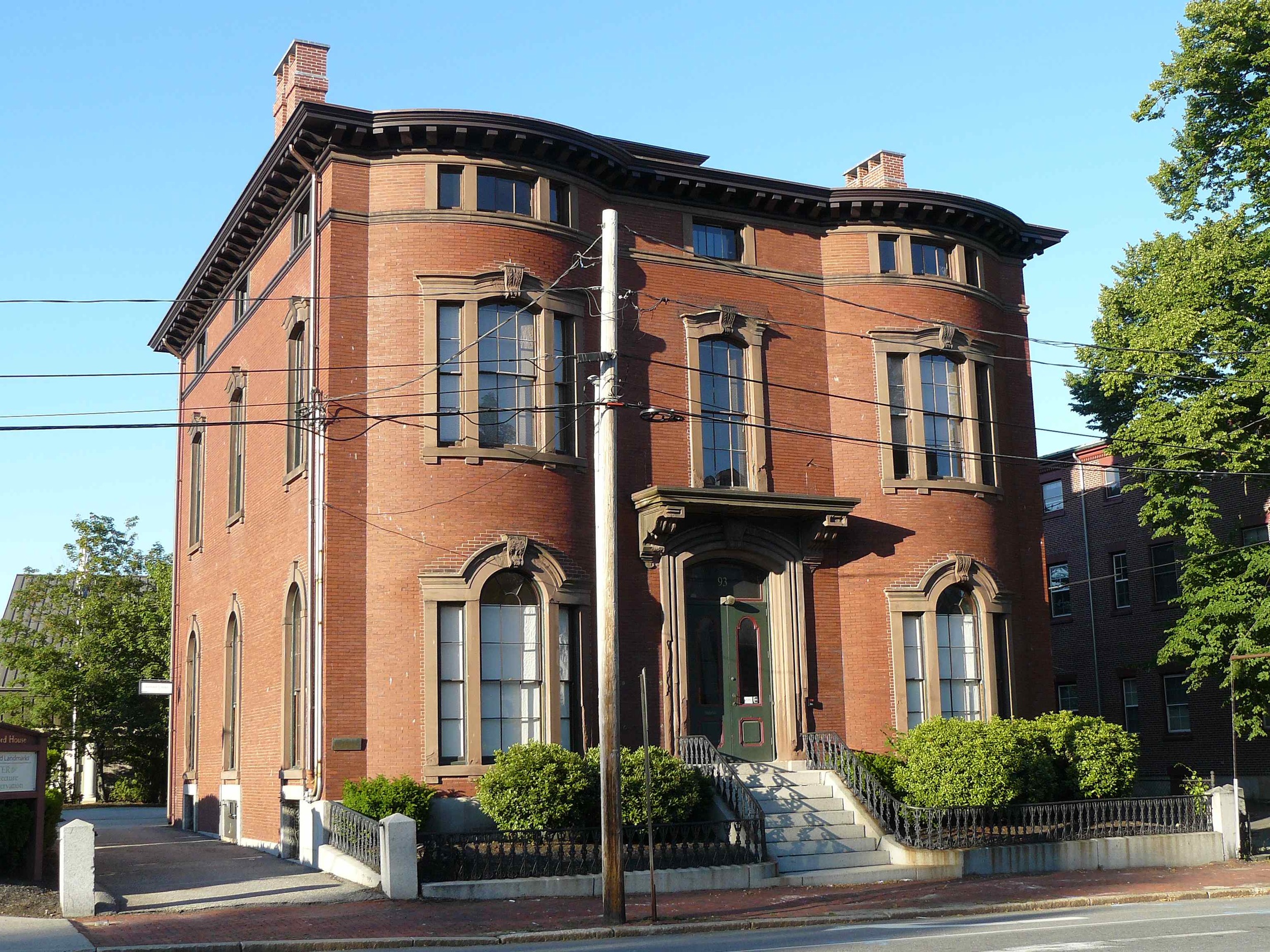
Built in 1858 the Safford House is one of the last high style homes built on High Street in the 19th century. The Renaissance Revival style dwelling with brick and brownstone details was converted to a business use in the mid 20th century and wasused as classroom space by the Portland Society of Art from 1965-1983. In 1983 the Portland Society of Art sold the building with historic preservation covenants to Safford Associates who completed a renovation of the building, adding a rear elevator and restoring some interior partitions removed by the Portland Society of Art to create large classrooms.

Read about the history of the Safford House on our blog.

Our Position

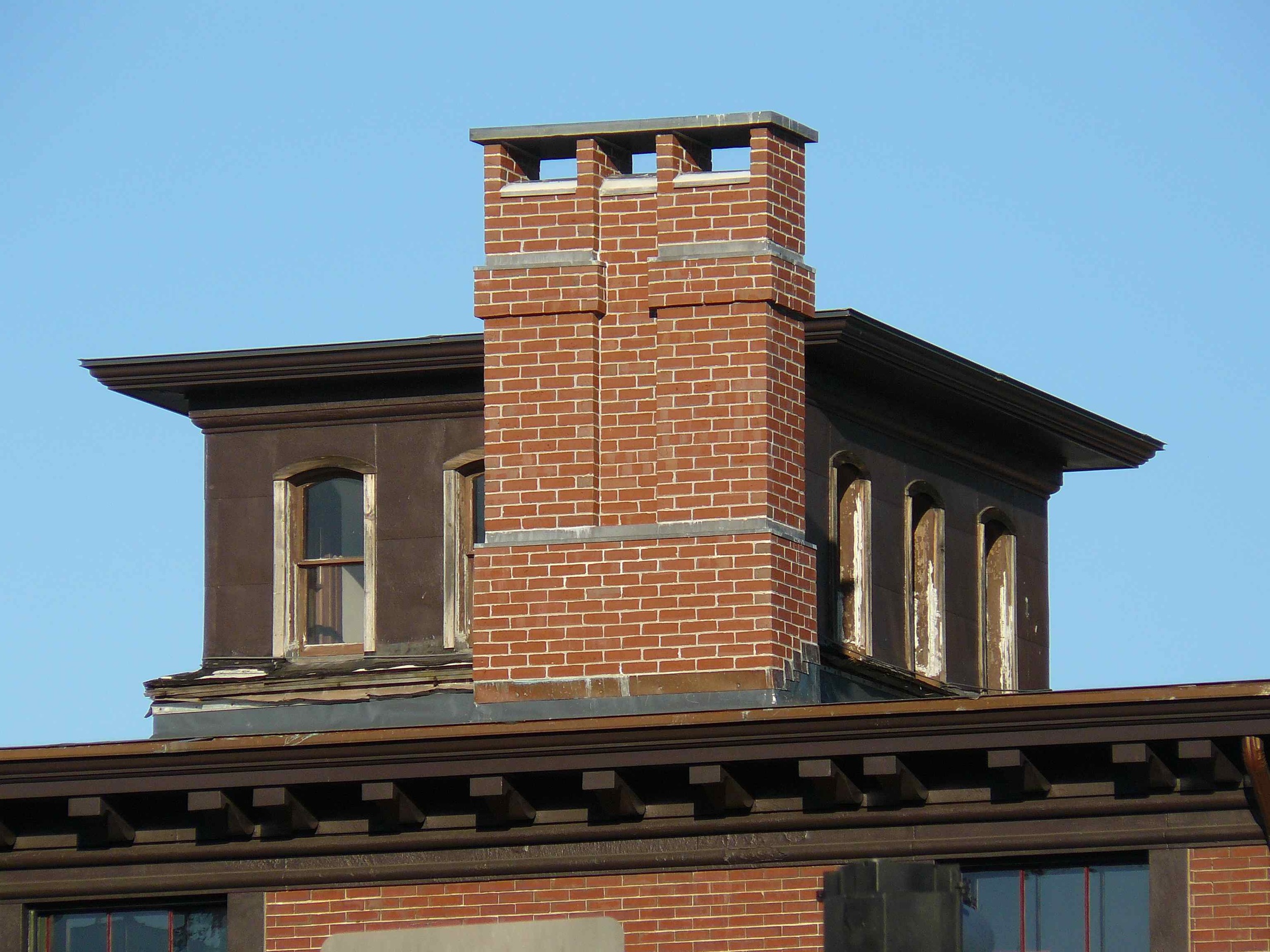
Since its early years Landmarks has demonstrated its preservation goals through hands on projects using its Revolving Fund, the biennial Old House Trade Show, the restoration of the Portland Observatory, and the organization’s headquarters. In 2004 Landmarks sold its longtime home at 165 State Street and began to search for a new location for the organization in a historic building in need of preservation. The following year Landmarks purchased the Safford House, a former dwelling at 93 High Street. Suffering from deferred maintenance, the building needed significant repairs to its building systems, roof, and exterior facades. Landmarks developed a preservation plan and implemented the most critical repairs in 2010 with the replacement of the roof and repairs to the cornice and frieze. Additional work completed on the multi-phase preservation plan includes restoration of the original windows, masonry repairs, and interior improvements.

Press

Quick Links

What You Can Do

  • Attend an event at Safford House! Sign up for our mailing list to stay informed about advocacy, education programs, and upcoming events.

  • Support the preservation efforts of Greater Portland Landmarks.

The Gothic House 

387 Spring Street, Portland

The Issue

In 1967 plans were developed to alter a neighborhood street in the Spring Street Arterial. The plan, known as the Patterns for Progress, was developed by Victor Gruen. In the plan, Spring Street east of High Street was widened and extended to a truncated Middle Street. Initial plans to build the Spring Street Arterial all the way to Franklin Arterial were not completed. Reducing pedestrian access along the roadway was desired to improve fast and unobstructed auto roads. The plan necessitated the removal of many buildings on both sides of the planned roadway, including the John J Brown House (1845) at 86 Spring Street, the site of the current Holiday Inn.

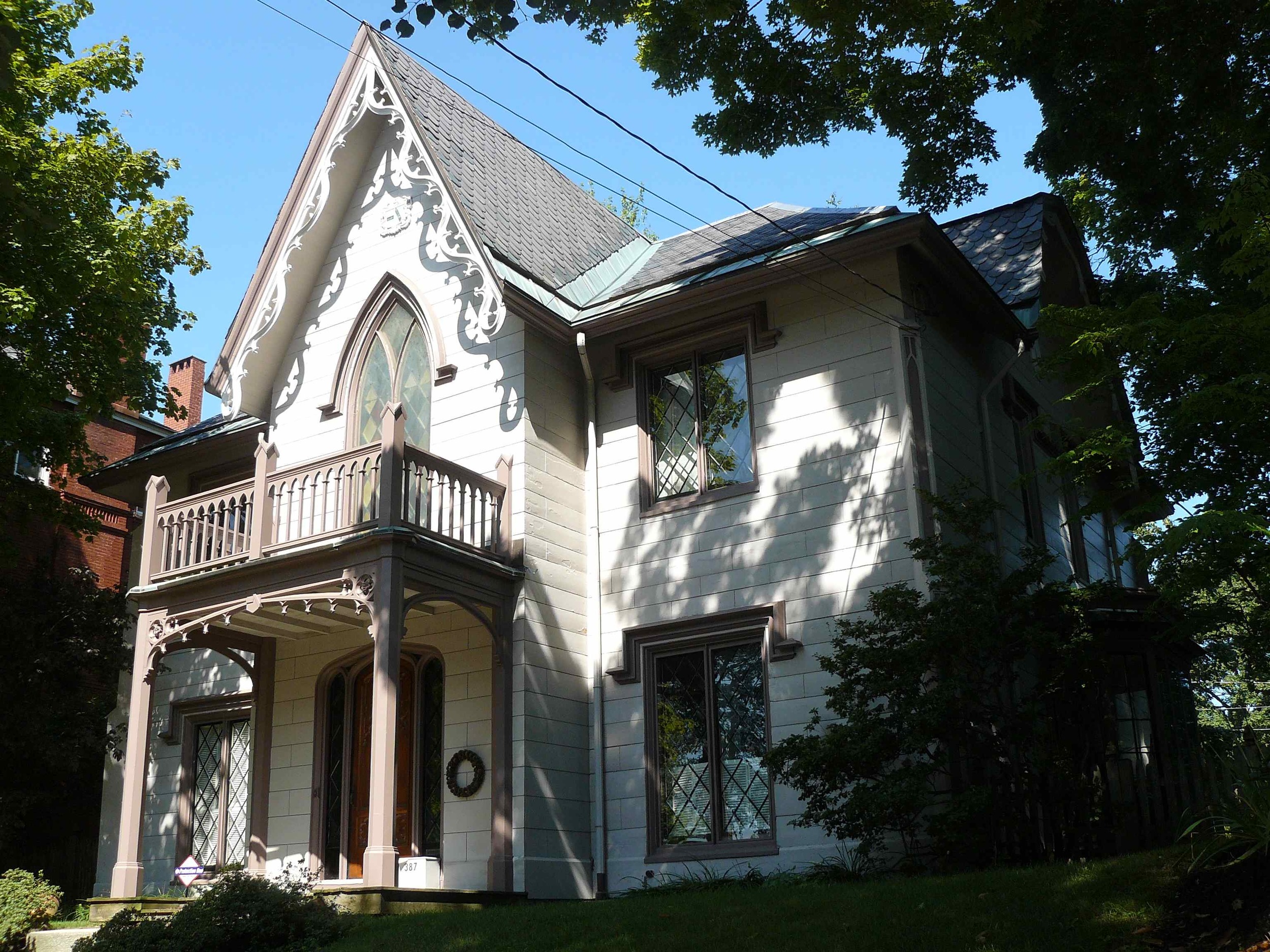
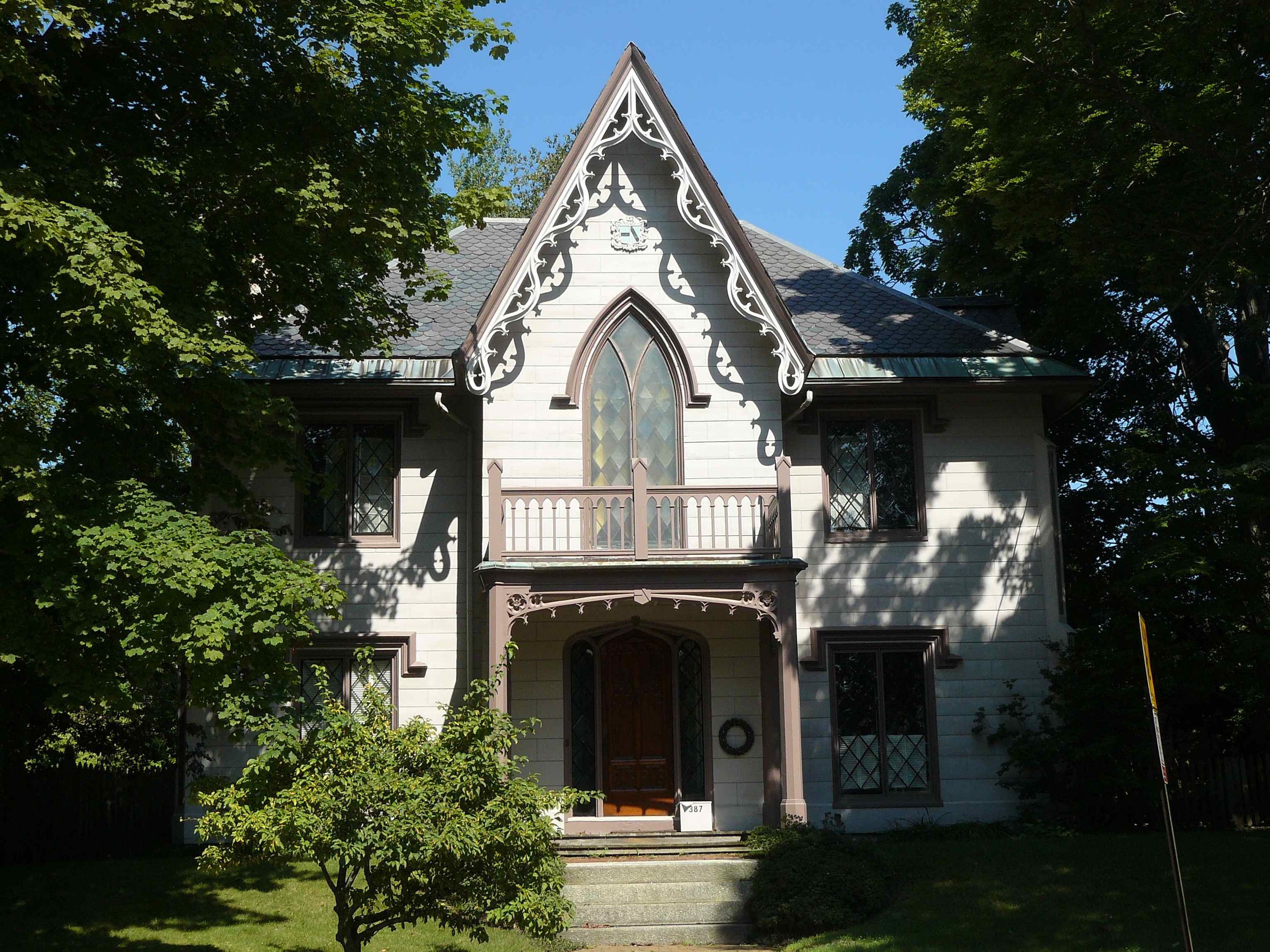
The John J Brown House is a fine example of Gothic Revival architecture by architect Henry Rowe in the mode of popular revivalist Andrew Jackson Downing. The dwelling features a steep central gable with carved vergeboards, a projecting second floor oriel window and a Tudor-arched porch. Its wood sheathing is cut to simulate masonry. It is one of the few surviving examples of Irish-born Henry Rowe. 

Our Position

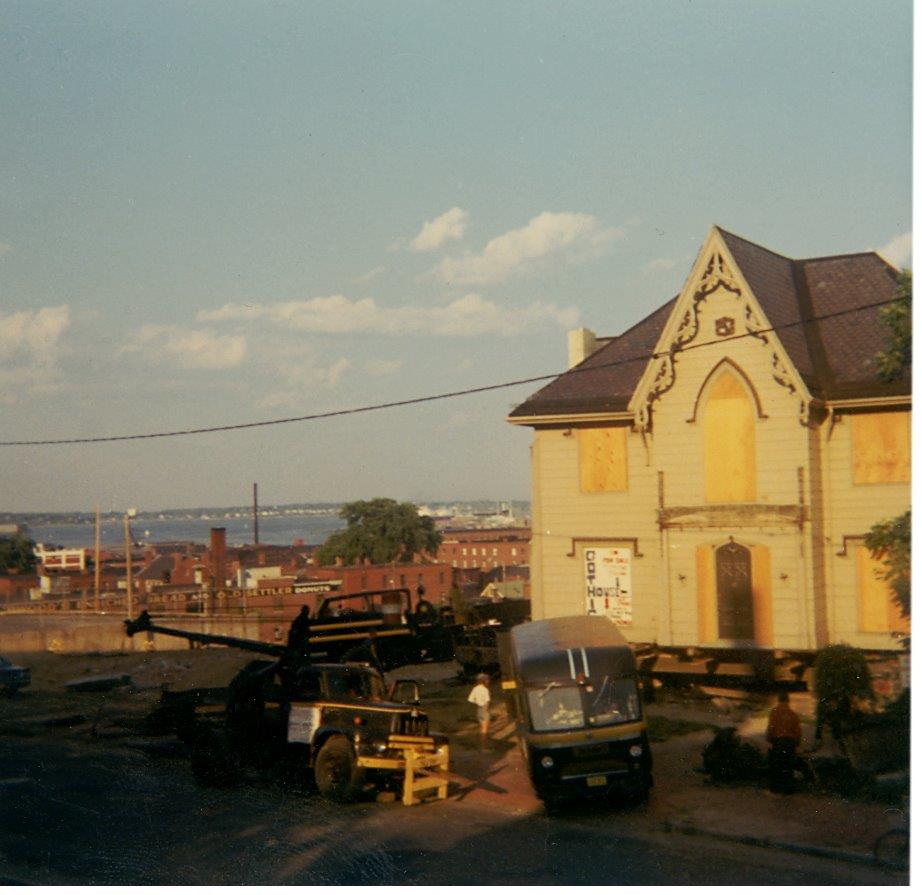
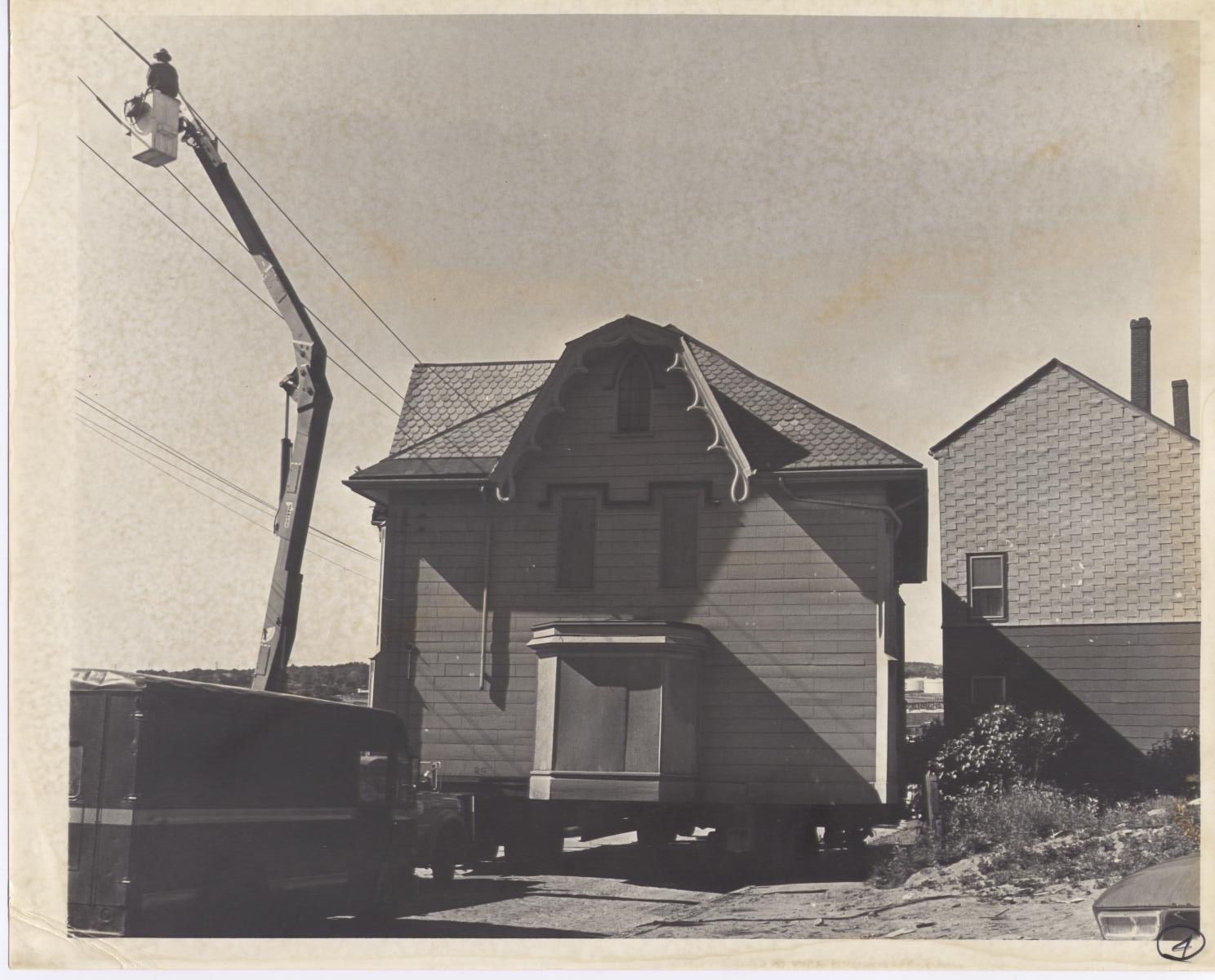
While protesting the demolition of large numbers of historic properties necessitated by the Gruen plan, Greater Portland Landmarks organized to save the John J Brown House in 1971. The developers of the Holiday Inn gave the building to Landmarks. Landmarks had the dwelling lifted from its foundation at 87 Spring Street and moved it to its current location at 387 Spring Street. Landmarks undertook the project when no other group or individual came up with a suitable plan. Because of the width of the streets, the house was moved down the Commercial Street and back up Danforth Street to Spring Street.  The house was then sold for the cost of the move to Mrs. Austin Lamont.

Press

Quick Links

What You Can Do

  • Download our self-guided walking tour of the Western Promenade, and walk by the Gothic House on Spring Street

  • Join our mailing list to stay informed about advocacy efforts, educational programs, and upcoming events.

  • Support Landmarks' advocacy efforts.

Federal Historic Tax Credits

biddeford_NPS.jpg

Recovery

Join us to support Historic Preservation’s role in our country’s recovery. Proposed improvements to the federal Historic Tax Credit program would help support Maine’s economic recovery during the COVID-19 pandemic by supporting small businesses, creating quality jobs, and facilitating the creation of affordable housing.

"Our historic tax credits have made the preservation of our older buildings not only a matter of respect for beauty and history, but of course for economic good sense."

President Ronald Reagan, 1984.

THE ISSUE

Map of Portland Projects.jpg

For more than three decades, the federal Historic Tax Credit (HTC) has successfully implemented a national policy of preserving our historic resources. It is the most significant investment the federal government makes toward the preservation of our historic buildings. Despite a proven track record of stimulating economic growth and preserving our architectural heritage, the historic tax credit faces an uncertain future. 

OUR POSITION

Landmarks joins preservation organizations across the country in supporting the proposed Historic Tax Credit Growth and Opportunity Act (HTC-GO) as well as temporary enhancements to the Historic Tax Credit (HTC) to aid in the economic recovery.

On 1 April 2021 Rep. Earl Blumenauer (D-OR) and Darin Lahood (R-IL) introduced a new version of HTC-GO in the House of Representatives. Please join Landmarks and other organizations around the country in asking our members of Congress to Enact the Historic Tax Credit Growth and Opportunity Act (HTC-GO). HTC-GO provisions would make the credit easier to use for small projects and non-profits, allow more historic properties to utilize the incentive, and would enhance the overall value of the HTC, bringing more investment capital into projects that will use it directly for job creation and sustained economic activity.  

Temporary Provisions:

  • Boost Economic Activity by Temporarily Increasing the HTC Percentage (through 2024) for all Rehabilitation Projects from 20 to 30 percent of Qualified Rehabilitation Expenses (QREs). The credit would then be phased down in subsequent years, 26% in 2025, 23% in 2026, and 20% in 2027.

Permanent Provisions:

  • Increase the HTC from 20% to 30% for smaller projects with less than $2.5 million in Qualified Rehabilitation Expenses (QREs).

  • Lower the substantial rehabilitation threshold from 100% to 50% of adjusted basis, making more buildings eligible to use the HTC.

  • Eliminate the HTC basis adjustment (deducts the value of the tax credit from the property’s value for tax purposes) make it easier to pair with low-income housing tax credits (LIHTC).

  • Modify HTC rule requirements regarding certain tax-exempt use properties. Make the HTC easier to use by non-profits for affordable housing, homeless services, arts centers, and others.

Maine’s small businesses and construction industry, like so many others, has experienced drastic, and in some cases, devastating impacts due to the necessary COVID-19 countermeasures both with projects presently under-construction and in the financing of future projects.

Including HTC provisions in an economic recovery bill can not only aid projects facing present obstacles but also act as a catalyst for new exponential growth in historic rehab projects across Greater Portland and the entire state.

The HTC is a proven program that generates more money for the Treasury than it costs, while also creating local jobs and promoting strong communities across the country and here in Maine. In Maine more than 72 historic buildings have been rehabilitated using HTC investment generating $77 million in taxes and $283 million in business and household income. Greater Portland Landmarks encourages you to ask members of Congress to ensure the federal Historic Tax Credit is improved and enhanced in 2020. 

Rehabilitation projects costs on average are 60% labor and 40% materials compared to new construction, which is about 40% labor and 60% materials. In addition to requiring more local labor, rehabilitation projects tend to use a greater percentage of locally purchased materials. As a result about 75% of the economic benefits of these projects remain in the communities where projects are located, and for Maine that's over $219 million in labor costs and materials purchases.

In addition to revitalizing communities and spurring economic growth, the HTC returns more to the Treasury than it costs—$1.20-1.25 in tax revenue for every dollar invested. Yet because historic rehabilitation projects frequently have higher costs and greater design challenges they face lender and investor bias against investments. The historic tax credit helps to bridge the gap when financing historic preservation projects.

Maine is one of thirty-four states across the country that recognizes the economic development potential of historic rehabilitation projects and has enacted a state tax credit program that works in tandem with the federal program. The Maine program provides an additional incentive to attract investment in Maine communities, and has been particularly useful in kick-starting economic development in Maine's small towns and rural communities.

We thank Sen. Collins for her past leadership on this issue and urge the rest of Maine's congressional delegation to support these proposed improvements and enhancements to the historic tax credit.

Greater Portland projects funded in part with Historic Tax Credits

  • Falmouth High School/Plummer School,1 92 Middle Road, Falmouth, vacant school turned senior housing, completed November 2017

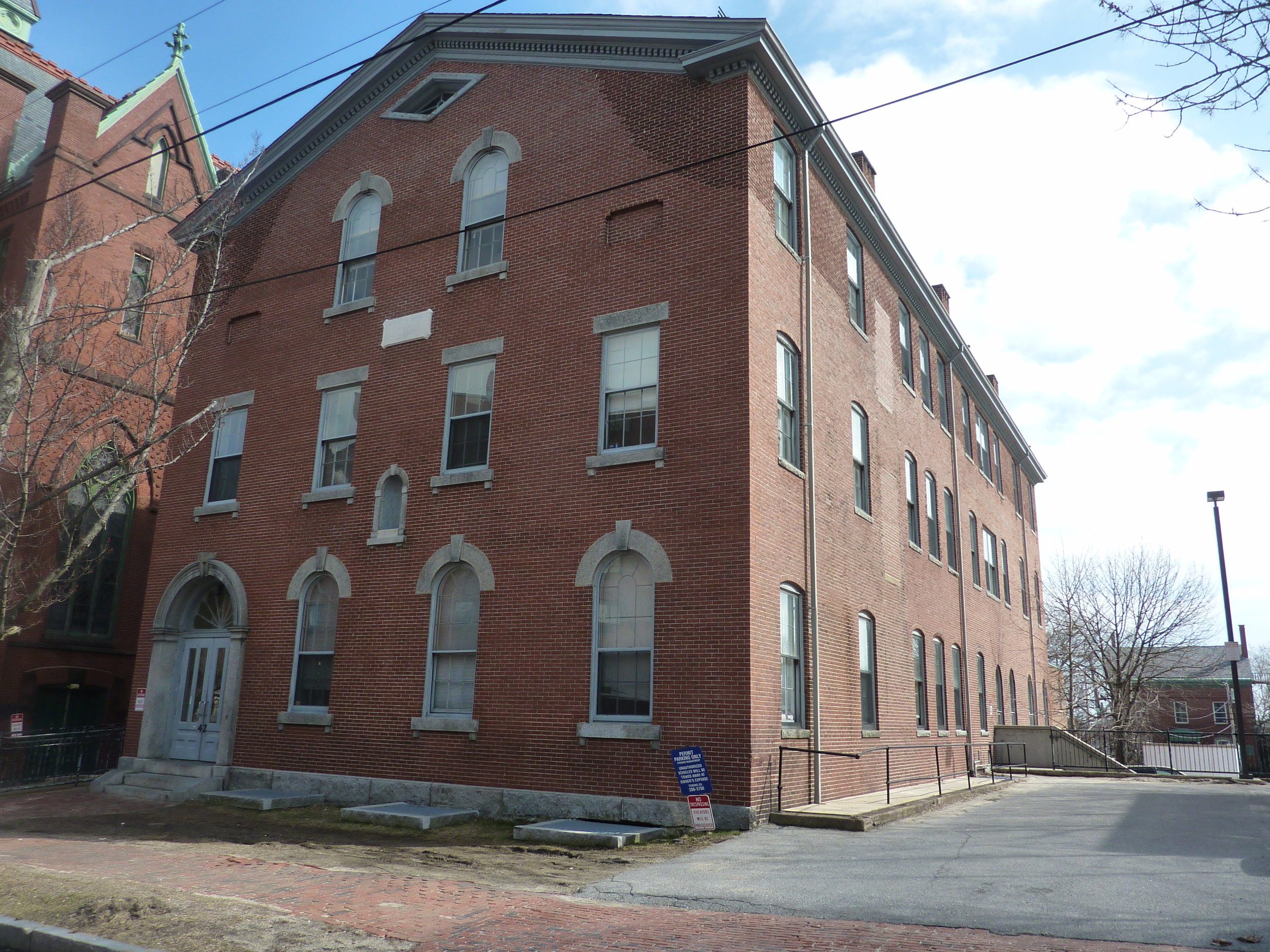
  • St. Dominic's School, 42 Gray Street, Portland

  • Chestnut Street Church, Chestnut Street, Portland, vacant church turned restaurant, completed October 2009

  • Samuel T Pickard House, 743 Congress Street, Portland, rehabilitated lodging house, completed February 2010

  • Akers Building, 386 Fore Street, Portland, rehabilitated offices & retail, completed May 2011, second phase of project completed March 2013

  • Baxter Library, 621 Congress Street, Portland, college classes converted into office space, completed September 2010

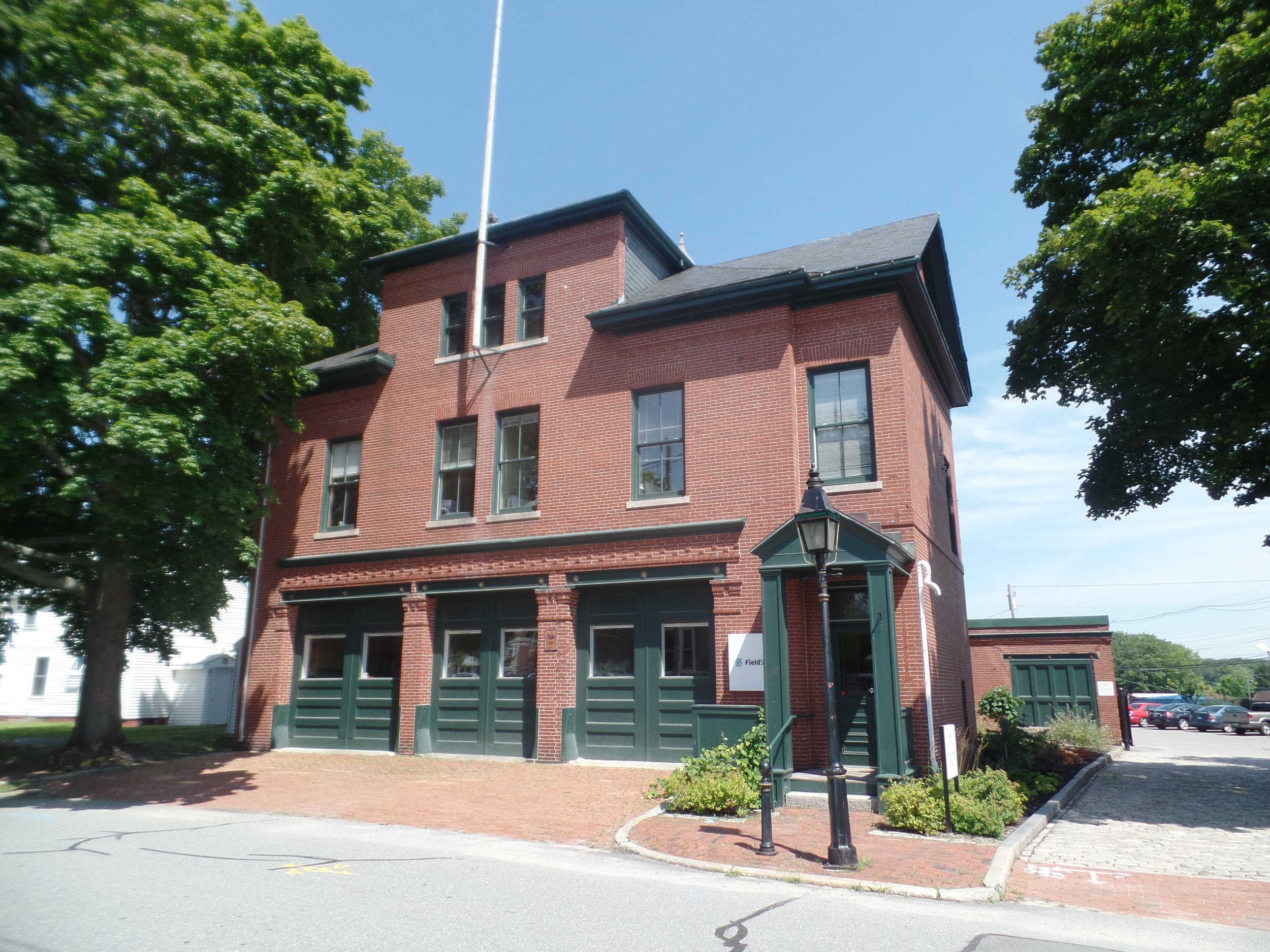
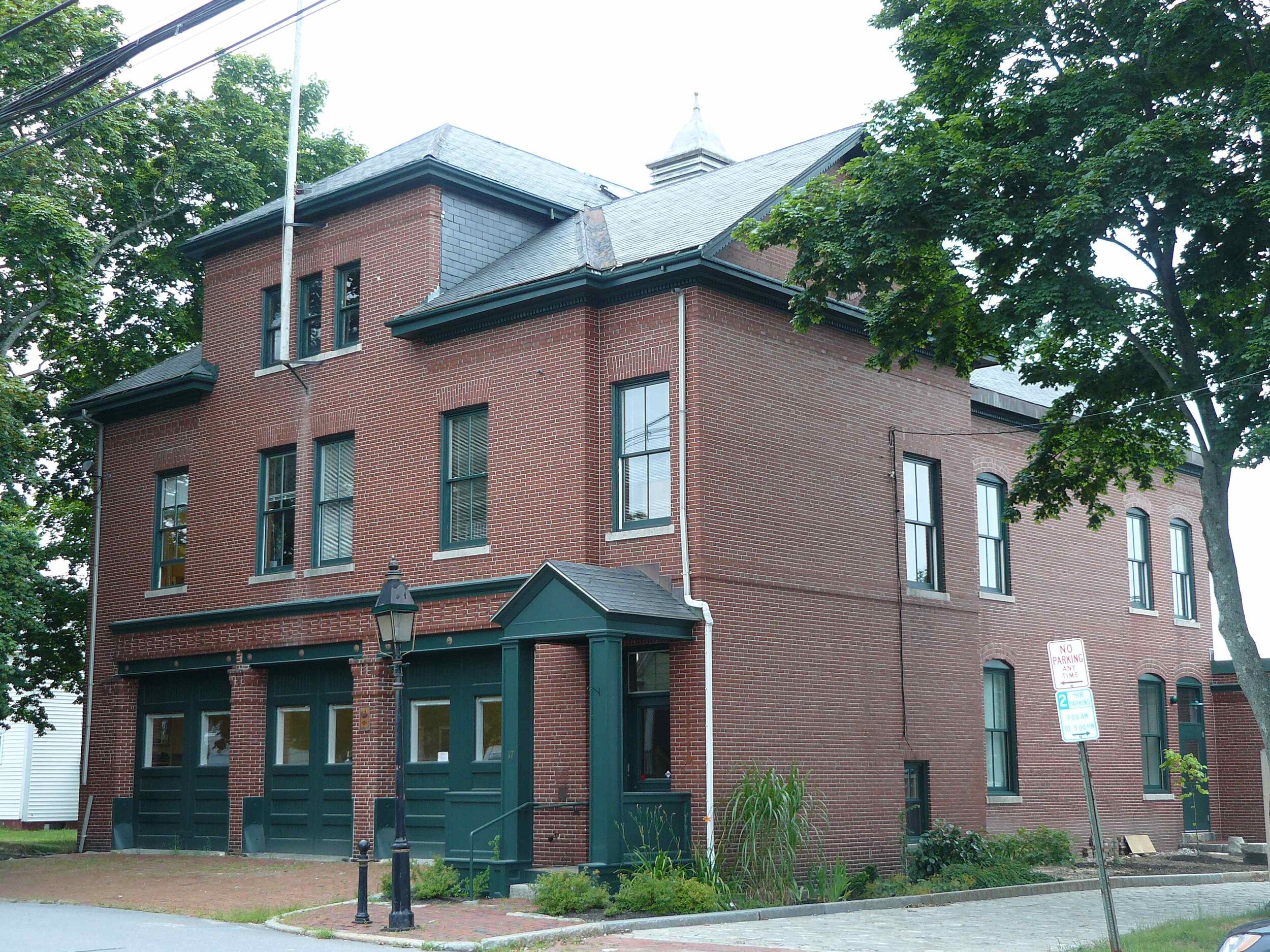
  • Engine Co. No. 9 Fire House, 17 Arbor Street, Portland

  • Children's Hospital, 68 High Street, Portland, classrooms and offices converted to affordable housing, completed January 2013

  • New England Telephone & Telegraph Building, 45 Forest Avenue, Portland, rehabilitated communications exchange, completed June 2012

  • New England Telephone & Telegraph Building, 45 Forest Avenue, Portland, vacant communications exchange/office space turned residential, projected completion 2023

  • 130-132 Pleasant Street, Portland, rehabilitated residential and office spaces, completed December 2013

  • Eastland Park Hotel, 157 High Street, Portland, hotel and apartments, rehabilitated into hotel exclusively, completed December 2013

  • Edmund Phinney House, 191 Pine Street, Portland, rehabilitated apartments, completed September 2013

  • Charles B. Clarke House, 223 Western Promenade, Portland, rehabilitated residential space, completed December 2014

  • Court Square Building, 85 Market Street, Portland, rehabilitated residential and retail spaces, completed June 2015

  • Rufus Tibbetts House, 804 Congress Street, Portland, rehabilitated residential units, completed June 2015

  • Jesse Wilson House, 25 Bramhall Street, Portland, vacant doctor’s office converted to rental housing, completed July 2014

  • Nathan Clifford School, 180 Falmouth Street, Portland, vacant school converted to apartments, completed December 2014

  • Press Herald Building now Press Hotel, 390 Congress Street, Portland, vacant office space converted into hotel, completed April 2015

  • Schlotterbeck & Foss Factory Building, Preble Street, Portland, industrial & office space converted into housing, completed March 2017

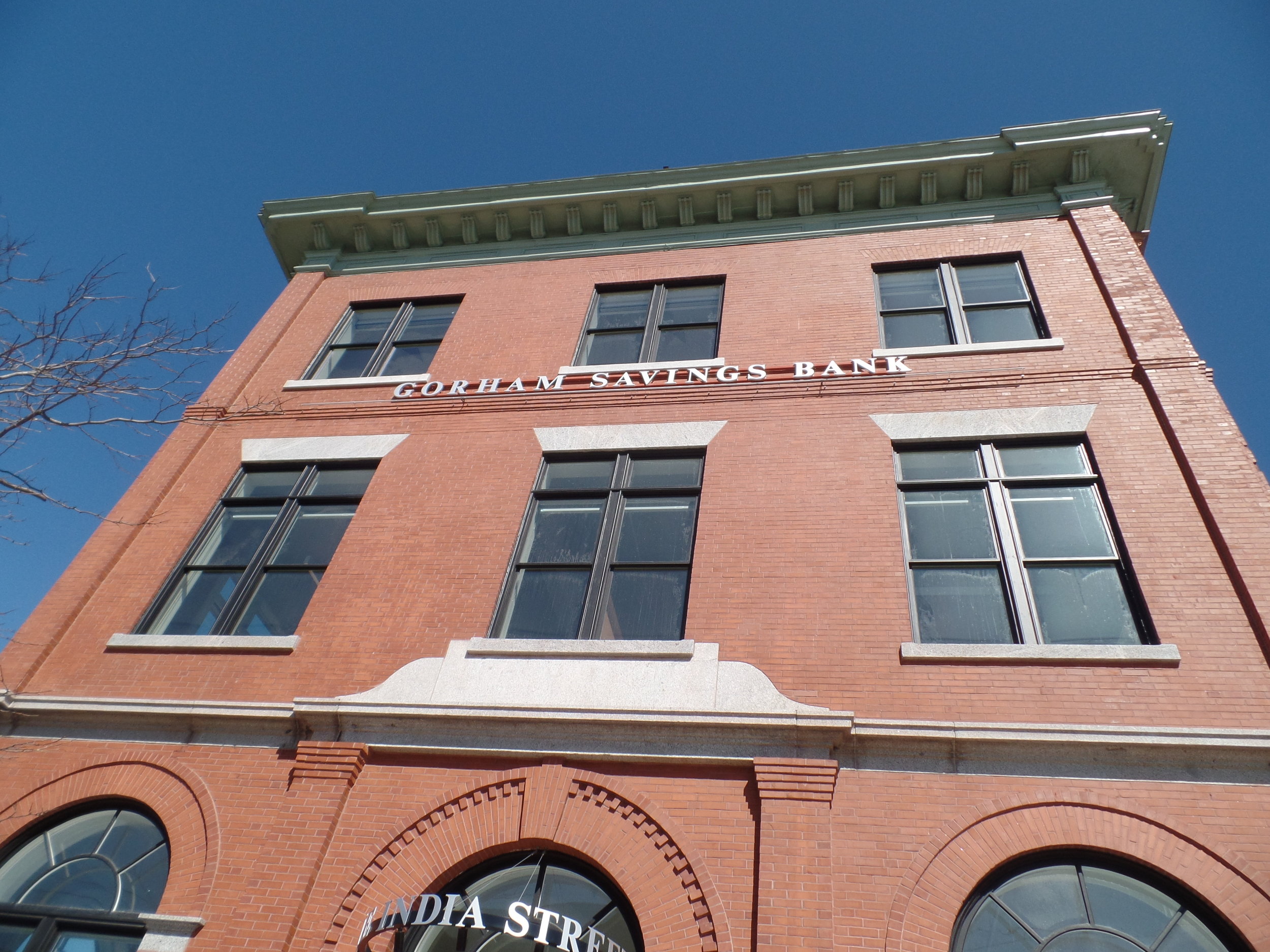
  • Grand Trunk Office Building, India Street, Portland, rehabilitated office space, completed March 2017

  • Scarborough High School (Bessey School), 272 US Route 1, Scarborough, mixed use building converted to affordable housing, completed January 2009

  • St. Hyacinth School and Convent, 2 Walker Street, Westbrook, vacant school and convent converted to affordable housing, completed October 2013

Press

Quick Links

UPDATE: 

In July 2020 the U.S. House of Representatives passed the Moving Forward Act (HR 2), a $1.5 trillion bill that funds infrastructure projects. In addition to dedicating roughly $400 billion in infrastructure investments for roads, bridges, and transit, the bill also included key Historic Tax Credit (HTC) improvements and temporary measures related to COVID-19 recovery that were recommended by the historic preservation and community development advocates, including Greater Portland Landmarks.  

The legislation included temporary increases for all HTC projects to help overcome obstacles from the nationwide shutdown in the spring and aid in the economic recovery. The legislation also included a temporary extension to project deadlines to ensure projects impacted by the pandemic did not fail to qualify for the HTC.  The Senate did not take up the bill.

We need your help to ensure any additional COVID-19 related legislation includes these same temporary and permanent enhancements. Including enhanced HTC provisions in an infrastructure or economic recovery bill will aid projects facing present obstacles and act as a catalyst for new growth in community revitalization projects across the nation, including here in Maine. Though Senate consideration of a transportation/infrastructure bill may not happen until 2021, there are components of the infrastructure legislation that are directly related to COVID-19 relief/recovery that may be considered in House and Senate negotiations for the next phase of COVID-19 related legislation this month. 

what can you do? Take Action! 

Contact your Congresspersons to tell them you support including HTC provisions in emerging COVID-19 relief legislation.  

“Please include needed HTC enhancements (below) that were in the recent House infrastructure bill (H.R. 2) to the next moving legislative vehicle. These enhancements will help tax credit projects to overcome present obstacles related to onsite labor, supply chain, regulatory and financing challenges. They will also allow the HTCs to be used to fund future projects that will aid in the economic recovery.”  

  • 30% Historic Tax Credit for projects $2.5 million and less 

  • Makes the credit easier to use by non-profits 

  • Eliminate the HTC Basis Adjustment, bringing more value to HTCs 

  • Reduces the Historic Rehab Test to 50% of a building’s basis instead of 100%  

  • Contact Maine's Senators, thank Sen. Collins for her past support of historic tax credits and urge both Senators Collins and King to encourage Senate leadership to include enhancements to the Historic Tax Credit in an economic recovery packages.

    • Sen. Susan M. Collins (R) 413 Dirksen Senate Office Building Washington, DC 20510 (202) 224-2523 or (207)283-1101 www.collins.senate.gov/contact

    • Sen. Angus S. King Jr. (I) 133 Hart Senate Office Building Washington, DC 20510  (202) 224-5344 or (207) 883-1588  www.king.senate.gov/contact

  • Contact Maine's Representatives, ask them to co-sponsor and support enhancements to the Historic Tax Credit in an economic recovery package.

  • Join our mailing list to stay informed about our advocacy efforts, educational programs, and upcoming events.

  • Support Landmarks' advocacy efforts by making a donation or becoming a member today.

Duck Pond Corner, Westbrook

The Issue

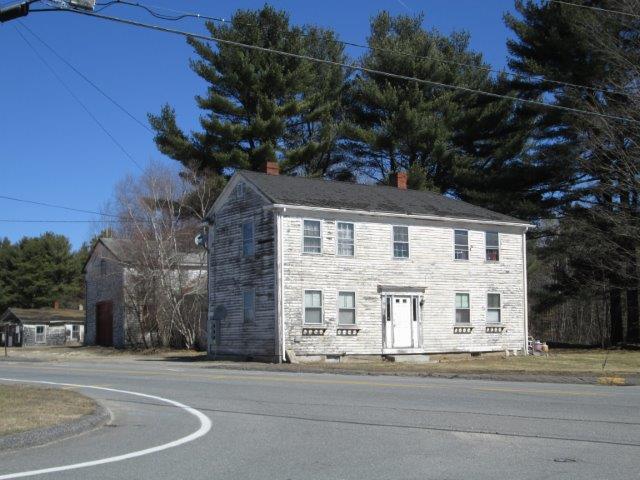
Duck Pond Corner, a formerly rural village in Westbrook is bisected by one the state’s busiest transportation corridors, Route 302. The intersection of Duck Pond and Hardy Roads with Route 302 is a high-crash site, with twelve accidents in the last three years. The Maine Department of Transportation is proposing a roundabout to make the intersection safer, but local residents are concerned about the amount of land needed for a roundabout and the impact a roundabout might have on the historic buildings adjacent to the intersection.

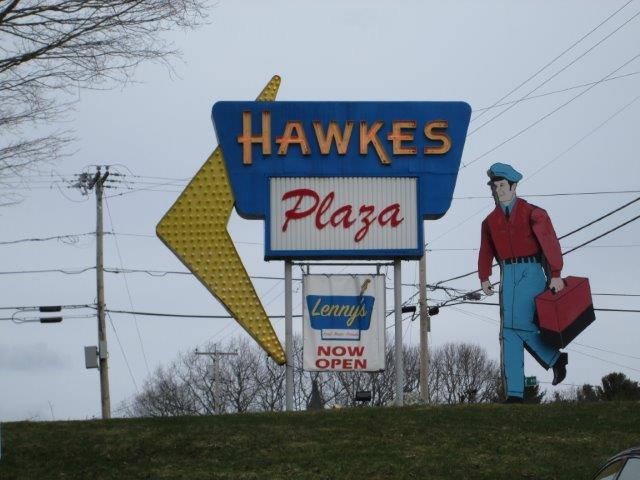
Duck Pond Corner is Westbrook’s last remaining rural village. It developed around a bucket mill on Mill Brook and later became a popular destination for summer visitors. The corner is best known for the Walking TV Repairman, a sign built by businessman and musician Al Hawkes to advertise his radio and TV store in the 1950s. 

Our Position

Local residents concerned about the neighborhood researched its history and the history of the historic buildings that comprise the village, with help from the Westbrook Historical Society. Greater Portland Landmarks has helped turn that research into a request to the Maine Historic Preservation Commission for their determination on whether the village could become a National Register Historic District. National Register status would mean that any changes to the intersection would need to be reviewed for their impact on historic structures.

Since Landmarks began working with local residents to gain recognition of the area’s historic significance, the Walking TV Repairman sign and Hawkes' former store were rehabilitated by local restaurateur and developer Bill Umbel into a pub. A historic marker at the intersection was recently restored for the City of Westbrook by Richardson Monument of South Portland.  

Update

The Maine Historic Preservation Commission found in November 2016 the Walking TV Repairman sign is eligible for listing on the National Register of Historic Places for its significance in the areas of commerce and art!

Press

Public to Consider High-Crash Intersection Options in Westbrook Portland Press Herald

Iconic Hawkes Plaza Repairman Lives again in Westbrook Bangor Daily News

Quick Links

Westbrook Historical Society's History of Duck Pond Corner

What You Can Do

  • Urge Westbrook's leaders to support a transportation solution that will respect the neighborhood's historic resources and enhance the vitality of local businesses.

  • Support Landmark's advocacy efforts.

Mellen E. Bolster House

749 Congress Street, Portland

The Issue

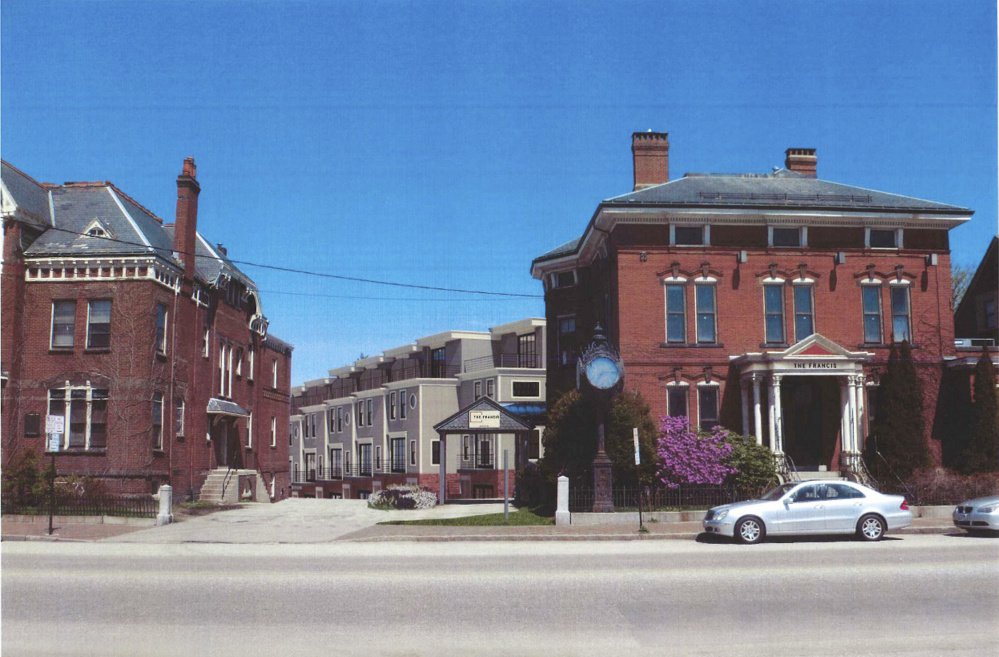
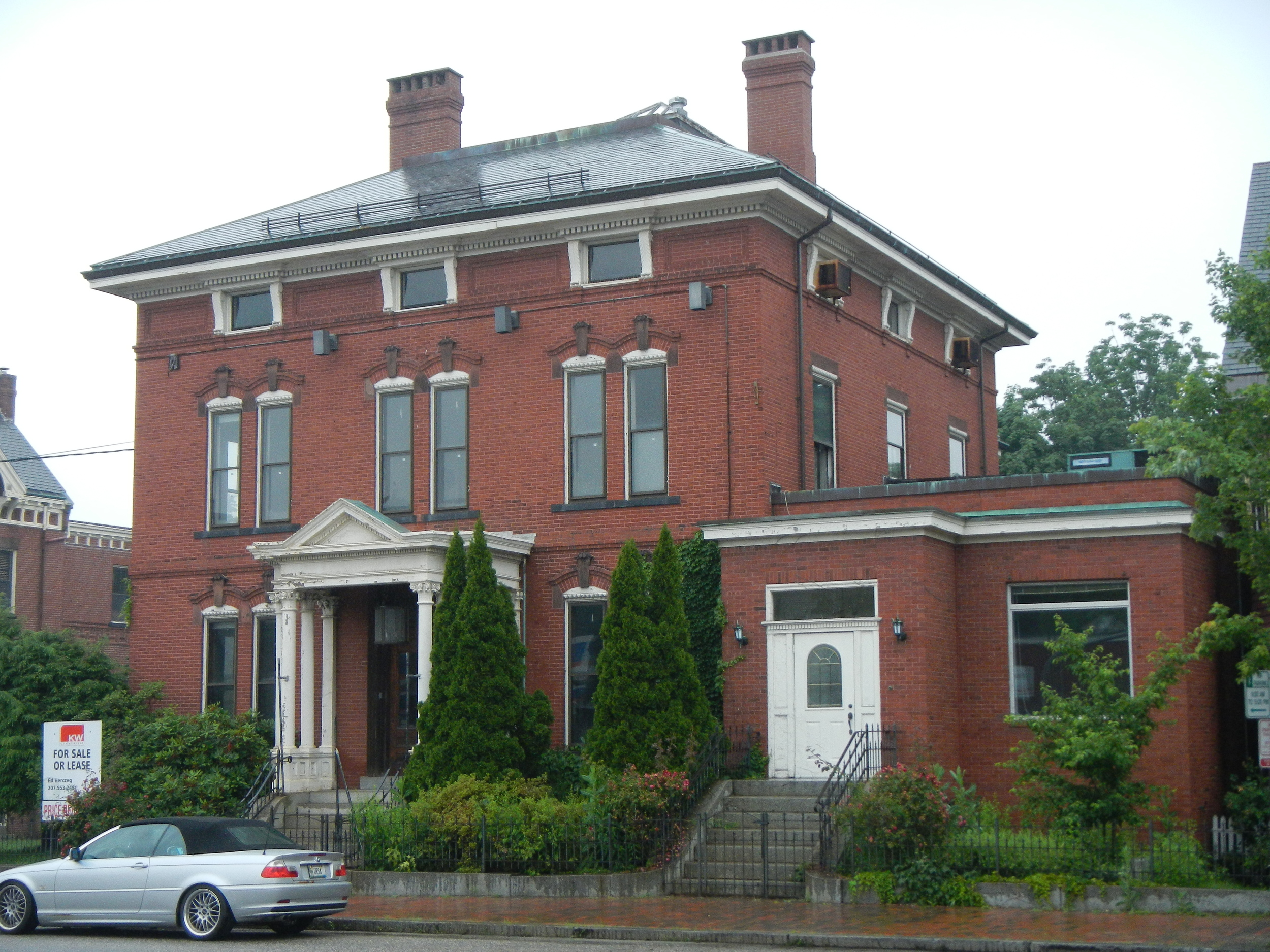
The historic Bolster House, long occupied by the Hay and Peabody Funeral Home, has been vacant since the funeral home closed in 2005. Located on a large sloping lot with frontage on Congress and Mellen Streets, the building was sold to new owners but remained vacant for several years. The original carriage house at the rear of the property remains and is occupied by two units of housing. Designed by Francis H. Fassett, the historic home and carriage house are contributing buildings in the Congress Street Historic District. After restoration, the Bolster House is now in operation as The Francis, a boutique hotel.

Hay and Peabody’s Seth Thomas Clock was named to our Places in Peril list in 2017. The restored clock was reinstalled in 2020!

Our Position

Greater Portland Landmarks toured the site in the Spring of 2016 with the development team to view the current conditions of the vacant historic building. The historic building will be rehabilitated using federal and state historic tax credits. Landmarks supports the proposed construction of new townhouses at the rear of the parcel that will economically support the rehabilitation of the historic Bolster House.

Since the beginning of the project the development team worked with their neighbors to resolve site issues and we commend all the parties for working together to help conserve the character of Mellen Street. We also commend the development team for responding to public and board member comments at various city workshops to revise the design of the townhouses. Using characteristics of the traditional townhouse form – a regular rhythm of openings, a more uniform palette of materials, and more prominent pedestrian entrances – the approved contemporary design is in keeping with the historic character and context of urban residential development in Portland’s West End. 

This exciting new project supports Portland’s housing goals with a design that respects neighborhood integrity, provides infill redevelopment on a site close to open space and community amenities, and increases housing density along a well-served public transportation corridor. We are very pleased that this long vacant building will have a new life and help renew the vitality of the western end of the Congress Street Historic District. Greater Portland Landmarks looks forward to its successful development.

Press

Quick Links

What You Can Do

  • Sign up for our mailing list to stay informed about advocacy efforts, including meetings at city hall regarding projects in the Congress Street Historic District.

  • Support the advocacy efforts of Greater Portland Landmarks.

Kotzschmar Organ 

Merrill Auditorium, 20 Myrtle Street, Portland  |  2014 Preservation Award Winner

The Issue

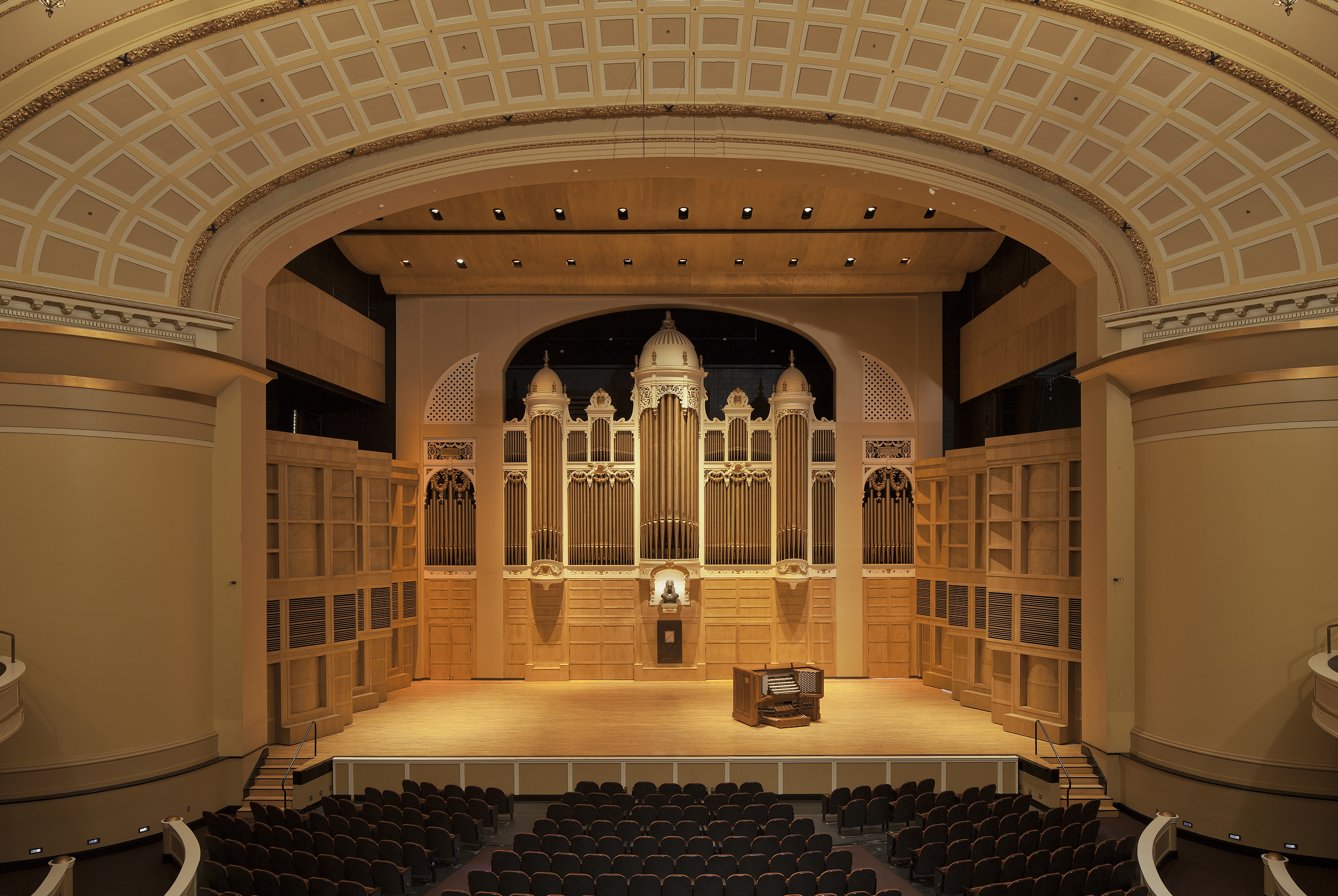
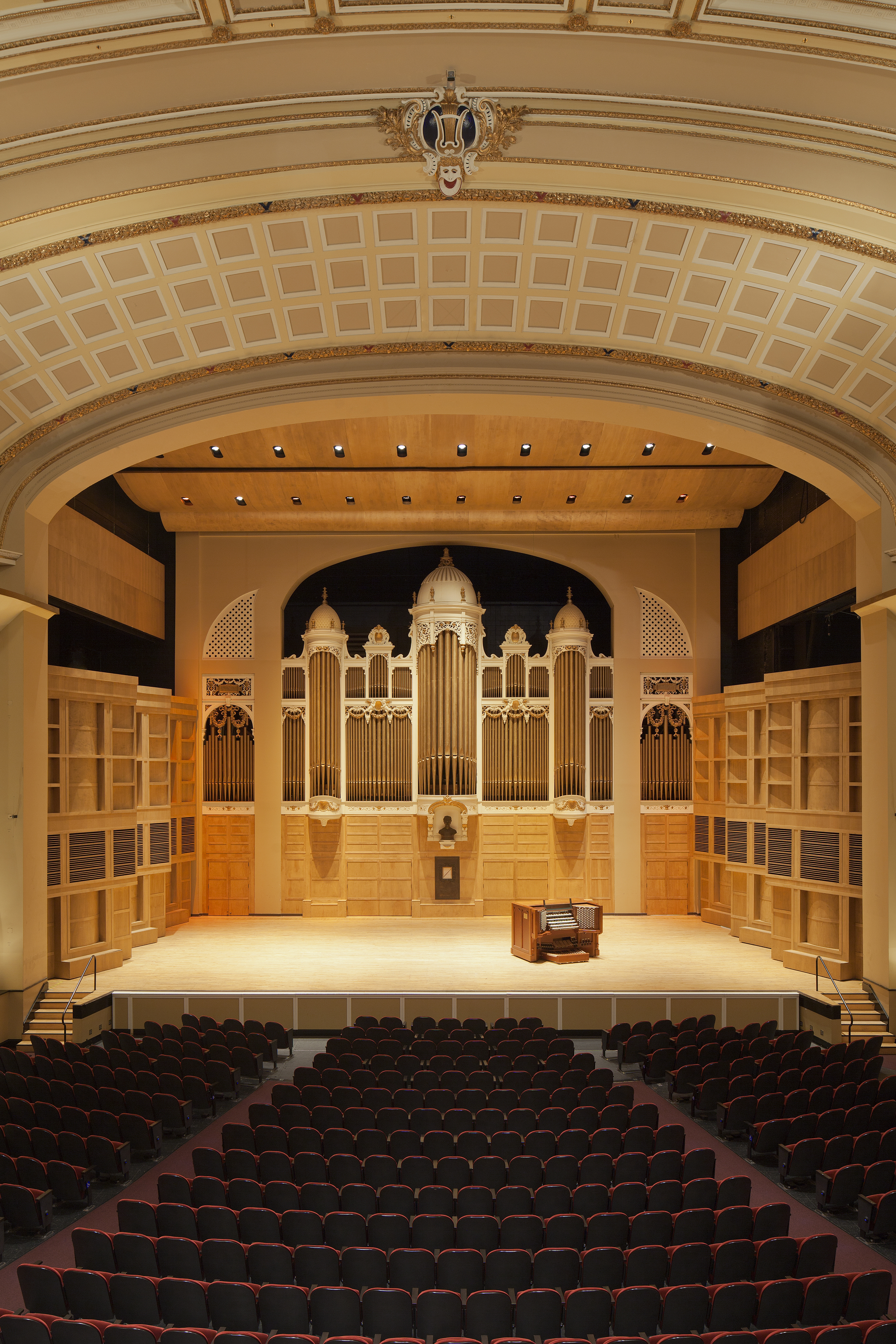
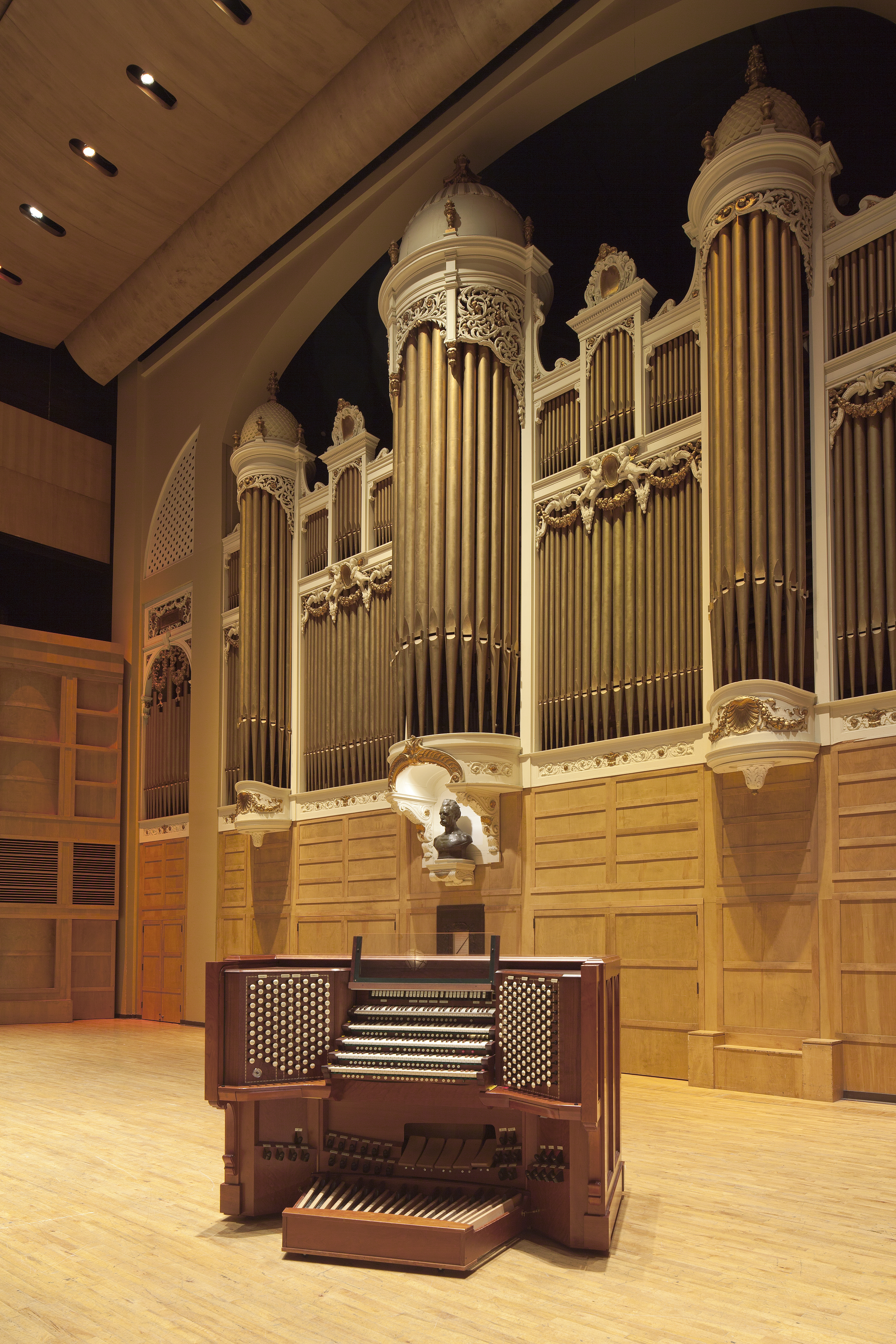
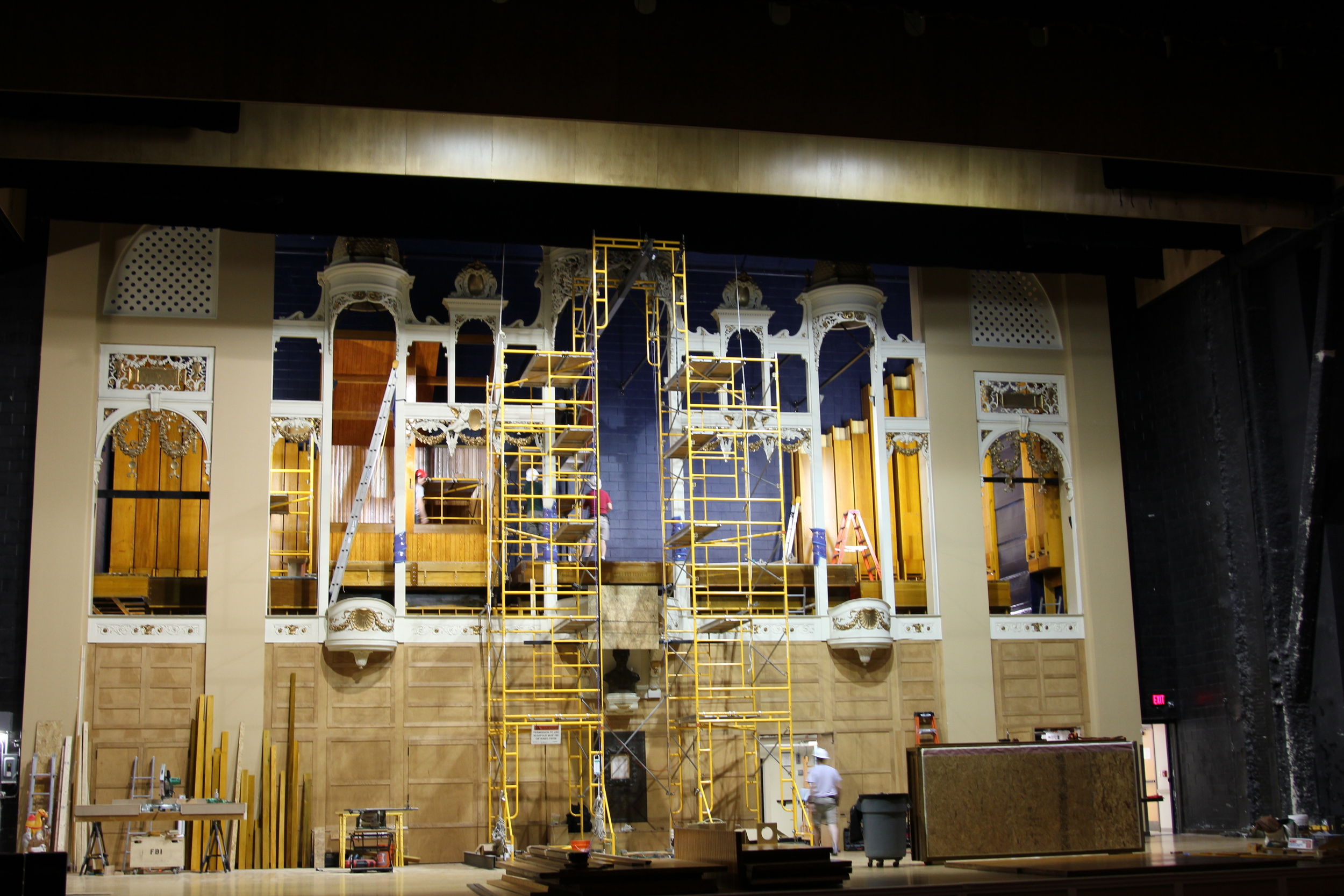
Named after Herman Kotzschmar, a German immigrant who became a leading musical performer in early 20th century Portland, the organ was installed in City Hall Auditorium in 1912 as a gift from Cyrus Curtis. The organ was enlarged in 1927 and now includes nearly 7,000 pipes. It is one of two municipal organs left in the United States.  In 2012 the hundred year-old 50-ton instrument was in need of repair, the wind chest was leaking air and valves needed to be restored or replaced.

Our Position

In a private/public partnership the Friends of the Kotzschmar Organ raised $1.25 million for the project and the City contributed an additional $1.25 million raised through a $2/ticket surcharge for Merrill Auditorium events. The project restores an iconic symbol of Portland’s artistic history to be enjoyed for future generations.

Greater Portland Landmarks awarded the Friends of the Kotzschmar Organ and the City of Portland a 2014 Preservation Honor Award to celebrate their herculean effort to preserve this unique element of Portland’s municipal and musical heritage.

2014 Preservation Award Winner!

Project Team:
Foley-Baker, Inc., Organ Builders
Friends of the Kotzschmar Organ, Project Manager
City of Portland, Owner and Financial Partner

Press

Quick Links

What you Can Do

  • Attend a concert of the Kotzschmar Organ!

  • Support the advocacy efforts of Greater Portland Landmarks

Park Row Balcony 

88 - 94 Park Street, Portland  |  2014 Preservation Award Winner

The issue

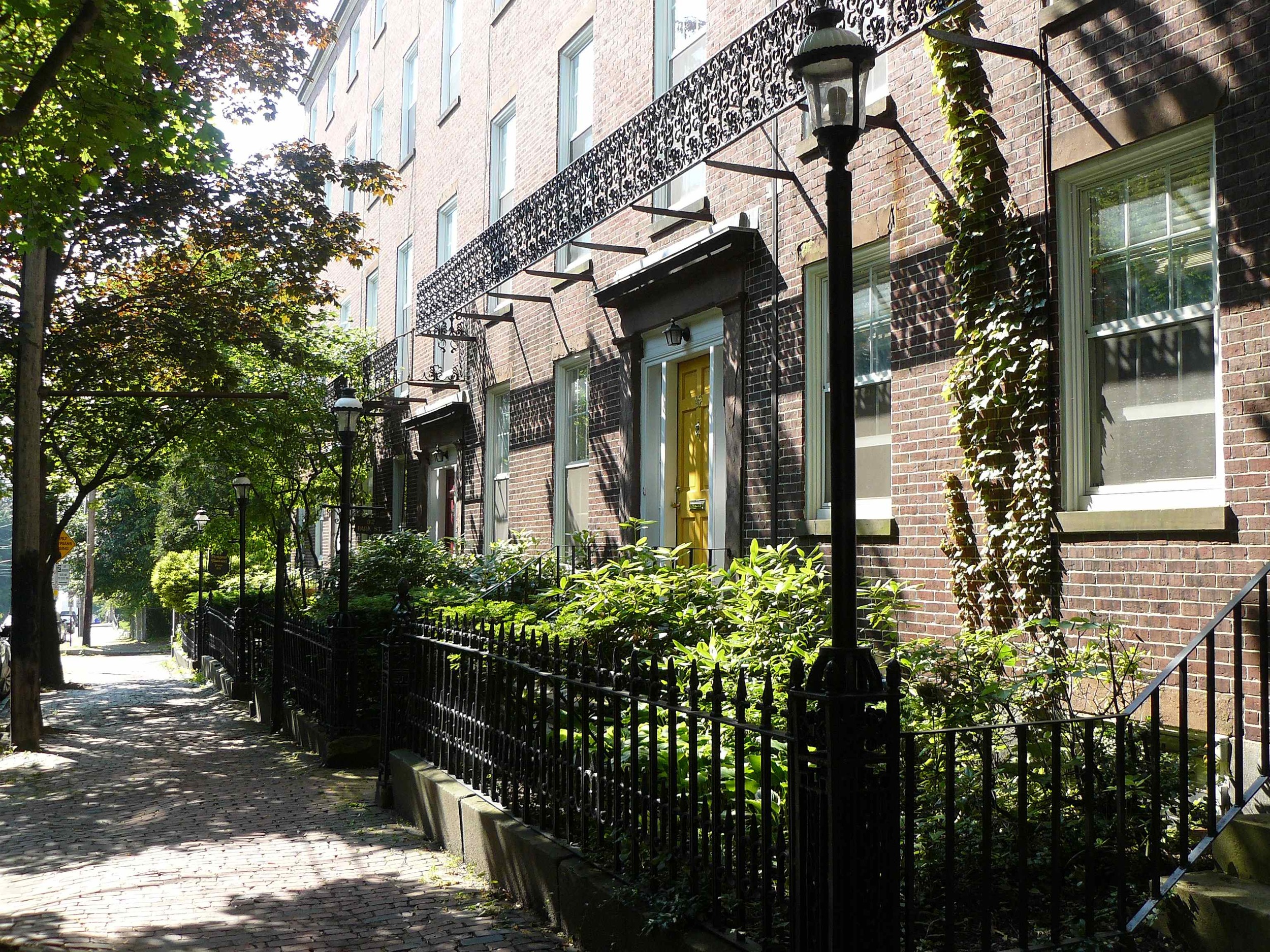
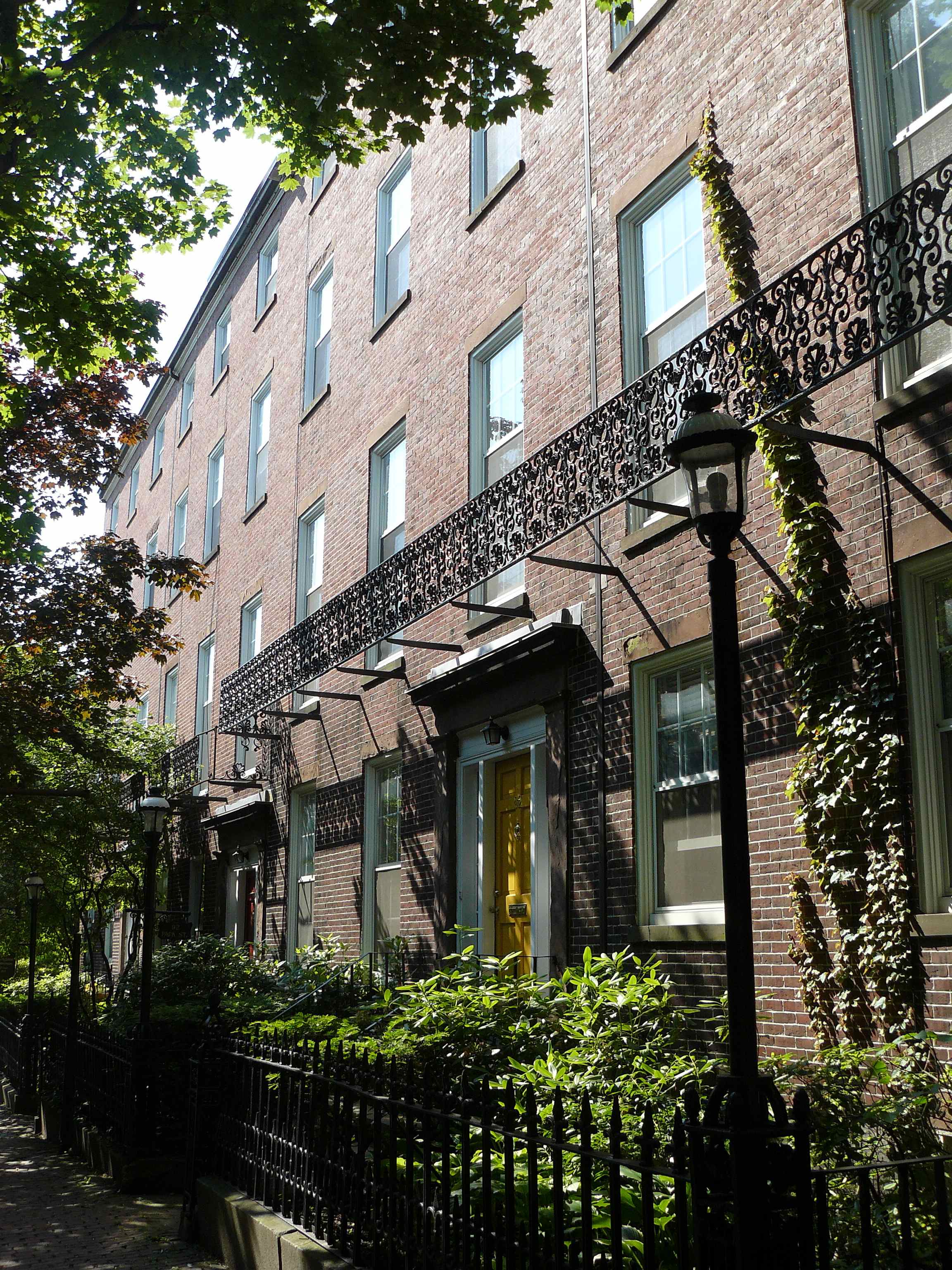
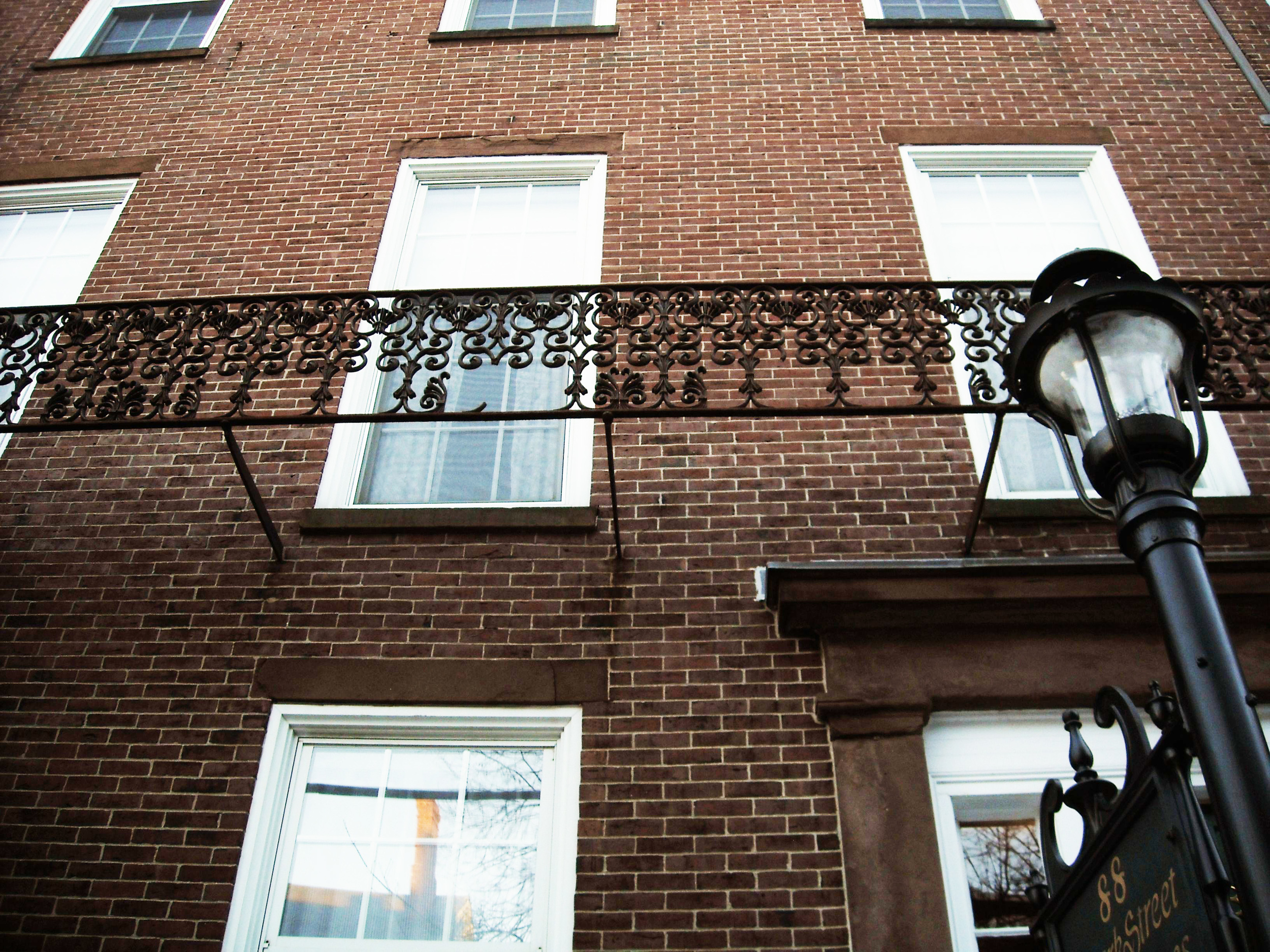
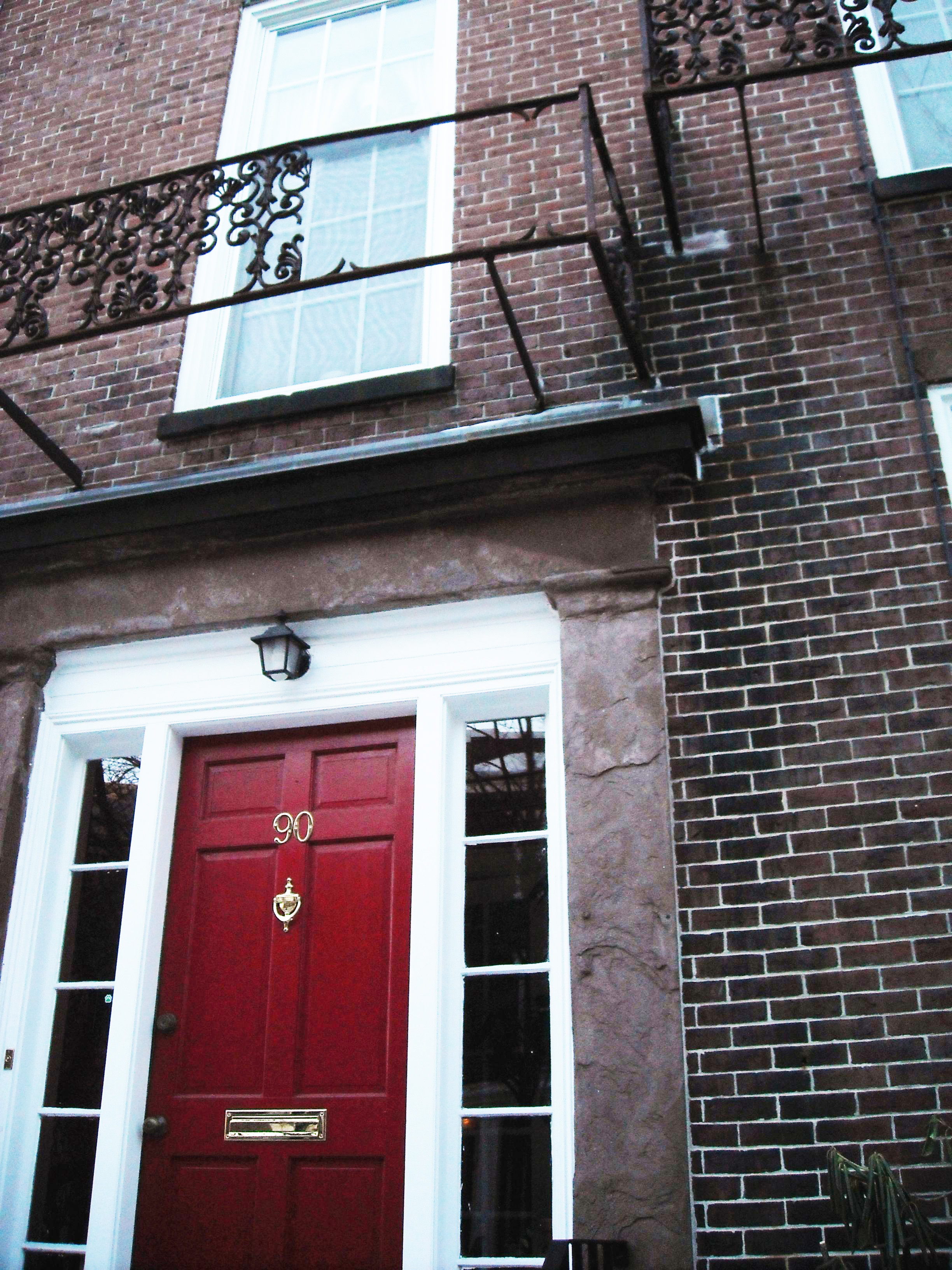
The Park Row townhouses at 88-94 Park Street were listed in the National Register of Historic Places in 1972. One of the character defining features of this distinctive collection of row houses is the cast iron balcony grills above the elevated first floor entries.  Over time, the cast iron had deteriorated badly, and in some instances the casting were completely missing from the balcony frames.

Our Position

The homeowners’ association formed a working partnership with a local craftsman that creatively addressed the preservation needs with the financial capacity of the owners. To manage costs on what could be a prohibitively expensive repair to a purely decorative element of the building, the project was spread out over four phases and partial panels were cast for selective repairs.

Greater Portland Landmarks awarded Standfast Works Forge and the Park Street Townhouse Owners’ Association a 2014 Preservation Honor Award to celebrate their preservation and restoration of the cast iron balcony, a character defining element of the Park Row Townhouses. 

2014 Preservation Award Winner!

Project Team:
Standfast Works Forge, Cast Iron Work
Ron Guerin, President of the Park Street Townhouse Owners' Association
Tom Faran, Vice President, Park Street Townhouse Owners' Association
Ann Worster, Former President, Park Street Townhouse Owners' Association

What You Can Do

  • Take our self-guided walking tour of the State Street neighborhood and view the Park Street Townhouses

  • Support the advocacy and education efforts of Greater Portland Landmarks

St. Hyacinth's School & Convent 

2 Walker Street, Westbrook  |  2014 Preservation Award Winner

The Issue

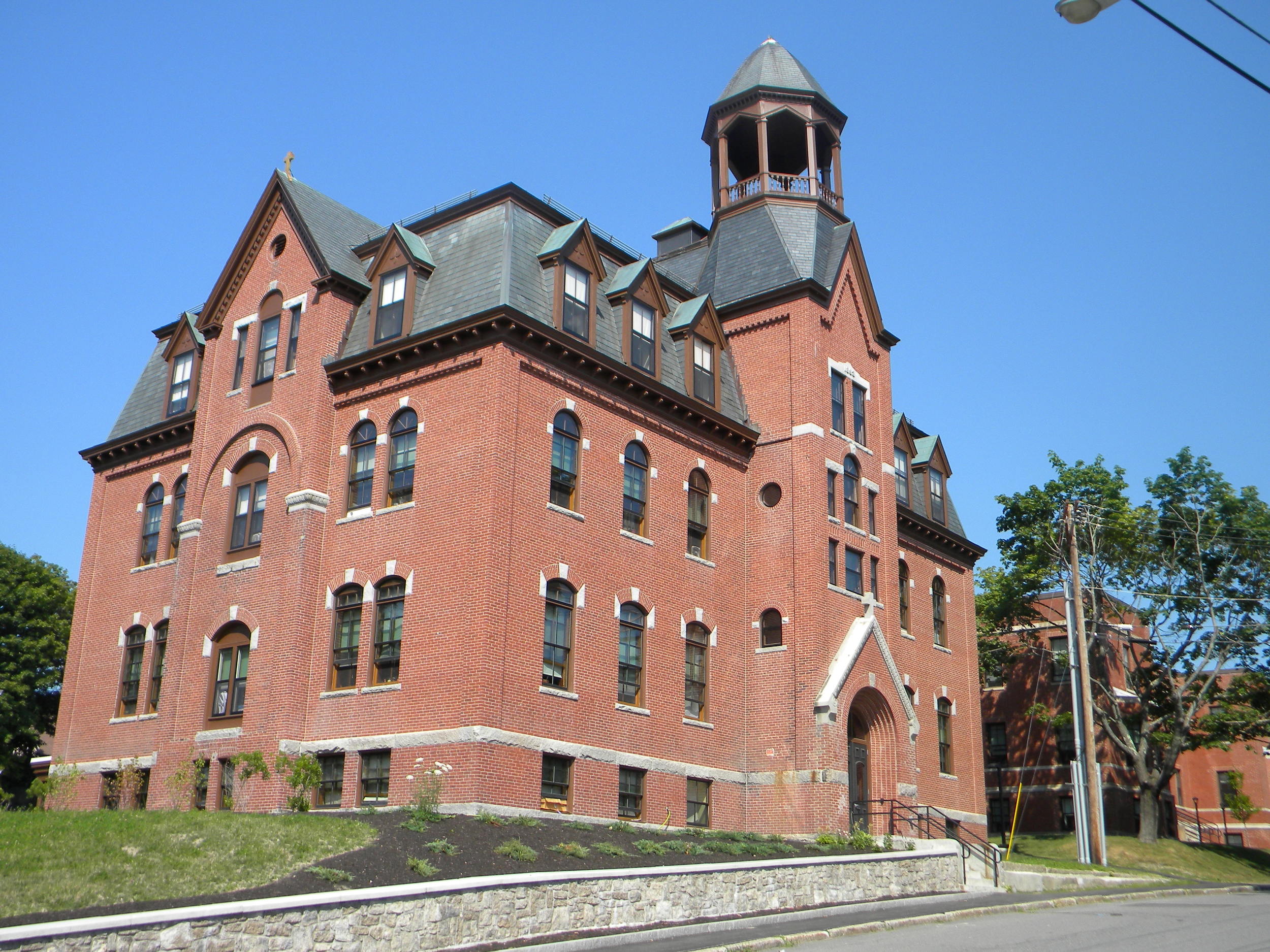
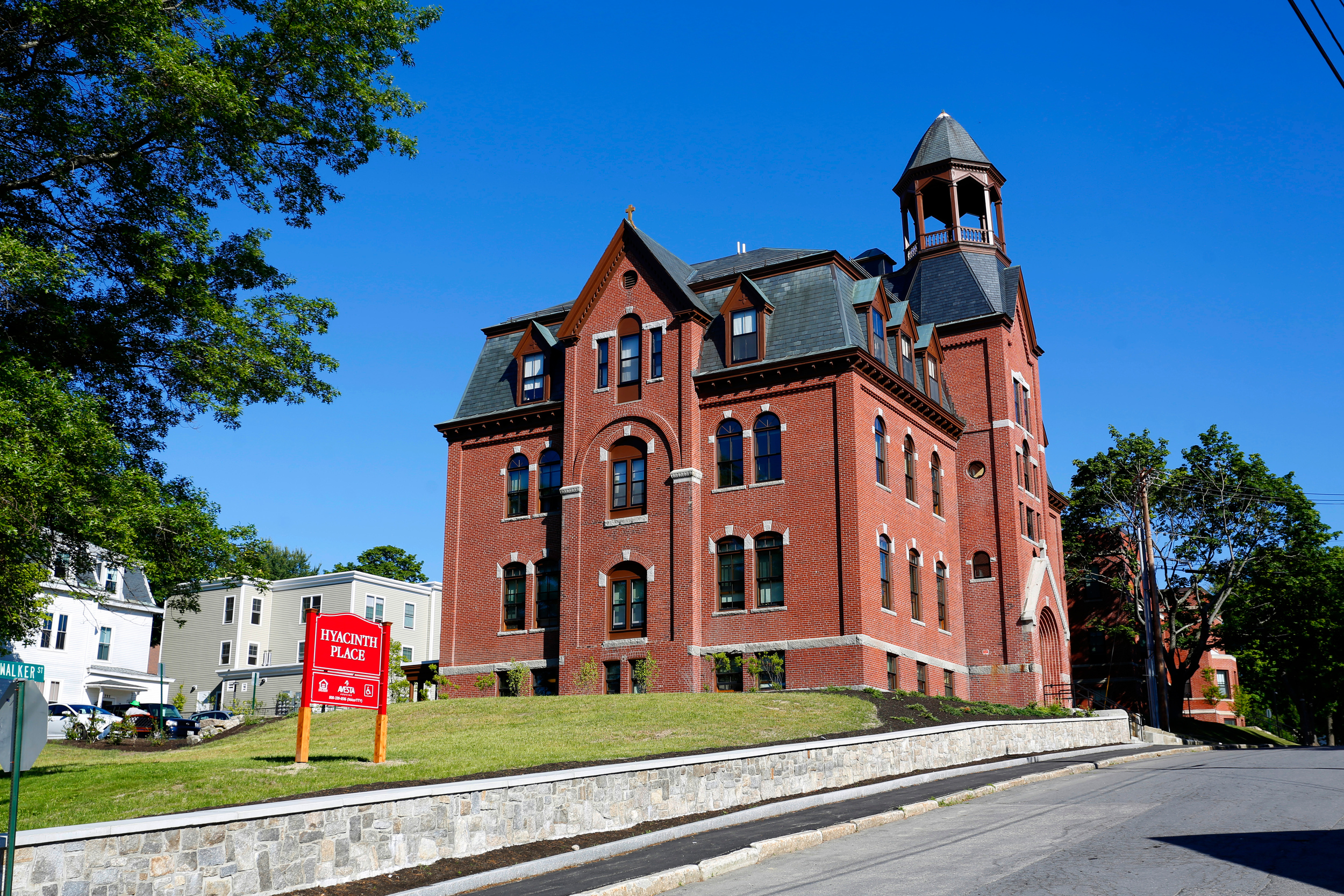
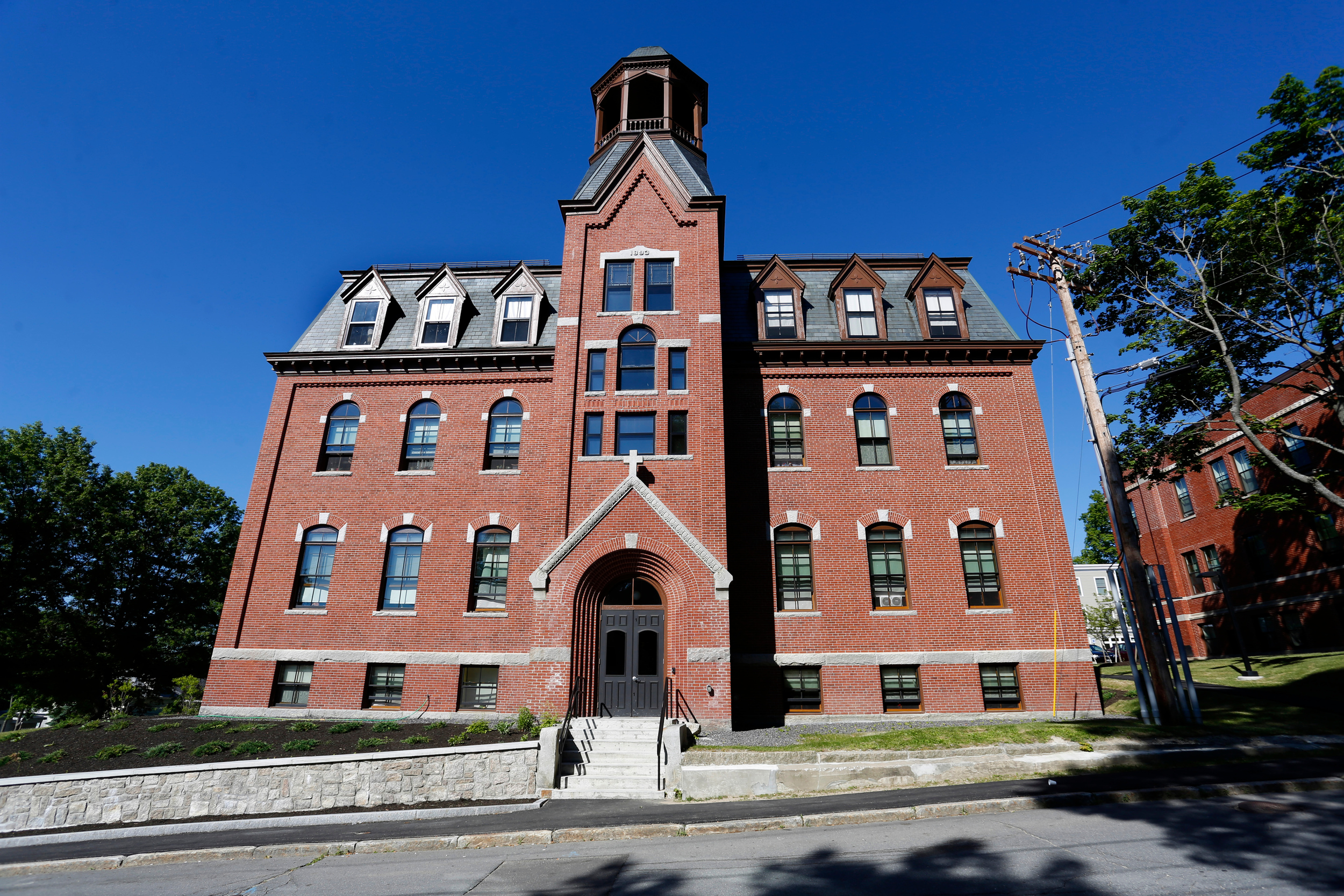
The Saint Hyacinth’s School (1893) and Convent (1921) were built on Walker and Brown Streets in Westbrook to serve the French Canadian immigrants that settled in Westbrook to work in the areas mills. The School was designed by Coburn and Son of Lewiston and the convent was designed by Timothy O’Connell of Boston.  In 1963 the last eight grade class graduated from St. Hyacinth’s, but elementary school continued there for a few more years, closing in 1974. The buildings were then home to a Center of Religious Education, a House of Prayer, St. Hyacinth Historical Society, and the Westbrook Food Pantry before being vacated. The buildings were long neglected by deferred maintenance. Both the school and convent suffered from leaking roofs. The leaking roof in the former school had rotted structural timbers, warped wood floors and destroyed interior plaster work. 

Our Position

In 2013 the buildings were listed in the National Register of Historic Places for their architectural and educational significance as well as their association with Westbrook’s Franco-American community. The exteriors of the former school and convent were restored and the interiors rehabilitated for use as a 37-units of housing. The $9.7 million project was financed in part with Federal and State Historic Tax Credits.

Greater Portland Landmarks awarded the Developer’s Collaborative, Avesta Housing and the project team a 2014 Preservation Honor Award to celebrate the preservation and rehabilitation these important former religious buildings now known as Hyacinth Place.

2014 Preservation Award Winner!

Project Team:
Developers Collaborative, Co-Developer
Avesta Housing, Co-Developer
Archetype Architects, Architect
Sutherland Conservation & Consulting, Historic Consultant
Portland Builders, Project Manager
FST, Civil Engineer
Curtis Thaxter, Attorney
Maine Housing, Financial Partner
Boston Capital, Syndicator
Bangor Savings Bank, Lender

Press

Quick Links

What you Can Do

  • Support the advocacy efforts of Greater Portland Landmarks

Samuel Trask Block

393-395 Spring Street, Portland  |  2014 Preservation Award Winner

The Issue

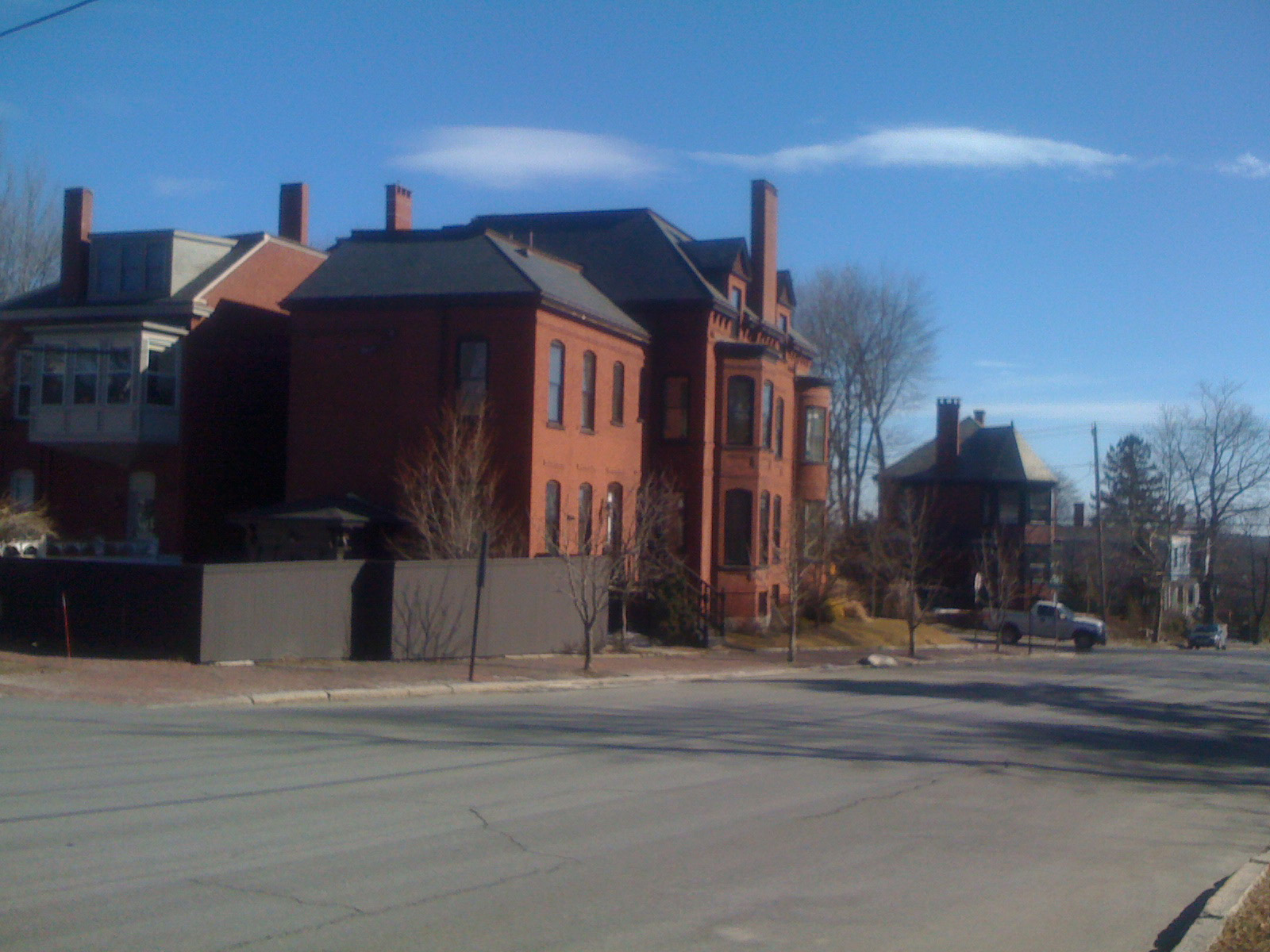
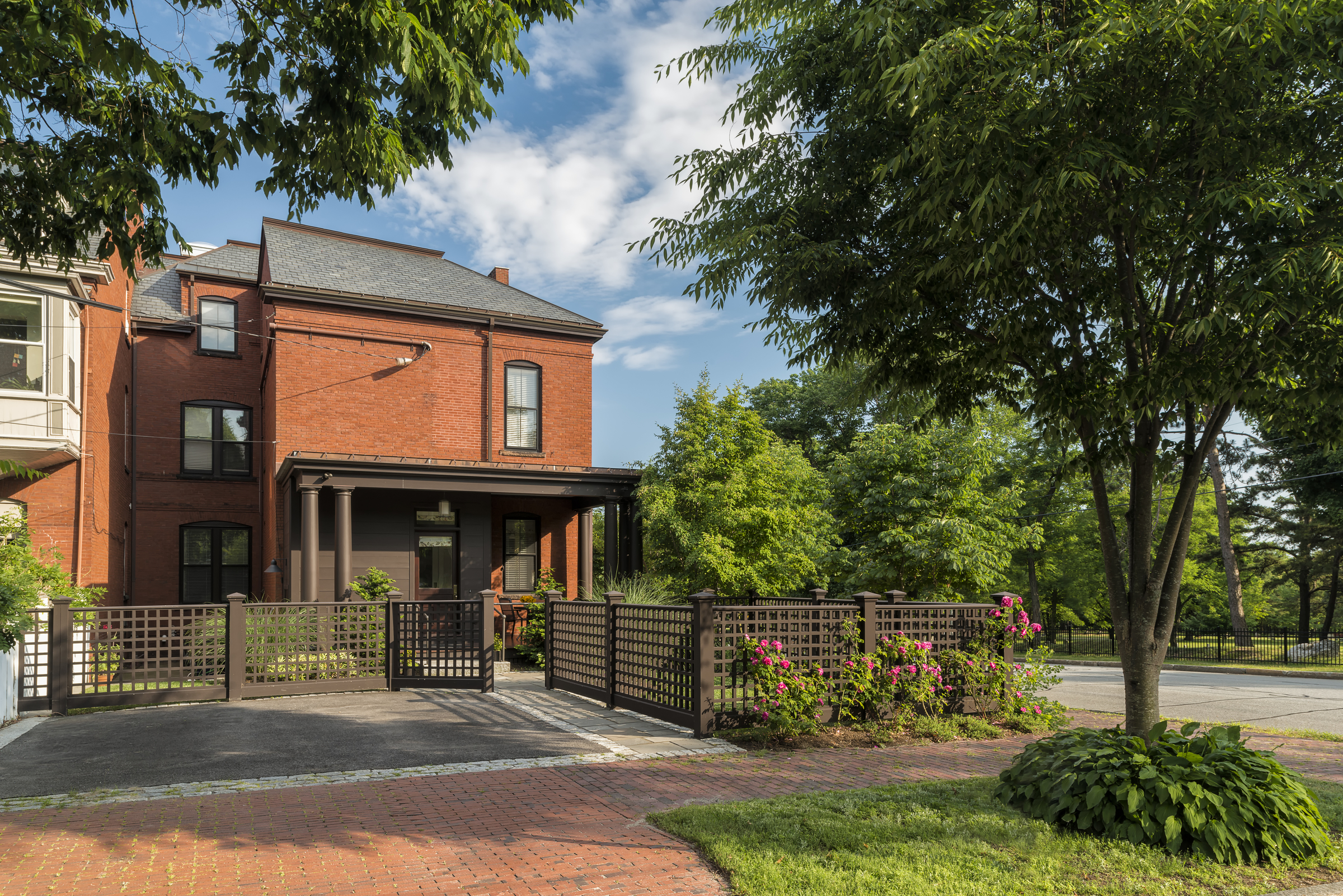
Built in 1887, the Samuel Trask Block at 393-395 Spring Street was designed by Francis H. Fassett and Frederick A. Thompson. The two-and-a-half story house is Queen Anne in style with brick, wood, stone, and terra cotta details. The building is located in Portland’s Spring Street National Register Historic District. A lack of practical everyday access to the townhouse at 395 Spring Street from the rear parking area led to a new construction project and exterior improvements. 

Our Position

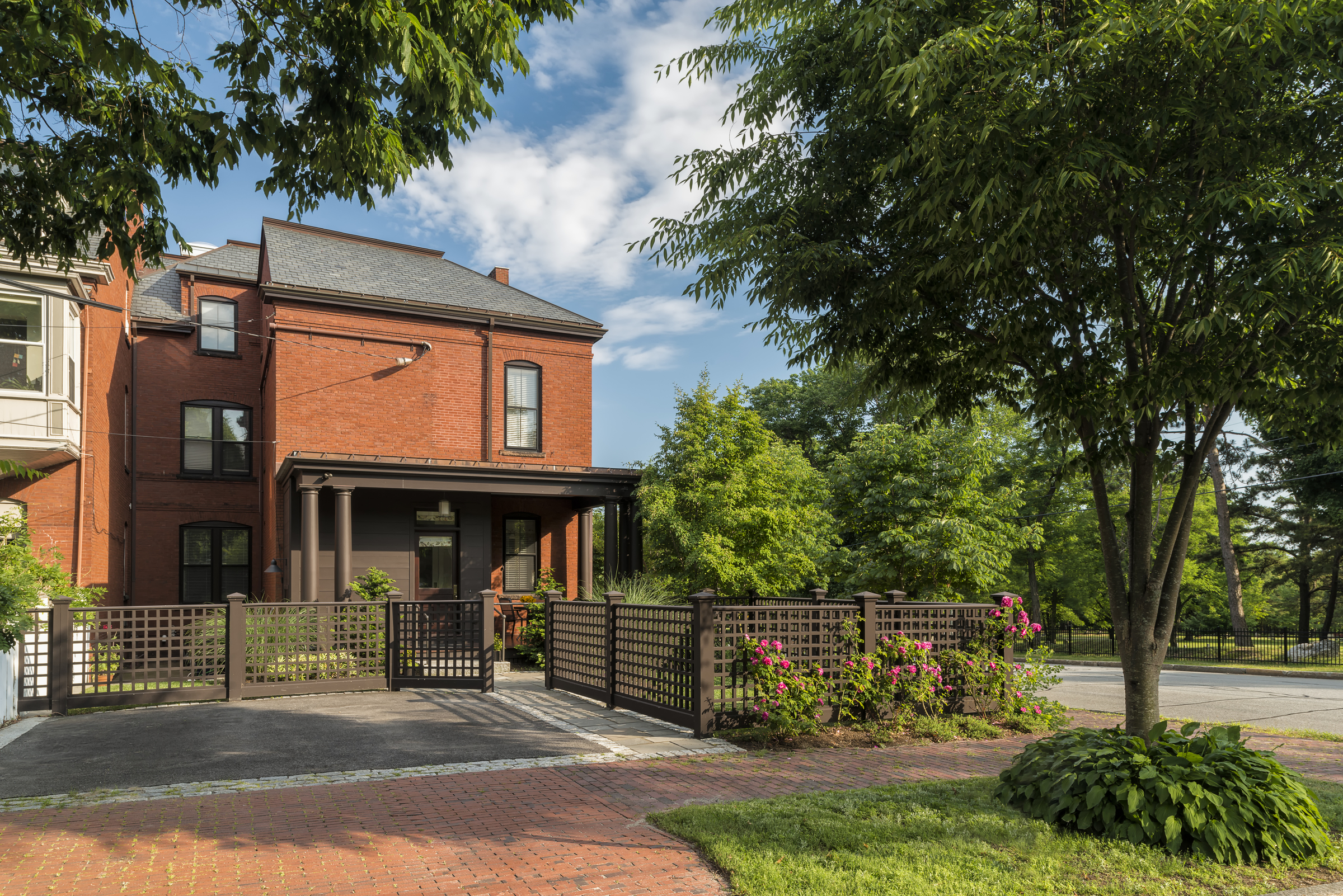
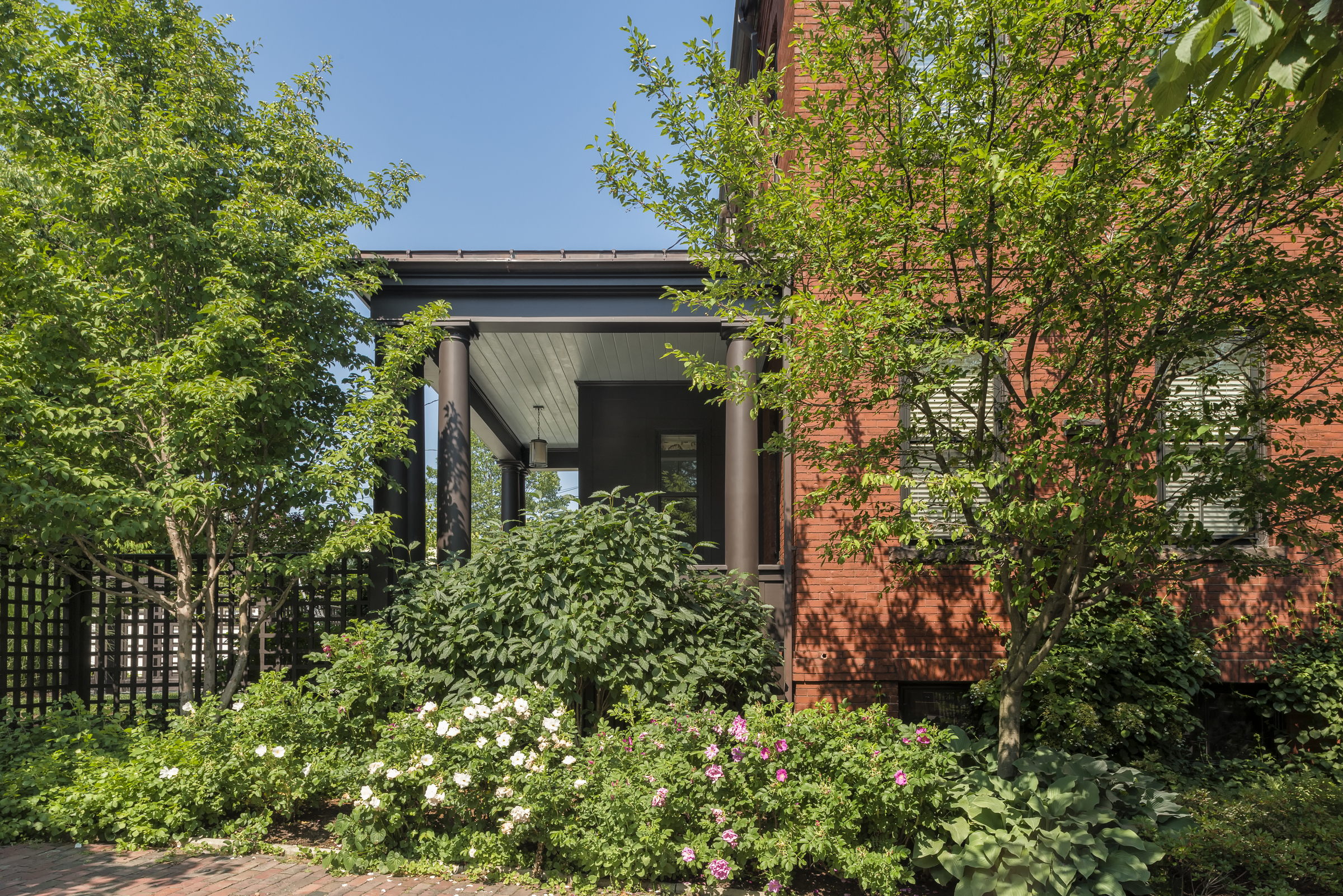
New construction on this home included the addition of a porch and mudroom, filling in a sunken garden, and a new level parking area.  The design solution transformed a confusing and inaccessible point of entry into a welcoming façade. The details of the historic house were not copied in the new construction.  They were simplified while recognizing and maintaining the grand scale of the original house and they are distinct from the original. The project combines landscaping and architecture, replacing a forbidding barrier with a perforated lattice that creates a welcoming interchange between the public sidewalk and the private yard and makes landscaping an integral part of the overall design.

2014 Preservation Award Winner!

Project Team:
Carriage House Studio, Architect
Ocean House Builders, Contractor
The Heritage Company, Roofing
Ron Forest & Sons Fence Co., Fencing
Fogg Lighting, Lighting
Hanover Ironworks, Railings
Carol Liscovitz Photography, 'After' photography

Press

Quick Links

What You Can Do

  • Take our self-guided walking tour of the Western Promenade and view the Samuel Trask Block.

  • Subscribe to our mailing list to stay informed about advocacy efforts, educational programs, and upcoming events.

  • Support the advocacy efforts of Greater Portland Landmarks.

 Historic Fire Stations

The Issue

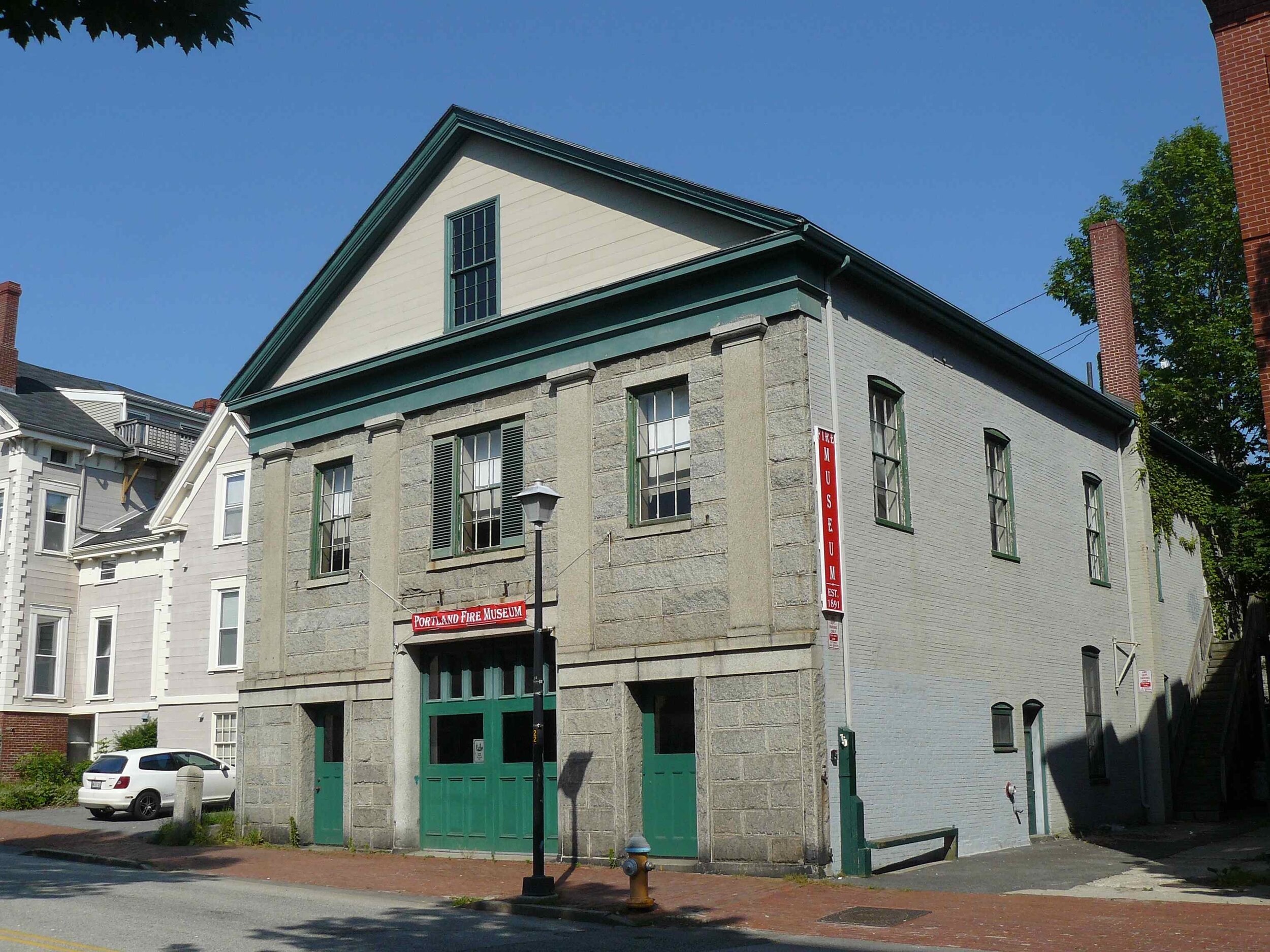
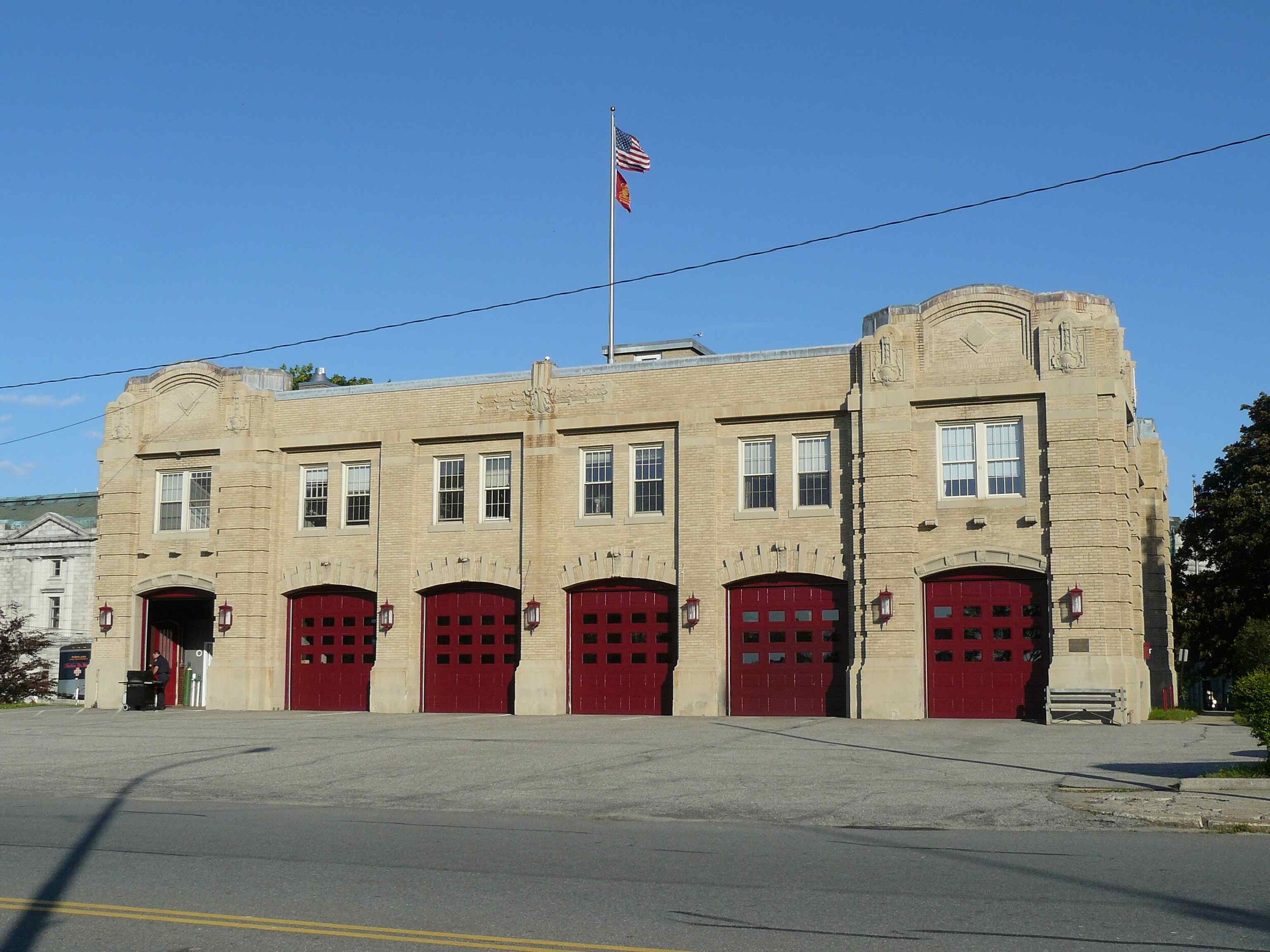
Communities in greater Portland have long histories of firefighting operations. Portland is one of the oldest departments in America, establishing the first engine company in 1768. Many stations in the area were designed as large open spaces that didn’t accommodate quarters for full time fire personnel, but served other community needs. In some neighborhoods and towns, fire stations have served as voting stations or town offices, functioning as the civic heart of their communities.

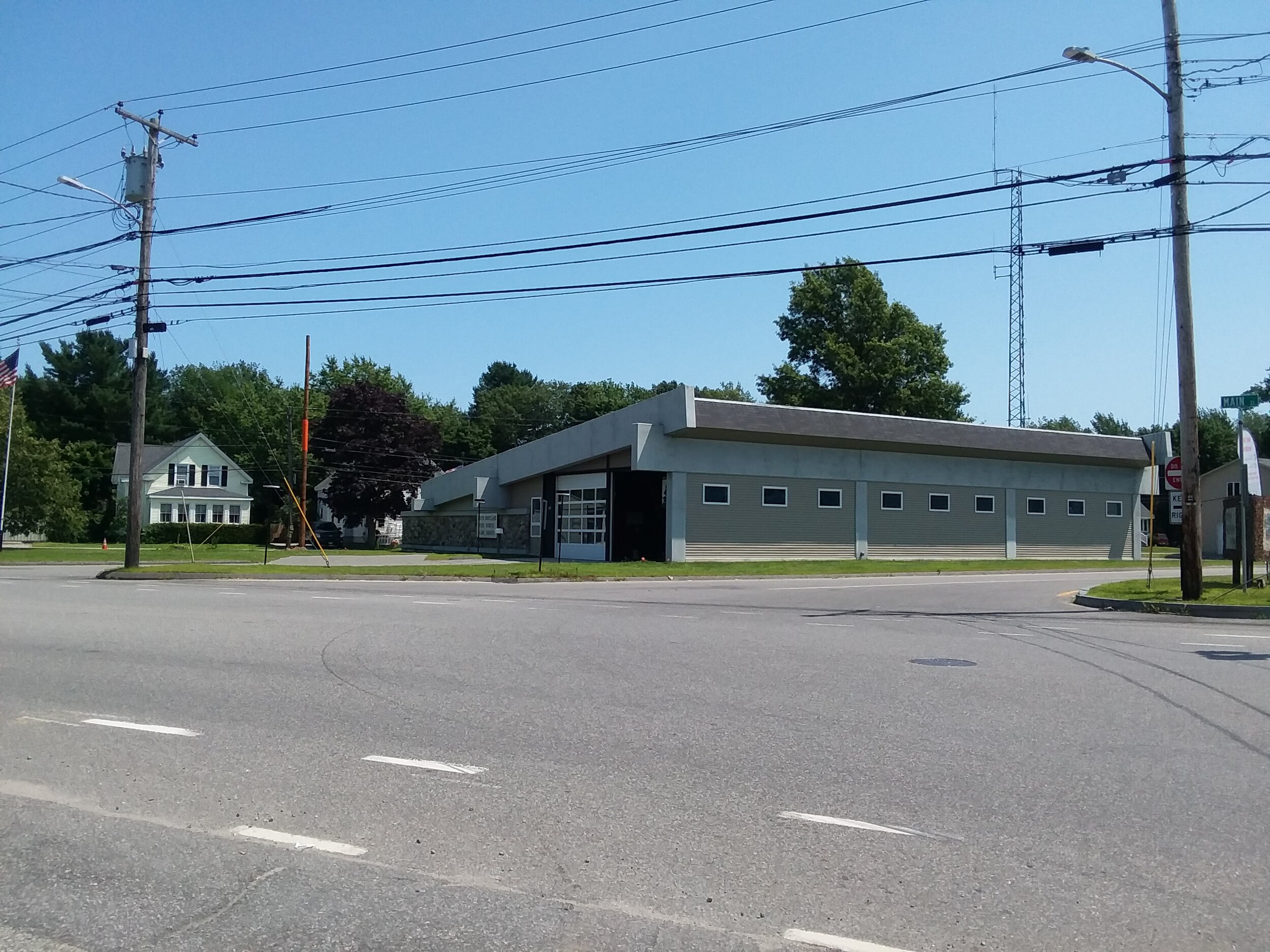
Most fire stations in greater Portland were built during a different age of firefighting. Consolidation, changes in firefighting technology, and a need for accommodations for staff are challenges threatening some surviving stations. Many have narrow doors or short bays unable to accommodate new equipment, requiring some departments to close, relocate or demolish stations and build larger buildings.

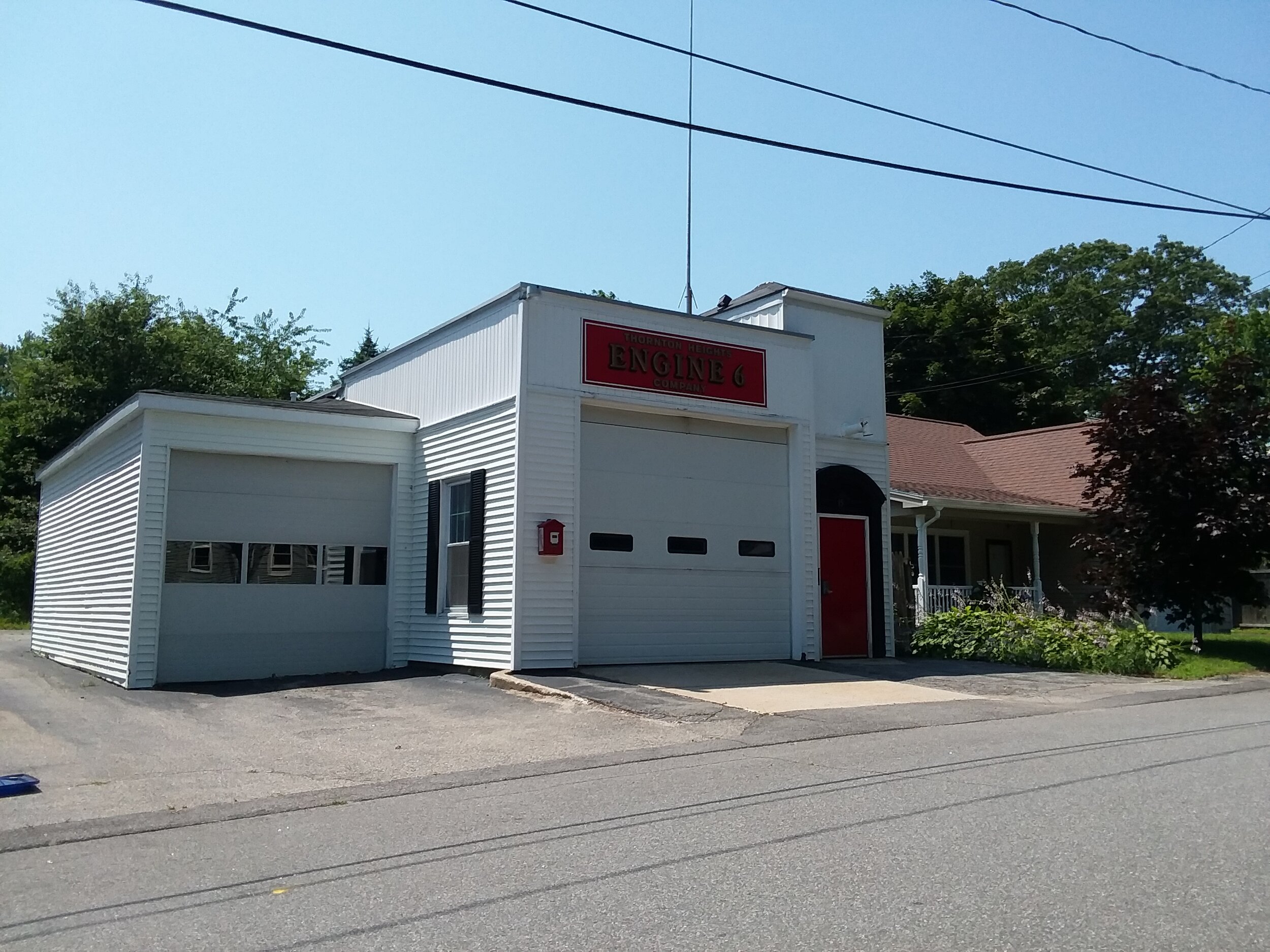
  • In South Portland the fire station at 360 Main St. was demolished for several reasons: mold, lack of sufficient living space, insufficient bay width and little ability to expand the building to accommodate new equipment. The new replacement station will also result in the closure of the engine house in Thornton Heights (1939).

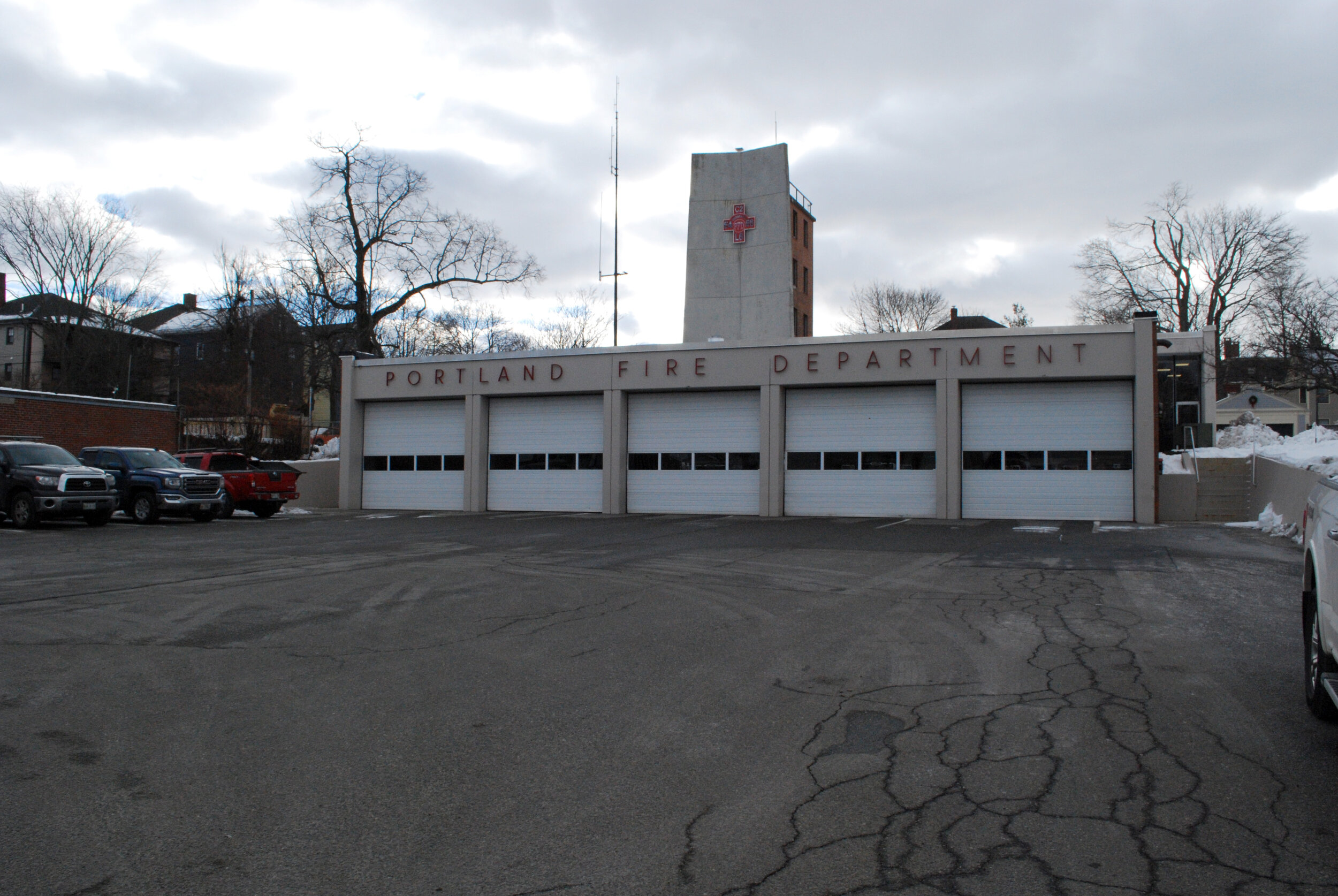
  • In Portland, an October 2017 study recommended closing or replacing stations in East Deering (1957), North Deering (1966), Riverton (1971), Rosemont (1951), and Central Station on Congress Street (1924/5). The Bramhall Station on Congress Street (1964) was also recommended for a major remodel or closure.

Our Position

As the Portland Fire Department approaches its 240th year of service we encourage the department and surrounding communities to look closely at the legacy reflected in our community stations. Already, several Fire Stations have been sold and repurposed into functional commercial space. In Westbrook, Discover Downtown Westbrook recently presented a plan to the city to turn a vacant fire station into an artist space and a visitor’s center. We challenge community leaders to consider alternatives to demolishing these buildings that continue to serve as neighborhood anchors.

Press

Portland Fire Department lacks suitable ladder truck at busiest station, Portland Press Herald

Greater Portland Landmarks announces 2019 Places in Peril, Portland Press Herald

Quick Links

Bramhall Station, City of Portland

What You Can Do

  • Join our mailing list to stay informed about advocacy, educational programs, and upcoming events.

  • Support our advocacy efforts and Places in Peril program by becoming a member or making a donation today.

Portland’s ReCode

Portland is in the process of updating its land use code (zoning).

Portland is in the process of updating its land use code (zoning).

The Planning Department has begun their overhaul of the City’s Design Manual, a document that contains standards and guidelines for new construction in various districts across the city. Following a kick-off meeting for the project in early 2021, a working group, that includes a representative from Landmarks is working to advise city staff on several key sections of the manual. As chapters are available for review, the city will post them for public feedback.

the issue

Following the completion of the city’s new comprehensive plan in 2017, the planning department, with advice from the Council’s Ad Hoc ReCode Committee and the Planning Board undertook Phase I of a comprehensive rewrite of the land use ordinance. Phase I was largely a reorganization of the existing code. Removing duplicate information and simplifying dimensional standards into more easily read charts reduced the bulk of the text considerably. Although some changes were incorporated into Phase I, more substantive changes are under consideration for Phase II. Phase II, which got underway in Spring 2021, will have a considerable impact on how Portland grows for the next 10-25 years. We hope that the future changes will facilitate the creation of additional housing units in new and existing buildings in all zones, focus development and revitalization efforts to reinforce a network of walkable neighborhoods that are interconnected by trails and public transportation, and begin to prepare Portland to be more resilient in the face of climate change.

Our Position

Greater Portland Landmarks supported the redraft of the land use code into a more user-friendly document. We provided comment and met with city staff throughout the Phase I reorganization on proposed text changes that affect historic landmarks and districts, as well as historic but undesignated neighborhoods. We supported proposed changes to the Historic Preservation Ordinance and allowances for accessory dwelling unit options throughout the city. We are currently part of a working group assisting the City of Portland on the design manual update.

Phase II will be an enormous task for the city and will have an large impact on the city’s development for at least a generation. We believe it is critically important for neighborhoods and concerned citizens to be as involved as possible in the process. During Phase I there was limited public engagement in the many workshops held by the planning board. Land use code is a daunting and dense subject to many people. In the coming months, Landmarks will focus our advocacy to help our membership and the community become more familiar with the existing code and become more engaged with the city’s process so that Portland in 2030 reflects the city we envisioned during the comprehensive planning process.

 
Portland Is Graphic.jpg


Munjoy Hill Historic District

important Update:

The Portland City Council approved the new Historic District on April 12th!

Upon reconsideration, the Portland City Council approved the proposed Munjoy Hill Historic District, voting 5-4 (Snyder, Ray, Thibodeau, Zarro, and Dion voted in the affirmative). Thank you to everyone who wrote and spoke in favor of the district, and thank you to everyone who participated in this three-year process. We hope that you will join one of our walking tours of the new historic district when tours begin again!

Read Greater Portland Landmarks’ public comments for the February 1st meeting.

The Munjoy Hill Historic District will:

  • conserve a unique, authentic, and walkable neighborhood.

  • stabilize rising housing costs for working residents and long-time Munjoy Hill families.

  • promote sustainability through a reduction in the manufacture and transportation of new building materials - and reduce building construction materials in our waste stream.

  • offer residents a voice in how new development will enhance their neighborhood.

  • preserve the homes that tell the story of the working-class and immigrant families that helped to fuel Portland’s maritime and industrial economy in the second half of the 19th century and the early 20th century.

The Issue

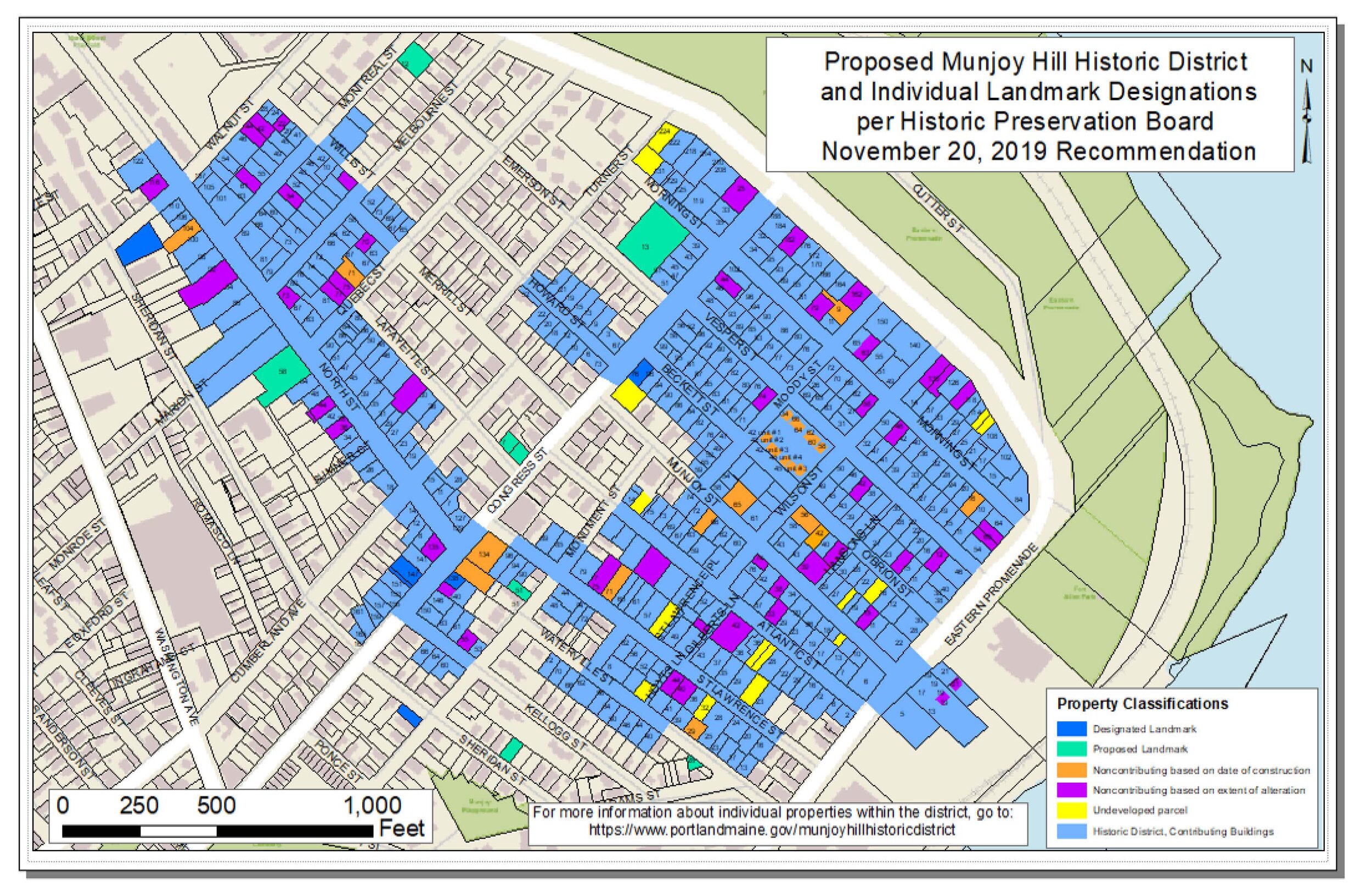
In December of 2017 the Portland City Council voted to approve a six-month moratorium on demolitions in the R-6 district on Munjoy Hill.  The impetus for adoption was concern from some Munjoy Hill residents that the current residential development interest was resulting in an undue number of demolitions to existing structures and infill development that was sometimes out of scale and character with existing neighborhood fabric. In June 2018 the City Council approved an overlay district that includes changes to the dimensional standards, design review by the Historic Preservation Board for projects choosing to meet the alternative design standards, and demolition review standards for existing residences. The Council also urged the city to look at potential historic district protections for some areas on Munjoy Hill.

Nov 20 2019 map.jpg

Consultants and city staff compiled documentation on more than 400 buildings that could be included in a local historic district. In late April 2019, the city presented a preliminary proposal on potential boundaries. Since then, the Historic Preservation Board has held several workshops, site visits, and public informational meetings to answer questions about a potential historic district designation.

On November 20th the Historic Preservation Board held a public hearing on the proposed Munjoy Hill Historic District. They recommended a district be designated, how big the district should be, and what buildings within the boundaries would be contributing to the district. They also recommended the designation of several individual buildings that fall outside the boundaries as local landmarks.
The Process So Far

On 11/20/2019 the Historic Preservation Board voted unanimously to recommend to the Planning Board that a Munjoy Hill Historic District be designated and to recommend tot he City Council that the district and six individual landmarks be considered for designation. Delayed by the pandemic, on 8/11/2020 the Planning Board voted 4-3 in favor of recommending the Munjoy Hill Local Historic District to the Portland City Council. Thank you to the many people who wrote in favor of the district! The city received comments from nearly 325 people since the district was nominated in July 2019. Over 80% of the comments have been in support of the district.

  • City Councilors directed city staff to pursue a historic district on Munjoy Hill in June 2018 when they approved a new conservation overlay district within the R-6 zone on the hill.

  • A historic district will help manage changes to buildings within the neighborhood as they are rehabilitated to meet 21st century needs.

  • City Tax Assessor, Chris Huff, has confirmed that historic designation is not a factor included in property valuation, and that a historic district has no impact on property taxes.
District.jpg

Landmarks’ mission to preserve Greater Portland’s remarkable legacy of buildings, landscapes, and parks is achieved in part by identifying valuable historic resources that tell the story of our community. The historic dwellings that line the Eastern Prom are integral to the setting of the Eastern Promenade, which is a Historic Landscape District. In addition to these properties our own research has determined that two-thirds, or 500 of the approximately 750 buildings in the R-6 zone on Munjoy Hill retain their historic architectural integrity. These historic resources help define the streetscapes that make this neighborhood of Portland a desirable place to live, work, and recreate.

Historic District Designations Landmarks supports designation of a Munjoy Hill Local Historic District with boundaries focused on the Eastern Promenade and North Street. These resources tell the story of the Munjoy Hill neighborhood’s development over a broad period of time and retain significant levels of architectural integrity. Munjoy Hill's historic buildings are significant features of the neighborhood's streetscapes and help make the area a desirable and attractive place to live, work and play. We believe it is necessary to preserve the character defining buildings that reflect the neighborhood's development over a broad period of time and the role these buildings' residents played in the social and cultural history of the neighborhood, before more of the Hill's historic identity is lost.

Historic preservation is a key part of the City’s 2017 Comprehensive Plan, as is affordable housing and sustainable development. In many cases these historic buildings include existing affordable housing units. Retaining these units rather than replacing them with costly new condominiums is an important means to meeting affordable housing needs on Munjoy Hill. Also, the preservation or reuse of these buildings and their embodied energy helps to fulfill City Comprehensive Plan goals to adopt sustainable building and land use polices.
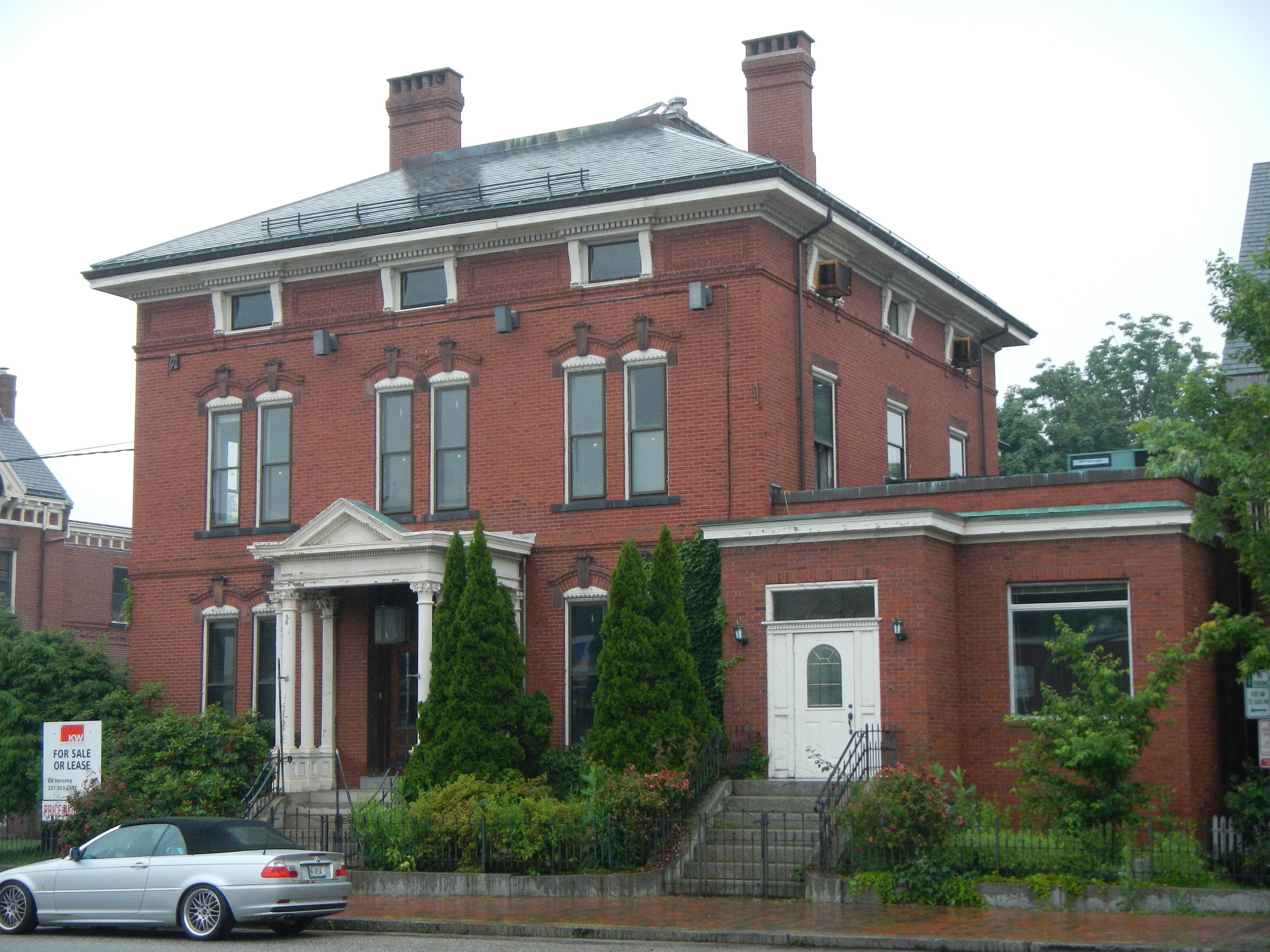
  • Historic preservation and affordable housing are compatible: more than 400* new housing units were approved or built in Portland’s historic buildings and districts in the last 5 years, and nearly 75% of those units are affordable housing units for low-income residents and seniors. *total amount as of November 2019.

  • The preservation or reuse of historic buildings helps to fulfill City Comprehensive Plan goals to adopt sustainable building and land use polices. "The greenest building is... one that is already built." Carl Elefante, FAIA

Press

Quick Links

 A special thank you to the Munjoy Hill Neighborhood Organization for inviting us to their quarterly  neighborhood meeting on March 22nd  to talk about the history of the neighborhood and answer questions about what historic districts are in Portland. Miss the Presentation? You can see the slideshow here. 

What You can do

  • Join our mailing list to stay informed about our advocacy efforts, educational programs, and upcoming events.

  • Support Landmarks' advocacy efforts by making a donation or becoming a member today

Portland’s Working Waterfront


The Issue

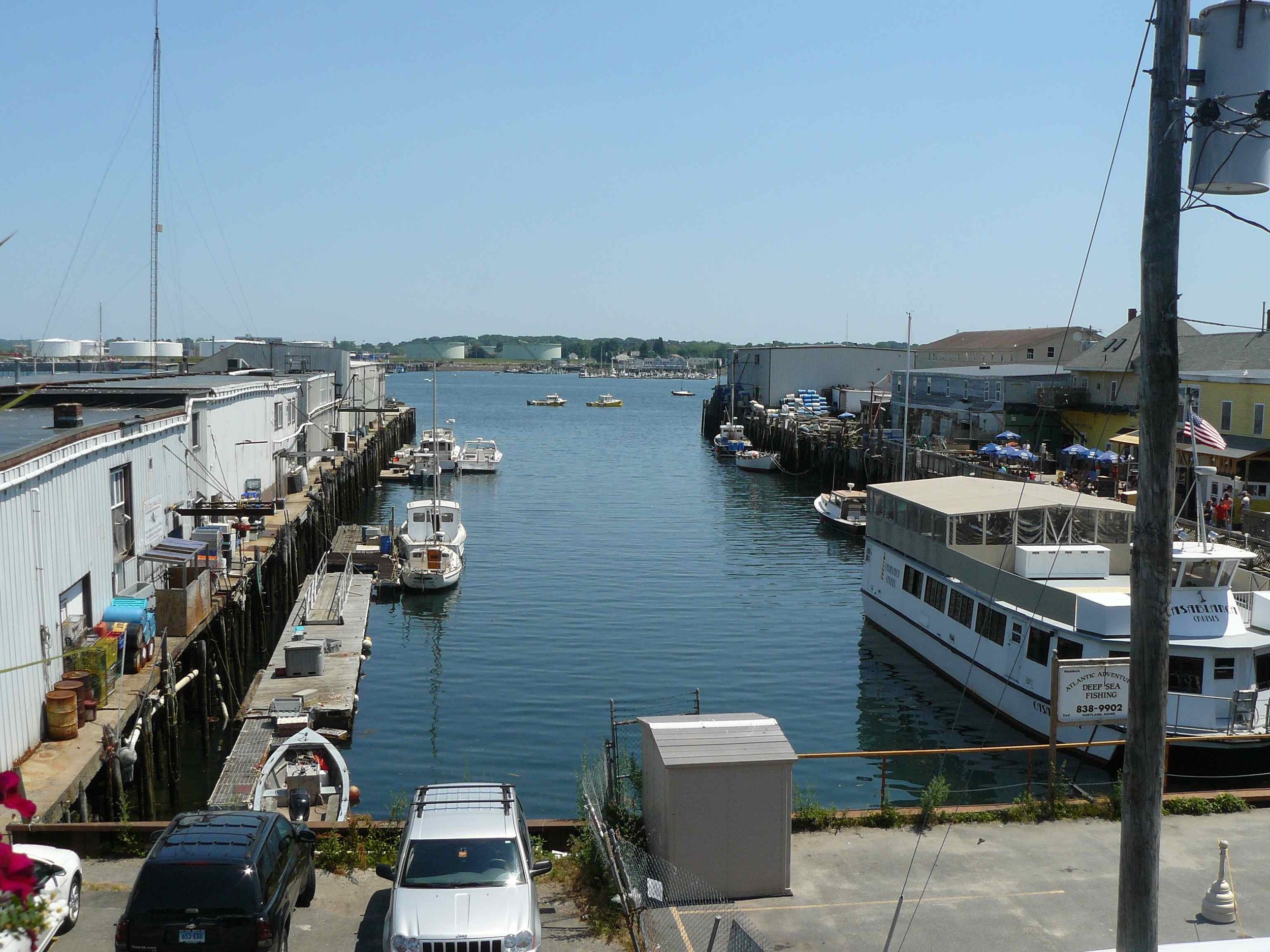
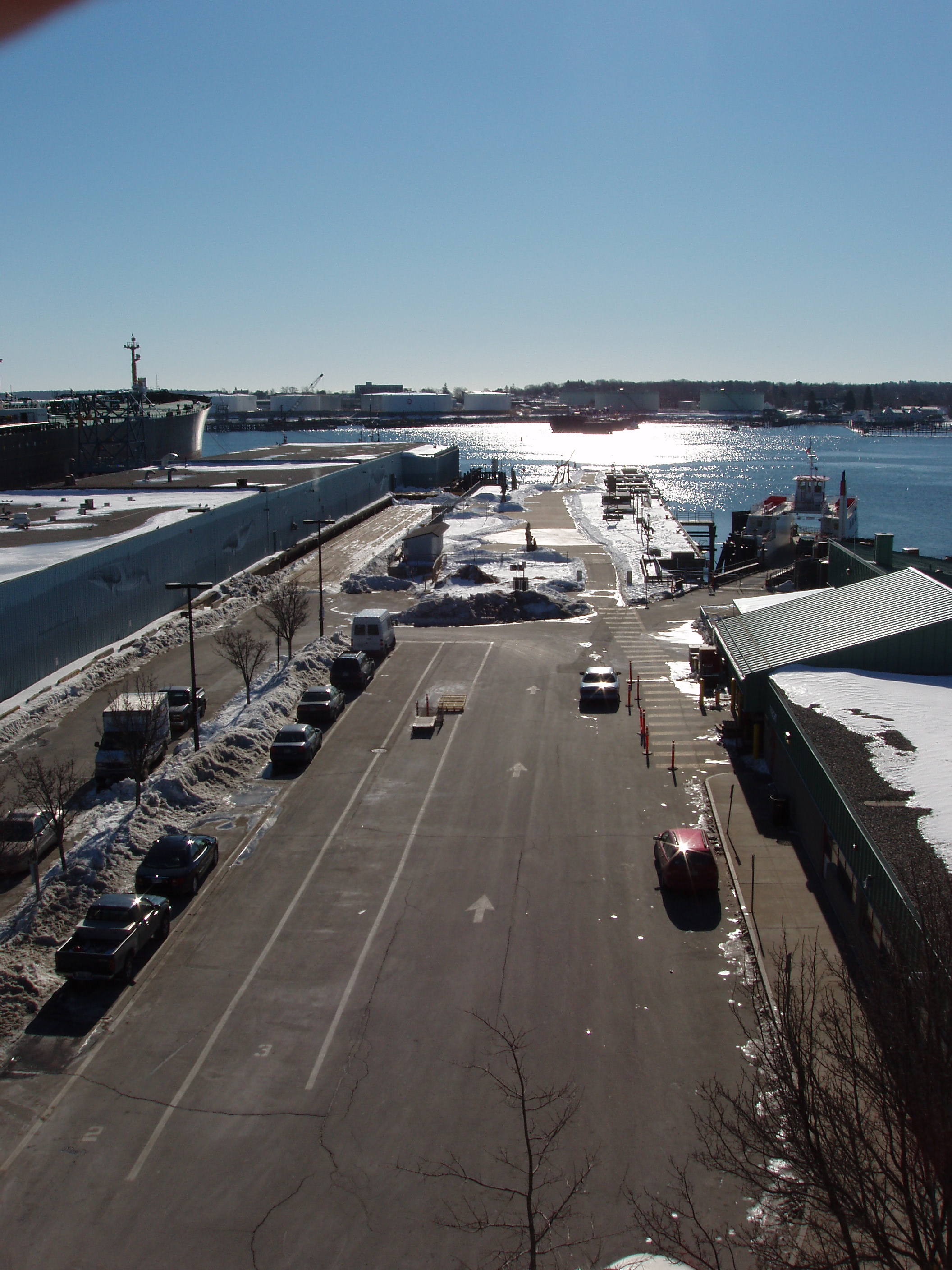
On December 17, 2018 the Portland City Council voted to approve a six-month moratorium on non-marine development in the Waterfront Central Zone.  The impetus for adoption was a citizen’s referendum that would have eliminated non-marine-related development on Portland’s waterfront. The proposed fishermen’s referendum is a reaction to increasing non-marine development, limited parking, and increasing traffic congestion that is hampering the transportation of their product as well as access to berths and marine related businesses. As part of the council action, a task force was created to try to solve traffic congestion and other access issues that led fishermen to seek the referendum in the first place.

Our Position

The harbor and the working waterfront are significant to the historic growth and development of the city and the region. The waterfront’s authentic character is a large part of why tourists and locals are drawn to visit, work, and live in the city. Planning decisions need to balance disparate uses and ensure that they can coexist next to each other. Waterfront policies should preserve marine uses, but also provide for a balance of non-marine uses to allow the waterfront to adapt to changing economic requirements and evolving infrastructure needs, and to spur needed investment.

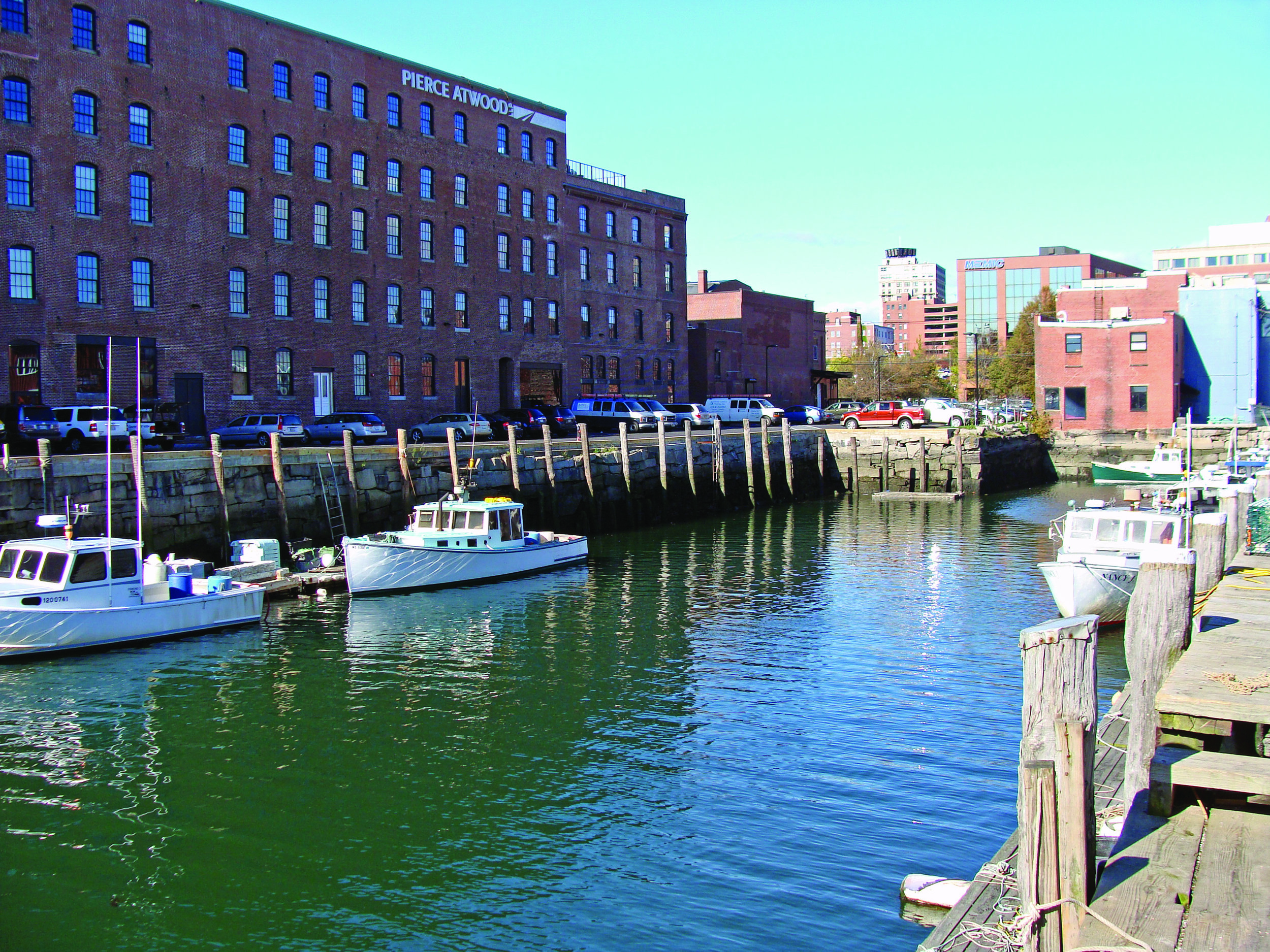
Landmarks’ mission to preserve Greater Portland’s remarkable legacy of buildings, landscapes, and parks is achieved in part by identifying valuable historic resources that tell the story of our community. That story is in large part defined by the waterfront. Landmarks supported the moratorium, closely followed the study group discussions, and commissioned a historic resources survey to document culturally significant buildings and structures on the central waterfront that may be impacted by sea level rise. We are hopeful that the current dialogue and cooperation between parties will preserve Portland’s working waterfront for future generations.

Press

Quick Links

What You can do


Portland Company, 58 Fore Street

Formal Finding and Recommendation of the Historic Preservation Board


Following a public hearing and final deliberations, the Historic Preservation Board voted on two motions as follows:

1) The Board voted 6-0 (Sheridan recused) that on the basis of plans, elevations and renderings of the proposed development included in the Master Development Plan for 58 Fore Street and information included in the staff report for the December 7, 2016 public hearing, the Board finds that the proposed Master Development Plan for 58 Fore Street, specifically that portion of the proposed development located within the boundary of the Portland Company Historic District, is in conformance with Portland's Historic Preservation Ordinance standards subject to the removal of the proposed rooftop addition above Building 16, the reduction in scale of the proposed infill construction on the footprint of Building 14 and 15 to a height not to exceed existing building heights, and the provision of an offset separating  Building 16 and new townhouses to the east. 

Additionally, the Board finds that the proposed development adjacent to or within one hundred feet of the Portland Company Historic District will be developed so as to be generally compatible with the major character defining elements of the landmark or portion of the district in the immediate vicinity of the proposed development.

These findings do not preclude the Historic Preservation Board's authority as part of future reviews of Certificate(s) of Appropriateness to require reasonable adjustments in scale, massing or design of proposed additions, alterations, or new construction to comply with ordinance requirements, as identified in the 12/7/16 staff report and as amended during Board discussions.

2) The Historic Preservation Board voted 5-1 ( Sheridan recused, Oldham opposed) to recommend to the Planning Board and City Council that the boundaries of the Portland Company Historic District be amended as shown and described in Bernstein Shur's letter of November 10, 2016. This recommendation is based on the Board's finding that amending the boundaries of the Portland Company Historic District is necessary to fulfill a key objective of the Master Development Plan, that being the relocation of Building 12 to a position abutting the western edge of the 50' public access easement on site. Additionally, the Board finds that the district boundary amendment will create a single contiguous historic district and allow for the relocation of Building 12 to a position where it will continue to have a visual relationship with the other remaining Portland Company historic structures.