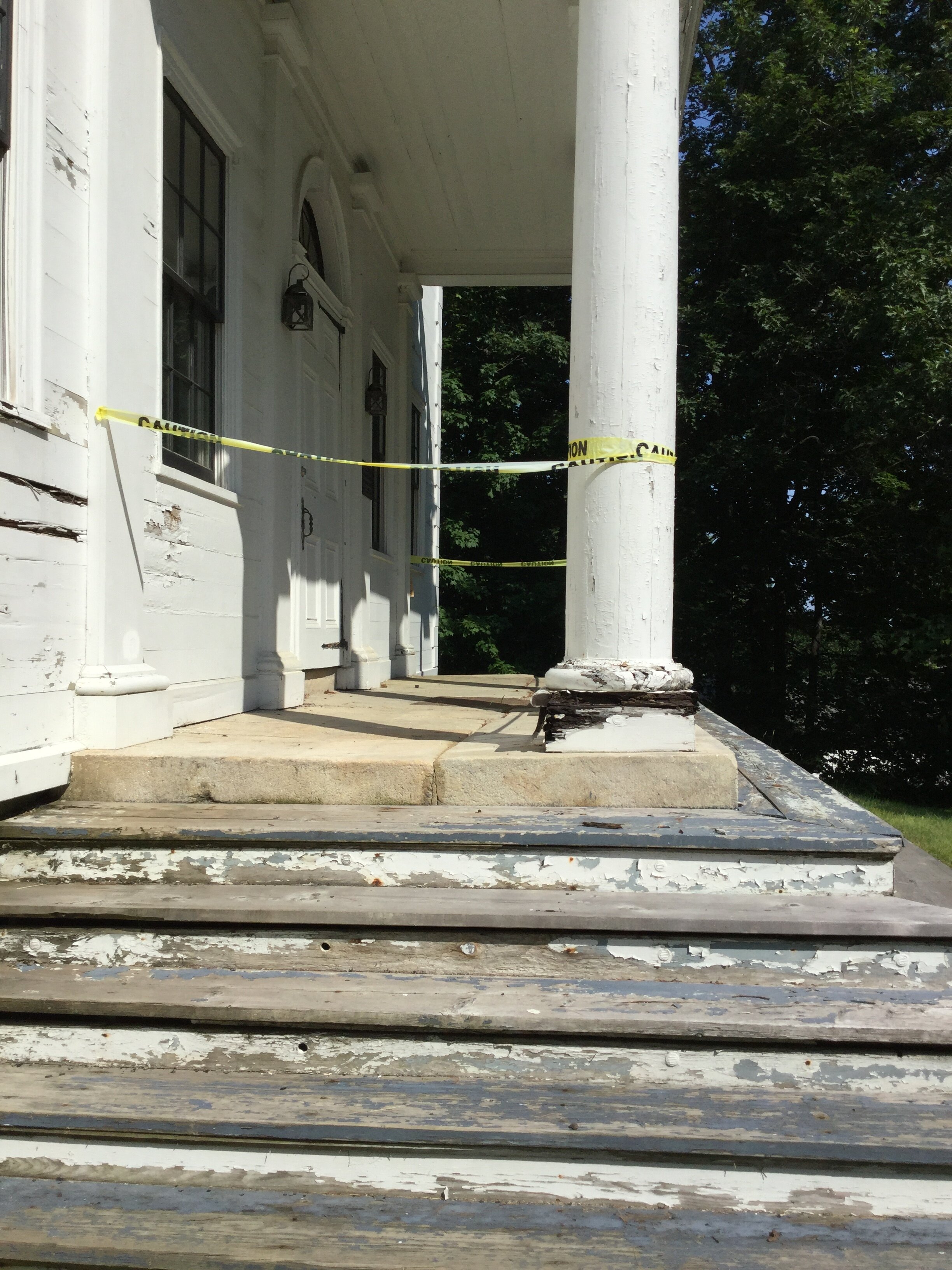
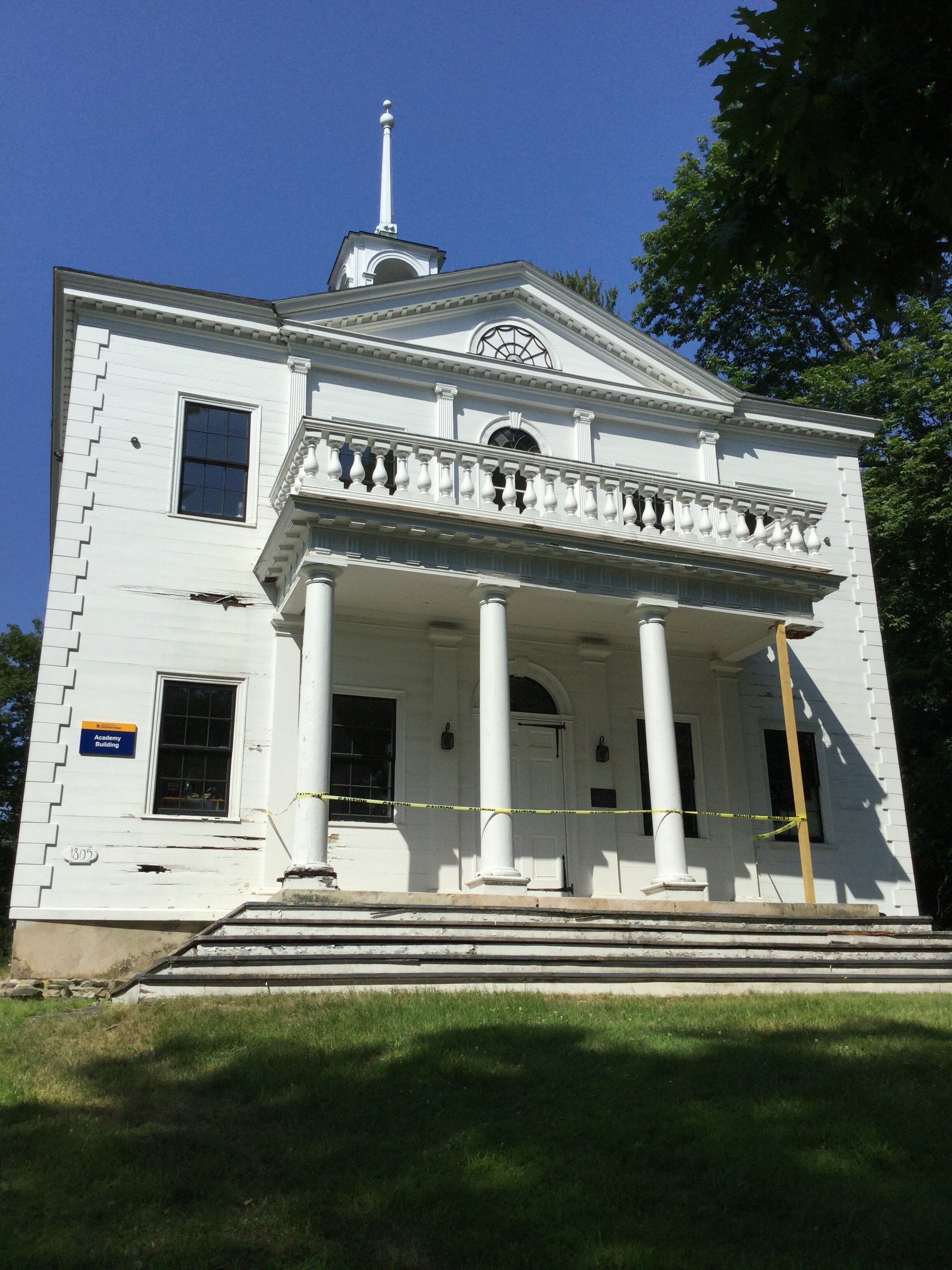
Gorham Academy, University of Southern Maine, Gorham
update

August, 2022: Restoration is underway and includes work to stabilize the foundation, repairing rot on the porch and front columns, and ensuring that the building is weathertight. A new roof was completed in June. For a full update on the work taking place, read this article from the Portland Press Herald.

Nominated to Places in Peril in 2019

The Issue

The University of Southern Maine’s Campus Master Plan puts several of the historic buildings on the Portland and Gorham campuses at risk.

Gorham Academy (c. 1806) is one of the first six academies incorporated in what was then the District of Maine by the General Court of Massachusetts. Designed in 1806 by Samuel Elder in the Federal style it quickly became a symbol of pride in the community, and today it is a focal point on the University of Southern Maine Gorham Campus. The character-defining features of the building are still intact, including the classically detailed portico and pediment, four Doric columns supporting a second floor balcony, and fanlight above the central second-floor door. It was added to the National Register of Historic Places in 1972. Although the 213-year-old building houses studios for the Art Department, it is plagued by deferred maintenance. The building is not in a prominent location on campus and is easily overlooked -- as evidenced by an overwhelming addition proposed for the rear of the building in the 2019 University of Southern Maine Campus Master Plan. For more information on the Gorham campus buildings, click here.

Our Position

The Gorham Academy is a significant building in the town of Gorham. As it is currently on the National Register of Historic Places, tax credits could be used to offset the cost of rehabilitation. We are pleased to learn that USM has initiated a planning process looking at the rehabilitation needs of the building and will soon begin repairs! Landmarks looks forward to working with the Gorham community and the University of Southern Maine to ensure this important community landmark lives long into the future.

Press

USM to make more than $750,000 in repairs to Gorham Academy American Journal

Preservation rules guard USM buildings slated for demolition, American Journal

USM launches plan to enhance Portland campus, Portland Press Herald

Older than Maine, Gorham Academy due for facelift American Journal

Quick Links

Trustees approve Master Plan to transform USM Campus, USM

Academy Building (University of Southern Maine), Wikipedia

USM Campus Descriptions

What You Can Do

  • Advocate for the preservation of these buildings to the President and Trustees of USM

  • Join our mailing list to stay informed about our advocacy efforts, educational programs, and upcoming events.

  • Support Landmarks' advocacy efforts and our Places in Peril program by making a donation or becoming a member today.

Deering Farmhouse - University of Southern Maine, Portland

Nominated to Places in Peril in 2019

The Issue

The University of Southern Maine’s Campus Master Plan puts several of the historic buildings on the Portland and Gorham campuses at risk.

The Deering Farmhouse (c.1807) is the last remaining structure of the more than 200-acre James Deering Estate (1803) and is believed to be the last Federal period farmhouse within the City of Portland. James Deering, known as the “merchant prince of Portland,” was one of the original founders of the Atlantic & St. Lawrence Railroad. Six acres of his estate were purchased by Portland Junior College in 1947; unfortunately, the Deering mansion and barn were demolished. Upon the college’s merger with University of Southern Maine, the house became the Alumni Office. While the building is in good condition, it was last extensively renovated in the 1970s and is currently vacant. The University's 2019 campus master plan proposes to use the site as the location for a new graduate school and would require relocation or demolition of the farmhouse. The building was recently determined eligible for listing on the National Register of Historic Places, but has no current local protection from demolition or alterations.

Our Position

The key location of the Deering Farmhouse on the campus represents an opportunity for continued use for education or administration purposes. Now that the building has been determined eligible for the National Register, historic rehabilitation tax credits can be used for upgrades. Landmarks looks forward to working with the University of Southern Maine to explore practical options for rehabilitation and reuse.

Press

USM to make more than $750,000 in repairs to Gorham Academy American Journal

Preservation rules guard USM buildings slated for demolition, American Journal

USM launches plan to enhance Portland campus, Portland Press Herald

Older than Maine, Gorham Academy due for facelift American Journal

Quick Links

Trustees approve Master Plan to transform USM Campus, USM

Academy Building (University of Southern Maine), Wikipedia

USM Campus Descriptions

What You Can Do

  • Advocate for the preservation of these buildings to the President and Trustees of USM

  • Join our mailing list to stay informed about our advocacy efforts, educational programs, and upcoming events.

  • Support Landmarks' advocacy efforts and our Places in Peril program by making a donation or becoming a member today.
Preparing Historic Resources for Climate Change

Nominated to Places in Peril in 2019

The Issue

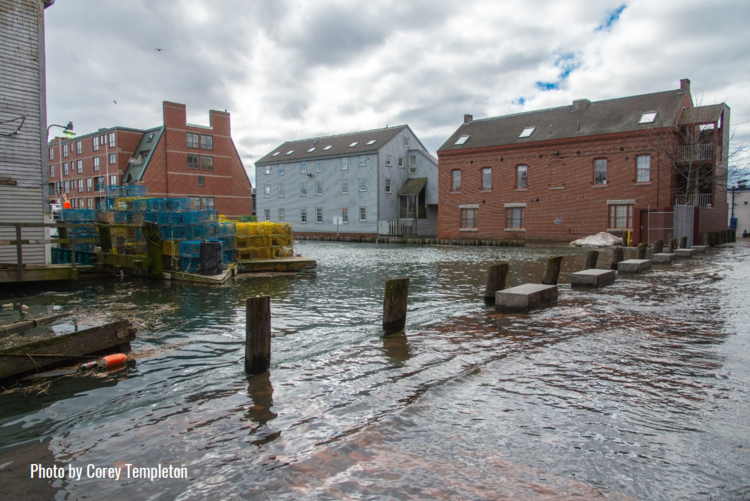
Rising seas and coastal flooding present a threat to cultural resources in historic coastal communities. Planning for the future, preservationists need to make tough decisions about what will be lost, what can be saved, and how historic preservation can contribute to making our places more sustainable.

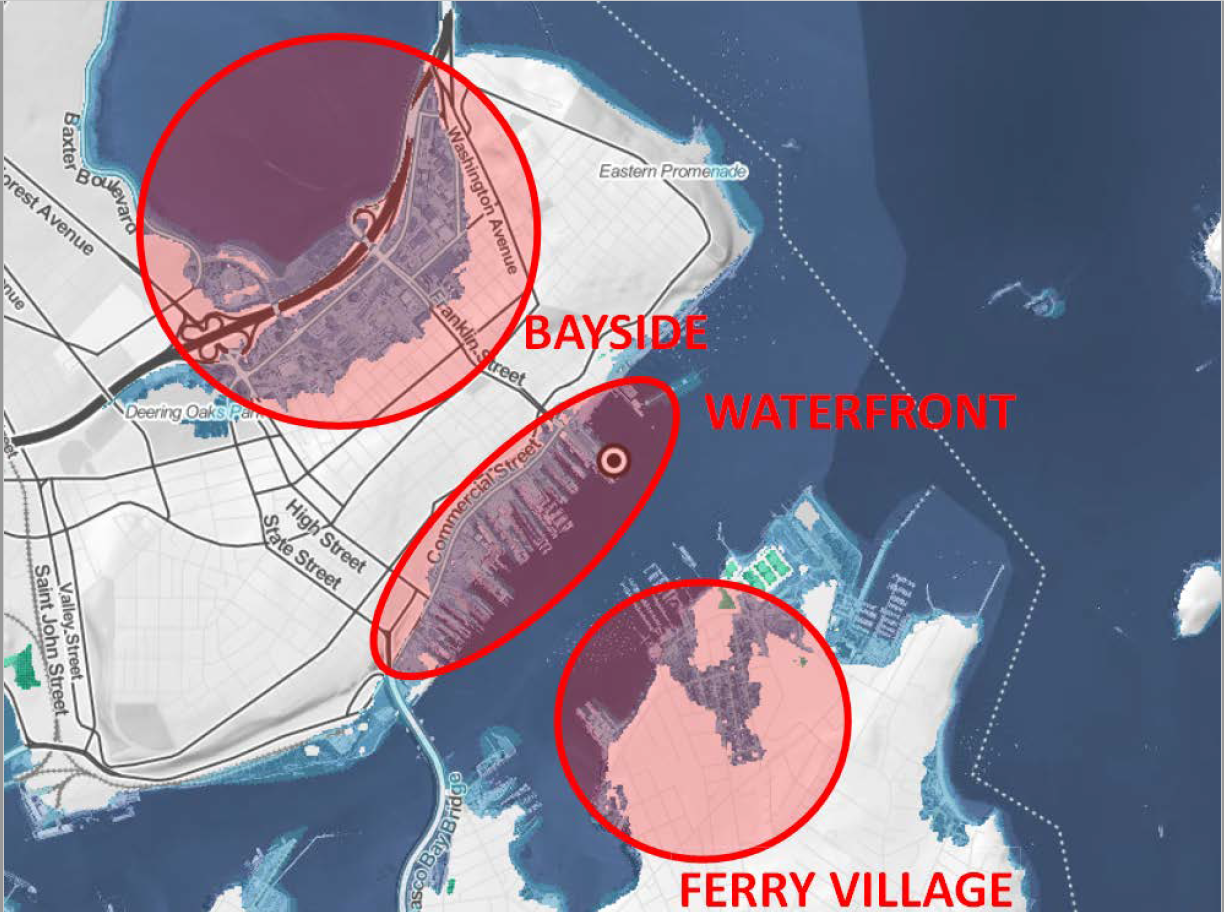
Greater Portland is at considerable risk according to sea level rise projections. Though difficult to quantify exact damage, the probability is high that rising seas and storm surges to coastal areas will do irrevocable damage to coastal homes and businesses as has already been seen in other states and in places like Camp Ellis in Saco. Communities such as Higgins Beach, Pine Point, Prouts Neck, and Portland’s Bayside and Stroudwater neighborhoods as well as the Portland waterfront will be severely impacted by seal level rise and storm surges. Bayside and the waterfront have already seen the damage that can result from a king tide flood and there is evidence pointing to more of these storm surges in the near future. The cottages of Higgins Beach and the 1897 Oceanside Hotel are in the area’s projected flood zone. Elsewhere in Scarborough, Prouts Neck is anticipated to become an island community, as Black Point Road would become underwater and homes like that of Winslow Homer could be threatened by storm surges. Areas along the Spurwink, Nonesuch, Libby, Scarborough, and Fore Rivers would see substantial loss of property due to the expansion of the rivers.

Many of Greater Portland’s most treasured prehistoric and historic sites sit along the coast and its intersecting rivers and streams—areas at high risk because of rising sea levels. These sites include historic seaside communities, residential neighborhoods, wharves, forts, lighthouses and 2,000 documented shell middens that contain valuable information and prehistoric cultural artifacts. The waterfront in the greater Portland region has been inhabited for thousands of years, and through the development of natural and maritime resource economies, people have dramatically shaped its geography. Infill projects in Portland expanded the peninsula on the north and south to accommodate rail service and industrial uses in the 19th century. In South Portland, Ferry Village’s mud flats were filled during World War II for the construction of massive shipyards.

Threat

Greater Portland communities are already experiencing recurrent flooding, erosion and increasingly intense storms—threats that are projected to increase as the Gulf of Maine warms and expands. The continued damage and destruction of local historic landmarks and sites could be detrimental to Greater Portland’s personality and sense of collective history. The loss of archaeological sites would be both academically and culturally devastating. Information about Maine’s prehistory and early colonialism could wash away, and Indigenous communities lose more fragments of their ancestors’ landscapes. If this occurs, Greater Portland will face substantial revenue losses because our regional economy depends so heavily on historic districts, properties, and parks to attract tourism, new residents, and new businesses.

Our Position

We know that our historic buildings, archaeological resources, and communities are at risk, but many disagree on where to go from there. While we consider how to preserve our built and cultural landscapes, we must weigh our desire for authenticity against our need for survival in the face of climate change impacts. How should preservation evolve in light of our changing climate and landscape? Greater Portland Landmarks will work to document resources at risk, educate potentially impacted communities and property owners on best practices in hazard mitigation for historic resources, and assist with local efforts to increase the region’s resiliency to climate change.   

As concerns about climate change mount, historic preservation and the conservation of existing resources are key to developing a strategy of resiliency, risk management and adaptation. Through collaboration and broad public engagement, we will raise awareness of the issue and work together with key partners to develop proactive and sustainable solutions. Landmarks’ goal over the next year is to develop a Climate Change Impact overview report and analysis to explore solutions that mitigate these risks. While climate change cannot be reversed, much can be done to protect our communities, and we look forward to devising creative solutions to mitigate threats and protect endangered landmarks.

Press

Quick Links

What You Can Do

  • Join our mailing list to stay informed about advocacy, educational programs, and upcoming events.

  • Support the advocacy efforts of Greater Portland Landmarks.